Kirjojen hintavertailu. Mukana 12 203 938 kirjaa ja 12 kauppaa.

Kirjailija

Patrizia C. McBride

Kirjat ja teokset yhdessä paikassa: 4 kirjaa, julkaisuja vuosilta 2006-2016, suosituimpien joukossa The Void of Ethics. Vertaile teosten hintoja ja tarkista saatavuus suomalaisista kirjakaupoista.

4 kirjaa

Kirjojen julkaisuhaarukka 2006-2016.

The Void of Ethics

The Void of Ethics

Patrizia C. McBride

Northwestern University Press
2006
nidottu
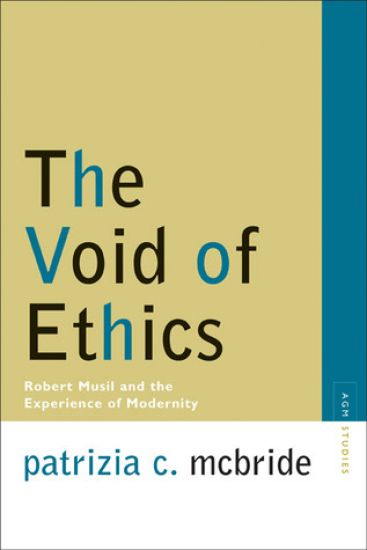
In a pluralistic society without absolute standards of judgment, how can an individual live a moral life? This is the question Robert Musil (1880-1942), an Austrian-born engineer and mathematician turned writer, asked in essays, plays, and fiction that grapple with the moral ambivalence of modern life. Though unfinished, his monumental novel of Vienna in the febrile days before World War I, The Man without Qualities, is identified by German scholars as the most important literary work of the twentieth century. In a fresh examination of his essays, notebooks, and fiction, Patrizia McBride reconstructs Musil's understanding of ethics as a realm of experience that eludes language and thought. After situating Musil's work within its contemporary cultural-philosophical horizon, as well as the historical background of rising National Socialism, McBride shows how the writer's notion of ethics as a void can be understood as a coherent and innovative response to the crises haunting Europe after World War I. She explores how Musil rejected the outdated, rationalistic morality of humanism, while simultaneously critiquing the irrationalism of contemporary art movements, including symbolism, impressionism, and expressionism. Her work reveals Musil's remarkable relevance today-particularly those aspects of his thought that made him unfashionable in his own time: a commitment to fighting ethical fundamentalism and a literary imagination that validates the pluralistic character of modern life.

The Void of Ethics

The Void of Ethics

Patrizia C. McBride

Northwestern University Press
2006
sidottu
In a pluralistic society without absolute standards of judgment, how can an individual live a moral life? This is the question Robert Musil (1880-1942), an Austrian-born engineer and mathematician turned writer, asked in essays, plays, and fiction that grapple with the moral ambivalence of modern life. Though unfinished, his monumental novel of Vienna in the febrile days before World War I, The Man without Qualities, is identified by German scholars as the most important literary work of the twentieth century. In a fresh examination of his essays, notebooks, and fiction, Patrizia McBride reconstructs Musil's understanding of ethics as a realm of experience that eludes language and thought. After situating Musil's work within its contemporary cultural-philosophical horizon, as well as the historical background of rising National Socialism, McBride shows how the writer's notion of ethics as a void can be understood as a coherent and innovative response to the crises haunting Europe after World War I. She explores how Musil rejected the outdated, rationalistic morality of humanism, while simultaneously critiquing the irrationalism of contemporary art movements, including symbolism, impressionism, and expressionism. Her work reveals Musil's remarkable relevance today-particularly those aspects of his thought that made him unfashionable in his own time: a commitment to fighting ethical fundamentalism and a literary imagination that validates the pluralistic character of modern life.
The Chatter of the Visible

The Chatter of the Visible

Patrizia C. McBride

The University of Michigan Press
2016
nidottu
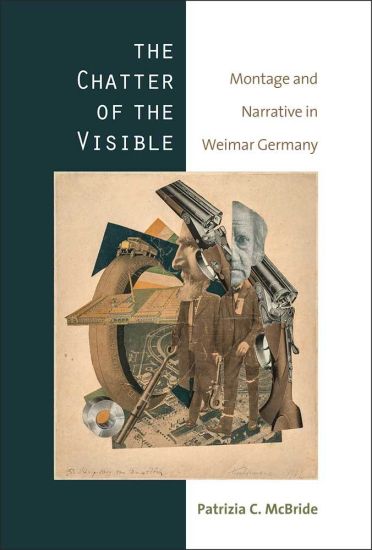
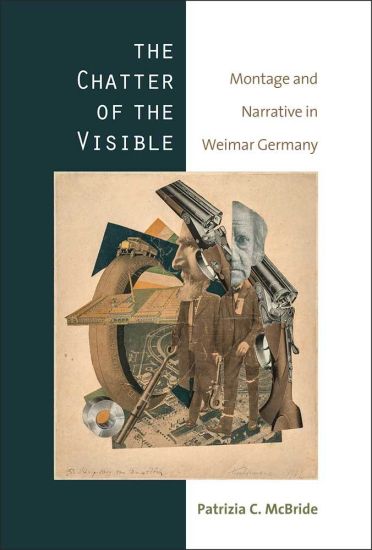
The Chatter of the Visible examines the paradoxical narrative features of the photomontage aesthetics of artists associated with Dada, Constructivism, and the New Objectivity. While montage strategies have commonly been associated with the purposeful interruption of and challenge to narrative consistency and continuity, McBride offers an historicized reappraisal of 1920s and 1930s German photomontage work to show that its peculiar mimicry was less a rejection of narrative and more an extension or permutation of it—a means for thinking in narrative textures exceeding constraints imposed by “flat” print media (especially the novel and other literary genres). McBride’s contribution to the conversation around Weimar-era montage is in her situation of the form of the work as a discursive practice in its own right, which affords humans a new way to negotiate temporality, as a particular mode of thinking that productively relates the particular to the universal, or as a culturally specific form of cognition.
The Chatter of the Visible

The Chatter of the Visible

Patrizia C. McBride

The University of Michigan Press
2016
sidottu
The Chatter of the Visible examines the paradoxical narrative features of the photomontage aesthetics of artists associated with Dada, Constructivism, and the New Objectivity. While montage strategies have commonly been associated with the purposeful interruption of and challenge to narrative consistency and continuity, McBride offers an historicized reappraisal of 1920s and 1930s German photomontage work to show that its peculiar mimicry was less a rejection of narrative and more an extension or permutation of it—a means for thinking in narrative textures exceeding constraints imposed by “flat” print media (especially the novel and other literary genres). McBride’s contribution to the conversation around Weimar-era montage is in her situation of the form of the work as a discursive practice in its own right, which affords humans a new way to negotiate temporality, as a particular mode of thinking that productively relates the particular to the universal, or as a culturally specific form of cognition.