Kirjojen hintavertailu. Mukana 12 657 676 kirjaa ja 12 kauppaa.

Kirjailija

Patrizia Caraveo

Kirjat ja teokset yhdessä paikassa: 3 kirjaa, julkaisuja vuosilta 2021-2025, suosituimpien joukossa Saving the Starry Night. Vertaile teosten hintoja ja tarkista saatavuus suomalaisista kirjakaupoista.

3 kirjaa

Kirjojen julkaisuhaarukka 2021-2025.

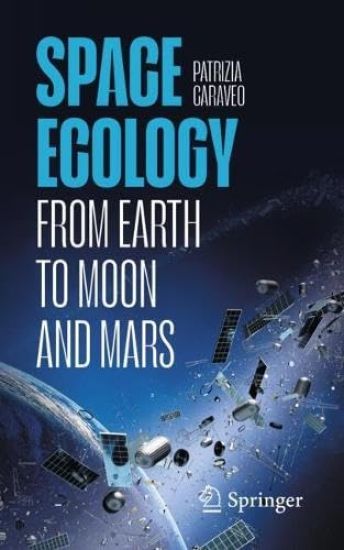
Space Ecology

Space Ecology

Patrizia Caraveo

Springer International Publishing AG
2025
nidottu
The recent entry of private entrepreneurs into the world of space has multiplied the number of services provided by instruments in orbit, resulting into a rapid and tumultuous growth of the space economy. More services translate into more launches bringing into orbit more satellites. As a result, circum-terrestrial orbits are filling up alarmingly, and we are only at the beginning of the proliferation of mega constellations that have sprung up in recent years to provide planet-wide Internet connectivity. There are neither national nor international laws for managing the number of orbiting satellites that are growing at such a dizzying rate that real orbital traffic jams are feared. We need to extend to the space around us, but also to the other bodies in the solar system, the concept of sustainable use so as not to repeat the same mistakes we have made on Earth's surface. Around our planet we need to avoid overcrowding of orbits so as not to endanger our planet's economy, which is heavily dependent on the use of satellites. Looking further afield, to the Moon and Mars, for example, we must balance resource utilization with unnecessary pollution of fragile ecosystems. Human settlements will have to respect the ecosystem of these celestial bodies that do not belong to any state but must be absolutely protected in order to prevent an interplanetary version of the tragedy of the commons, unfortunately so familiar in our planet. Particular attention must be paid to the risks of biological pollution. Explorers (both human and robotic) risk carrying terrestrial material. Similarly, handling extraterrestrial samples requires well-equipped laboratories and continuous surveillance.
Europe in the Global Space Economy

Europe in the Global Space Economy

Patrizia Caraveo; Clelia Iacomino

Springer International Publishing AG
2023
nidottu
This book analyzes the policies and space economy programs of major space-faring nations and explores whether the present institutional set-up in Europe is adequate to address the challenges. At the core of the discussion are the relative roles of governments and markets in a highly dynamic panorama that involves advancements in science, modifications in technology and organization, and the introduction of new rules of behavior. After a close examination of the history of development of the space economy, and the shift from the centralized model to deregulation and the opening up of space activities to commercial companies, a wide-ranging overview of global space governance is provided. National and regional perspectives are discussed, and the current role of commercial actors in the global space system is elucidated. The various challenges faced by Europe are then examined, including the threat posed by institutional and market fragmentation to the emergence of European companies able to compete with companies of nations such as the USA. The final part of the book analyzes proposals for reforming of the space system in Europe and offers a vision for future European space policy.
Saving the Starry Night

Saving the Starry Night

Patrizia Caraveo

Springer Nature Switzerland AG
2021
nidottu
This book takes a close look at our relationship with the sky, the stars, light and darkness. In particular, it examines how light pollution has interfered with the culture of astronomy and our ability to appreciate this essential facet of our natural world. The sky has always held significance for humanity, in both cultural and scientific terms. And yet we persistently pollute it with (sometimes unnecessary) light in our obsessive desire to chase away the darkness. This effectively switches off the stars, hampering our ability to enjoy one of the most inspiring sights nature has to offer to humankind. In addition, too much light is hazardous to both our health and that of the fauna and flora of this planet. This book also features a comprehensive look at the current controversy regarding efforts to expand internet access through the launch into low Earth orbits of thousands of new satellites, which will pollute the night with moving lights while filling to saturation the capability of the circumterrestrial space. This conflict does not mean that the interests of astronomy and those of space technology have to be at odds, and potential compromises are explored between the satellite initiative and the desire to maintain a dark, radio silent sky.