Kirjojen hintavertailu. Mukana 12 390 323 kirjaa ja 12 kauppaa.

Kirjailija

Paul Allen

Kirjat ja teokset yhdessä paikassa: 49 kirjaa, julkaisuja vuosilta 1998-2026, suosituimpien joukossa Gentelligence. Vertaile teosten hintoja ja tarkista saatavuus suomalaisista kirjakaupoista.

49 kirjaa

Kirjojen julkaisuhaarukka 1998-2026.

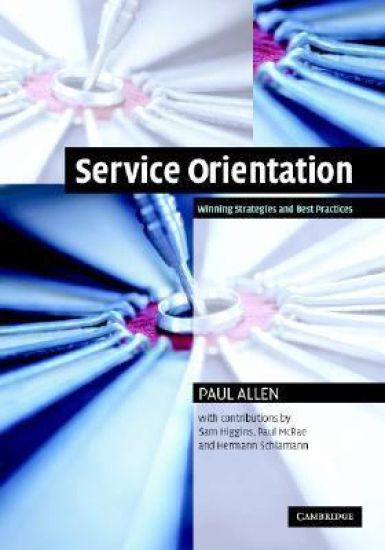
Service Orientation

Service Orientation

Paul Allen

Cambridge University Press
2006
sidottu
An introduction to service orientation, showing how it works and highlighting the benefits it can deliver. After covering the basics of service orientation, this book discusses key issues such as business agility, designing quality-of-service infrastructure, implementing service-level agreements, and cultural factors.
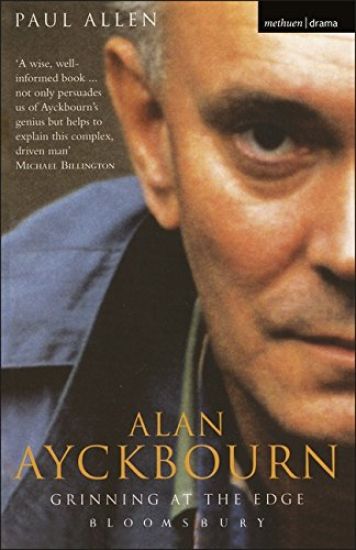
Grinning At The Edge

Grinning At The Edge

Paul Allen

Methuen Drama
2002
nidottu
Now in paperback, the hugely acclaimed, authorised biography of Britain's most popular playwright Alan Ayckbourn is Britain's most popular playwright and its most private. He has won numerous awards for his plays and has worked with some of theatre's most celebrated names, yet he spends most of his time away from the limelight in a Yorkshire seaside town not writing at all but running a small repertory theatre. This is a portrait of a man who - from Relatively Speaking in 1965 to his double play House and Garden at the National Theatre in 2000 - has chronicled human behaviour, our aspirations and insecurities, while shaping the theatrical experience of millions."Mr Allen's book makes me want to start reading the entire Ayckbourn canon over again...splendid stuff" Hugh Leonard, Sunday Independent "Paul Allen has come up with a wise, well-informed book that not only persuades us of Ayckbourn's genius but also helps to explain this complex, driven man" Michael Billington, Country Life "Lucid, meticulously researched ...this impressively detailed account benefits from Paul Allen's rich inside knowledge of theatre" Terry Eagleton, Times Literary Supplement "Thorough and enjoyable" Christopher Hirst, Independent
Philip III and the Pax Hispanica, 1598-1621

Philip III and the Pax Hispanica, 1598-1621

Paul Allen

Yale University Press
2000
sidottu
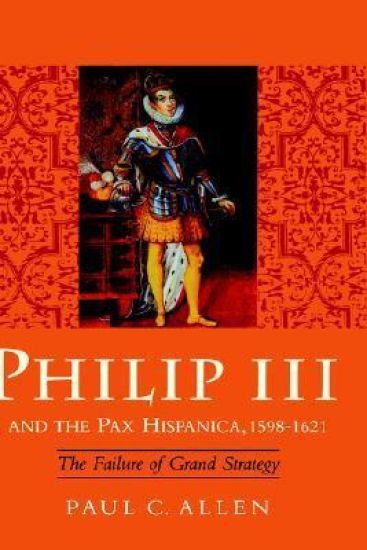
Impoverished and exhausted after fifty years of incessant warfare, the great Spanish Empire at the turn of the sixteenth century negotiated treaties with its three most powerful enemies: England, France, and the Netherlands. This intriguing book examines the strategies that led King Philip III to extend the laurel branch to his foes. Paul Allen argues that, contrary to widespread belief, the king’s gestures of peace were in fact part of a grand strategy to enable Spain to regain military and economic strength while its opponents were falsely lulled away from their military pursuits. From the outset, Allen contends, Philip and his advisers intended the Pax Hispanica to continue only until Spain was able to resume its battles—and defeat its enemies.Drawing on primary sources from the four countries involved, the book begins with a discussion of how Spanish foreign policy was formulated and implemented to achieve political and religious aims. The author investigates the development of Philip’s “peace” strategy, the Twelve Years’ Truce, and the decision to end the truce and engage in war with the Dutch, and then with the English and French. Renewed warfare was no failure of peace policy, Allen shows, but a conscious decision to pursue a consistent strategy. Nevertheless the negotiation for peace did represent a new diplomatic method with significant implications for both the future of the Spanish Empire and the practices of European diplomacy.
Component-Based Development for Enterprise Systems

Component-Based Development for Enterprise Systems

Paul Allen

Cambridge University Press
1998
pokkari
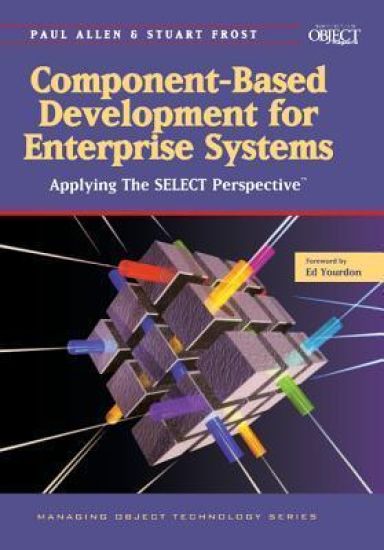
This ground-breaking book distills the experience of the author in dealing with problems in industry that can be solved by using the SELECT Perspective. A pragmatic component-based approach for the development of enterprise systems, the SELECT Perspective comprises a unique blend of techniques, architecture, and process. Enterprise software development presents challenges of sheer scale and complexity that continue to accelerate at a terrific pace. Businesses are becoming increasingly adaptive and are calling for software that is more and more flexible. Component technology holds the promise of solving these problems, but there are some complications. For example, many organizations continue to struggle with the challenge of integrating their legacy systems with the newer technology. The approach in this book offers a streamlined set of modeling techniques based on the Unified Modeling Language (UML); uses a serviced-based architecture that provides an overall design philosophy for reusable software that addresses the needs of the business, not the technology; and is a clearly defined software process that provides guidance on how to employ the knowledge base of available techniques.