Kirjojen hintavertailu. Mukana 12 298 761 kirjaa ja 12 kauppaa.

Kirjailija

Paul Atkinson

Kirjat ja teokset yhdessä paikassa: 55 kirjaa, julkaisuja vuosilta 1992-2026, suosituimpien joukossa NICE. Vertaile teosten hintoja ja tarkista saatavuus suomalaisista kirjakaupoista.

55 kirjaa

Kirjojen julkaisuhaarukka 1992-2026.

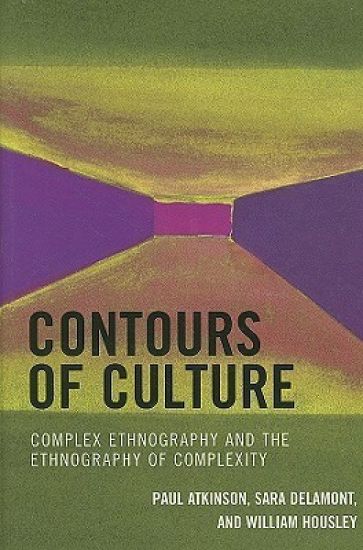
Contours of Culture

Contours of Culture

Paul Atkinson; Sara Delamont; William Housley

AltaMira Press,U.S.
2007
sidottu
In Contours of Culture the authors discuss the uses of various ethnographic methods in the study of culture, drawing on their field research with an opera company, Welsh artists, and classes on the popular Brazilian martial art capoeira. In their practical research and in the research of other scolars, they encounter complex problems and themes that often require new ways of organizing and conceiving cultural material, and even new ways of giving expression to phenomena that are only partially understood. This book is not only about the inherent complexities involved in ethnography; it is also about the kinds of opportunities available to researchers immersed in this complexity and how they might grasp cultural settings in their entirety.

Everyday Arias

Everyday Arias

Paul Atkinson

AltaMira Press,U.S.
2006
nidottu
Paul Atkinson explores the remarkable world of opera through his fieldwork with the internationally known Welsh National Opera company. In order to show us how cultural phenomena are produced and enacted, he takes us on stage and behind the scenes into the collective social action that goes into the realization of an opera. The author demonstrates how artistic interpretation is translated into the routine work of the rehearsal studio and the theatre, and how producers negotiate a practical reality with her or his performers to ultimately create extraordinary performances through the mundane, everyday work that makes them possible. The author calls for a sustained investigation of cultural phenomena, not based solely on textual analysis but on the importance of collective work and social organization. Atkinson's work will appeal to anthropologists and sociologists who study the performance arts, as well as to those engaged in theatre arts, opera and music.
Everyday Arias

Everyday Arias

Paul Atkinson

AltaMira Press,U.S.
2006
sidottu
Paul Atkinson explores the remarkable world of opera through his fieldwork with the internationally known Welsh National Opera company. In order to show us how cultural phenomena are produced and enacted, he takes us on stage and behind the scenes into the collective social action that goes into the realization of an opera. The author demonstrates how artistic interpretation is translated into the routine work of the rehearsal studio and the theatre, and how producers negotiate a practical reality with her or his performers to ultimately create extraordinary performances through the mundane, everyday work that makes them possible. The author calls for a sustained investigation of cultural phenomena, not based solely on textual analysis but on the importance of collective work and social organization. Atkinson's work will appeal to anthropologists and sociologists who study the performance arts, as well as to those engaged in theatre arts, opera and music.
Risky Relations

Risky Relations

Katie Featherstone; Paul Atkinson; Aditya Bharadwaj; Angus Clarke

Berg Publishers
2005
nidottu
Increasingly more conditions are now being identified as having a genetic component, and controversial new genetic technologies potentially have major consequences for social relations and self-identity. How do family members respond to the information that they have a genetically transmitted disease or condition? How do they communicate (or not communicate) about their shared heritage? How do they decide who to tell and who not to tell within their family? Richly illustrated with the real experiences of individuals and families, Risky Relations is essential reading for anthropologists and sociologists of health and medicine, specialists in family and kinship, and health professionals concerned with the treatment and counselling of clients with genetic conditions. The lived impact of genetic technology on understanding within families with genetic conditions has never been systematically explored. This book fills a major gap by placing ethical, medical and social debates surrounding this charged issue firmly in context.
Risky Relations

Risky Relations

Katie Featherstone; Paul Atkinson; Aditya Bharadwaj; Angus Clarke

Berg Publishers
2005
sidottu
Increasingly more conditions are now being identified as having a genetic component, and controversial new genetic technologies potentially have major consequences for social relations and self-identity. How do family members respond to the information that they have a genetically transmitted disease or condition? How do they communicate (or not communicate) about their shared heritage? How do they decide who to tell and who not to tell within their family? Richly illustrated with the real experiences of individuals and families, Risky Relations is essential reading for anthropologists and sociologists of health and medicine, specialists in family and kinship, and health professionals concerned with the treatment and counselling of clients with genetic conditions. The lived impact of genetic technology on understanding within families with genetic conditions has never been systematically explored. This book fills a major gap by placing ethical, medical and social debates surrounding this charged issue firmly in context.
Qualitative Research and Hypermedia

Qualitative Research and Hypermedia

Bella Dicks; Bruce Mason; Amanda Coffey; Paul Atkinson

SAGE Publications Inc
2005
sidottu
Digital culture and digital technologies have rapidly become unavoidable and essential forms of social experience and communication in our emerging globalised society. If we want to attempt to analyse and understand our technology-saturated society, and all its new media, then we must also develop research methods and forms of analysis that can accommodate and exploit digital culture and digital technologies. This important new methods text sets out to equip qualitative researchers with the tools necessary to conduct ethnography in the age of email and the internet. It will investigate how digital technologies potentially transform the ways in which we do research. This text also introduces the reader to new emerging methods that utilise new technologies and explains how to conduct data collection, analysis and representation using new technologies and `hypermedia'. Essential reading for any student or researcher interested in qualitative research in an age of hypermedia, this text: - explains how digital technology impacts on social research; - investigates how digital technology has reshaped the field of social research; - consider the implications of bringing multimedia into the forefront of qualitative research; - suggests new ways of observing and documenting a `technologised' and design-rich society; - enables the reader to use new technologies to handle and represent qualitative data; - unpacks the theoretical implications of writing and researching for the electronic screen
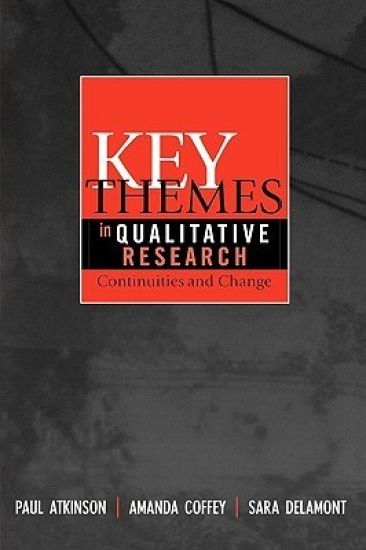
Key Themes in Qualitative Research

Key Themes in Qualitative Research

Paul Atkinson; Amanda Coffey; Sara Delamont

AltaMira Press,U.S.
2003
nidottu
Key Themes in Qualitative Research is an attempt by three well-respected ethnographic researchers to present a balanced view of qualitative methodology and research. The book is structured around classic texts, written by methodological pioneers, which comprise the basic foundation of modern qualitative research. The authors examine key premises in these texts, such as intimacy, advocacy, and validity, and how they may be supported, redesigned, or made problematic in today's field. This allows for a critical analysis of Old Guard vs. Avant-Garde ideas and provides for the reader a guide to wade through the proliferation of texts and theories available since the postmodern turn. While not designed as a primer in qualitative research methods, anyone with modest experience in the field should find this book extremely useful.
Interactionism

Interactionism

Paul Atkinson; William Housley

SAGE Publications Inc
2003
sidottu
'Atkinson and Housley have produced a book that is a very competent, interesting and useful addition to other work in the field. Its distinctive contribution for me, lies in the exploration of the relationship between, and developments within interactionist sociologies' - Sociology What is symbolic interactionism? This refreshing and authoritative book provides readers with: · A guide to the essential thinking, research and concepts in interactionism · A demonstration of the use of the interactionist approach · An explaination of why the interactionist influence has not been fully acknowledged in Britain. The authors argue that few sociologists in Britain have identified themselves with symbolic interactionism, even though many have engaged with interactionist ideas in their research and methodological work. We are all interactionists now, in the sense that many of the key ideas of interactionism have become part of the mainstream of sociological thought. Currently fashionable approaches to sociology display a kind of collective amnesia. A good deal of today's ideas that are presented as 'novel' or 'innovative' only appear so because earlier contributions - interactionism among them - are not explicitly acknowledged.
Interactionism

Interactionism

Paul Atkinson; William Housley

SAGE Publications Inc
2003
nidottu
'Atkinson and Housley have produced a book that is a very competent, interesting and useful addition to other work in the field. Its distinctive contribution for me, lies in the exploration of the relationship between, and developments within interactionist sociologies' - Sociology What is symbolic interactionism? This refreshing and authoritative book provides readers with: · A guide to the essential thinking, research and concepts in interactionism · A demonstration of the use of the interactionist approach · An explaination of why the interactionist influence has not been fully acknowledged in Britain. The authors argue that few sociologists in Britain have identified themselves with symbolic interactionism, even though many have engaged with interactionist ideas in their research and methodological work. We are all interactionists now, in the sense that many of the key ideas of interactionism have become part of the mainstream of sociological thought. Currently fashionable approaches to sociology display a kind of collective amnesia. A good deal of today's ideas that are presented as 'novel' or 'innovative' only appear so because earlier contributions - interactionism among them - are not explicitly acknowledged.
The Doctoral Experience

The Doctoral Experience

Sara Delamont; Paul Atkinson; Odette Parry

Routledge Falmer
1999
sidottu
Richly illustrated with case studies and interviews, this book identifies key themes pervading academic life: the nature of research and research supervision; key social processes and problems; distinct and contrasting sub-cultures of departments and disciplines in universities; mentorship and sponsorship; and apprenticeship and rites of passage for postgraduate students. Anyone developing policy and practice in Higher Education, or wishing to understand their own position within the wider picture will benefit from reading this book.
Making Sense of Qualitative Data

Making Sense of Qualitative Data

Amanda Jane Coffey; Paul Atkinson

SAGE Publications Inc
1996
nidottu
After a research project has been designed and the data have been gathered, what is the best way to transform the myriad varieties of data into something useful? Authors Amanda Coffey and Paul Atkinson underscore the diversity of approaches at the disposal of the qualitative researcher by using a single data set--doctoral students and faculty members in social anthropology--that they analyze using a number of techniques. User-friendly and accessible, Making Sense of Qualitative Data is not intended as a comprehensive cookbook of methods. It describes and illustrates a number of key, complementary approaches to qualitative data and offers practical advice on the many ways to analyze data, which the reader is encouraged to explore and enjoy. Practical and straightforward, with special attention paid to the possibilities in computer-aided analysis, Making Sense of Qualitative Data is an invaluable resource to students and professionals in qualitative and research methods, sociology, anthropology, communication, management, and education.
Medical Talk and Medical Work

Medical Talk and Medical Work

Paul Atkinson

SAGE Publications Ltd
1995
nidottu
The development of a sociology of medical knowledge is both assessed and contributed to in Medical Talk and Medical Work. Underlying the analysis is research on the work of haematologists, which offers a rich resource for understanding the complexities and contradictions between physical bodies and social embodiment, medical talk and technical apparatus. Using but moving beyond this specific material, Paul Atkinson demonstrates the strengths and weaknesses of the existing understanding of medical knowledge. Among the issues explored are: the place of interaction among doctors, rather than between doctors and patients, in defining the construction of medical knowledge; the ways in which clinical opinion is socially produced and the nature of the local settings through which this process occurs; and the relations among medical knowledge, medical language and the increasingly technological contexts of contemporary medical practice.
Medical Talk and Medical Work

Medical Talk and Medical Work

Paul Atkinson

SAGE Publications Ltd
1995
sidottu
The development of a sociology of medical knowledge is both assessed and contributed to in Medical Talk and Medical Work. Underlying the analysis is research on the work of haematologists, which offers a rich resource for understanding the complexities and contradictions between physical bodies and social embodiment, medical talk and technical apparatus. Using but moving beyond this specific material, Paul Atkinson demonstrates the strengths and weaknesses of the existing understanding of medical knowledge. Among the issues explored are: the place of interaction among doctors, rather than between doctors and patients, in defining the construction of medical knowledge; the ways in which clinical opinion is socially produced and the nature of the local settings through which this process occurs; and the relations among medical knowledge, medical language and the increasingly technological contexts of contemporary medical practice.
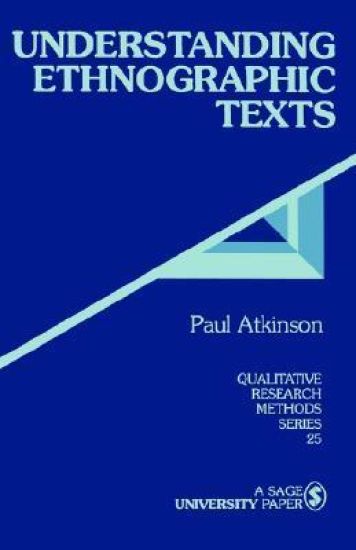
Understanding Ethnographic Texts

Understanding Ethnographic Texts

Paul Atkinson

SAGE Publications Inc
1992
nidottu
Back to the basics. This is precisely what Paul Atkinson does for his readers in Understanding Ethnographic Texts, the first "how to" book of its kind. He provides basic, yet significant, lessons for ethnographers going about the business of writing up their findings. He uses the postmodernist premise that ethnography is not an unbiased, scientific view of "the field setting," but rather a construction of the ethnographer. From this, Atkinson offers useful advice on how to read, and then how to write ethnography. He explains the importance of self-consciousness in understanding how to present the material, how to develop story lines and use metaphor, how to organize material and create a voice, how to balance analysis with description, and how to use one's own work in conjunction with others. He also outlines various literary conventions through recent experiments that have departed from traditional ethnographic style. He links these studies to an analysis of the contributions of postmodernist theory to ethnographic work, and then argues for the "authority" of the researcher, which contrasts the viewpoint of many postmodernist ethnographers. This highly accessible, "how to" book is readable, thoughtful, and instructive, and will prove invaluable to qualitative researchers, writing scholars, and text analysts, and to ethnographers in sociology and anthropology.