
Kirjailija
Paul B. McNulty
Kirjat ja teokset yhdessä paikassa: 8 kirjaa, julkaisuja vuosilta 2013-2019, suosituimpien joukossa A Girl Called May: (with appendices). Vertaile teosten hintoja ja tarkista saatavuus suomalaisista kirjakaupoista.
8 kirjaa
Kirjojen julkaisuhaarukka 2013-2019.
A Girl Called May: (with appendices)
Paul B. McNulty
Createspace Independent Publishing Platform
2018
nidottu
This edition includes Appendices I through V. Margaret Mary 'May' McNulty was born on 5 November 1900 at 15 Warrington Place, Dublin 2, Ireland. There she lived for the rest of her life apart from the 1920s when she sojourned in Italy and Austria. She was the daughter of Thomas McNulty BA BL, originally of Derry City, and Mary Boylan, originally of Dublin. They married in a Roman Catholic Chapel on 30 December 1891. Little is known of May's early years except that her father died when she was only three and she attended Muckross Park College, a private girls' secondary school, in Dublin. May McNulty was a singer of sufficient talent to warrant further training in Milan commencing in 1921. She reputedly sang on Radio ireann but no such record has been found. Neither has her singing talent featured in any Irish newspaper following an on-line search for Miss McNulty or variants thereof. A Google search was equally fruitless in relation to her singing although her career as an international bridge player was highlighted. While in Milan, she attracted the attention of some male admirers including the operatic singer, Davide Dorlini, a French Tahitian, who revealed his affection for her in a 1922 picture card: alla Signorina May McNulty con auguri (with best wishes.) His possible connection to the late Dag Drollett and the family of Marlon Brando is explored. May McNulty moved to Austria in 1924 after an opportunity to advance her singing career had apparently not emerged. Examination of picture postcards received from her many correspondents revealed that Frida Schad may have been a Holocaust victim; that J.McD in Donegal missed her singing; that M in St Mary's, Dublin may have been suicidal; that a teaching role for May was indicated in a card signed Your little pupil; that May was a child-minder for eight-year-old Jeannie Enfer destined to become a distinguished Austrian writer who also translated the work of Irish authors into German. An April 1927 picture card reveals May's move from the provincial Wiener Neustadt to the metropolis of Vienna while remaining dependent on family finance. While there she may have sought to promote her singing career by contact with noted musicologists, Harold Sheldon and Hugo Botstiber. Later that year, she received an intriguing card from Liesl Wanka inviting her to visit again at Vienna. Liesl is mentioned in a critique of Dr Paul Hasterlik by Helene K nig; in a letter by Hasterlik (later a Holocaust victim) to his son in 1935; and in the diary of Katharina Br mse who mentions Liesl's involvement in an unspecified project. Having returned to Ireland in 1932, with no apparent sign of a singing contract, May turned to the game of contract bridge destined to become her enduring passion. Now, in her early thirties, her postcard archive peters out and is replaced by newspaper reports. She quickly establishes herself in the world of contract bridge. Progress was reported after WW II when she captained a championship team of the Contract Bridge Association of Ireland that travelled to Belfast to play their counterparts representing the Northern Ireland Bridge Union. In 1946, she set up a new record in competitive bridge by winning for the third time in succession the National Team Championship and Kelburn Cup using only four other players to complete her teams. This was sufficient to prelude an appearance on Radio ireann, where she partnered Noel Peart in a discussion entitled Meet The Bridge Experts. In 1952, she must have revisited memories of her continental past when playing bridge against Austria whose team included Mrs H Breithner, likely to be the second wife of the famous Viennese Mayor and social democrat, Hugo Breitner. Torquay was May's final appearance as an international bridge player. Her declining health persuaded her not to participate in the 1960 Women's World Championship in Turin. May McNulty passed away, as a single woman, in 1966 but her memory lives on.

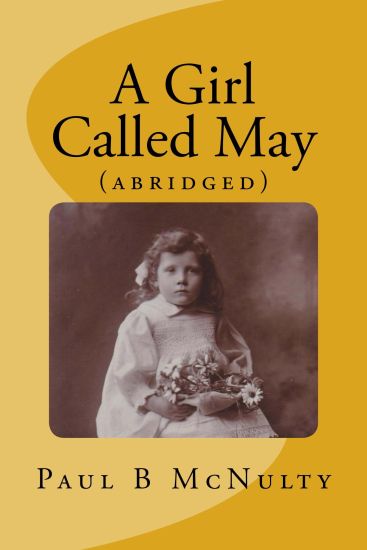
A Girl Called May: (abridged)
Paul B. McNulty
Createspace Independent Publishing Platform
2018
nidottu
Margaret Mary 'May' McNulty was born on 5 November 1900 at 15 Warrington Place, Dublin 2, Ireland. There she lived for the rest of her life apart from the 1920s when she sojourned in Italy and Austria. I have studied May's career through the lens of a McNulty-Boylan picture postcard archive, an on-line search of her progress in Irish newspapers (as below) and archival research. According to family lore, May McNulty was a singer of sufficient talent to warrant further training in Milan commencing in 1921. She reputedly sang on Radio ireann but no such record has been found. Neither has her singing talent featured in any Irish newspaper following an on-line search. A further search was equally fruitless in relation to her singing although her career as an international bridge player was highlighted. May McNulty moved to Austria in 1924. She received a picture postcard from Ida Enfer in 1926. It was co-signed by Enfer's eight year-old daughter, Jeannie, later a distinguished writer who also translated the work of Irish authors into German. An April 1927 picture card reveals May's move from the provincial Wiener Neustadt to the metropolis of Vienna while remaining dependent on home finance. While there May have sought to promote her singing career as suggested in a picture postcard from the noted musicologist, Harold Sheldon, who promised to reply to her letter. Contact with the family of another musicologist, Hugo Botstiber, was evident from a card received from Nana Botstiber, who urged May to write her at Vienna. Dr Felzmann, writing from Croatia in 1928, reminds us of May's singing talent: I hope you are in good health and always busy in singing? Having returned to Ireland in 1932, with no apparent sign of a singing contract, May turns to the game of contract bridge destined to become her enduring passion. Now, in her early thirties, her postcard archive peters out and is replaced by newspaper reports. May quickly establishes herself in the world of contract bridge attracting attention as Honorary Secretary of Dublin's largest Bridge Club, the Regent, in 1937. She came to national prominence in 1938 when partnering Mrs Fitzgerald to win the Ladies' Championship. Her upward momentum continued when qualifying for the Free State of Ireland Team Panel in partnership with Mrs J O'Neill. Now an established international bridge player, May McNulty was included in a team of five to represent Ireland at the 1949 European Bridge Championships in Paris. In 1951, Ireland beat Wales in their third match for the Camrose Trophy by 50 match points over 100 boards at the Portmarnock Country Club. Mrs O Giddings and Miss M McNulty, in their first Camrose partnership, played exceedingly well and showed fine judgment in selecting the best game contract. In 1952, May McNulty must have revisited memories of her continental past when playing bridge against Austria whose team included Mrs H Breithner, likely to be the second wife of the famous Viennese Mayor and social democrat, Hugo Breitner. May McNulty passed away, a single woman, in 1966. S amus Dowling rated her as Ireland's greatest female bridge player, second only to the legendary Ruth Giddings, in Thank you, Partner: The History of Bridge in Ireland, 2009.
1798: A Rebel Romance: A Stage Play
Paul B. McNulty
Createspace Independent Publishing Platform
2016
nidottu
When Cecilia Lynch falls in love with John Moore, a United Irishman, she finds herself drawn into the web of revolution. The illegitimate daughter of the late Sir Harry Lynch-Blosse stands by her fianc when General Humbert routs the redcoats through Castlebar. Cecilia is jubilant when the Frenchman appoints Moore, formerly of Alicante and the Sorbonne, as President of Connaught within the declared Irish Republic. Their hopes for the future of a free and United Ireland are unrestrained.

Letters to the Editor: Food & Food-Related Issues
Paul B. McNulty
Createspace Independent Publishing Platform
2016
nidottu


Genealogy of the Anglo-Norman Lynches: who settled in Galway
Paul B. McNulty
Createspace Independent Publishing Platform
2013
nidottu
The pedigrees of the Anglo-Norman Lynches who settled in Galway are mostly derived from the descendants of James and William, the sons of Thomas Lynch, the first Provost of Galway in 1274. The progression of the family in Ireland was emphasised by the appointment of more than eighty mayors of Galway named Lynch between 1485 and 1654. When James I bestowed a baronetcy on Henry Lynch, a rich merchant, in 1622 their elevated status was confirmed. However, political controversy intervened when Henry Lynch, 3rd Bt, was attainted of high treason following the defeat of James II at the Battle of the Boyne. Personal controversy followed with the liaison of Henry Lynch-Blosse, 7th Bt with the alluring Sibella Cottle which scandalized the community. The story has been outlined by the author in his historical novel, "Spellbound by Sibella." The Lynch-Blosses continued to serve in Ireland until the purchase of their estate of 18,566 acres by the Congested District's Board in 1909 for 154,000. Thereafter, the family settled in Wales and later in England. The current incumbent is Richard Hely Lynch-Blosse, 17th Bt, a general practitioner in Oxfordshire. The Anglo-Norman Lynches who settled in Galway have been connected to famous people and events including the Bodkin massacre, Che Guevara, James II, Richard 'Humanity Dick' Martin MP, Grace O'Malley, Patrick Sarsfield and Bram Stoker. These connections are illustrated in pedigree charts derived from a BrothersKeeper.com database of 2843 individuals. The database also includes members of the extended family of the author.
