Kirjojen hintavertailu. Mukana 12 582 898 kirjaa ja 12 kauppaa.

Kirjailija

Paul B. Preciado

Kirjat ja teokset yhdessä paikassa: 22 kirjaa, julkaisuja vuosilta 2008-2025, suosituimpien joukossa Pornotopía. Vertaile teosten hintoja ja tarkista saatavuus suomalaisista kirjakaupoista.

22 kirjaa

Kirjojen julkaisuhaarukka 2008-2025.

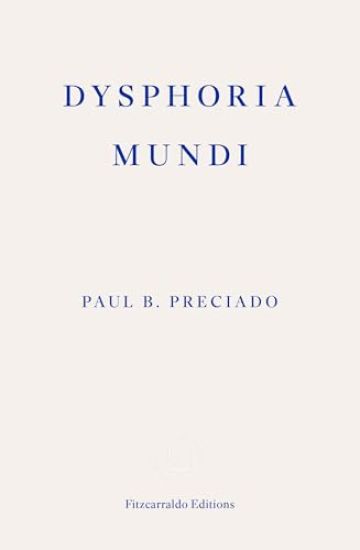
Dysphoria Mundi: A Diary of Planetary Transition
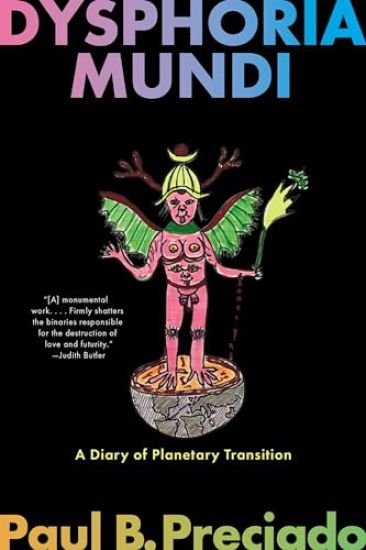
A revolutionary book tracing the collapse of the paradigms that have organized the world for centuries In Dysphoria Mundi, Paul B. Preciado, best known for his 2013 cult classic Testo Junkie, has written a mutant text assembled from essays, philosophy, poetry, and autofiction that captures a moment of profound change and possibility. Rooted in the isolation of the COVID-19 pandemic, and taking account of the societal convulsions that have ensued, Preciado tries to make sense of our times from within the swirl of a revolutionary present moment. The central thesis of this monumental work is that dysphoria, to be understood properly, should not be seen as a mental illness but rather as the condition that defines our times. Dysphoria is an abyss that separates a patriarchal, colonial, and capitalist order hurtling toward its end from a new way of being that, until now, has been seen as unproductive and abnormal but is in fact the way out of our current predicament. With echoes of visionaries such as William S. Burroughs and Kathy Acker, Preciado's theoretical writing is propelled by lyric power while providing us with a critical toolbox full of new concepts that can guide our thinking and our actions: transition, cognitive emancipation, denormalization, disidentification, "electronic heroin," digital coups, necro-kitsch. Dysphoria Mundi is Preciado's most accessible and significant work to date, in which he makes sense of a world in ruins around us and maps a joyous, radical way forward.
Kan monsteret tale?

Kan monsteret tale?

Paul B. Preciado

-
2024
nidottu
»I dag taler de engang monstrøse kroppe, der er produceret af kønsforskellens patriarkalsk-koloniale regime, for sig selv og producerer viden om sig selv. Tiden er inde til at slæbe analytikernes brikse ud i gaderne og kollektivisere talen, politisere kroppene, afbinarisere køn og seksualitet og afkolonisere det ubevidste.«Paul B. Preciado er forfatter, filosof, aktivist, filmskaber, kurator og »dissident fra kønssystemet«. Kan monsteret tale? var hovedtalen ved den a°rlige psykoanalytiske kongres i Paris i 2019 og er siden blevet diskuteret bredt. I 2022 udkom Testo Junkie. Sex, stoffer & biopolitik i dansk oversættelse.
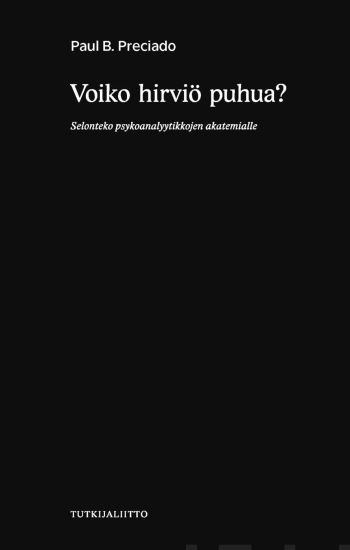
Voiko hirviö puhua?

Voiko hirviö puhua?

Paul B. Preciado

TUTKIJALIITTO
2023
nidottu
Alun perin vuonna 2020 julkaistu Voiko hirviö puhua? perustuu esitelmään, jonka Paul B. Preciado piti Pariisissa lacanilaiseen psykoanalyysiin keskittyneen École de la Cause Freudienne -yhdistyksen kansainvälisessä konferenssissa vuonna 2019. Preciado ehti pitää puheestaan vain neljäsosan, kun hänelle jo ilmoitettiin, että aika oli loppunut. Silti puhe ehti herättää luentosalissa poikkeuksellista kuohuntaa.Nopeasti internetiin levisi esitelmästä puhelimella kuvattuja videoita, osia puheesta litteroitiin ja käännettiin sitten espanjaksi, italiaksi, englanniksi... Lopulta Preciado päätti julkaista kesken jääneen ja pitkin internetiä leviävän puheenvuoronsa kokonaisuudessaan kirjana nimeltä Voiko hirviö puhua?.Kirjassa Preciado vaatii nykyanalyytikkoja tarkastelemaan tutkimuksensa ja praktiikkansa lähtöoletuksia kriittisesti ja päivittämään ne 2020-luvulle. Preciadon mukaan psykoanalyysi nojaa edelleen binäärisiin ja heteronormatiivisiin lähtöoletuksiin, jotka eivät ota huomioon esimerkiksi sukupuolen moninaisuutta vaan patologisoivat sen. Vaikka Voiko hirviö puhua? puhutteleekin suoraan ja ankarasti psykoanalyytikkoja, se on samalla transihmisen puheenvuoro koko patriarkaaliselle, heteronormatiiviselle ja binäärisen sukupuolen lävistämälle yhteiskunnallemme.Paul B. Preciado on yksi keskeisimpiä nimiä tämän hetken feministisessä teoriassa ja queer-teoriassa. Hänet tunnetaan kirjoitustyylistään, jossa yhdistyvät teoria, omaelämäkerta ja autofiktio -tyylistä, jota Maggie Nelson on kuvaillut termillä ”autoteoria”. Teoksissaan Preciado käsittelee sellaisia aiheita kuin sukupuoli, identiteetti, seksuaalisuus, biopolitiikka sekä vallan arkkitehtuurit ja teknologiat.
Testonisti

Testonisti

Paul B. Preciado

TUTKIJALIITTO
2022
nidottu
Paul B. Preciadon Testonisti. Farmakopornografisia tunnustuksia on omaelämäkertaa ja teoriaa yhdistelevä analyysi siitä, miten sukupuoli ja seksuaalisuus muotoutuvat jälkiteollisessa yhteiskunnassa. Kirja ilmestyi ensimmäisen kerran vuonna 2008 espanjaksi ja siitä vuoden kuluttua ranskaksi kirjailijan itsensä kääntämänä. Preciado ottaa Testonistissä analyysinsa kiintopisteiksi kaksi teollisuudenalaa: lääketeollisuuden ja pornoteollisuuden. Näihin aloihin tiivistyy hänen mukaansa koko jälkiteollinen yhteiskunta, ja siksi hän kutsuukin aikaväliä 1960-luvulta tähän päivään farmakopornografiseksi aikakaudeksi. Preciado tarkastelee, miten synteettisten hormonien keksiminen ja hormonipohjaisten lääkkeiden käytön yleistyminen on alkanut tuottaa uudenlaista käsitystä sukupuolesta. Farmakopornografisessa yhteiskunnassa sukupuoli määrittyy ensisijaisesti molekyylitasolla, ja siksi lääketeollisuudella on suuri rooli sukupuolien määrittelyssä ja niiden hallinnassa. Pornoteollisuus taas luo jatkuvasti uusia haluja, jotka se kääntää omaksi voitokseen. Erilaiset pornosivustot ja -alustat mahdollistavat sen, että nykyään kuka tahansa, jolla on käytössään webkamera, voi ryhtyä tuottamaan pornoa ja siten luovuttaa oman työvoimansa alustoja hallinnoivien pornoteollisuusjättien käyttöön. Teoreettisen tason rinnalla Testonistissä kulkee päiväkirjamainen taso. Koko kirja alkaa siitä, kun Preciado alkaa käyttää laittomasti - siis lääketieteellisen ja juridisen sukupuolenkorjausprosessin ulkopuolella - testosteronia, jota hän on saanut ystävältään iholle levitettävän geelin muodossa. Testonisti on kertomus siitä, kuinka Preciado käyttää omaa ruumistaan koealustana tutkiessaan sukupuolen muodostumista sekä vastarinnan paikkana kapinoidessaan farmakopornografista ruumiiden hallintaa vastaan. Nopeasti hän myös huomaa, että testosteroni ja sen avaama maailma ovat erityisen koukuttavia. Testonisti yhdistää uudella tavalla queer-teoriaa ja nykykapitalismin analyysia luoden perusteellisen ja syväluotaavan näkemyksen yhteiskunnasta, jossa sukupuoli, seksuaalisuus, markkinatalous, kolonialismi ja postfordistisiset tuotantomuodot kietoutuvat erottamattomasti yhteen.
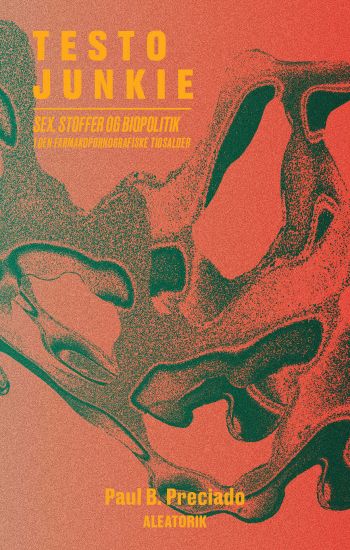
Testo Junkie

Testo Junkie

Paul B. Preciado

-
2022
nidottu
Ønsker man at sætte sig ind i de nye vilkår for debatter om køn og seksualitet, er dette hovedværk bestående af dagbogsnotater og filosofiske essays uomgængeligt. Forfatteren begynder at tage testosteron, ikke som led i en kønsbekræftende behandling, men som ethvert andet reguleret stof, hvilket igangsætter en ustoppelig kaskade af tænkning og begivenheder: om den juridiske og lægevidenskabelige regulering af narkotika, en ny historieskrivning for de “farmakopornografiske” samfund, et intimt forhold til Virginie Despentes, den sexede forbrugskapitalismes rødder i Playboy, opdagelsen af kønshormonerne, de første forsøg med p-piller i Puerto Ricos slumkvarterer, feminismens historie, AIDS-krisen og dildoer.Fra forordet: “Du vil ikke finde nogen endelig konklusion på sandheden om mit køn, og heller intet orakelsvar om den kommende verden. Når læseren her finder filosofiske refleksioner, beretninger om hormonbehandlinger og detaljerede registre over seksuelle praksisser samlet uden nogen form for kontinuitet, er det ganske enkelt, fordi det er den måde, hvorpå subjektivitet konstrueres og dekonstrueres.”Paul B. Preciado (f. 1970) er forfatter, filosof, aktivist, kurator og “kønssystems-dissident”. Testo Junkie er hans hovedværk.
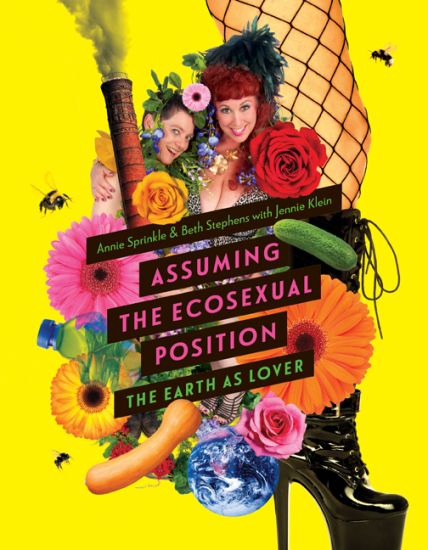
Assuming the Ecosexual Position

Assuming the Ecosexual Position

Annie Sprinkle; Beth Stephens; Jennie Klein; Una Chaudhuri; Paul B. Preciado

University of Minnesota Press
2021
sidottu
The story of the artistic collaboration between the originators of the ecosex movement, their diverse communities, and the Earth What’s sexy about saving the planet? Funny you should ask. Because that is precisely-or, perhaps, broadly-what Annie Sprinkle and Beth Stephens have spent many years bringing to light in their live art, exhibitions, and films. In 2008, Sprinkle and Stephens married the Earth, which set them on the path to explore the realms of ecosexuality as they became lovers with the Earth and made their mutual pleasure an embodied expression of passion for the environment. Ever since, they have been not just pushing but obliterating the boundaries circumscribing biology and ecology, creating ecosexual art in their performance of an environmentalism that is feminist, queer, sensual, sexual, posthuman, materialist, exuberant, and steeped in humor.Assuming the Ecosexual Position tells of childhood moments that pointed to a future of ecosexuality-for Annie, in her family swimming pool in Los Angeles; for Beth, savoring forbidden tomatoes from the vine on her grandparents’ Appalachian farm. The book describes how the two came together as lovers and collaborators, how they took a stand against homophobia and xenophobia, and how this union led to the miraculous conception of the Love Art Laboratory, which involved influential performance artists Linda M. Montano, Guillermo GÓmez-PeÑa, and feminist pornographer Madison Young. Stephens and Sprinkle share the process of making interactive performance art, including the Chemo Fashion Show, Cuddle, Sidewalk Sex Clinics, and Ecosex Walking Tours. Over the years, they celebrated many more weddings to various nature entities, from the Appalachian Mountains to the Adriatic Sea. To create these weddings, they collaborated with hundreds of people and invited thousands of guests as they vowed to love, honor, and cherish the many elements of the Earth.As entertaining as it is deeply serious, and arriving at a perilous time of sharp differences and constricting categories, the story of this artistic collaboration between Sprinkle, Stephens, their diverse communities, and the Earth opens gender and sexuality, art and environmentalism, to the infinite possibilities and promise of love.
Assuming the Ecosexual Position

Assuming the Ecosexual Position

Annie Sprinkle; Beth Stephens; Jennie Klein; Una Chaudhuri; Paul B. Preciado

University of Minnesota Press
2021
nidottu
The story of the artistic collaboration between the originators of the ecosex movement, their diverse communities, and the Earth What’s sexy about saving the planet? Funny you should ask. Because that is precisely-or, perhaps, broadly-what Annie Sprinkle and Beth Stephens have spent many years bringing to light in their live art, exhibitions, and films. In 2008, Sprinkle and Stephens married the Earth, which set them on the path to explore the realms of ecosexuality as they became lovers with the Earth and made their mutual pleasure an embodied expression of passion for the environment. Ever since, they have been not just pushing but obliterating the boundaries circumscribing biology and ecology, creating ecosexual art in their performance of an environmentalism that is feminist, queer, sensual, sexual, posthuman, materialist, exuberant, and steeped in humor.Assuming the Ecosexual Position tells of childhood moments that pointed to a future of ecosexuality-for Annie, in her family swimming pool in Los Angeles; for Beth, savoring forbidden tomatoes from the vine on her grandparents’ Appalachian farm. The book describes how the two came together as lovers and collaborators, how they took a stand against homophobia and xenophobia, and how this union led to the miraculous conception of the Love Art Laboratory, which involved influential performance artists Linda M. Montano, Guillermo GÓmez-PeÑa, and feminist pornographer Madison Young. Stephens and Sprinkle share the process of making interactive performance art, including the Chemo Fashion Show, Cuddle, Sidewalk Sex Clinics, and Ecosex Walking Tours. Over the years, they celebrated many more weddings to various nature entities, from the Appalachian Mountains to the Adriatic Sea. To create these weddings, they collaborated with hundreds of people and invited thousands of guests as they vowed to love, honor, and cherish the many elements of the Earth.As entertaining as it is deeply serious, and arriving at a perilous time of sharp differences and constricting categories, the story of this artistic collaboration between Sprinkle, Stephens, their diverse communities, and the Earth opens gender and sexuality, art and environmentalism, to the infinite possibilities and promise of love.
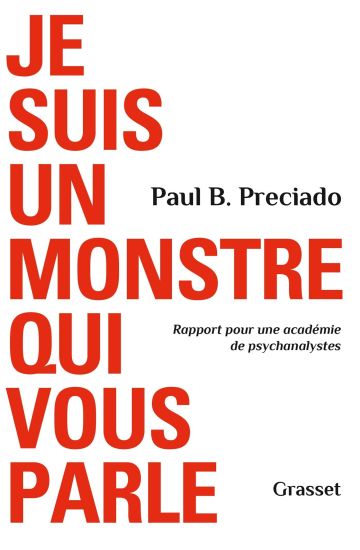
Can the Monster Speak?: Report to an Academy of Psychoanalysts
Paul Preciado's controversial 2019 lecture at the cole de la Cause Freudienne annual conference, published in a definitive translation for the first time. In November 2019, Paul Preciado was invited to speak in front of 3,500 psychoanalysts at the cole de la Cause Freudienne's annual conference in Paris. Standing in front of the profession for whom he is a "mentally ill person" suffering from "gender dysphoria," Preciado draws inspiration in his lecture from Kafka's "Report to an Academy," in which a monkey tells an assembly of scientists that human subjectivity is a cage comparable to one made of metal bars. Speaking from his own "mutant" cage, Preciado does not so much criticize the homophobia and transphobia of the founders of psychoanalysis as demonstrate the discipline's complicity with the ideology of sexual difference dating back to the colonial era--an ideology which is today rendered obsolete by technological advances allowing us to alter our bodies and procreate differently. Preciado calls for a radical transformation of psychological and psychoanalytic discourse and practices, arguing for a new epistemology capable of allowing for a multiplicity of living bodies without reducing the body to its sole heterosexual reproductive capability, and without legitimizing hetero-patriarchal and colonial violence. Causing a veritable outcry among the assembly, Preciado was heckled and booed and unable to finish. The lecture, filmed on smartphones, was published online, where fragments were transcribed, translated, and published with no regard for exactitude. With this volume, Can the Monster Speak? is published in a definitive translation for the first time.
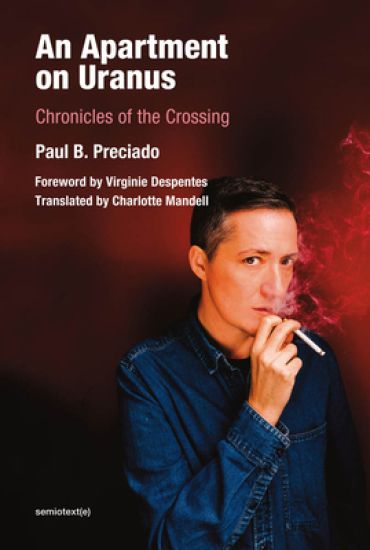
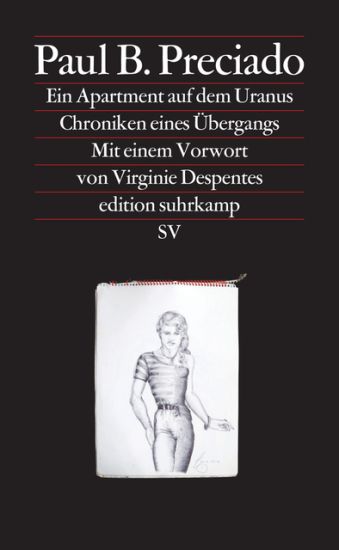
An Apartment on Uranus - Chronicles of the Crossing
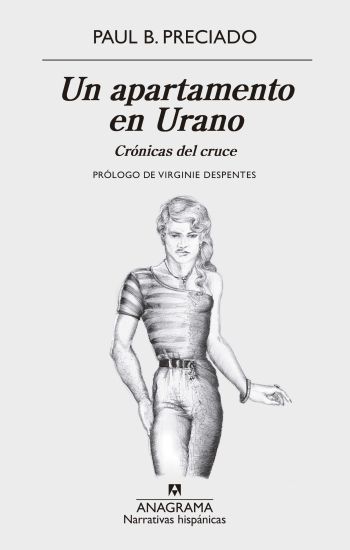
A "dissident of the gender-sex binary system" reflects on gender transitioning and political and cultural transitions in technoscientific capitalism.Uranus, the frozen giant, is the coldest planet in the solar system as well as a deity in Greek mythology. It is also the inspiration for uranism, a concept coined by the writer Karl Heinrich Ulrich in 1864 to define the "third sex" and the rights of those who "love differently." Following Ulrich, Paul B. Preciado dreams of an apartment on Uranus where he might live beyond existing power, gender and racial strictures invented by modernity. "My trans condition is a new form of uranism," he writes. "I am not a man. I am not a woman. I am not heterosexual. I am not homosexual. I am not bisexual. I am a dissident of the gender-sex binary system. I am the multiplicity of the cosmos trapped in a binary political and epistemological system, shouting in front of you. I am a uranist confined inside the limits of technoscientific capitalism."This book recounts Preciado's transformation from Beatriz into Paul B., but it is not only an account of gender transitioning. Preciado also considers political, cultural, and sexual transition, reflecting on issues that range from the rise of neo-fascism in Europe to the technological appropriation of the uterus, from the harassment of trans children to the role museums might play in the cultural revolution to come. An Apartment on Uranus is a bold, transgressive, and necessary book.
An Apartment on Uranus

An Apartment on Uranus

Paul B. Preciado

Fitzcarraldo Editions
2020
nidottu
Uranus is the coldest planet in the solar system, a frozen giant named after a Greek deity. It is also the inspiration for Uranism, a concept coined by the writer Karl Heinrich Ulrichs in 1864 to define the 'third sex' and the rights of those who 'love differently'. Following in Ulrichs's footsteps, Paul B. Preciado dreams of an apartment on Uranus where he can live, free of the modern power taxonomies of race, gender, class or disability. In this bold and transgressive book, Preciado recounts his transformation from Beatriz into Paul B., and examines other processes of political, cultural and sexual transition, reflecting on socio-political issues including the rise of neo-fascism in Europe, the criminalization of migrants, the harassment of trans children, the technological appropriation of the uterus, and the role artists and museums might play in the writing of a new social contract. A stepchild of Michel Foucault and Judith Butler, Preciado argues, with courage and conviction, for a planetary revolution of all living beings against the norm.
Pornotopia

Pornotopia

Paul B. Preciado

Zone Books
2019
pokkari
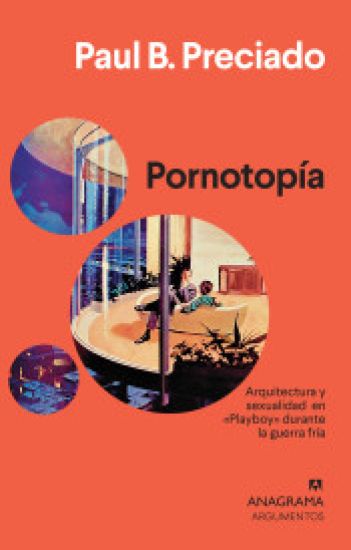
Design objects, bachelor pads, and multimedia rotating beds as expressions of the relationships among architecture, gender, and sexuality.Published for the first time in 1953, Playboy became not only the first pornographic popular magazine in America, but also came to embody an entirely new lifestyle that took place in a series of utopian multimedia spaces, from the fictional Playboy's Penthouse of 1956 to the Playboy Mansion of 1959 and the Playboy Clubs of the 1960s. At the same time, the invention of the contraceptive pill offered access to a biochemical technique able to separate (hetero)sexuality and reproduction, troubling the traditional relationships between gender, sexuality, power, and space. In Pornotopia, Paul Preciado examines popular culture and pornographic spaces as sites of architectural production. Combining historical perspectives with insights from critical theory, gender studies, queer theory, porn studies, and the history of technology, and drawing from a range of primary transdisciplinary sourcestreatises on sexuality, medical and pharmaceutical handbooks, architecture journals, erotic magazines, building manuals, and novels-Preciado traces the strategic relationships among architecture, gender, and sexuality through popular sites related to the production and consumption of pornography: design objects, bachelor pads, and multimedia rotating beds. Largely relegated to the margins of traditional histories of architecture, these sites are not mere spaces but a series of overlapping systems of representation. They are understood here not as inherently or naturally sexual, nor as perverted or queer, but rather as biopolitical techniques for governing sexual reproduction and the production of gender in modernity.
Miriam Cahn – I As Human

Miriam Cahn – I As Human

Marta Dziewanska; Kathleen Bühler; Adam Szymczyk; Éric De Chassey; Paul B. Preciado; Paul Preciado; Élisabeth Lebovici; Anna Ara; Fernando López Garcia

Museum of Modern Art in Warsaw
2019
nidottu
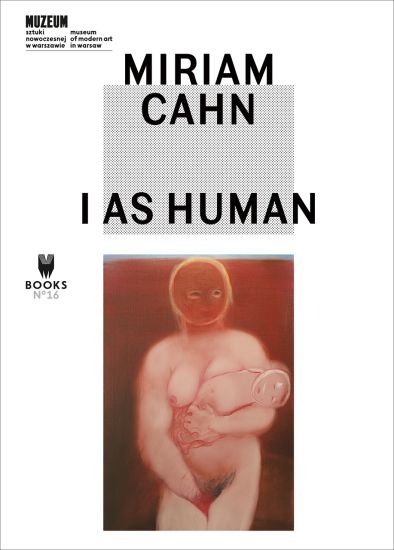
A rebel and feminist, the Switzerland-born Miriam Cahn is one of the major artists of her generation. Widely known for her drawings and paintings, she also experiments with photography, moving images, sculptures, and performance art. Cahn’s diverse body of work is disturbing and dreamlike, filled with striking human figures pulsing with an energy both passionate and violent. These pieces, along with Cahn’s reflections on artistic expression, have always responded to her contemporary moment. In the 1980s, her work addressed the feminist, peace, and environmental movements, while the work she produced in the 1990s and early 2000s contains allusions to the war in the former Yugoslavia, the conflict in the Middle East, and the September 11 terrorist attacks. Her recent production tackles ever-evolving political conflicts, engaging with the European refugee crisis and the “#metoo” movement.Miriam Cahn: I as Human examines different facets of the artist’s prolific and troubling oeuvre, featuring contributions from art historians, critics, and philosophers including Kathleen Bühler, Paul B. Preciado, Elisabeth Lebovici, Adam Szymczyk, Natalia Sielewicz and .
Countersexual Manifesto

Countersexual Manifesto

Paul B. Preciado; Jack Halberstam

Columbia University Press
2018
pokkari
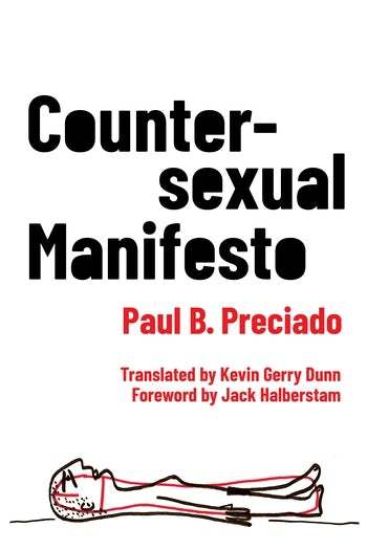
Countersexual Manifesto is an outrageous yet rigorous work of trans theory, a performative literary text, and an insistent call to action. Seeking to overthrow all constraints on what can be done with and to the body, Paul B. Preciado offers a provocative challenge to even the most radical claims about gender, sexuality, and desire.Preciado lays out mock constitutional principles for a countersexual revolution that will recognize genitalia as technological objects and offers step-by-step illustrated instructions for dismantling the heterocentric social contract. He calls theorists such as Derrida, Foucault, Butler, and Haraway to task for not going nearly far enough in their attempts to deconstruct the naturalization of normative identities and behaviors. Preciado’s claim that the dildo precedes the penis—that artifice, not nature, comes first in the history of sexuality—forms the basis of his demand for new practices of sexual emancipation. He calls for a world of sexual plasticity and fabrication, of bio-printers and “dildonics,” and he invokes countersexuality’s roots in the history of sex toys, pornography, and drag in order to rupture the supposedly biological foundations of the heterocentric regime. His claims are extreme, but supported through meticulous readings of philosophy and theory, as well as popular culture. The Manifesto is now available in English translation for its twentieth anniversary, with a new introduction by Preciado. Countersexual Manifesto will disrupt feminism and queer theory and scandalize us all with its hyperbolic but deadly serious defiance of everything we’ve been told about sex.
Countersexual Manifesto

Countersexual Manifesto

Paul B. Preciado; Jack Halberstam

Columbia University Press
2018
sidottu
Countersexual Manifesto is an outrageous yet rigorous work of trans theory, a performative literary text, and an insistent call to action. Seeking to overthrow all constraints on what can be done with and to the body, Paul B. Preciado offers a provocative challenge to even the most radical claims about gender, sexuality, and desire.Preciado lays out mock constitutional principles for a countersexual revolution that will recognize genitalia as technological objects and offers step-by-step illustrated instructions for dismantling the heterocentric social contract. He calls theorists such as Derrida, Foucault, Butler, and Haraway to task for not going nearly far enough in their attempts to deconstruct the naturalization of normative identities and behaviors. Preciado’s claim that the dildo precedes the penis—that artifice, not nature, comes first in the history of sexuality—forms the basis of his demand for new practices of sexual emancipation. He calls for a world of sexual plasticity and fabrication, of bio-printers and “dildonics,” and he invokes countersexuality’s roots in the history of sex toys, pornography, and drag in order to rupture the supposedly biological foundations of the heterocentric regime. His claims are extreme, but supported through meticulous readings of philosophy and theory, as well as popular culture. The Manifesto is now available in English translation for its twentieth anniversary, with a new introduction by Preciado. Countersexual Manifesto will disrupt feminism and queer theory and scandalize us all with its hyperbolic but deadly serious defiance of everything we’ve been told about sex.