Kirjojen hintavertailu. Mukana 12 390 323 kirjaa ja 12 kauppaa.

Kirjailija

Paul Barber

Kirjat ja teokset yhdessä paikassa: 20 kirjaa, julkaisuja vuosilta 2005-2024, suosituimpien joukossa Mental Health Law in England and Wales. Vertaile teosten hintoja ja tarkista saatavuus suomalaisista kirjakaupoista.

20 kirjaa

Kirjojen julkaisuhaarukka 2005-2024.

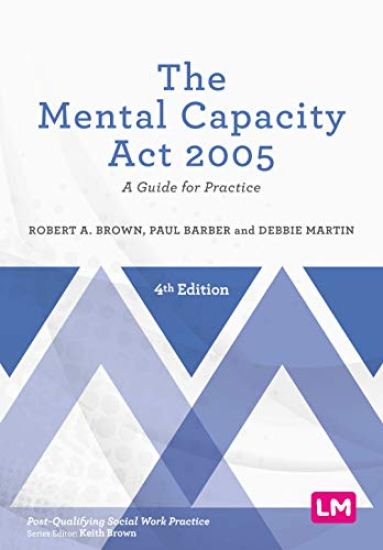
The Mental Capacity Act 2005

The Mental Capacity Act 2005

Robert Brown; Debbie Martin; Neil Allen; Paul Barber

SAGE PUBLICATIONS LTD
2024
nidottu
The Mental Capacity Act 2005 and its accompanying Codes of Practice continue to have a huge impact on mental health professionals working with some of the most vulnerable people throughout England and Wales. Whether you are a Social Worker, Best Interest Assessor, Mental Health Nurse, Doctor, Psychiatrist or an Approved Mental Health Professional (AMHP), understanding the Mental Capacity Act and its implications for practice is essential and this indispensable guide will help you do just that. The Mental Capacity Act 2005 is designed to protect and empower individuals who may lack the mental capacity to make their own decisions about their care and treatment and this bestselling book will provide invaluable support to busy practitioners needing to draw on the Act in the following ways: - Sets out the full text of the main body of the Act for quick reference - Contains practical advice and checklists for working with the Act and the main principles and Codes of Practice - Shows how the Mental Health Act and Mental Capacity Act interact so that statutory requirements can be put into practice.
The Mental Capacity Act 2005

The Mental Capacity Act 2005

Robert Brown; Debbie Martin; Neil Allen; Paul Barber

SAGE PUBLICATIONS LTD
2024
sidottu
The Mental Capacity Act 2005 and its accompanying Codes of Practice continue to have a huge impact on mental health professionals working with some of the most vulnerable people throughout England and Wales. Whether you are a Social Worker, Best Interest Assessor, Mental Health Nurse, Doctor, Psychiatrist or an Approved Mental Health Professional (AMHP), understanding the Mental Capacity Act and its implications for practice is essential and this indispensable guide will help you do just that. The Mental Capacity Act 2005 is designed to protect and empower individuals who may lack the mental capacity to make their own decisions about their care and treatment and this bestselling book will provide invaluable support to busy practitioners needing to draw on the Act in the following ways: - Sets out the full text of the main body of the Act for quick reference - Contains practical advice and checklists for working with the Act and the main principles and Codes of Practice - Shows how the Mental Health Act and Mental Capacity Act interact so that statutory requirements can be put into practice.
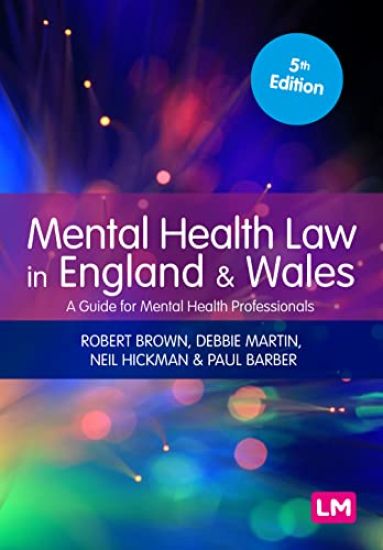
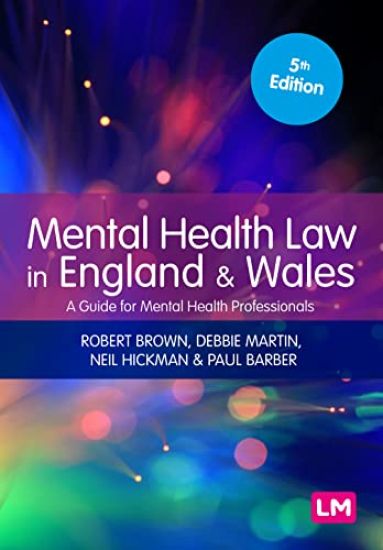
Mental Health Law in England and Wales

Mental Health Law in England and Wales

Robert Brown; Debbie Martin; Neil Hickman; Paul Barber

SAGE PUBLICATIONS LTD
2023
sidottu
Mental Health Law in England and Wales is a comprehensive guide to the Mental Health Act 1983 for any mental health professional - from social workers, psychologists and occupational therapists, to doctors and nurses. The book aims to simplify mental health law so that it’s accessible to busy professionals at all stages of practice as well as those affected by mental health law. Key chapters include details on who operates the Act, who is affected by it, how the law governs issues of capacity and consent to treatment, how to appeal against compulsion, and the role of the nearest relative. There are also important chapters on advocacy, children and human rights issues, as well as extensive appendices which provide access to the 1983 Act itself, important rules and regulations, and a summary of key cases. This Fifth Edition includes: - Practical advice and checklists for working with the Act. - An updated text of the Mental Health Act and relevant Rules and Regulations. - Recent case law including the Devon judgment on Mental Health Act assessments. - A summary of the Human Rights Act 1998. - Guidance on the interface between the Mental Health Act and the Mental Capacity Act. - Recent case law concerning the ‘relevant information’ when assessing for incapacity.
Mental Health Law in England and Wales

Mental Health Law in England and Wales

Robert Brown; Debbie Martin; Neil Hickman; Paul Barber

SAGE PUBLICATIONS LTD
2023
nidottu
Mental Health Law in England and Wales is a comprehensive guide to the Mental Health Act 1983 for any mental health professional - from social workers, psychologists and occupational therapists, to doctors and nurses. The book aims to simplify mental health law so that it’s accessible to busy professionals at all stages of practice as well as those affected by mental health law. Key chapters include details on who operates the Act, who is affected by it, how the law governs issues of capacity and consent to treatment, how to appeal against compulsion, and the role of the nearest relative. There are also important chapters on advocacy, children and human rights issues, as well as extensive appendices which provide access to the 1983 Act itself, important rules and regulations, and a summary of key cases. This Fifth Edition includes: - Practical advice and checklists for working with the Act. - An updated text of the Mental Health Act and relevant Rules and Regulations. - Recent case law including the Devon judgment on Mental Health Act assessments. - A summary of the Human Rights Act 1998. - Guidance on the interface between the Mental Health Act and the Mental Capacity Act. - Recent case law concerning the ‘relevant information’ when assessing for incapacity.
Essentials of Pharmacology for Nurses, 4e

Essentials of Pharmacology for Nurses, 4e

Paul Barber; Deborah Robertson

Open University Press
2020
nidottu
This ideal starter text for student nurses in pharmacology is now into its 4th edition. It makes pharmacology less intimidating by focusing on the knowledge needed at pre-registration level in order to safely and competently practice as a newly qualified nurse.Praised for its helpful layout and jargon-free language, this updated edition introduces pharmacology in a friendly, informative way, without assuming previous knowledge or a level of confidence in numeracy. This new edition has been carefully expanded to include new chapters on cardiovascular pharmacology and chemotherapy in cancer nursing. There are more details on drugs used in chronic and long-term conditions applied to nursing competencies and standards. It incorporates the new 2018 NMC standards for nursing education and links to practice guidelines. Additional case scenarios have been added spanning all areas of practice and include adult, elderly care, child, mental health and learning disability applications. This allows nurses to apply their knowledge to a range of different people with varying and complex needs to enhance their application to practice.The book contains:• 120 calculations and 130 multiple choice questions to assist you in assessing your learning as you work through each chapter• Clinical tips boxes linking pharmacology to nursing practice• 50 person centred case scenarios across a range of practice settings• References to key standards and guidelines"The book also emphasises the application of the principles of pharmacology to all areas of practice and includes; drug action, drug interactions, side effects and adverse reactions. It is useful for all pre-registration students and those on post qualifying or continuing professional development courses where pharmacology is a component.Overall, this book is an excellent resource for healthcare students that will support their learning throughout their training and beyond. It covers fundamental concepts of how the major classes of medications exert their therapeutic effect, but also how side effects and adverse reactions can occur. Chapters on legal aspects of medication administration and drug calculations enhance this usefulness of this book – all of which are supported by example questions, calculations and clinical ‘tips’. This book has been fully updated to reflect the 2018 NMC standards and as such provides a one-stop shop for any students studying safe administration of medications."Dr Andy Powell, Physiology Lead for Nursing Birmingham City University"The outlay of the chapters is easily navigated and the level of the knowledge that the book starts at is at a basic level enough for any student nurse from year 1-3 to start with and builds in complexity. They are in lovely bite-size chunks that are easy to read and easily understood. The 10 MCQ’s at the end of a chapter are a very useful method of chapter consolidation and the case studies further reinforce learning."Georgina Cox, Senior Lecturer in Adult Health Middlesex UniversityDeborah Robertson is a lecturer in nursing at the University of Salford. She teaches on the pre-registration nursing curriculum as well as being involved in post qualifying and post graduate education. She is also author of Essentials of Medicines Management for Mental Health Nurses.Paul Barber was a Senior Lecturer at the University of Chester. He is co-author of Further Essentials of Pharmacology for Nurses (2012) and contributor and editor of Medicines Management for Nurses: Case Book (2013), all Open University Press. He is now retired.
Mental Health Law in England and Wales

Mental Health Law in England and Wales

Paul Barber; Robert Brown; Debbie Martin

Learning Matters Ltd
2019
sidottu
This complete and comprehensive guide to the Mental Health Act 1983 for any mental health professional – from social workers, psychologists and occupational therapists, to doctors and nurses. The book aims to simplify mental health law so that it’s accessible to busy professionals at all stages of practice as well as those affected by mental health law. Key chapters include details on who operates the Act, who is affected by it, how the law governs issues of capacity and consent to treatment, how to appeal against compulsion, and the role of the nearest relative. There are also important chapters on advocacy, children and human rights issues, as well as an extensive appendices which provide access to the 1983 Act itself, important rules and regulations, and a summary of key cases. This fourth edition includes: - Practical advice and checklists for working the Act - Information on detention of patients in hospital under The Mental Health Act - The impact of the Policing and Crime Act 2017 on periods of detention and places of safety - Additional case law detailing patient discharges and Deprivation of Liberty Safeguards. - The Supreme Court 2019 judgement in the case of D (A Child)
Applied Cognitive Psychology

Applied Cognitive Psychology

Paul Barber

Routledge
2017
nidottu
Originally published in 1988 Applied Cognitive Psychology draws on the psychology of perception, attention, and cognition to give an understanding of some everyday activities and skills. Paul Barber focuses on processes involved in selecting simple actions, face perception, reading, and tasks requiring attention skills. He uses practical problems as starting points for discussion, including mental overloading in air-traffic controllers, cooker-hob design, the use of Photokit/identikit, and reading from computer screens. The book also examines the strengths and limitations of the basic analytical approach of ‘information-processing’ in psychology.As well as providing a textbook for students of psychology and ergonomics, Applied Cognitive Psychology will still be welcomed by those from other disciplines – management studies, education, sports science – who need to understand skilled behaviour in applied settings.
Applied Cognitive Psychology

Applied Cognitive Psychology

Paul Barber

Routledge
2015
sidottu
Originally published in 1988 Applied Cognitive Psychology draws on the psychology of perception, attention, and cognition to give an understanding of some everyday activities and skills. Paul Barber focuses on processes involved in selecting simple actions, face perception, reading, and tasks requiring attention skills. He uses practical problems as starting points for discussion, including mental overloading in air-traffic controllers, cooker-hob design, the use of Photokit/identikit, and reading from computer screens. The book also examines the strengths and limitations of the basic analytical approach of ‘information-processing’ in psychology.As well as providing a textbook for students of psychology and ergonomics, Applied Cognitive Psychology will still be welcomed by those from other disciplines – management studies, education, sports science – who need to understand skilled behaviour in applied settings.
Medicine Management for Nurses: Case Book

Medicine Management for Nurses: Case Book

Paul Barber

Open University Press
2013
nidottu
Medicine management is an important and demanding aspect of nursing practice. It requires both clinical knowledge and the use of professional judgement. This accessible book is designed to help both practising and student nurses prepare to deal with the challenges of medicine management. It covers the principles and skills involved in a range of common medicine management scenarios and will help nursing students integrate their knowledge of physiology, pathophysiology, pharmacology and nursing care. This handy book:Is based on 21 practical case studies, which help you learn about effective medicine management and test your understanding of essential drug groups. Helps you gain confidence in your knowledge of pharmacology Highlights the nurse’s role in identifying the therapeutic and adverse effects of medicines on a patientPart of the Case Book series, Medicine Management for Nurses Case Book offers a unique way of relating theory to practice. The cases are ideal for preparing for exams, tests and working in practice, as each one includes self-test questions and answers. Whether you are preparing to qualify or studying medicine management after qualification, this case book is the ideal practical tool for you.Contributors: Diane Blundell, Abe Ginourie, Joy Parkes, Ruth Sadik, Pat Talbot, Janine Upton, Traci Whitfield, Christine Whitney-Cooper, Debbie Wyatt."The book offers a unique and engaging approach to an important subject that most students find daunting. Realistic case scenarios are used as a catalyst to introduce information and concepts that underpin practice. The presentation style supports the active participation of the student with the inclusion of questions at the beginning of each topic offering a platform to explore key areas whilst referring to the scenario. I highly recommend it to pre-registered student nurses."Kris Paget, Senior Lecturer, Faculty of Health, Social Work and Education, Kingston University, UK"This collection of case studies provides a unique and user friendly guide to commonly seen pharmacological therapies and treatment options across the lifespan. The case studies have been carefully selected to provide the diverse care needs of complex disease processes in a person centred way. Each case study is relevant to the role of the Nurse and will provide essential and core information whether nurses are working in either a medical or surgical clinical setting. Government Health Care Directives provide the essential clinical evidence based theory necessary to promote medicine adherence and each chapter provides the relevant pathophysiology which is essential to underpin the safe administration of medication therapies.The role of the nurse in medicine management with respect to patient education and the professional responsibilities of monitoring and evaluating complex medication therapies is presented in each case study. This provides an holistic approach to the care of patients receiving complex medication therapies."Barry Ricketts, Senior Lecturer, Adult Nursing, Oxford Brookes University, UK
Facilitating Change in Groups and Teams

Facilitating Change in Groups and Teams

Paul Barber

Libri Publishing
2012
nidottu
Based on extensive practitioner research, this book focuses on facilitating change for all who work in teams and within organizations. These pages present a model of facilitation that addresses how to increase awareness of physical and sensory, social and cultural, emotional and biographical, projective and imagined, and transpersonal and intuitive influences. Some of the topics include generating individual and group understanding, liberating and refining new experiential knowledge, raising personal and social awareness, and educating and empowering all involved. Professionals, especially organizational consultants and coaches, will learn how to facilitate team-building and community change in organizations.
Further Essentials of Pharmacology for Nurses

Further Essentials of Pharmacology for Nurses

Paul Barber; Joy Parkes; Diane Blundell

Open University Press
2012
nidottu
"The book is an easy to follow introductory text ... It uses uncomplicated language and case studies and questions that provide students with concrete examples, relating to real life situations, upon which they can develop their pharmacological knowledge and understanding. Clinical tips are clear and illustrate the key points that should be considered by the nurse in the real care giving environment, including acknowledgement of the increasing usage of complementary medicine."David Armstrong, Senior Lecturer, Northumbria University, UK"This new book explains specific common disease processes including anatomy and physiology as well as the medications/drugs which may be used… It will be essential reading for pre-registration nursing students who want to build on their existing knowledge."Margaret Dilger, Lecturer, University of Salford, UK This user-friendly guide follows on from the bestselling book Essentials of Pharmacology for Nurses, and is written for pre-registration nursing students looking for an accessible guide to drug groups that goes beyond the essentials. It is simple and accessible and examines the next logical set of drug groups that nurses need to know. These include:Cardiovascular drugsGastrointestinal drugsDrugs used in cancerDrugs used in nausea and vomitingAnaesthesia Fluids Topical medicines Written by authors with extensive academic and practice experience, this book will build on your existing knowledge of anatomy and physiology to help give a holistic understanding of body systems. It features: Multiple choice questions in every chapter and calculation tests Unique sections on ‘Complementary Therapies and Pharmacology’ and ‘Medicines Used on the Skin’Clinical tip boxes linking pharmacology to the role of the nurse or midwife Patient scenarios from a range of different clinical settings
Vampires, Burial, and Death

Vampires, Burial, and Death

Paul Barber

Yale University Press
2010
pokkari
In this engrossing book, Paul Barber surveys centuries of folklore about vampires and offers the first scientific explanation for the origins of the vampire legends. From the tale of a sixteenth-century shoemaker from Breslau whose ghost terrorized everyone in the city, to the testimony of a doctor who presided over the exhumation and dissection of a graveyard full of Serbian vampires, his book is fascinating reading. “This study’s comprehensiveness and the author’s bone-dry wit make this compelling reading, not just for folklorists, but for anyone interested in a time when the dead wouldn’t stay dead.”—Booklist “Barber’s inquiry into vampires, fact and fiction, is a gem in the literature of debunking… [and] a convincing exercise in mental archaeology.”—Roy Porter, Nature “A splendid book about the undead, illuminated by the findings of morbid anatomy…. The main value of this most interesting book is to remind us how far we have come in our ability to explain the world and how this has released us from at least some terrors.”—Anthony Daniels, Spectator “This book is fascinating reading for physicians and anthropologists as well as anyone interested in folklore.”—R. Ted Steinbock, M.D., Journal of the American Medical Association “A fascinating and pain-staking (sorry!) thesis, which welds together folklore, epidemic panic, communal stupidity, and forensic and funereal science.”—Huw Knight, New Scientist
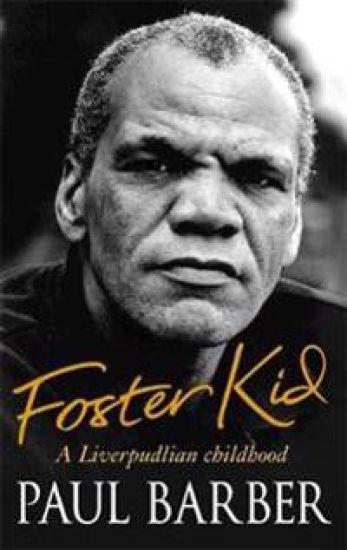
Foster Kid

Foster Kid

Paul Barber

Sphere
2008
pokkari
After the death of his mother, Paul and his brothers and sister spent the rest of their childhoods in a succession of children's and foster homes where they found themselves at the mercy of adults more interested in their own welfare than providing a loving home.Paul left care at the age of sixteen, and three years later landed his first acting role, by accident, in the musical 'Hair', which put him on the path to London and a successful career in show business.Foster Kid is an extraordinarily frank, funny and heartfelt account of a young boy's life.