Kirjojen hintavertailu. Mukana 12 390 323 kirjaa ja 12 kauppaa.
Kirjailija
Paul Bowles
Kirjat ja teokset yhdessä paikassa: 32 kirjaa, julkaisuja vuosilta 1995-2024, suosituimpien joukossa The Sheltering Sky. Vertaile teosten hintoja ja tarkista saatavuus suomalaisista kirjakaupoista.
'The Sheltering Sky is a book about people on the edge of an alien space; somewhere where, curiously, they are never alone' Michael Hoffman.Port and Kit Moresbury, a sophisticated American couple, are finding it more than a little difficult to live with each other. Endeavouring to escape this predicament, they set off for North Africa intending to travel through Algeria - uncertain of exactly where they are heading, but determined to leave the modern world behind. The results of this casually taken decision are both tragic and compelling.
"The Sheltering Sky is one of the most original, even visionary, works of fiction to appear in the twentieth century." --Tobias Wolff"It stands head and shoulders above most other novels published in English since World War II." --New Republic In this classic work of psychological terror, Paul Bowles examines the ways in which Americans apprehend other cultures--and the ways in which their incomprehension destroys them. The story of three American travelers adrift in the cities and deserts of North Africa after World War II, The Sheltering Sky is at once merciless and heartbreaking in its compassion. It etches the limits of human reason and intelligence--perhaps even the limits of human life --when they touch the unfathomable emptiness and impassive cruelty of the dessert.
Globalization and money – two concepts inextricably linked. In many ways the speed with which financial resources traverse the globe, the opportunities which this provides for the efficient allocation of resources, the possibilities which this creates for financial crises and traders who act as agents removed from the concerns of national citizens have come to symbolize the phenomenon, hopes and fears of ‘globalization’.However, inextricably linked they may be, but well understood they are not. In the case of national currencies, a wide variety of predictions and analyses can be found. For some, national currencies represent barriers to a seamless global economy. Others argue that national currencies will disappear due to the power of international financial markets which will force national governments to adopt more credible currencies and abandon their own. In contrast, others see imperialism or regionalism as the main challenges.Paul Bowles provides an innovative and systematic analysis of the implications of theories of globalization for national currencies. He critically examines whether, as a result, the world is heading for fewer currencies. He argues that the main ‘force of globalization’ which is endangering national currencies is that of globalization as ‘neoliberal globalism’. However there is no single neoliberal position on money and so the ‘contingent’ nature of neoliberalism explains why this particular force of globalization operates more strongly in some countries than others. This is demonstrated in case studies of four systemically significant currencies, namely, those of Australia, Canada, Mexico and Norway. National Currencies and Globalization will be of interest to researchers and students of International Political Economy, Politics, Economics and Finance.
Globalization and money – two concepts inextricably linked. In many ways the speed with which financial resources traverse the globe, the opportunities which this provides for the efficient allocation of resources, the possibilities which this creates for financial crises and traders who act as agents removed from the concerns of national citizens have come to symbolize the phenomenon, hopes and fears of ‘globalization’.However, inextricably linked they may be, but well understood they are not. In the case of national currencies, a wide variety of predictions and analyses can be found. For some, national currencies represent barriers to a seamless global economy. Others argue that national currencies will disappear due to the power of international financial markets which will force national governments to adopt more credible currencies and abandon their own. In contrast, others see imperialism or regionalism as the main challenges.Paul Bowles provides an innovative and systematic analysis of the implications of theories of globalization for national currencies. He critically examines whether, as a result, the world is heading for fewer currencies. He argues that the main ‘force of globalization’ which is endangering national currencies is that of globalization as ‘neoliberal globalism’. However there is no single neoliberal position on money and so the ‘contingent’ nature of neoliberalism explains why this particular force of globalization operates more strongly in some countries than others. This is demonstrated in case studies of four systemically significant currencies, namely, those of Australia, Canada, Mexico and Norway. National Currencies and Globalization will be of interest to researchers and students of International Political Economy, Politics, Economics and Finance.
The short fiction of American literary cult figure Paul Bowles is marked by a unique, delicately spare style, and a dark, rich, exotic mood, by turns chilling, ironic, and wry possessing a symmetry between beauty and terror that is haunting and ultimately moral. In "Pastor Dowe at Tecate," a Protestant missionary is sent to a faraway place where his God has no power. In "Call at Corazon," an American husband abandons his alcoholic wife on their honeymoon in a South American jungle. In "Allal," a boy's drug-induced metamorphosis into a deadly serpent leads to his violent death. Here also are some of Bowles's most famous works, including "The Delicate Prey," a grimly satisfying tale of vengeance, and "A Distant Episode," which Tennessee Williams proclaimed "a masterpiece.""
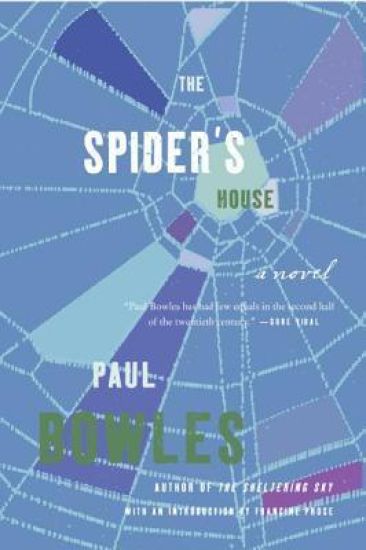
Originally published in 1955, Paul Bowles's remarkable novel set in Fez, Morocco, during the last days of the French colonial empire, is an expansive piece of writing--vintage Bowles"With its atmosphere of sinister tension, its scenes of nationalist conspiracy and French police action, of escape and pursuit in the Arab quarter, The Spider's House reads for stretches like a first-class political thriller." -New York TimesThe dilemma of the outsider in an alien society, and the gap in understanding between cultures, recurrent themes of Paul Bowles's writings, are dramatized with brutal honesty in this novel set in Fez, Morocco, during that country's 1954 nationalist uprising. Totally relevant to today's political situation in the Middle East and elsewhere, richly descriptive of its setting, and uncompromising in its characterizations, The Spider's House is perhaps Bowles's best, most beautifully subtle novel.
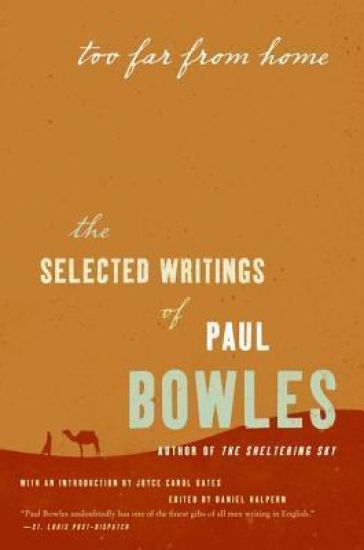
A striking collection of stories, poems, letters, travel essays, journal entries, excerpts from three novels, and more--including the complete text of The Sheltering Sky--from one of the most revered authors of the twentieth century
Driven by famine from their home in the Rif, Mohamed's family walks to Tangiers in search of a better life. But things are no better there. Eight of his siblings die of malnutrition and neglect, and one is killed by his father in a fit of rage. This is a memoir of a young Moroccan boy's coming of age in a time of extreme poverty and degradation.
Exemplary storles that reveal the blzarre, the dlsturblng, the perllous, and the wlse ln other clvlllzatlons -- from one of Amerlca's most lmportant wrlters of the twentleth century.
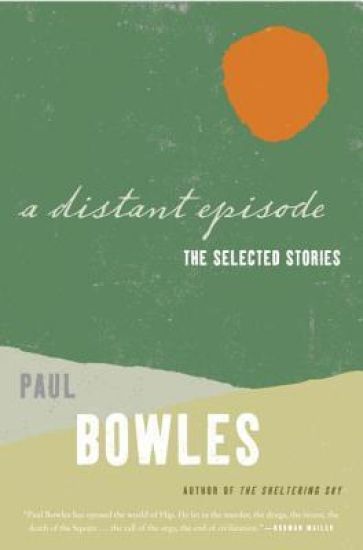
A Distant Episode contains the best of Paul Bowles's short stories, as selected by the author. An American cult figure, Bowles has fascinated such disparate talents as Norman Mailer, Allen Ginsberg, Truman Capote, William S. Burroughs, Gore Vidal, and Jay McInerney.
The Sheltering Sky is a landmark of twentieth-century literature. In this intensely fascinating story, Paul Bowles examines the ways in which Americans' incomprehension of alien cultures leads to the ultimate destruction of those cultures.A story about three American travelers adrift in the cities and deserts of North Africa after World War II, The Sheltering Sky explores the limits of humanity when it touches the unfathomable emptiness and impassive cruelty of the desert.This P.S. edition features an extra 16 pages of insights into the book, including author interviews, recommended reading, and more.
Let It Come Down, with its title from Macbeth, tells the story of Dyar, a New York bank clerk who throws up his secure, humdrum job to find a reality abroad with which to identify himself, and his macabre experiences in the inferno of Tangiers as he gives in to his darkest impulses. Rich in descriptions of the corruption and decadence of the International Zone in the last days before Moroccan independence, Bowles's second novel is an alternately comic and horrific account of a descent into nihilism.
This extraordinary collection of correspondence by Paul Bowles spans eight decades and provides an evolving portrait of an artist renowned for his privacy. From his earliest extant letter, written at the age of four, to his precocious effusions to Aaron Copeland and to Gertrude Stein; from his meditations on mescaline as relayed to Ned Rorem, to his intensely moving letters to Jane Bowles during her illness, In Touch fills in the lacunae left by previous biographers and offers a rare look at the many aspects of Bowles's brilliant career--as composer, novelist, short-story master, travel writer, translator, ethnographer, and literary critic. Here is Bowles on the genesis of his first novel, The Sheltering Sky; on his distaste for Western melodies and his dogged attempts to record indigenous Moroccan music; on the Beats, Gore Vidal, Truman Capote, and Tennessee Williams; on the nature and craft of writing; on Bernardo Bertolucci, David Byrne, and Sting; on the decline of American and the challenges of living in North Africa. Gossipy, reflective, enlightening, and always entertaining, In Touch stands as an epistolary autobiography of one of the legendary writers of our time, and a unique chronicle of the twentieth-century avant-garde.
The photographs collected here represent David Katzenstein’s lifelong artistic journey as a visual chronicler of humanity. Traveling to many parts of the world, he experienced other cultures and peoples firsthand. The photographs presented here were drawn from a much larger body of work, with the hope of creating a journey through journeys for the viewer.Katzenstein’s travels took him to thirty-seven countries over forty-nine years. What started as a way to combine his two passions—photography and travel—has grown into a visual chronicle of humanity. Steeped in the tradition of documentary photography, Katzenstein imbues his work with immediacy, emotional engagement, and a deep respect for his subjects. He takes the viewer with him on his journeys, sharing public and private moments first-hand.
Exploring the life of the world-shaping system of capitalism and the writings of leading thinkers, this book gives an account of recent developments of capitalism, including the impact of the global Climate Crisis, questions around democracy and capitalism, and the impact of COVID-19.Capitalism stands unrivalled as the most enduring economic system of our times. Since the collapse of the Soviet bloc the world has become a new stage for capital, and yet despite this dominance capitalism is still not widely understood. In this volume Paul Bowles addresses some of the key questions around the history of capitalism;What are the central, unchanging features of capitalism? How does capitalism vary from place to place and over time?Does capitalism improve our lives?Is capitalism a system which is "natural" and "free"? Or is it unjust and unstable?What about today’s global capitalism?Will capitalism destroy or liberate us?This third edition of a classic text includes updates to all chapters with the inclusion of more global material, as well as a new chapter focussing on the future of capitalism, the clash of different capitalisms including neoliberal versus state capitalism, and whether we are seeing the end of capitalism and, if so, what post-capitalism might look like.
Exploring the life of the world-shaping system of capitalism and the writings of leading thinkers, this book gives an account of recent developments of capitalism, including the impact of the global Climate Crisis, questions around democracy and capitalism, and the impact of COVID-19.Capitalism stands unrivalled as the most enduring economic system of our times. Since the collapse of the Soviet bloc the world has become a new stage for capital, and yet despite this dominance capitalism is still not widely understood. In this volume Paul Bowles addresses some of the key questions around the history of capitalism;What are the central, unchanging features of capitalism? How does capitalism vary from place to place and over time?Does capitalism improve our lives?Is capitalism a system which is "natural" and "free"? Or is it unjust and unstable?What about today’s global capitalism?Will capitalism destroy or liberate us?This third edition of a classic text includes updates to all chapters with the inclusion of more global material, as well as a new chapter focussing on the future of capitalism, the clash of different capitalisms including neoliberal versus state capitalism, and whether we are seeing the end of capitalism and, if so, what post-capitalism might look like.
THIS PATHBREAKING Work analyzes the evolution of China's financial reforms since 1979. China's reformers have stressed the construction of a more diverse, flexible, and competitive financial system as a crucial element of China's economic reform program. The authors assess the theory and practice of financial reform in light of China's specific characteristics as a large, developing country that still claims to be pursuing the goal of establishing a new form of "socialist" market economy. The authors utilize two approaches. First, they place the overall design and trajectory of. financial reform since 1979 within a broad comparative framework of alternative strategies of financial reform and financial systems. Second, they use a political economy perspective to explore the complex interactions among the political and economic actors— individual, group, or institutional—that affect reform outcomes. Integrating these two approaches, the authors conclude by assessing future directions for feasible and desirable financial reform in China.
THIS PATHBREAKING Work analyzes the evolution of China's financial reforms since 1979. China's reformers have stressed the construction of a more diverse, flexible, and competitive financial system as a crucial element of China's economic reform program. The authors assess the theory and practice of financial reform in light of China's specific characteristics as a large, developing country that still claims to be pursuing the goal of establishing a new form of "socialist" market economy. The authors utilize two approaches. First, they place the overall design and trajectory of. financial reform since 1979 within a broad comparative framework of alternative strategies of financial reform and financial systems. Second, they use a political economy perspective to explore the complex interactions among the political and economic actors— individual, group, or institutional—that affect reform outcomes. Integrating these two approaches, the authors conclude by assessing future directions for feasible and desirable financial reform in China.
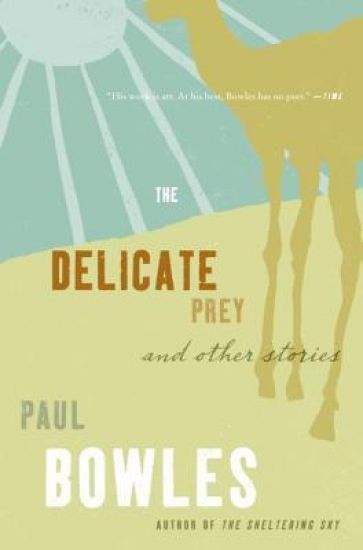
Paul Bowles's classic collection of short stories, available in a deluxe paperback edition--part of Ecco's Art of the Story series."All the tales are a variety of detective story," wrote Bowles of this, his first short story collection, "in which the reader is the detective; the mystery is in the motivation for the characters'' behavior." In such stories as "A Distant Episode" and How Many Midnights," Bowles pushes human character beyond socially defined limits and maps a transformed (often horribly transformed) reality.Bowles captures the duality of human frailty and cruelty in these seventeen taut and atmospheric tales, written between 1939 and 1949. Brutal and gorgeous, visceral yet perceptive, this timeless collection is "one of the most profound, beautifully wrought, and haunting collections in our literature. . . at once austere, witty, violent, and sensuous. . . . His language has a purity of line, a poise and authority entirely its own, capable of instantly modulating from farce to horror without a ruffle" (Tobias Wolff).
"Bowles is at his best when writing about places. He can evoke a place with a few sure strokes."--New York Times"His work is art. At his best, Bowles has no peer."--TimeTravels is a thrilling anthology of the travel writings of Paul Bowles, author of the era-defining post-war novel The Sheltering Sky. The acclaimed essays in Travel--never before collected in a single volume--span more than sixty years and range from Bowles's early days in Paris to his time spent in Ceylon, Thailand, Kenya, and his expatriate life in Morocco. Insightful, exciting, and evocative, featuring original photographs throughout, Travels is a stunning collection of rarely seen shorter works--a showcase of the literary artistry of one of the truly great American writers of the twentieth century.