Kirjojen hintavertailu. Mukana 12 595 353 kirjaa ja 12 kauppaa.

Kirjailija

Paul Callaghan

Kirjat ja teokset yhdessä paikassa: 10 kirjaa, julkaisuja vuosilta 2009-2024, suosituimpien joukossa Wool to Weta. Vertaile teosten hintoja ja tarkista saatavuus suomalaisista kirjakaupoista.

10 kirjaa

Kirjojen julkaisuhaarukka 2009-2024.

The Dreaming Path

The Dreaming Path

Paul Callaghan; Uncle Paul Gordon

HARPERCOLLINS PUBLISHERS INC
2024
nidottu
Drawing on ancient Aboriginal wisdom, a leading Indigenous Australian healer and an Elder show you how to find contentment, purpose, and healing by learning to reconnect with your story—and ultimately the universe. Dr. Paul Callaghan belongs to the land of the Worimi people who live north of Sydney along the east coast of Australia. Raised to live the western way, Paul found himself mired in deep depression—struggling to find meaning while raising a family and working as a senior education executive. Desperate to break free of his restlessness, he made a drastic change: He “went bush” and connected with his elders to “walk Country” and learn Aboriginal traditions. Twenty years later, Paul is an expert healer and spiritual guide eager to share the wisdom of his ancestors and the insights he discovered on his life journey.In this affirming, empowering, and transformative book, he teaches you about the Dreaming Path—a connection to the earth and the universe, past, present, and future that has always been there, but can be difficult to find amid the chaos of the modern world.The Dreaming Path offers tips, practices, inspiration, and motivation that can enable you to achieve a profound state of mind, body, and spirit wellness, while encouraging you to think deeply about essential life topics, including:Caring for our place and the importance of storyRelationships, sharing, and unityLove, gratitude, and humilityLearning and living your truthInspiration and resilienceBeing present and healing from the pastContentmentLeadingThe Dreaming Path reminds us that we are our stories; by learning to recognize that we are all an indelible part of something much larger, we can begin to heal ourselves and our communities.
The Dreaming Path

The Dreaming Path

Paul Callaghan; Uncle Paul Gordon

HARPERCOLLINS PUBLISHERS INC
2024
sidottu
Drawing on ancient Aboriginal wisdom, a leading Indigenous Australian healer and an Elder show you how to find contentment, purpose, and healing by learning to reconnect with your story—and ultimately the universe. Dr. Paul Callaghan belongs to the land of the Worimi people who live north of Sydney along the east coast of Australia. Raised to live the western way, Paul found himself mired in deep depression—struggling to find meaning while raising a family and working as a senior education executive. Desperate to break free of his restlessness, he made a drastic change: He “went bush” and connected with his elders to “walk Country” and learn Aboriginal traditions. Twenty years later, Paul is an expert healer and spiritual guide eager to share the wisdom of his ancestors and the insights he discovered on his life journey.In this affirming, empowering, and transformative book, he teaches you about the Dreaming Path—a connection to the earth and the universe, past, present, and future that has always been there, but can be difficult to find amid the chaos of the modern world.The Dreaming Path offers tips, practices, inspiration, and motivation that can enable you to achieve a profound state of mind, body, and spirit wellness, while encouraging you to think deeply about essential life topics, including:Caring for our place and the importance of storyRelationships, sharing, and unityLove, gratitude, and humilityLearning and living your truthInspiration and resilienceBeing present and healing from the pastContentmentLeadingThe Dreaming Path reminds us that we are our stories; by learning to recognize that we are all an indelible part of something much larger, we can begin to heal ourselves and our communities.
iridescence

iridescence

Paul Gordon; Paul Callaghan

Moshpit Publishing
2014
pokkari
This book provides models, insights and exercises on achieving improved wellbeing through traditional Aboriginal culture, philosophy and spirituality. Although the amount of information in the world is increasing at an alarming rate, ancient wisdom is more relevant to our daily lives than ever. In the 1970s, we were told of the brave new world that awaited us beyond 2000, a world of robots, technology and automation. We were sold an image of a world of increased leisure, a world with more time to connect with friends, family, nature and spirit, a world of increased wellbeing It is now 2015 and 'busy-ness' has accelerated rather than dissipated. We rush here and there without questioning why. We are seduced by 'busy-ness'. Many of us are also seduced by desire. Often the things we desire take us away from wellbeing rather than towards it. Material possessions, power, fame and fortune are often in our fantasies and dreams waiting for the day when they will become reality. In addition, we are often conditioned to jump on a treadmill of continual wants. We pursue, wish for and sometimes even pray for what we want rather than what we need. As a result, we are rarely at peace and find it hard to find the magic in every moment of every hour of every day. Rather than be in the present, our mind is somewhere else, searching for the pot of gold at the end of the rainbow rather than witnessing the magic of the rainbow itself. We ruminate on what we don't have rather than what we have. For over 60,000 years, the first nation's people of Australia have achieved wellbeing through understanding all that they need to live a good life is around them. This knowledge was shared in a holistic mind, body and spirit framework that was lived 24 hours a day, 7 days a week, unlike many of us in today's world where mind, body and spirit needs are not integrated and something to contemplate at the end of the working day, week or when we retire. Paul Callaghan has experienced much in his life. In his earlier years, he felt a sense of achievement from completing formal studies, the overwhelming joy of becoming a father and the satisfaction of career and professional success. Then, to his surprise, he felt the darkness and loneliness of depression. Joy was gone and success a word beyond comprehension and reality. On his path of recovery Paul realised, he hadn't been walking his footsteps, fulfilling his destiny or living his Dreaming Path. Paul wasn't living his story or truth. As he searched for answers to this life changing insight, he was introduced to the profound healing of Aboriginal culture, philosophy and spirituality. Paul discovered what it felt like to find himself and to believe in himself. He has also felt the relief and freedom of letting go of desire and embracing thankfulness. He has felt what it is like to connect with his Dreaming Path and live his truth. Are you living your truth, your story? If not, then iridescence provides you with models, tools, insights, exercises, reflections and 30 specific messages around key themes including your life's journey, the importance of the past, love, learning, sharing, leadership, laughter, loss, personal power, anxiety, anger, regret, guilt, responsibility, success, wellbeing and truth to help you find your colours so that you can start living your story today. Are you ready to take that journey?
Get off the Grass

Get off the Grass

Paul Callaghan; Shaun Hendy

Auckland University Press
2013
nidottu
In this book two of New Zealand's leading thinkers tell us to get off the grass! - and explain how we might do so. Shaun Hendy and Paul Callaghan argue that the New Zealand 'paradox' can be explained by our struggle to innovate. On a per capita basis, OECD countries on average produce four times as many patents as New Zealand. Why is this? What determines a country's capacity for innovation? Shaun Hendy and Paul Callaghan take a quantitative look at how innovation works both in New Zealand and around the world. They show that economic geography plays a key role in determining rates of innovation and productivity. If New Zealand is to grow its economy more rapidly it must overcome geography to build nationwide communities of innovators, entrepreneurs and businesses. It must get off the grass and diversify its economy beyond the primary sector. Hendy and Callaghan pose deep challenges to the country: Can New Zealand learn to innovate like a city of four million people? Can New Zealand become a place where talent wants to live? Can we learn to live off knowledge rather than nature? Are we willing to take science seriously? In a brilliant intellectual adventure that takes us from David Ricardo and Adam Smith to economic geography and the science of complex networks, Shaun Hendy and Paul Callaghan pose the tough questions and provide some powerful answers for New Zealand's future.
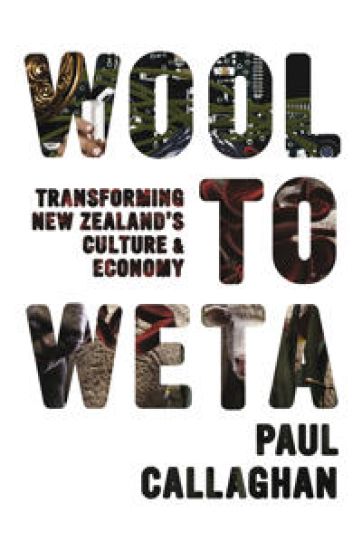
Wool to Weta

Wool to Weta

Paul Callaghan

Auckland University Press
2009
nidottu
Victoria University physicist Paul Callaghan has given a series of public lectures around New Zealand, sponsored by the David and Genevieve Becroft Foundation and the Royal Society of New Zealand, entitled 'Beyond the Farm and the Theme Park'. The lectures have been on the subject of sustainable wealth generation and culture change. Callaghan argues that if New Zealand keeps relying on tourism and farming we will fall all the way to the bottom of OECD rankings pretty quickly. What's the alternative? He argues that New Zealand's future lies in emerging industries based on science, technology, and intellectual property exemplified by companies like WETA, Fisher and Paykel Healthcare etc. Callaghan has interviewed a number of New Zealanders involved in wealth generation through science-based business, in economic thinking and leadership, in investment and in education and philanthropy. Where does New Zealand's competitive advantage lie? What should we make of the key roles of tourism and farming in the economy? Is new business development likely to come out of those sectors or from outside them? What role should government play in science and economic development? How does the culture of New Zealanders align with our possible economic futures? The interviewees have different answers to these questions and Callaghan has a strong point of view.