Kirjojen hintavertailu. Mukana 12 390 323 kirjaa ja 12 kauppaa.
Kirjailija
Paul Cloke
Kirjat ja teokset yhdessä paikassa: 19 kirjaa, julkaisuja vuosilta 1997-2024, suosituimpien joukossa Rural Wales. Vertaile teosten hintoja ja tarkista saatavuus suomalaisista kirjakaupoista.
Between 1990 and 1993 the authors worked together on a research project based at University of Wales, Lampeter. The report was commissioned by the Welsh Office, who did not publish the findings. This text analyzes and interprets this research to produce a possibly controversial picture of contemporary rural life in the welsh countryside. This comprehensive view of post-war Welsh rural life looks at social and cultural issues, housing and social change, employment, incomes and poverty, transport, community and environment.
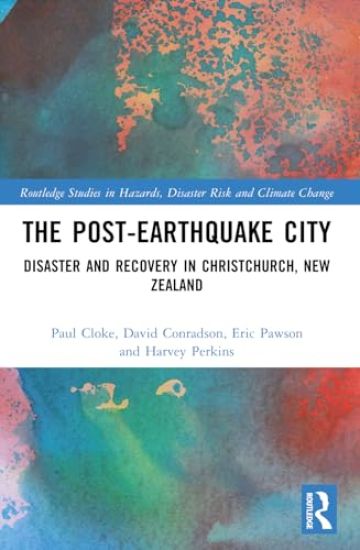
This book critically assesses Christchurch, New Zealand as an evolving post-earthquake city. It examines the impact of the 2010–13 Canterbury earthquake sequence, employing a chronological structure to consider ‘damage and displacement’, ‘recovery and renewal’ and ‘the city in transition’.It offers a framework for understanding the multiple experiences and realities of post-earthquake recovery. It details how the rebuilding of the city has occurred and examines what has arisen in the context of an unprecedented opportunity to refashion land uses and social experience from the ground up. A recurring tension is observed between the desire and tendency of some to reproduce previous urban orthodoxies and the experimental efforts of others to fashion new cultures of progressive place-making and attention to the more-than-human city. The book offers several lessons for understanding disaster recovery in cities. It illuminates the opportunities disasters create for both the reassertion of the familiar and the emergence of the new; highlights the divergence of lived experience during recovery; and considers the extent to which a post-disaster city is prepared for likely climate futures.The book will be valuable reading for critical disaster researchers as well as geographers, sociologists, urban planners and policy makers interested in disaster recovery.
This book critically assesses Christchurch, New Zealand as an evolving post-earthquake city. It examines the impact of the 2010–13 Canterbury earthquake sequence, employing a chronological structure to consider ‘damage and displacement’, ‘recovery and renewal’ and ‘the city in transition’.It offers a framework for understanding the multiple experiences and realities of post-earthquake recovery. It details how the rebuilding of the city has occurred and examines what has arisen in the context of an unprecedented opportunity to refashion land uses and social experience from the ground up. A recurring tension is observed between the desire and tendency of some to reproduce previous urban orthodoxies and the experimental efforts of others to fashion new cultures of progressive place-making and attention to the more-than-human city. The book offers several lessons for understanding disaster recovery in cities. It illuminates the opportunities disasters create for both the reassertion of the familiar and the emergence of the new; highlights the divergence of lived experience during recovery; and considers the extent to which a post-disaster city is prepared for likely climate futures.The book will be valuable reading for critical disaster researchers as well as geographers, sociologists, urban planners and policy makers interested in disaster recovery.
The problems of providing essential services in a constrained economic climate, and of conserving the rural environment whilst protecting rural people, are of immediate importance. This book, first published in 1979, was the first major piece of published research on the topic of rural settlement planning. It examines in detail the history and theory behind key settlement policies, and their practical application within the British rural planning system. Using Warwickshire and Devon as two very different case studies, Paul Cloke measures the outcome of settlement planning and discusses the wider implications of the ‘concentration-dispersal’ debate. This reissue will provide essential background for students of rural and social geography, and rural sociology and economics.
This book explores the hopeful possibility that emerging geographies of postsecularity are able to contribute significantly to the understanding of how common life may be shared, and how caring for the common goods of social justice, well-being, equality, solidarity and respect for difference may be imagined and practiced. Drawing on recent geographic theory to recalibrate ideas of the postsecular public sphere, the authors develop the case for postsecularity as a condition of being that is characterised by practices of receptive generosity, rapprochement between religious and secular ethics, and a hopeful re-enchantment and re-shaping of desire towards common life. The authors highlight the contested formation of ethical subjectivity under neoliberalism and the emergence of postsecularity within this process as an ethically-attuned politics which changes relations between religion and secularity and animates novel, hopeful imaginations, subjectivities, and praxes as alternatives to neoliberal norms. The spaces and subjectivities of emergent postsecularity are examined through a series of innovative case studies, including food banks, drug and alcohol treatment, refugee humanitarian activism in Calais, homeless participatory art projects, community responses to the Christchurch earthquakes in New Zealand, amongst others. The book also traces the global conditions for postsecularity beyond the Western and predominantly Christian-secular nexus of engagement.This is a valuable resource for students in several academic disciplines, including geography, sociology, politics, religious studies, international development and anthropology. It will be of great interest to secular and faith-based practitioners working in religion, spirituality, politics or more widely in public policy, urban planning and community development.
The third book in The Mission and Marginal Series looks at the lessons we can learn from the testimonies of people living and working on the margins of society. If you look hard enough you will find groups of Christians deeply embedded in the life of every city - serving faithfully, innovating in extraordinarily creative ways and living sacrificially. This book is the third in a six-volume series specifically exploring the theologies and practices that are arising as groups seek to follow Jesus in these challenging situations. At the heart of the series are the core convictions that such involvement must prioritise the marginalised and socially excluded; that theology must be liveable and practical; and that mission studies benefit from engagement with insights from contemporary social science.
This book explores the hopeful possibility that emerging geographies of postsecularity are able to contribute significantly to the understanding of how common life may be shared, and how caring for the common goods of social justice, well-being, equality, solidarity and respect for difference may be imagined and practiced. Drawing on recent geographic theory to recalibrate ideas of the postsecular public sphere, the authors develop the case for postsecularity as a condition of being that is characterised by practices of receptive generosity, rapprochement between religious and secular ethics, and a hopeful re-enchantment and re-shaping of desire towards common life. The authors highlight the contested formation of ethical subjectivity under neoliberalism and the emergence of postsecularity within this process as an ethically-attuned politics which changes relations between religion and secularity and animates novel, hopeful imaginations, subjectivities, and praxes as alternatives to neoliberal norms. The spaces and subjectivities of emergent postsecularity are examined through a series of innovative case studies, including food banks, drug and alcohol treatment, refugee humanitarian activism in Calais, homeless participatory art projects, community responses to the Christchurch earthquakes in New Zealand, amongst others. The book also traces the global conditions for postsecularity beyond the Western and predominantly Christian-secular nexus of engagement.This is a valuable resource for students in several academic disciplines, including geography, sociology, politics, religious studies, international development and anthropology. It will be of great interest to secular and faith-based practitioners working in religion, spirituality, politics or more widely in public policy, urban planning and community development.
An exciting new series written with the aim of equipping churches and church-planting teams with the theory and practical knowledge needed to develop significantly new approaches to mission. This first book in the series presents a thought-provoking foundation for contemporary mission. Drawing on key theological, missiological and social scientific ideas it discusses the fundamentals that provide a basis for place-dependent, reflexive praxis amongst people occupying social margins. This fascinating work re-energises debate around questions of why and how mission in marginal places should be planned and implemented.
The second book in the series focuses on participation and practice, and discusses a range of ways in which Kingdom-centred mission can be embedded in the actually existing realms of activity and need in marginal places. The book explores five different realms of practice, each presenting opportunities for innovative expressions of incarnational attentiveness to marginalized communities and people. It seeks to inspire prayerful and discerning activity that tunes into what Jesus is doing in local places, rather than providing any kind of "off-the-shelf" checklist of prefigured mission tactics. It challenges readers to take their faith-praxis beyond orthodox congregational settings and out into the everyday realms of life in marginal places.
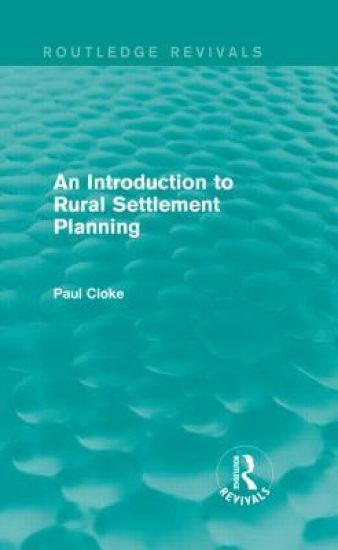
This book, first published in 1983, provided the first thorough and informative introduction to the theory, practice and politics of rural settlement planning. It surveys the conceptual and ideological leanings of those who have developed, implemented and revised rural settlement practice, and gives detailed analysis of planning documentation to assess the extent to which policies have been successfully implemented. Paul Cloke assesses the shortfalls of rural planning and resource management and suggests methods by which a sustainable rural future might be attained. This reissue provides essential background and a comprehensive handbook for those with an interest in rural settlement planning.
This book, first published in 1983, provided the first thorough and informative introduction to the theory, practice and politics of rural settlement planning. It surveys the conceptual and ideological leanings of those who have developed, implemented and revised rural settlement practice, and gives detailed analysis of planning documentation to assess the extent to which policies have been successfully implemented. Paul Cloke assesses the shortfalls of rural planning and resource management and suggests methods by which a sustainable rural future might be attained. This reissue provides essential background and a comprehensive handbook for those with an interest in rural settlement planning.
The problems of providing essential services in a constrained economic climate, and of conserving the rural environment whilst protecting rural people, are of immediate importance. This book, first published in 1979, was the first major piece of published research on the topic of rural settlement planning. It examines in detail the history and theory behind key settlement policies, and their practical application within the British rural planning system. Using Warwickshire and Devon as two very different case studies, Paul Cloke measures the outcome of settlement planning and discusses the wider implications of the ‘concentration-dispersal’ debate. This reissue will provide essential background for students of rural and social geography, and rural sociology and economics.
Each chapter of this important and innovative book narrates the inspiring story of how faith is the prime motivation for an organised response to social and political need in different contexts. This book tells the story of a number of different faith-based organizations based in different parts of Europe, but characterized by the same set of goals and aspirations to bring faith-inspired action into contexts of social injustice and marginalization in urban areas.
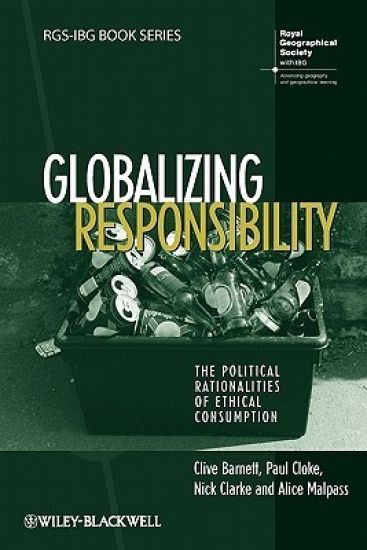
Globalizing Responsibility: The Political Rationalities of Ethical Consumption presents an innovative reinterpretation of the forces that have shaped the remarkable growth of ethical consumption. Develops a theoretically informed new approach to shape our understanding of the pragmatic nature of ethical action in consumption processesProvides empirical research on everyday consumers, social networks, and campaignsFills a gap in research on the topic with its distinctive focus on fair trade consumptionLocates ethical consumption within a range of social theoretical debates -on neoliberalism, governmentality, and globalisationChallenges the moralism of much of the analysis of ethical consumption, which sees it as a retreat from proper citizenly politics and an expression of individualised consumerism
Globalizing Responsibility: The Political Rationalities of Ethical Consumption presents an innovative reinterpretation of the forces that have shaped the remarkable growth of ethical consumption. Develops a theoretically informed new approach to shape our understanding of the pragmatic nature of ethical action in consumption processesProvides empirical research on everyday consumers, social networks, and campaignsFills a gap in research on the topic with its distinctive focus on fair trade consumptionLocates ethical consumption within a range of social theoretical debates -on neoliberalism, governmentality, and globalisationChallenges the moralism of much of the analysis of ethical consumption, which sees it as a retreat from proper citizenly politics and an expression of individualised consumerism
Utilizing innovative ethnographic research, Swept Up Lives? challenges conventional accounts of urban homelessness to trace the complex and varied attempts to care for homeless people Presents innovative ethnographic research which suggests an important shift in perspective in the analysis and understanding of urban homelessnessEmphasizes the ethical and emotional geographies of care embodied and performed within homeless services spacesSuggests that different homelessness ‘scenes’ develop in different places due to varied historical, political, and cultural responses to the problems faced
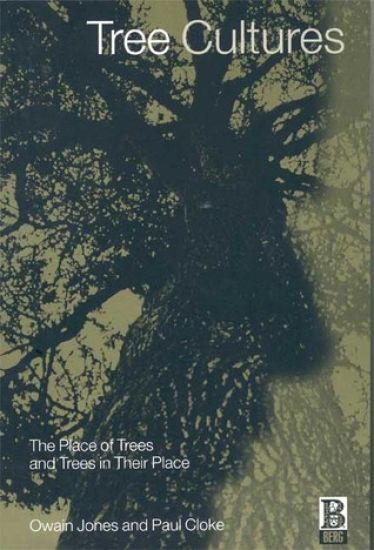
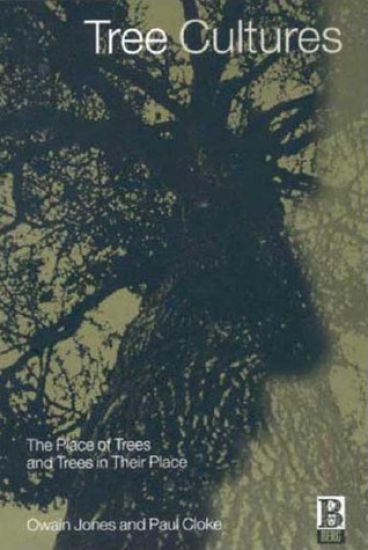
The relationship between nature and culture has become a popular focus in social science, but there have been few grounded accounts of trees. Providing shelter, fuel, food and tools, trees have played a vital role in human life from the earliest times, but their role in symbolic expression has been largely overlooked. For example, trees are often used to express nationalistic feelings. Germans drew heavily on tree and forest imagery in nation-building, and the idea of 'hearts of oak' has been central to concepts of English identity. Classic scenes of ghoulish trees coming to life and forests closing in on unsuspecting passers-by commonly feature in the media. In other instances, trees are used to represent paradisical landscapes and symbolize the ideologies of conservation and concern for nature. Offering new theoretical ideas, this book looks at trees as agents that co-constitute places and cultures in relationship with human agency. What happens when trees connect with human labour, technology, retail and consumption systems? What are the ethical dimensions of these connections? The authors discuss how trees can affect and even define notions of place, and the ways that particular places are recognized culturally. Working trees, companion trees, wild trees and collected or conserved trees are considered in relation to the dynamic politics of conservation and development that affect the values given to trees in the contemporary world. Building on the growing field of landscape study, this book offers rich insights into the symbolic and practical roles of trees. It will be vital reading for anyone interested in the anthropology of landscape, forestry, conservation and development, and for those concerned with the social science of nature.
The relationship between nature and culture has become a popular focus in social science, but there have been few grounded accounts of trees. Providing shelter, fuel, food and tools, trees have played a vital role in human life from the earliest times, but their role in symbolic expression has been largely overlooked. For example, trees are often used to express nationalistic feelings. Germans drew heavily on tree and forest imagery in nation-building, and the idea of 'hearts of oak' has been central to concepts of English identity. Classic scenes of ghoulish trees coming to life and forests closing in on unsuspecting passers-by commonly feature in the media. In other instances, trees are used to represent paradisical landscapes and symbolize the ideologies of conservation and concern for nature. Offering new theoretical ideas, this book looks at trees as agents that co-constitute places and cultures in relationship with human agency. What happens when trees connect with human labour, technology, retail and consumption systems? What are the ethical dimensions of these connections? The authors discuss how trees can affect and even define notions of place, and the ways that particular places are recognized culturally. Working trees, companion trees, wild trees and collected or conserved trees are considered in relation to the dynamic politics of conservation and development that affect the values given to trees in the contemporary world. Building on the growing field of landscape study, this book offers rich insights into the symbolic and practical roles of trees. It will be vital reading for anyone interested in the anthropology of landscape, forestry, conservation and development, and for those concerned with the social science of nature.
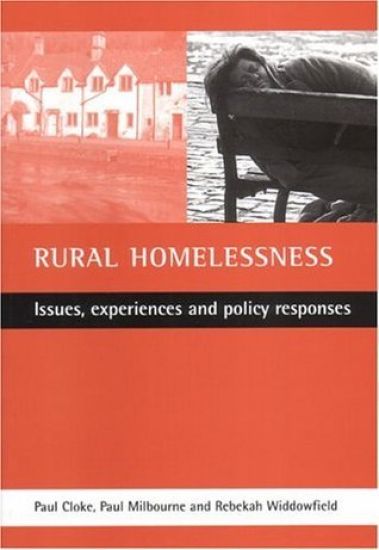
Rural homelessness: supplies evidence on the nature, extent and experiences of homelessness in rural areas; provides a wide-ranging theoretical, empirical and policy-related account of homelessness in rural areas; offers a critique of policy responses to rural homelessness. The book is aimed at students and academics in human geography, sociology, social policy, housing studies and rural studies. It will also be of interest to individuals and organisations dealing with housing, homelessness and other social issues in rural areas.