Kirjojen hintavertailu. Mukana 12 390 323 kirjaa ja 12 kauppaa.

Kirjailija

Paul Cobb

Kirjat ja teokset yhdessä paikassa: 6 kirjaa, julkaisuja vuosilta 1987-2024, suosituimpien joukossa Systems for Instructional Improvement. Vertaile teosten hintoja ja tarkista saatavuus suomalaisista kirjakaupoista.

6 kirjaa

Kirjojen julkaisuhaarukka 1987-2024.

The Book and the Knife

The Book and the Knife

Paul Cobb

TROUBADOR PUBLISHING
2024
nidottu
In 1031, an Arab scientist, a Jewish astronomer and a Christian monk gather under the dome of an observatory in Spain. A foretelling written on the blade of a knife tells of a new ruler, whose power will come from the knowledge in a centuries old book. As its guardians begin to covet this knowledge for themselves, the book is drawn into the conflict between the houses of Wessex and Godwin, and England’s destiny. It will carry a secret at the heart of the succession to the English throne. But the book is in danger, from those who will use it for the wealth and power it can bring — or who want to destroy it. From Spain to Normandy and England, The Book and the Knife: Thegn of Berewic is the story of the power of knowledge, of a generation—spanning blood feud, and of the struggle for control of England before the Norman invasion of 1066. A story of loyalty and treachery, love and hate.
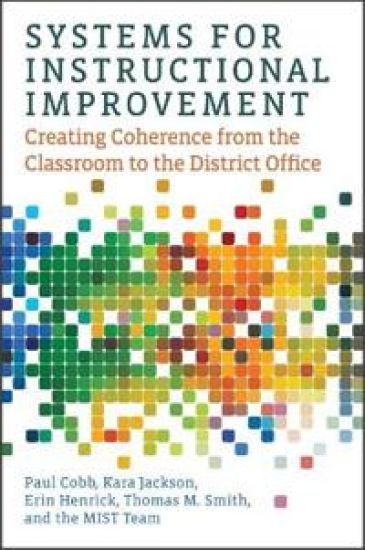
Systems for Instructional Improvement

Systems for Instructional Improvement

Paul Cobb; Kara Jackson; Erin Henrick; Thomas M. Smith; Michael Sorum

Harvard Educational Publishing Group
2018
nidottu
In Systems for Instructional Improvement, Paul Cobb and his colleagues draw on their extensive research to propose a series of specific, empirically grounded recommendations that together constitute a theory of action for advancing instruction at scale. The authors outline the elements of a coherent instructional system; describe productive practices for school leaders in supporting teachers’ growth; and discuss the role of district leaders in developing school-level capacity for instructional improvement.Based on the findings of an eight-year research-practice partnership with four large urban districts investigating their efforts to enhance middle school math instruction, the authors seek to bridge the gap between the literature on improving teaching and learning and the literature on policy and leadership. They look at the entire education system and make recommendations on improvement efforts with a focus on student learning and teachers’ instructional vision. In particular, the authors offer insights on the interplay among various supports for teacher learning, including pullout professional development, coaching, collaborative inquiry, the most instructionally productive uses of principals’ time, and the tensions that tend to emerge at the district level. They provide a guide for district-level leaders in organizing their work to support significant teacher learning.Systems for Instructional Improvement provides an invaluable resource for school and district leaders, while outlining a clearly focused agenda for future research.
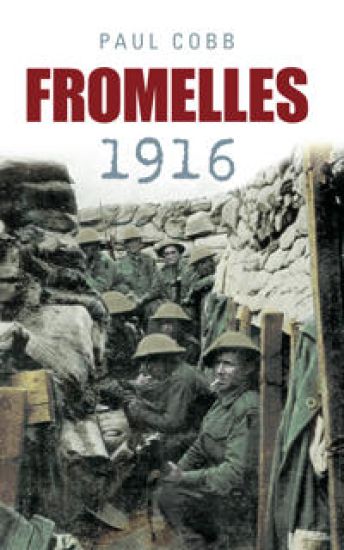
Fromelles 1916

Fromelles 1916

Paul Cobb

The History Press Ltd
2010
nidottu
At Fromelles in July 1916 two divisions – one British and one Australian – within a few weeks of arriving in France – went into action for the first time. Their task was to prevent the Germans from moving troops to the Somme where a major British offensive was in progress, but the attack on 19/20 July was a disaster with nearly 7,000 casualties in a few hours. This account explores this battle which for many epitomises the futility of the Great War. In those few hours many heroic deeds were done but the battle caused a souring of Anglo-Australian relationships and truly was a baptism of fire for these British and Australian troops. This is their history. In a new section, Paul Cobb explores the recent discovery in 2008/09 of a mass war grave on the battlefield and includes details of the findings of the archaeological dig, the recovery of 250 bodies and the creation of a new military cemetery.
Fromelles 1916

Fromelles 1916

Paul Cobb

The History Press Ltd
2007
nidottu
At Fromelles in July 1916 two divisions – one British and one Australian – within a few weeks of arriving in France – went into action for the first time. Their task was to prevent the Germans from moving troops to the Somme where a major British offensive was in progress, but the attack on 19/20 July was a disaster with nearly 7,000 casualties in a few hours. This account explores this battle which for many epitomises the futility of the Great War. In those few hours many heroic deeds were done but the battle caused a souring of Anglo-Australian relationships and truly was a baptism of fire for these British and Australian troops. This is their history. In a new section, Paul Cobb explores the recent discovery in 2008/09 of a mass war grave on the battlefield and includes details of the findings of the archaeological dig, the recovery of 250 bodies and the creation of a new military cemetery.
Construction of Arithmetical Meanings and Strategies

Construction of Arithmetical Meanings and Strategies

Leslie P. Steffe; Hermine Sinclair; Paul Cobb

Springer-Verlag New York Inc.
1987
nidottu
The studies presented in this book should be of interest to anybody concerned with the teaching of arithmetic to young children or with cognitive development in general. The 'eaching experiment· was carried out with half a dozen children entering first grade over two years in biweekly sessions. Methodologically the authors' research is original. It is a longitudinal but not a naturalistic study, since the experimenter-teachers directed their interaction with each individual child with a view to his or her possible progress. It is experimental in the sense that two groups of subjects were selected according to criteria derived from an earlier study (Steffe, von Glasersfeld, Richards & Cobb, 1983) and that the problems proposed were comparable, though far from identical across the subjects; but unlike more rigid and shorter "learning" or ''training" studies it does not include pre-and posttests, or predetermined procedures. Theoretically, the authors subscribe to Piagefs constructivism: numbers are made by children, not found (as they may find some pretty rocks, for example) or accepted from adults (as they may accept and use a toy). The authors interpret changes in the children's counting behaviors in terms of constructivist concepts such as assimilation, accommodation, and reflective abstraction, and certain excerpts from protocols provide on-line examples of such processes at work. They also subscribe to Vygotsky's proposal for teachers '0 utilize the zone of proximal development and to lead the child to what he (can) not yet do· (1965, p. 104).