Kirjojen hintavertailu. Mukana 12 595 353 kirjaa ja 12 kauppaa.

Kirjailija

Paul Collier

Kirjat ja teokset yhdessä paikassa: 40 kirjaa, julkaisuja vuosilta 1990-2025, suosituimpien joukossa The Second World War. Vertaile teosten hintoja ja tarkista saatavuus suomalaisista kirjakaupoista.

40 kirjaa

Kirjojen julkaisuhaarukka 1990-2025.

The Second World War

The Second World War

David Horner; Robin Havers; Alastair Finlan; Mark J Grove; Philip D. Grove; Paul Collier; Geoffrey Jukes; Russell Hart; Stephen A. Hart; Max Hastings

Osprey Publishing
2018
sidottu
Bringing together the work of nine leading historians, and superbly illustrated with contemporary photography and colour maps, The Second World War gives readers a comprehensive understanding of all aspects of history’s greatest conflict.The period from 1939 to 1945 saw some of the most devastating and remarkable events in living memory. Labouring beneath a daily burden of fear, sacrifice, deprivation and uncertainty, soldiers and civilians of all nationalities were driven to extremes of selfless loyalty, dogged determination or bitter cruelty by the demands of a world at war. This book tells the stories of the men and women who lived and died during the Second World War, from politicians to factory workers, and from High Command to the conscripted men on the front lines. The experience of war is brought to life through a wealth of contemporary documentation, private writings and historical research, whilst the political, military and historical significance of the war is assessed and examined. From Europe's Western and Eastern Fronts to the war at sea, and from the Pacific to the Mediterranean and North Africa, every fighting front of the Second World War is covered in this truly comprehensive volume.
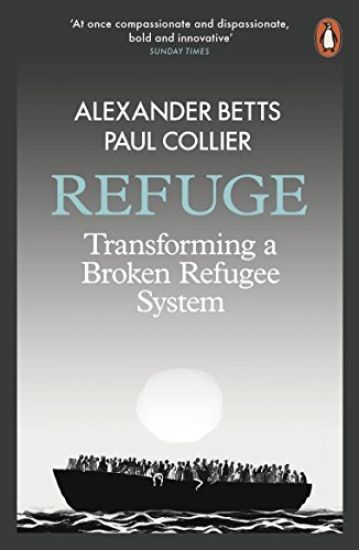
Refuge

Refuge

Alexander Betts; Paul Collier

Penguin Books Ltd
2018
pokkari
Europe is facing its greatest refugee crisis since the Second World War, yet the institutions responding to it remain virtually unchanged from those created in the post-war era. Going beyond the scenes of desperation which have become all-too-familiar in the past few years, Alexander Betts and Paul Collier show that this crisis offers an opportunity for reform if international policy-makers focus on delivering humane, effective and sustainable outcomes - both for Europe and for countries that border conflict zones. Refugees need more than simply food, tents and blankets, and research demonstrates that they can offer tangible economic benefits to their adopted countries if given the right to work and education. Refuge sets out an alternative vision that can empower refugees to help themselves, contribute to their host societies, and even rebuild their countries of origin.
The Political Economy of Economic Growth in Africa, 1960–2000: Volume 1

The Political Economy of Economic Growth in Africa, 1960–2000: Volume 1

Benno J. Ndulu; Stephen A. O'Connell; Robert H. Bates; Paul Collier; Chukwuma C. Soludo

Cambridge University Press
2009
pokkari
The period from 1960 to 2000 was one of remarkable growth and transformation in the world economy. Why did most of Sub-Saharan Africa fail to develop over this period? Why did a few small African economies succeed spectacularly? The Political Economy of Economic Growth in Africa, 1960–2000 is by far the most ambitious and comprehensive assessment of Africa's post-independence economic performance to date. Volume 1 examines the impact of resource wealth and geographical remoteness on Africa's growth and develops a new dataset of governance regimes covering all of Sub-Saharan Africa. Separate chapters analyze the dominant patterns of governance observed over the period and their impact on growth, the ideological formation of the political elite, the roots of political violence and reform, and the lessons of the 1960–2000 period for contemporary growth strategy.
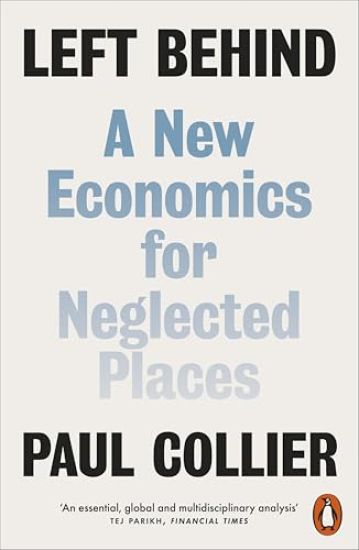
Left Behind

Left Behind

Paul Collier

PENGUIN BOOKS LTD
2025
pokkari
A FINANCIAL TIMES BEST BOOK OF 2024The world-renowned economist offers a ground-breaking new vision for inclusive prosperityLeft behind places can be found in prosperous countries—from South Yorkshire, integral to the industrial revolution and now England’s poorest county, to Barranquilla, once Colombia’s portal to the Caribbean and now struggling. More alarmingly, the poorest countries in the world are diverging further from the rest of humanity than they were at the start of this century. Why have these places fallen behind? And what can we do about it?World-renowned development economist Paul Collier has spent his life working in neglected communities. In this book he offers his candid diagnosis of why some regions and countries are failing, and a new vision for how they can catch up. Collier lays the blame for widening inequality on stale economic orthodoxies that prioritize market forces to revive left behind regions, and on the arrogant, hands-off and one-size fits all approach of centralized bureaucracies like the UK Treasury. As a result, Collier argues, the UK has become the most unequal and unfair society in the western world.Yet the core message of Left Behind is hopeful: bringing together encouraging case studies of recovery from around the world, Collier shows how renewal is achievable through a combination of collective learning, moral leadership and local agency. With keen insight, he draws lessons from such seemingly disparate fields as behavioural psychology, evolutionary biology and moral philosophy to share a bold, galvanizing vision for a more inclusive, prosperous world.
Left Behind

Left Behind

Paul Collier

PENGUIN BOOKS LTD
2024
sidottu
A FINANCIAL TIMES BEST BOOK OF 2024The world-renowned economist offers a ground-breaking new vision for inclusive prosperityLeft behind places can be found in prosperous countries—from South Yorkshire, integral to the industrial revolution and now England’s poorest county, to Barranquilla, once Colombia’s portal to the Caribbean and now struggling. More alarmingly, the poorest countries in the world are diverging further from the rest of humanity than they were at the start of this century. Why have these places fallen behind? And what can we do about it? World-renowned development economist Paul Collier has spent his life working in neglected communities. In this book he offers his candid diagnosis of why some regions and countries are failing, and a new vision for how they can catch up. Collier lays the blame for widening inequality on stale economic orthodoxies that prioritize market forces to revive left behind regions, and on the arrogant, hands-off and one-size fits all approach of centralized bureaucracies like the UK Treasury. As a result, Collier argues, the UK has become the most unequal and unfair society in the western world. Yet the core message of Left Behind is hopeful: bringing together encouraging case studies of recovery from around the world, Collier shows how renewal is achievable through a combination of collective learning, moral leadership and local agency. With keen insight, he draws lessons from such seemingly disparate fields as behavioural psychology, evolutionary biology and moral philosophy to share a bold, galvanizing vision for a more inclusive, prosperous world.
Loving Lebus

Loving Lebus

Paul Collier

Libri Publishing
2022
nidottu
'Loving Lebus' encapsulates the changing styles of furniture over time. With comprehensive notes placing Lebus furniture in context the author has selected the best of the firm's advertisements, catalogue images, photographs and Lebus furniture pieces today. Antique and vintage - Lebus furniture is enjoying a resurgence. We are once again, ‘Loving Lebus’. Paul has nurtured a passion for all things Lebus. His first book 'Harris Lebus: A Romance with the Furniture Trade' went behind the scenes to look into how Lebus furniture was made. Now the Lebus story is complete - 'Loving Lebus: Looking into Harris Lebus Furniture' is another labour of love.
Greed Is Dead

Greed Is Dead

Paul Collier; John Kay

PENGUIN BOOKS LTD
2021
pokkari
Two of the UK's leading economists call for an end to extreme individualism as the engine of prosperity 'provocative but thought-provoking and nuanced' TelegraphThroughout history, successful societies have created institutions which channel both competition and co-operation to achieve complex goals of general benefit. These institutions make the difference between societies that thrive and those paralyzed by discord, the difference between prosperous and poor economies. Such societies are pluralist but their pluralism is disciplined.Successful societies are also rare and fragile. We could not have built modernity without the exceptional competitive and co-operative instincts of humans, but in recent decades the balance between these instincts has become dangerously skewed: mutuality has been undermined by an extreme individualism which has weakened co-operation and polarized our politics.Collier and Kay show how a reaffirmation of the values of mutuality could refresh and restore politics, business and the environments in which people live. Politics could reverse the moves to extremism and tribalism; businesses could replace the greed that has degraded corporate culture; the communities and decaying places that are home to many could overcome despondency and again be prosperous and purposeful. As the world emerges from an unprecedented crisis we have the chance to examine society afresh and build a politics beyond individualism.
Kapitalismens framtid

Kapitalismens framtid

Paul Collier

Dreyers forlag
2020
sidottu
Paul Collier, en av vår tids mest markante økonomer, legger her frem et manifest for en ny kapitalisme. Ifølge hans diagnose for dagens kapitalistiske samfunn dreier det seg ikke bare om skjev fordeling mellom fattig og rik, men også om den økende kløften i samfunnsfundamentet - mellom byene og resten av landet, mellom urban elite og .ertallet av befolkningen, mellom høyt utdannede og de med mindre utdanning. I Rottweiler-samfunnet, som Collier kaller det, hvor slitne arbeidere gjør opprør mot kapitalistiske «snyltere», taper verdien av tillit og sosialt samhold terreng, og i vakuumet som oppstår er det bare de rivaliserende ideologiene, sosialisme og populisme, som har grepet fatt i skillelinjene som blant annet har ført til Trump, Brexit og ytre høyres oppsving i Tyskland og Italia. Mange har kritisert kapitalismen, men få har presentert et så realistisk forslag til forbedringer. I denne dyptfølte og originale boka legger Collier fram et manifest for en sosialkapitalisme som bygger på en ny samfunnsetikk som vil bygge bro over de økonomiske, sosiale og kulturelle skillene.
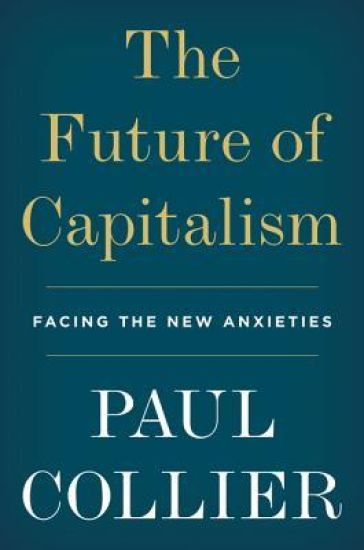
The Future of Capitalism: Facing the New Anxieties
Bill Gates's Five Books for Summer Reading 2019From world-renowned economist Paul Collier, a candid diagnosis of the failures of capitalism and a pragmatic and realistic vision for how we can repair it.Deep new rifts are tearing apart the fabric of the United States and other Western societies: thriving cities versus rural counties, the highly skilled elite versus the less educated, wealthy versus developing countries. As these divides deepen, we have lost the sense of ethical obligation to others that was crucial to the rise of post-war social democracy. So far these rifts have been answered only by the revivalist ideologies of populism and socialism, leading to the seismic upheavals of Trump, Brexit, and the return of the far-right in Germany. We have heard many critiques of capitalism but no one has laid out a realistic way to fix it, until now.In a passionate and polemical book, celebrated economist Paul Collier outlines brilliantly original and ethical ways of healing these rifts--economic, social and cultural--with the cool head of pragmatism, rather than the fervor of ideological revivalism. He reveals how he has personally lived across these three divides, moving from working-class Sheffield to hyper-competitive Oxford, and working between Britain and Africa, and acknowledges some of the failings of his profession.Drawing on his own solutions as well as ideas from some of the world's most distinguished social scientists, he shows us how to save capitalism from itself--and free ourselves from the intellectual baggage of the twentieth century.
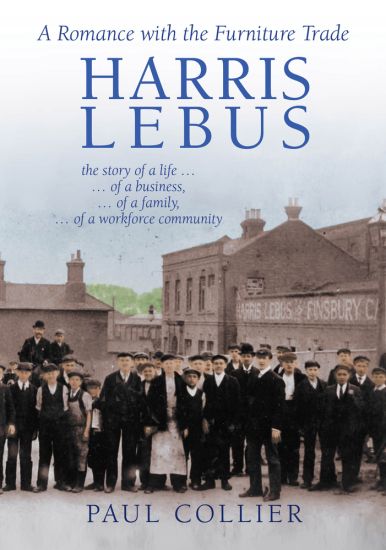
Harris Lebus

Harris Lebus

Paul Collier

Green Frigate Books
2020
nidottu
This book explores the history of the furniture manufacturer Harris Lebus from 1840 to 1970. Four generations of the Lebus family were engaged in the business which evolved from a family partnership into a public company. Oliver Lebus was chairman when the company ceased cabinet furniture manufacturing at Tottenham Hale in 1970. Using personal testimonies from those who were there, aspects of the story of 'the largest furniture factory' in the world are told through their eyes and using, in as far as possible, their own words.On a relatively, unremarkable North London Street, at Tottenham Hale, a set of railings stops short at a bricked wall on which a metal gatepost is affixed - this was the Ferry Lane entrance to Harris Lebus 'the largest furniture factory in the world'. Beyond the solitary post, a sloped, grass verge leads to a pleasant, low-rise housing built in the 1970's - Ferry Lane estate, and it is hard to imagine that this was once a bustling, energised furniture manufacturing hub. For seventy years furniture flowed on conveyor belts, and through a tunnel under Ferry Lane as the factory expanded in the fifties to occupy what is now Hale Village. During both World Wars the parts for wooden aircraft were made and assembled in huge workshops that were shrouded in secrecy. With the discovery of the factory underground war shelters in 2008 under what is now Hale Village and a subsequent Lebus exhibition curated by Haringey Local History Archives, interest was generated in this aspect of history and which has subsequently gathered momentum. Thousands of workers, each living individual lives came from near and far to spend their working days at Lebus. Many formed lifelong friendships, and just as four generations of the Lebus family spent their working lives in the factory, so too did successive generations of other families. Seemingly forgotten in the passing of time, they all left an indelible mark in this history. And in the case of some, their identities now emerge as their stories are explored; they are brought back to life telling their experiences in their own words. This is Paul Collier's first foray into authorship. In 2008, shortly after moving to Ferry Lane estate, Paul made a connection with Oliver Lebus, then in his nineties and who was the last family member of four generations at the company. They formed a special friendship and over several afternoons at his home in Kensington, Oliver introduced the author to his personal archives on which the foundations of this book were laid. Fully supported by both Haringey Local History Archives and members of the extended Lebus family, Harris Lebus - A Romance with the Furniture Trade, fully illustrated with over 200 photographs and images is a must read! His debut book appeals to a wide audience - interest in this history extends far beyond the locality of Tottenham Hale and Haringey, and will delight social historians and those with connections to the furniture trade, past and present.
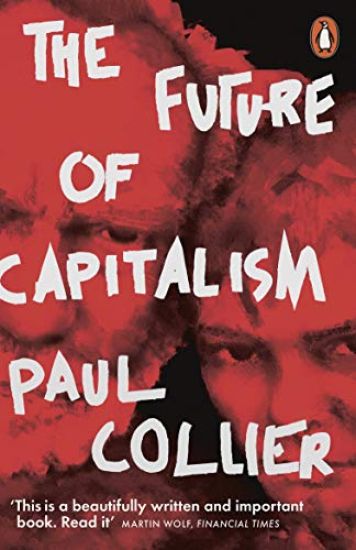
Future of Capitalism

Future of Capitalism

Paul Collier

Penguin Books Ltd.
2019
pokkari
Deep new rifts are tearing apart the fabric of Britain and other Western societies: thriving cities versus the provinces, the highly skilled elite versus the less educated, wealthy versus developing countries. As these divides deepen, we have lost the sense of ethical obligation to others that was crucial to the rise of post-war social democracy. So far these rifts have been answered only by the revivalist ideologies of populism and socialism, leading to the seismic upheavals of Trump, Brexit and the return of the far right in Germany. We have heard many critiques of capitalism but no one has laid out a realistic way to fix it, until now.In a passionate and polemical book, celebrated economist Paul Collier outlines brilliantly original and ethical ways of healing these rifts - economic, social and cultural - with the cool head of pragmatism, rather than the fervour of ideological revivalism. He reveals how he has personally lived across these three divides, moving from working-class Sheffield to hyper-competitive Oxford, and working between Britain and Africa, and acknowledges some of the failings of his profession.Drawing on his own solutions as well as ideas from some of the world's most distinguished social scientists, he shows us how to save capitalism from itself - and free ourselves from the intellectual baggage of the 20th century.These times are in desperate need of Paul Collier's insights. The Future of Capitalism restores common sense to our views of morality, as it also describes their critical role in what makes families, organizations, and nations work. It is the most revolutionary work of social science since Keynes. Let's hope it will also be the most influential - George Akerlof, Nobel Laureate in Economics, 2001In this bold work of intellectual trespass, Paul Collier, a distinguished economist, ventures onto the terrain of ethics to explain what's gone wrong with capitalism, and how to fix it. To heal the divide between metropolitan elites and the left-behind, he argues, we need to rediscover an ethic of belonging, patriotism, and reciprocity. Offering inventive solutions to our current impasse, Collier shows how economics at its best is inseparable from moral and political philosophy' - Michael Sandel, author of What Money Can't Buy and Justice.
Trailing George Best

Trailing George Best

Stuart Bolton; Paul Collier

Pitch Publishing Ltd
2018
nidottu
Trailing George Best: The Manchester Haunts of United's Greatest takes a forensic look back at the locations in and around Manchester where George Best worked, rested, partied and played during the Swinging 60s and the dubiously stylish 70s. Despite the questionable fashions, it was the best of times. George Best lived in the city for nearly 15 years and this book chronicles, with numerous images, the places where he lived, the avenues and alleyways he explored, the boutiques he managed, the nightclubs he both frequented and helped to run, and of course the football grounds where he ran amok. Having tracked down the people who knew George best during this period - people who lived with Best, the pals he hung out with, colleagues who worked with him, his business partners and personal managers - lifelong Manchester United supporters Stuart Bolton and Paul Collier unearth the stories that other writers could not reach.
The Future of Capitalism: Facing the New Anxieties
Bill Gates's Five Books for Summer Reading 2019From world-renowned economist Paul Collier, a candid diagnosis of the failures of capitalism and a pragmatic and realistic vision for how we can repair it.Deep new rifts are tearing apart the fabric of the United States and other Western societies: thriving cities versus rural counties, the highly skilled elite versus the less educated, wealthy versus developing countries. As these divides deepen, we have lost the sense of ethical obligation to others that was crucial to the rise of post-war social democracy. So far these rifts have been answered only by the revivalist ideologies of populism and socialism, leading to the seismic upheavals of Trump, Brexit, and the return of the far-right in Germany. We have heard many critiques of capitalism but no one has laid out a realistic way to fix it, until now.In a passionate and polemical book, celebrated economist Paul Collier outlines brilliantly original and ethical ways of healing these rifts--economic, social and cultural--with the cool head of pragmatism, rather than the fervor of ideological revivalism. He reveals how he has personally lived across these three divides, moving from working-class Sheffield to hyper-competitive Oxford, and working between Britain and Africa, and acknowledges some of the failings of his profession.Drawing on his own solutions as well as ideas from some of the world's most distinguished social scientists, he shows us how to save capitalism from itself--and free ourselves from the intellectual baggage of the twentieth century.
The Struggle for South Sudan

The Struggle for South Sudan

Paul Collier

I.B. Tauris
2018
nidottu
South Sudan, the world’s youngest country, has experienced a rocky start to its life as an independent nation. Less than three years after gaining independence in 2011 following a violent liberation war, the country slid back into conflict. In the wake of infighting within the ruling Sudan People’s Liberation Movement (SPLM), violence erupted in South Sudan’s capital, Juba, in December 2013. The conflict pitted President Salva Kiir’s predominantly Dinka presidential guard against Nuer fighters loyal to the former Vice President Riek Machar. As fighting spread across the country, it has taken on an increasingly ethnic nature. Ceasefires have been agreed, but there have been repeated violations by all sides. Today the conflict continues unabated and the humanitarian situation grows ever more urgent. This book analyses the crisis and some of its contributing factors. The contributors have worked on South Sudan for a number of years and bring a wealth of knowledge and different perspectives to this discussion. Providing the most comprehensive analysis yet of South Sudan’s social and political history, post-independence governance systems and the current challenges for development, this book will be essential reading for all those interested in the continuing struggle for peace in South Sudan.
Refuge: Rethinking Refugee Policy in a Changing World

Refuge: Rethinking Refugee Policy in a Changing World

Paul Collier; Alexander Betts

Oxford University Press
2017
nidottu
Global refugee numbers are at their highest levels since the end of World War II, but the system in place to deal with them, based upon a humanitarian list of imagined "basic needs," has changed little. In Refuge, Paul Collier and Alexander Betts argue that the system fails to provide a comprehensive solution to the fundamental problem, which is how to reintegrate displaced people into society. Western countries deliver food, clothing, and shelter to refugee camps, but these sites, usually located in remote border locations, can make things worse. The numbers are stark: the average length of stay in a refugee camp worldwide is 17 years. Into this situation comes the Syria crisis, which has dislocated countless families, bringing them to face an impossible choice: huddle in dangerous urban desolation, rot in dilapidated camps, or flee across the Mediterranean to increasingly unwelcoming governments. Refuge seeks to restore moral purpose and clarity to refugee policy. Rather than assuming indefinite dependency, Collier-author of The Bottom Billion-and his Oxford colleague Betts propose a humanitarian approach integrated with a new economic agenda that begins with jobs, restores autonomy, and rebuilds people's ability to help themselves and their societies. Timely and urgent, the book goes beyond decrying scenes of desperation to declare what so many people, policymakers and public alike, are anxious to hear: that a long-term solution really is within reach.