
Kirjailija
Paul Collins
Kirjat ja teokset yhdessä paikassa: 57 kirjaa, julkaisuja vuosilta 1998-2026, suosituimpien joukossa The Law and Economics of Canadian Competition Policy. Vertaile teosten hintoja ja tarkista saatavuus suomalaisista kirjakaupoista.
Mukana myös kirjoitusasut: PAUL COLLINS
57 kirjaa
Kirjojen julkaisuhaarukka 1998-2026.
The Law and Economics of Canadian Competition Policy
Michael J. Trebilcock; Edward M. Iacobucci; Ralph A. Winter; Paul Collins
University of Toronto Press
2003
pokkari
Offering a unique cross-disciplinary approach to scholarship in law and economics, this much-needed work expounds and critically evaluates all of the major doctrines of Canadian competition policy. The topics addressed, each in a separate chapter, include: Canadian competition policy in an historical context; basic economic concepts; multi-firm conduct; horizontal agreements; the merger review process; predatory pricing and price discrimination; vertical restraints; intra-brand competition; inter-brand competition; abuse of dominance; competition policy and intellectual property rights; competition policy and trade policy; competition policy and regulated industries; and enforcement. The treatment of each substantive topic is organized first around a discussion of the relevant body (or bodies) of economic theory and then the pertinent bodies of legal doctrine, including case law. Each chapter contains a critique of existing law in light of contemporary economic theory. This is the only book available that offers an up-to-date integrated analysis of economic theory and legal doctrine in the context of Canadian competition policy.

The Sumerians are widely believed to have created the world’s earliest civilization on the fertile floodplains of southern Iraq from about 3500 to 2000 BC. They have been credited with inventions no lesser than cities, writing and the wheel, and therefore hold an ancient mirror to our own urban, literate world. But is this picture correct? Paul Collins reveals how the idea of a Sumerian people was assembled from the archaeological and textual evidence uncovered in Iraq and Syria over the last 150 years. Reconstructed through the biases of those who unearthed them, the Sumerians were never simply lost and found, but reinvented a number of times, both in antiquity and in the more recent past.

Beyond Priests contends that the requirements of the clerical priesthood of the Catholic Church—that all priests must be male, and that all priests must be celibate—is a gross distortion of scripture and the church’s early history that must be changed. While the roots of the modern priesthood go back to the fourth century and even more remotely to the presbyters or elders who advised local bishops in the early church, the contemporary priestly model is very much the product of seventeenth-century French reformers acting to apply a 1563 decree on the priesthood of the Council of Trent. The present-day priestly model has increasingly become harmful, even toxic, not only to priests themselves, but to the ministry and the Catholic community. Based on the historical analysis, Beyond Priests outlines a whole new way of approaching ministry and leadership that is in tune with contemporary needs, is inclusive of women and men, and is more authentically derived from the New Testament and the early church.
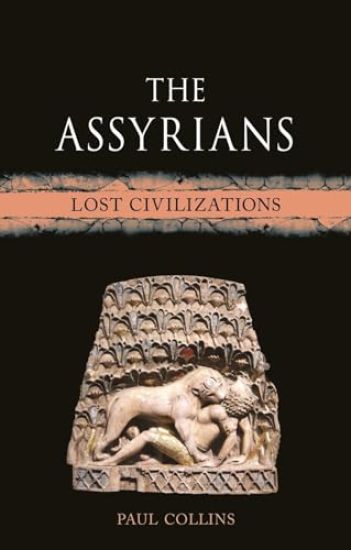
At the height of its power around 660 BC, the Assyrian empire, centred in northern Iraq, wielded dominance from Egypt to Iran. This vast region was ruled by a series of kings who showcased their power by constructing magnificent palaces adorned with superlative sculptures depicting royal rituals, battles and hunts. Established by military might, the empire thrived under administrators who relocated tens of thousands of people to serve the state, and scholars who interpreted divine will. This book relates the history of Assyria through the lens of its royal family and the officials who commissioned its superb buildings, art and literature, and laid the foundations for the later empires of Babylon and Persia.




The current world population is 7.9 billion people. Our demands are already making a massive impact on the earth. Global warming, biodiversity loss, resource depletion, these are all symptoms of a bigger problem, human numbers and excessive consumption. Given our impact on earth now we have to reduce our numbers rapidly. We don't have time to wait until 2100 for numbers to decrease gradually. After looking at all of the issues surrounding the population debate, The Depopulation Imperative argues that to achieve any reduction we need a profound moral change from an emphasis on the priority of the human to a new basic moral principle that puts the earth first. While the implications of this principle are radical, in the end the book argues that we can do it and there are grounds for hope.
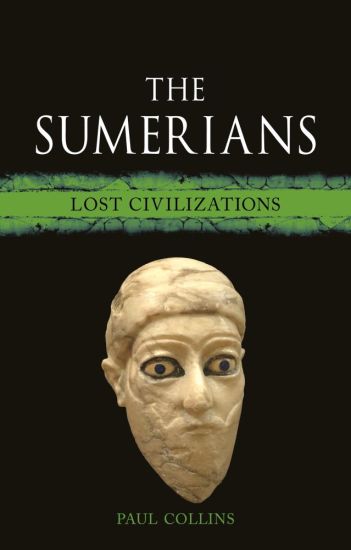
The Sumerians are widely believed to have created the world’s earliest civilization on the fertile floodplains of southern Iraq from about 3500 to 2000 BC. They have been credited with the invention of nothing less than cities, writing and the wheel, and therefore hold an ancient mirror to our own urban, literate world. But is this picture correct? Paul Collins reveals how the idea of a Sumerian people was assembled from the archaeological and textual evidence uncovered in Iraq and Syria over the last 150 years. Reconstructed through the biases of those who unearthed them, the Sumerians were never simply lost and found, but reinvented a number of times, both in antiquity and in the more recent past.

Sumer was a region of the ancient world that today forms the southern part of Iraq. It is a vast, flat land of floodplains formed by the Rivers Tigris and Euphrates. It was here that some of the world's first cities arose and writing was invented. Archaeologists have explored the remains of some of Sumer's ancient settlements. They have made remarkable discoveries at places such as Uruk, Ur, Eridu, Nippur, Kish and Lagash. These show that the people of Sumer were great artists, builders, inventors, warriors and traders. By 3500 BC the population of some Sumerian towns had grown into cities. The largest was certainly Uruk, which had a population of at least 10,000. At this time this would have been the largest settlement on the planet. Writing was invented by the Sumerians around 3200 BC. This script is known as cunieform script and through it readers can learn about the Sumerians in their own words. Readers will discover what is meant by a ziggurat, how cunieform writing works, the importance of cylinder seals and stories of Sumerian kings, heroes and gods. This fascinating book is perfect for Key Stage 2 readers aged 9 and up to gain a picture of one of the earliest civilisations in the world.
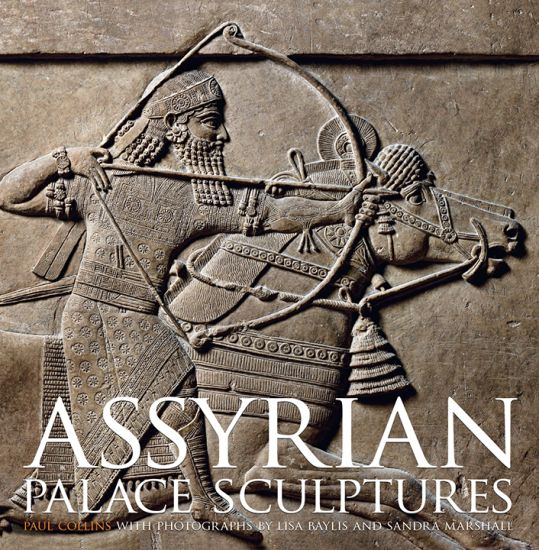
Between the ninth and seventh centuries BCE, the small kingdom of Assyria (present-day northern Iraq) expanded through conquest from Egypt to Iran. The relief sculptures that decorated Assyrian palaces represent the high point of Mesopotamian art of the first millennium BCE, both for their artistic quality and their vivid depictions of warfare, rituals, mythology, hunting, and other aspects of Assyrian life. Together, the sculptures constitute some of the most impressive and eloquent witnesses of the ancient Near East, their importance only increasing with the recent destruction by ISIS of many of the reliefs that remained in Iraq. Originally published by the British Museum in 2008, this book serves as a superb visual introduction to these extraordinary sculptures, showcasing a series of stunning photographs of the museum's unrivaled collection of Assyrian reliefs. Highlighting individual panels and their often overlooked details, these images capture the majesty of Assyrian kings, their splendid courts, and protecting divinities. An introduction by Collins sets the sculptures in their cultural and art historical context, while the following chapters provide a brief history of Assyria and its royal palaces as well as an overview of the artworks' discovery, reception, and understanding.
On November 23rd of 1849, in the heart of Boston, one of the city’s richest men simply vanished. Dr. George Parkman, a Brahmin who owned much of Boston’s West End, was last seen that afternoon visiting his alma mater, Harvard Medical School. Police scoured city tenements and the harbor, and leads put the elusive Dr. Parkman at sea or hiding in Manhattan. But one Harvard janitor held a much darker suspicion: that their ruthless benefactor had never left the Medical School building alive. His shocking discoveries in a chemistry professor’s laboratory engulfed America in one of its most infamous trials: The Commonwealth of Massachusetts v. John White Webster. A baffling case of red herrings, grave robbery, and dismemberment, it became a landmark case in the use of medical forensics and the meaning of reasonable doubt. Paul Collins brings nineteenth-century Boston back to life in vivid detail, weaving together newspaper accounts, letters, journals, court transcripts, and memoirs from this groundbreaking case. Rich in characters and evocative in atmosphere, Blood & Ivy explores the fatal entanglement of new science and old money in one of America’s greatest murder mysteries.
Looming large in the popular imagination as a serious poet and lively drunk who died in penury, Edgar Allan Poe was also the most celebrated and notorious writer of his day. He died broke and alone at the age of forty, but not before he had written some of the greatest works in the English language, from the chilling “The Tell-Tale Heart” to “The Murders in the Rue Morgue”—the first modern detective story—to the iconic poem “The Raven.” Poe’s life was one of unremitting hardship. His father abandoned the family, and his mother died when he was three. Poe was thrown out of West Point, and married his beloved thirteen-year-old cousin, who died of tuberculosis at twenty-four. He was so poor that he burned furniture to stay warm. He was a scourge to other poets, but more so to himself. In the hands of Paul Collins, one of our liveliest historians, this mysteriously conflicted figure emerges as a genius both driven and undone by his artistic ambitions. Collins illuminates Poe’s huge successes and greatest flop (a 143-page prose poem titled Eureka), and even tracks down what may be Poe’s first published fiction, long hidden under an enigmatic byline. Clear-eyed and sympathetic, Edgar Allan Poe is a spellbinding story about the man once hailed as “the Shakespeare of America.”
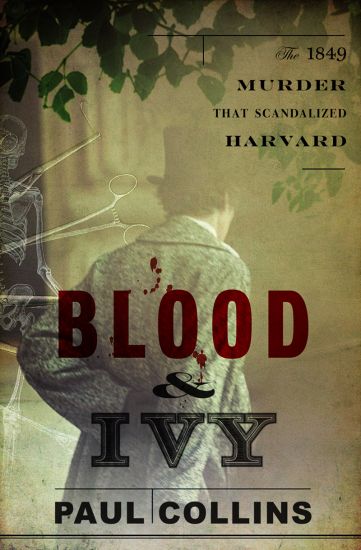
On 23 November 1849, in the heart of Boston, one of the city’s richest men vanished. Dr. George Parkman, who owned much of Boston's West End, was last seen that afternoon visiting his alma mater, Harvard Medical School. Police scoured city tenements and the harbour but a Harvard janitor held a much darker suspicion: that their ruthless benefactor had not left the Medical School building. His shocking discovery engulfed America in one of its most infamous trials, The Commonwealth of Massachusetts vs. John White Webster, Harvard’s professor of chemistry. A baffling case of red herrings, grave robbing and dismemberment; it became a landmark in the use of medical forensics. Rich in characters and atmosphere, Blood & Ivy explores the fatal entanglement of new science and old money in one of America’s greatest murder mysteries.
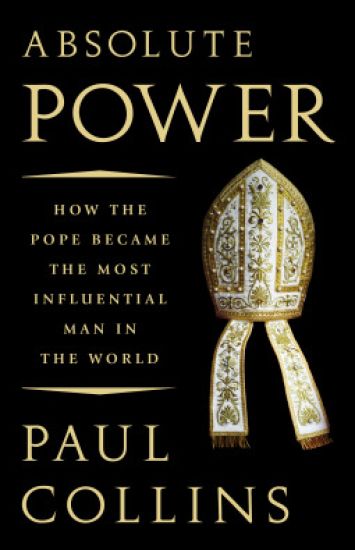
In 1799, the papacy was at rock bottom: The Papal States had been swept away and Rome seized by the revolutionary French armies. The cardinals were scattered across Europe, and Catholics feared they would be unable to elect the next pope. Even if Catholicism survived, it seemed the papacy was finished. And yet, just over two hundred years later, the pope still stands "at the very center of the central conversations of our time" (Time). His influence reaches across the world--from Cuban politics to gender equality to the refugee crisis--and the strength of his "soft power" is incomparable.In this gripping narrative of religious and political history, Paul Collins tells the improbable success story of the last 220 years of the papacy, from the unexalted death of Pope Pius VI in 1799 to the celebrity of Pope Francis today. As a historian, journalist, and theologian, Collins also poses pressing, critical questions to the Catholic Church: Does today's church governance stray from the teachings of the gospel? Is the papacy's internal power so great that it might be considered heretical? If so, what can be done to ensure a credible--and Christ-like--path forward?Absolute Power is required reading for anyone interested in the history of today's complex power structures--as well as anyone invested in religious, political, and social progress in the West.
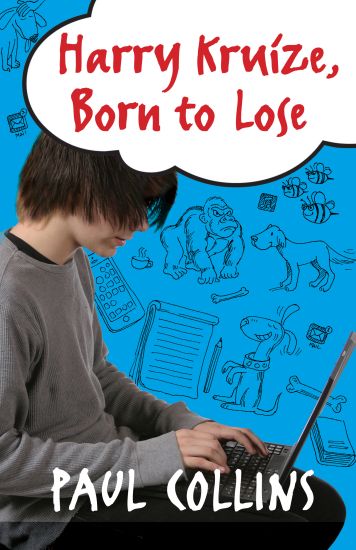
A tale of the acceptance of change and loss; the importance of friends and family, and the uplifting strength that comes from hope. Harrys mum runs a boarding house for transient old men who are down on their luck. To counter his frustration and anger, Harry longs for the companionship of a dog. The Annual Gala at school features a dog hurdle race and more than anything in the world, Harry would love to enter a dog into that race and win it. Such a win would give him a sense of worth and belonging. A new lodger, Jack Ellis, befriends Harry and shares a wealth of outback adventure stories featuring dogs with him.
The Stylus Phantasticus and Free Keyboard Music of the North German Baroque
Paul Collins
Routledge
2016
nidottu
The concept of stylus phantasticus (or ’fantastic style’) as it was expressed in free keyboard music of the north German Baroque forms the focus of this book. Exploring both the theoretical background to the style and its application by composers and performers, Paul Collins surveys the development of Athanasius Kircher’s original concept and its influence on music theorists such as Brossard, Janovka, Mattheson, and Walther. Turning specifically to fantasist composers of keyboard works, the book examines the keyboard toccatas of Merulo, Fresobaldi, Rossi and Froberger and their influence on north German organists Tunder, Weckmann, Reincken, Buxtehude, Bruhns, Lubeck, Bohm, and Leyding. The free keyboard music of this distinguished group highlights the intriguing relationship at this time between composition and performance, the concept of fantasy, and the understanding of originality and individuality in seventeenth-century culture.

Ancient Mesopotamia and Iran are usually treated separately or as part of a much broader 'Ancient Near East'. However, the developments that lie at the root of our own world - farming, cities, writing, organised religion, warfare - were forged in the tensions and relations between the inhabitants of lowland Mesopotamia (ancient Iraq) and the highlands of Iran. Mountains and Lowlands explores this relationship providing a detailed but accessible account covering the period 6000 BC-AD 650, from the development of the first agricultural communities to the coming of Islam. The story is told through the superlative Ancient Near Eastern collections in the Ashmolean Museum, Oxford, supplemented by images of photographs of archaeological sites and of iconic pieces in other collections including the Louvre, Paris. The discussion is further supported by six maps commissioned especially for this publication.