
Kirjailija
Paul Cooke
Kirjat ja teokset yhdessä paikassa: 12 kirjaa, julkaisuja vuosilta 2000-2021, suosituimpien joukossa Speaking the Taboo. Vertaile teosten hintoja ja tarkista saatavuus suomalaisista kirjakaupoista.
12 kirjaa
Kirjojen julkaisuhaarukka 2000-2021.
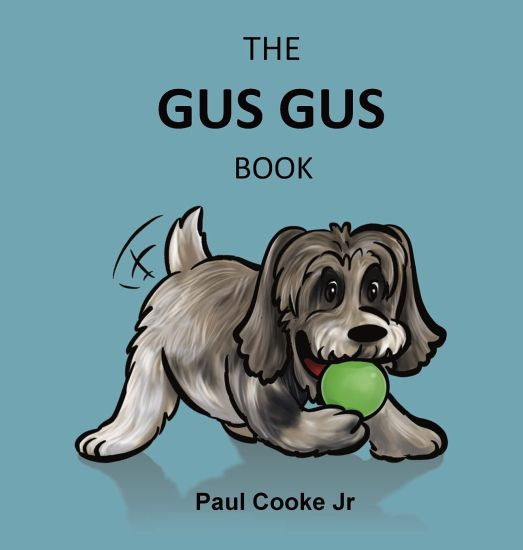
The perfect children's book for dog lovers Gus is an adorable, but sometimes naughty puppy. This children's book takes readers on a memorable journey with Gus in his daily adventures, troublemaking, and puppy training. Bold illustrations enable the imagination of a playful puppy enjoying his favorite activities such as fetch and tug-o-war. Three children; Kason, Myla, and Nolan decide to train Gus after the troublemaker chews shoes, gets into the trash, and has potty accidents inside. Young readers learn basic commands to use with dogs such as sit, stand, shake, and stay along with the expected response from the dog.

Music Industry Analysis 1999-2003
Paul Cooke
Createspace Independent Publishing Platform
2013
pokkari
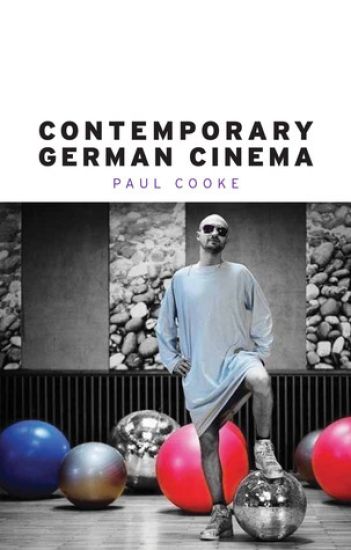
German film is enjoying enormous levels of success, be success defined in terms of financial returns, popularity with audiences at home and abroad or critical acclaim. On the one hand, the 2000s saw German productions become regular guests at all the major international film festivals, from Sundance to Tokyo, winning awards across the globe. As such, and as reviewers are keen to point out, the German industry appears to be reaching once again the aesthetic heights that brought it the international praise of critics from the late 1960s to the early 1980s. On the other, domestic productions are becoming more popular and, as a result, more commercially viable. Contemporary German Cinema examines the success of recent film production in its wider industrial, cultural and political context, blending broad overviews of recent trends with detailed examinations of key case studies. As a starting point, it explores the German film funding system and the economic place of the German industry within global film production. Subsequent chapters then look at the impact of this system on filmmakers’ aesthetic choices, be it the role of realism in contemporary cinema, or the rediscovery of the Heimatfilm as a popular film genre. This is complemented by discussion of the dominant issues these films explore, from the legacies of Germany’s Nazi past and post-war division, to the nation’s increasingly multicultural make up, the changing age and gender demographic of cinema audiences as well as the nation’s shifting relationship with the United States as both a ‘real’ and ‘imagined’ space.Paul Cooke looks at many of the most successful films of the last two decades, including Tom Tykwer's Run Lola Run, Wolfgang Becker's Good Bye, Lenin!, Hans Weingartner's The Edukators, Florian Henckel von Donnersmarchks The Lives of Others and Oliver Hirschbiegel's Downfall.
When the Berlin Wall came down and the two Germanies were reunited, culture was held up to be one of the keys to national unity. Ironically, however, Cooke argues it is the realm of culture that, at times, has most clearly demonstrated the continued divisions between East and West. Taking culture as broadly defined, this book examines state memorialization, literature, television, film, and the internet, to map out the problematic path of German national identity as it struggles to deal with the legacy of division. Drawing on postcolonial theory, the author examines the contention that the East has been colonized by the West, looking at how such perceptions have pervaded both east and west German culture. Cooke also discusses the complex phenomenon of nostalgia for East Germany, as evident in the recent international hit film Good Bye, Lenin! Rich in detail and first-hand accounts, this book provocatively asks how far East Germany can be read today as a postcolonial culture.
When the Berlin Wall came down and the two Germanies were reunited, culture was held up to be one of the keys to national unity. Ironically, however, Cooke argues it is the realm of culture that, at times, has most clearly demonstrated the continued divisions between East and West. Taking culture as broadly defined, this book examines state memorialization, literature, television, film, and the internet, to map out the problematic path of German national identity as it struggles to deal with the legacy of division. Drawing on postcolonial theory, the author examines the contention that the East has been colonized by the West, looking at how such perceptions have pervaded both east and west German culture. Cooke also discusses the complex phenomenon of nostalgia for East Germany, as evident in the recent international hit film Good Bye, Lenin! Rich in detail and first-hand accounts, this book provocatively asks how far East Germany can be read today as a postcolonial culture.

German Writers and the Politics of Culture
Paul Cooke; Andrew Plowman
Palgrave Macmillan
2003
sidottu
Before the fall of the Berlin Wall many East German writers were praised in the Western world as dissident voices of truth, bravely struggling with the draconian constraints of living under the GDR's communist regime. However, since unification, Germany has been rocked by scandals showing the level to which the Stasi, the East German Secret Police, controlled these same writers. This is the first study in English to systematically explore how the writers have responded to the challenge of dealing with the Stasi from the 1950s to the present day.
German Writers and the Politics of Culture
Paul Cooke; Andrew Plowman
Palgrave Macmillan
2003
nidottu
Before the fall of the Berlin Wall many East German writers were praised in the Western world as dissident voices of truth, bravely struggling with the draconian constraints of living under the GDR's communist regime. However, since unification, Germany has been rocked by scandals showing the level to which the Stasi, the East German Secret Police, controlled these same writers. This is the first study in English to systematically explore how the writers have responded to the challenge of dealing with the Stasi from the 1950s to the present day.
Although internationally renowned as a novelist, journalist, and essayist, Nobel Prize-winning author François Mauriac (1885-1970) never established a reputation as a poet. Yet it was Maurice Barrès’s favourable review of his first collection of verse, Les Mains jointes, that launched Mauriac’s career in 1910. He went on to publish three further collections of poems and insisted to the end of his life that, despite critical neglect of his verse, he remained first and foremost a poet. This book offers the first ever in-depth exploration of the whole of Mauriac’s verse output. After a chapter tracing his general conception of poetry and comparing his ideas to those of other poets and theorists, each of Mauriac’s verse collections is analysed in turn, as are many of his poems that were published exclusively in literary journals. A final chapter explores the significant relationship between Mauriac’s verse and his novels, revealing the multiple connections between these two series of texts. This volume will appeal to those with an interest in twentieth-century French poetry and, more generally, to those interested in the relationship between verse and prose.
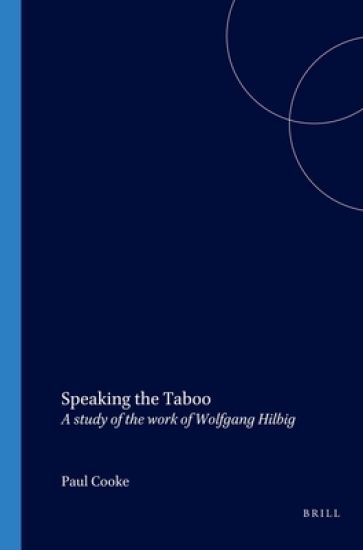
Wolfgang Hilbig is a writer who is widely acknowledged as one of the most important to have emerged from the former GDR. In this study, the first in English, Paul Cooke explores the interplay of aesthetic and social ‘taboos’, as defined by the official discourse of the GDR, in a cross-section of Hilbig’s critical writing, poetry and prose. The protagonists in Hilbig’s texts suffer from a profound crisis of identity due to the disparity between the state’s official presentation of life in the East and their own experience. Cooke argues that through their exploration of the ‘taboo’, i.e. that which is excluded from the state’s official discourse, Hilbig’s characters attempt to break through the banal rhetoric of the ruling elite in order to realise an authentic sense of self.