Kirjojen hintavertailu. Mukana 12 595 353 kirjaa ja 12 kauppaa.
Kirjailija
Paul Crowther
Kirjat ja teokset yhdessä paikassa: 34 kirjaa, julkaisuja vuosilta 1991-2024, suosituimpien joukossa Philosophy After Postmodernism. Vertaile teosten hintoja ja tarkista saatavuus suomalaisista kirjakaupoista.
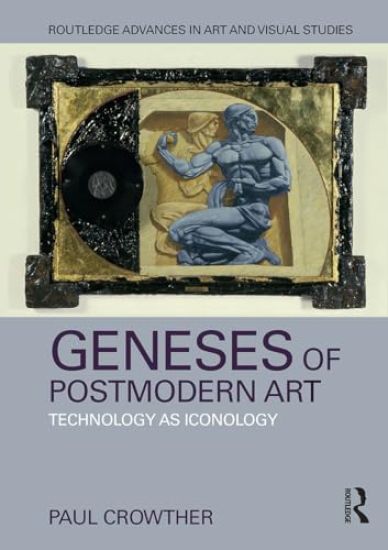
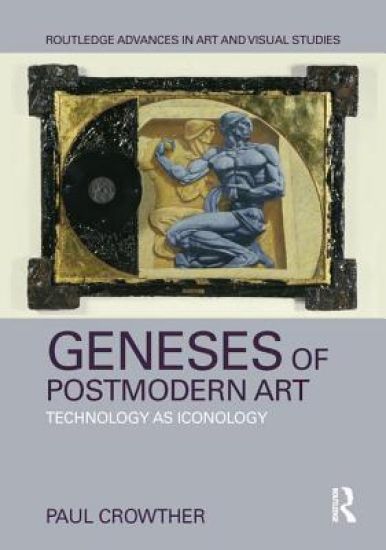
Postmodernism in the visual arts is not just another 'ism.' It emerged in the 1960s as a transformation of artistic creativity inspired by Duchamp's idea that the artwork does not have to be physically made by its creator. Products of mass culture and technology can be used just as well as traditional media. This idea became influential because of a widespread naturalization of technology - where technology becomes something lived in as well as used. Postmodern art embodies this attitude. To explain why, Paul Crowther investigates topics such as eclecticism, the sublime, deconstruction in art and philosophy, and Paolozzi's Wittgenstein-inspired works.
This is the first book dedicated to Husserl’s aesthetics. Paul Crowther pieces together Husserl’s ideas of phantasy and image and presents them as a unified and innovative account of aesthetic consciousness. He also shows how Husserl’s ideas can be developed to solve problems in aesthetics, especially those related to visual art, literature, theatre, and nature.After outlining the major components of Husserl’s phenomenological method, Crowther addresses the scope and structure of Husserl’s notion of aesthetic consciousness. For Husserl, aesthetic consciousness in all its forms involves phantasy—where items or states of affairs are represented as if actually perceived or experienced, even though they are not, in fact, given in the present perceptual field. Husserl also makes some extraordinarily interesting links between aesthetic consciousness and nature, showing how natural things and environments become instigators of such consciousness when apprehended in the appropriate terms. This "unreality" of the object of aesthetic consciousness anticipates contemporary debates about pictorial representation and is also relevant to Husserl’s accounts of literature and theatre.The Phenomenology of Aesthetic Consciousness and Phantasy will appeal to scholars and advanced students interested in aesthetics, philosophy of art, phenomenological aesthetics, and Husserl’s philosophy.
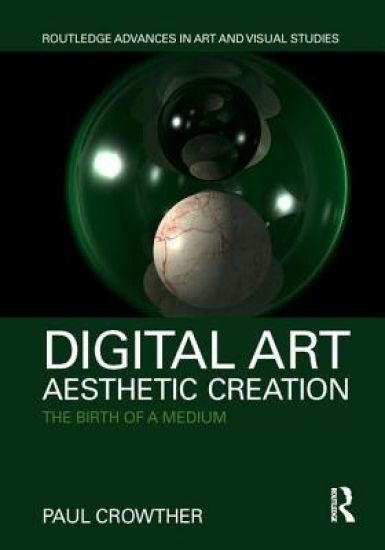
Is art created with computers really art? This book answers ‘yes.’ Computers can generate visual art with unique aesthetic effects based on innovations in computer technology and a Postmodern naturalization of technology wherein technology becomes something we live in as well as use. The present study establishes these claims by looking at digital art’s historical emergence from the 1960s to the start of the present century. Paul Crowther, using a philosophical approach to art history, considers the first steps towards digital graphics, their development in terms of three-dimensional abstraction and figuration, and then the complexities of their interactive formats.
This is the first book dedicated to Husserl’s aesthetics. Paul Crowther pieces together Husserl’s ideas of phantasy and image and presents them as a unified and innovative account of aesthetic consciousness. He also shows how Husserl’s ideas can be developed to solve problems in aesthetics, especially those related to visual art, literature, theatre, and nature.After outlining the major components of Husserl’s phenomenological method, Crowther addresses the scope and structure of Husserl’s notion of aesthetic consciousness. For Husserl, aesthetic consciousness in all its forms involves phantasy—where items or states of affairs are represented as if actually perceived or experienced, even though they are not, in fact, given in the present perceptual field. Husserl also makes some extraordinarily interesting links between aesthetic consciousness and nature, showing how natural things and environments become instigators of such consciousness when apprehended in the appropriate terms. This "unreality" of the object of aesthetic consciousness anticipates contemporary debates about pictorial representation and is also relevant to Husserl’s accounts of literature and theatre.The Phenomenology of Aesthetic Consciousness and Phantasy will appeal to scholars and advanced students interested in aesthetics, philosophy of art, phenomenological aesthetics, and Husserl’s philosophy.
Meaning in the visual arts centers on how the physical work makes its content or presence visible. The art object is fundamental. Indeed, the different object forms of each visual medium allows our experience of space-time, and our relations to other people, to be aesthetically embodied in unique ways. Through these embodiments, visual art compensates for what is otherwise existentially lost, and becomes part of what makes life worth living. The present book shows this by discussing a range of visual art forms, namely pictorial representation, abstraction, sculpture and assemblage works, land art, architecture, photography, and varieties of digital art.
This book shows that art involves an aesthetics of self-becoming, wherein we do not simply consume artistic meaning, but become empowered—by adapting ourselves to what creation in the different art forms makes possible. Paul Crowther argues that the great political task in aesthetics is no longer the creation of political art as such, but rather the winning back of art and aesthetics as central societal concerns. This involves the overcoming of neo-liberal treatments of art as mere commodity and misguided attitudes that dismiss it as the product of dead white European males. The book begins with a theory of self-consciousness which reveals the necessary role played by the aesthetic in personal identity. It then emphasises how art forms empower through processes of making and aesthetic effects that are unique to them individually. To show this, he considers the ontology of pictorial art, sculpture, installation and assemblage works, architecture, literature, cinema, and music. His arguments concerning these are supported, throughout, by in-depth discussions of specific artworks. The book’s effect, overall is to reorientate aesthetics by showing how art empowers through its revelation of new possibilities of experience.The Aesthetics of Self-Becoming will appeal to philosophers of art and aesthetics, as well as scholars in art history, literary studies, film studies, and music theory who are interested in the book’s central concerns.
Modern businesses depend on data for their very survival, creating a need for sophisticated databases and database technologies to help store, organise and transport their valuable data.This updated and expanded, easy-to-read textbook/reference presents a comprehensive introduction to databases, opening with a concise history of databases and of data as an organisational asset. As relational database management systems are no longer the only database solution, the book takes a wider view of database technology, encompassing big data, NoSQL, object and object-relational, and in-memory databases. Presenting both theoretical and practical elements, the new edition also examines the issues of scalability, availability, performance and security encountered when building and running a database in the real world.Topics and features:Presents review and discussion questions at the end of each chapter, in addition toskill-building, hands-on exercisesProvides new material on database adaptiveness, integration, and efficiency in relation to data growthIntroduces a range of commercial databases and encourages the reader to experiment with these in an associated learning environmentReviews use of a variety of databases in business environments, including numerous examplesDiscusses areas for further research within this fast-moving domainWith its learning-by-doing approach, supported by both theoretical and practical examples, this clearly-structured textbook will be of great value to advanced undergraduate and postgraduate students of computer science, software engineering, and information technology. Practising database professionals and application developers will also find the book an ideal reference that addresses today's business needs.
Meaning in the visual arts centers on how the physical work makes its content or presence visible. The art object is fundamental. Indeed, the different object forms of each visual medium allows our experience of space-time, and our relations to other people, to be aesthetically embodied in unique ways. Through these embodiments, visual art compensates for what is otherwise existentially lost, and becomes part of what makes life worth living. The present book shows this by discussing a range of visual art forms, namely pictorial representation, abstraction, sculpture and assemblage works, land art, architecture, photography, and varieties of digital art.
There are as many meanings to drawing and painting as there are cultural contexts for them to exist in. But this is not the end of the story. Drawings and paintings are made, and in their making embody unique meanings that transform our perception of space-time and sense of finitude. These meanings have not been addressed by art history or visual studies hitherto, and have only been considered indirectly by philosophers (mainly in the phenomenological tradition). If these intrinsic meanings are explained and further developed, then the philosophy of art practice is significantly enhanced. The present work, accordingly, is a phenomenology of how the gestural and digital creation of visual imagery generates self-transformation through aesthetic space.
This book shows that art involves an aesthetics of self-becoming, wherein we do not simply consume artistic meaning, but become empowered—by adapting ourselves to what creation in the different art forms makes possible. Paul Crowther argues that the great political task in aesthetics is no longer the creation of political art as such, but rather the winning back of art and aesthetics as central societal concerns. This involves the overcoming of neo-liberal treatments of art as mere commodity and misguided attitudes that dismiss it as the product of dead white European males. The book begins with a theory of self-consciousness which reveals the necessary role played by the aesthetic in personal identity. It then emphasises how art forms empower through processes of making and aesthetic effects that are unique to them individually. To show this, he considers the ontology of pictorial art, sculpture, installation and assemblage works, architecture, literature, cinema, and music. His arguments concerning these are supported, throughout, by in-depth discussions of specific artworks. The book’s effect, overall is to reorientate aesthetics by showing how art empowers through its revelation of new possibilities of experience.The Aesthetics of Self-Becoming will appeal to philosophers of art and aesthetics, as well as scholars in art history, literary studies, film studies, and music theory who are interested in the book’s central concerns.
Postmodernism in the visual arts is not just another 'ism.' It emerged in the 1960s as a transformation of artistic creativity inspired by Duchamp's idea that the artwork does not have to be physically made by its creator. Products of mass culture and technology can be used just as well as traditional media. This idea became influential because of a widespread naturalization of technology - where technology becomes something lived in as well as used. Postmodern art embodies this attitude. To explain why, Paul Crowther investigates topics such as eclecticism, the sublime, deconstruction in art and philosophy, and Paolozzi's Wittgenstein-inspired works.
Is art created with computers really art? This book answers ‘yes.’ Computers can generate visual art with unique aesthetic effects based on innovations in computer technology and a Postmodern naturalization of technology wherein technology becomes something we live in as well as use. The present study establishes these claims by looking at digital art’s historical emergence from the 1960s to the start of the present century. Paul Crowther, using a philosophical approach to art history, considers the first steps towards digital graphics, their development in terms of three-dimensional abstraction and figuration, and then the complexities of their interactive formats.
There are as many meanings to drawing and painting as there are cultural contexts for them to exist in. But this is not the end of the story. Drawings and paintings are made, and in their making embody unique meanings that transform our perception of space-time and sense of finitude. These meanings have not been addressed by art history or visual studies hitherto, and have only been considered indirectly by philosophers (mainly in the phenomenological tradition). If these intrinsic meanings are explained and further developed, then the philosophy of art practice is significantly enhanced. The present work, accordingly, is a phenomenology of how the gestural and digital creation of visual imagery generates self-transformation through aesthetic space.
Despite the wonders of the digital world, people still go in record numbers to view drawings and paintings in galleries. Why? What is the magic that pictures work on us? This book provides a provocative explanation, arguing that some pictures have special kinds of beauty and sublimity that offer aesthetic transcendence. They take us imaginatively beyond our finite limits and even invoke a sense of the divine. Such aesthetic transcendence forges a relationship with the ultimate and completes us psychologically. Philosophers and theologians sometimes account for this as an effect of art, but How Pictures Complete Us distinguishes itself by revealing how this experience is embodied in pictorial structures and styles. Through detailed discussions of artworks from the Renaissance through postmodern times, Paul Crowther reappraises the entire scope of beauty and the sublime in the context of both representational and abstract art, offering unexpected insights into familiar phenomena such as ideal beauty, pictorial perspective, and what pictures are in the first place.
Despite the wonders of the digital world, people still go in record numbers to view drawings and paintings in galleries. Why? What is the magic that pictures work on us? This book provides a provocative explanation, arguing that some pictures have special kinds of beauty and sublimity that offer aesthetic transcendence. They take us imaginatively beyond our finite limits and even invoke a sense of the divine. Such aesthetic transcendence forges a relationship with the ultimate and completes us psychologically. Philosophers and theologians sometimes account for this as an effect of art, but How Pictures Complete Us distinguishes itself by revealing how this experience is embodied in pictorial structures and styles. Through detailed discussions of artworks from the Renaissance through postmodern times, Paul Crowther reappraises the entire scope of beauty and the sublime in the context of both representational and abstract art, offering unexpected insights into familiar phenomena such as ideal beauty, pictorial perspective, and what pictures are in the first place.
Contemporary discussions of the image like to emphasize art's societal functions. Few studies come close to answering why pictures and sculptures fascinate and intrigue regardless of any practical functions they might serve. In this original, thought-provoking study, Paul Crowther reveals the intrinsic significance of pictures and sculptures. To address the question of how painting becomes an art, Crowther uses the analytic philosophy of Richard Wollheim as a starting point. But to sufficiently answer the question, he makes an important link to a tradition much more successful in giving voice to the deeper ontology of visual art - existential phenomenology. The result is a work that demonstrates the reciprocal relationship between phenomenology and analytic aesthetics. To expand its ontological scope and solve the problem of expression, analytic aesthetics needs phenomenology; while to develop a sustained, critically balanced, and intellectually available ontology, phenomenology needs the discursive force and lucidity of analytic philosophy. This convincing case for a post-analytic phenomenology of art is an important advancement of contemporary discussions of the philosophy of art.
Formulating a new approach to philosophy which, instead of simply rejecting postmodern thought, tries to assimilate some of its main features, Paul Crowther identifies conceptual links between value, knowledge, personal identity and civilization understood as a process of cumulative advance.To establish these links, Crowther deploys a mode of analytic philosophy influenced by Cassirer. This approach recontextualizes precisely those aspects of postmodernism which appear, superficially, to be fuel for the relativist fire. This method also enables him to illuminate some of the great practical dangers of the postmodern era - most notably the widespread inability or unwillingness to distinguish between signs and reality. Crowther renews analytic philosophy as a searching form of conceptual and cultural critique that pushes beyond the limits of postmodern thought.Essential reading for advanced students and academics interested in Twentieth Century Philosophy, Philosophy After Postmodernism will also be of value to scholars working in the fields of Cultural Studies and Sociology.
The Kantian Aesthetic explains the kind of perceptual knowledge involved in aesthetic judgments. It does so by linking Kant's aesthetics to a critically upgraded account of his theory of knowledge. This upgraded theory emphasizes those conceptual and imaginative structures which Kant terms, respectively, 'categories' and 'schemata'. By describing examples of aesthetic judgment, it is shown that these judgments must involve categories and fundamental schemata (even though Kant himself, and most commentators after him, have not fully appreciated the fact). It is argued, in turn, that this shows the aesthetic to be not just one kind of pleasurable experience amongst others, but one based on factors necessary to objective knowledge and personal identity, and which, indeed, itself plays a role in how these capacities develop. In order to explain how individual aesthetic judgments are justified, and the aesthetic basis of art, however, the Kantian position just outlined has to be developed further. This is done by exploring some of his other ideas concerning how critical comparisons inform our cultivation of taste, and art's relation to genius. By linking the points made earlier to a more developed account of this horizon of critical comparisons, a Kantian approach can be shown to be both a satisfying and comprehensive explanation of the cognitive basis of aesthetic experiences. It is shown also that the approach can even cover some of the kinds of avant-garde works which were thought previously to limit its relevance.
Contemporarydiscussions of the image like to emphasize art's societal functions. Fewstudies come close to answering why pictures and sculptures fascinate andintrigue regardless of any practical functions they might serve. In thisoriginal, thought-provoking study, Paul Crowther reveals the intrinsicsignificance of pictures and sculptures. To address thequestion of how painting becomes an art, Crowther uses the analytic philosophyof Richard Wollheim as a starting point. But to sufficiently answer thequestion, he makes an important link to a tradition much more successful ingiving voice to the deeper ontology of visual art - existential phenomenology. The result is a work that demonstrates thereciprocal relationship between phenomenology and analytic aesthetics. Toexpand its ontological scope and solve the problem of expression, analytic aestheticsneeds phenomenology; while to develop a sustained, critically balanced, andintellectually available ontology, phenomenology needs the discursive force andlucidity of analytic philosophy. This convincing case for a post-analyticphenomenology of art is an important advancement of contemporary discussions ofthe philosophy of art.
Why are visual artworks experienced as having intrinsic significance or normative depth? Why are some works of art better able to manifest this significance than others? In this 2002 book Paul Crowther argues that we can answer these questions only if we have a full analytic definition of visual art. Crowther's approach focuses on the pictorial image, broadly construed to include abstract work and recent conceptually-based idioms. The significance of art depends, however, essentially on the transhistorical nature of the pictorial image, the way in which its illuminative power is extended through historical transformation of the relevant artistic medium. Crowther argues against fashionable forms of cultural relativism, while at the same time showing why it is important that an appreciation of the history of art is integral to aesthetic judgment.