Kirjojen hintavertailu. Mukana 12 595 353 kirjaa ja 12 kauppaa.

Kirjailija

Paul Dickson

Kirjat ja teokset yhdessä paikassa: 22 kirjaa, julkaisuja vuosilta 1977-2023, suosituimpien joukossa Sputnik. Vertaile teosten hintoja ja tarkista saatavuus suomalaisista kirjakaupoista.

22 kirjaa

Kirjojen julkaisuhaarukka 1977-2023.

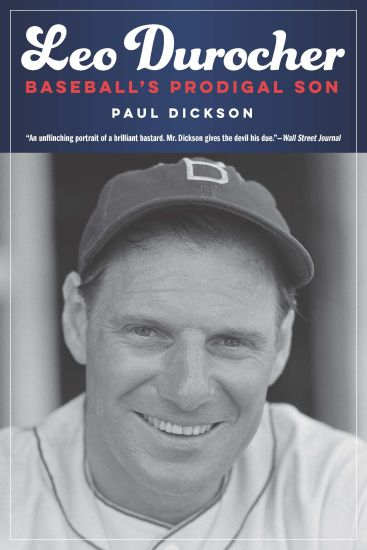
Leo Durocher

Leo Durocher

Paul Dickson

University of Nebraska Press
2023
pokkari
Leo Durocher (1905–1991) was baseball’s all-time leading cocky, flamboyant, and galvanizing character, casting a shadow across several eras, from the time of Babe Ruth to the Space Age Astrodome, from Prohibition through the Vietnam War. For more than forty years, he was at the forefront of the game, with a Zelig-like ability to be present as a player or manager for some of the greatest teams and defining baseball moments of the twentieth century. A rugged, combative shortstop and a three-time All-Star, he became a legendary manager, winning three pennants and a World Series in 1954. Durocher performed on three main stages: New York, Chicago, and Hollywood. He entered from the wings, strode to where the lights were brightest, and then took a poke at anyone who tried to upstage him. On occasion he would share the limelight, but only with Hollywood friends such as actor Danny Kaye, tough guy and sometime roommate George Raft, Frank Sinatra, and Durocher’s third wife, movie star Laraine Day. Dickson explores Durocher’s life and times through primary source materials, interviews with those who knew him, and original newspaper files. A superb addition to baseball literature, Leo Durocher offers fascinating and fresh insights into the racial integration of baseball, Durocher’s unprecedented suspension from the game, the two clubhouse revolts staged against him in Brooklyn and Chicago, and his vibrant life off the field.
Lupin

Lupin

Maurice LeBlanc; Paul Dickson

DOVER PUBLICATIONS INC.
2021
nidottu
The first collection of short stories by French novelist Maurice Leblanc—and the inspiration for countless retellings, interpretations, and adaptations in film, television, comic books, games, and more—Lupin depicts the elaborate capers and adventures of a suave thief and master of disguise as he steals from the rich and powerful. Charmingly written and full of wit, the stories include "The Queen's Necklace," "The Arrest of Arsène Lupin," "The Escape of Arsène Lupin," and many more of Leblanc's most popular tales.
The Rise of the G.I. Army, 1940-1941: The Forgotten Story of How America Forged a Powerful Army Before Pearl Harbor
In September 1939, when Nazi Germany invaded Poland and initiated World War II, a strong strain of isolationism existed in Congress and across the country. The U.S. Army stood at fewer than 200,000 men--unprepared to defend the country, much less carry the fight to Europe and the Far East. And yet, less than a year after Pearl Harbor, the American army led the Allied invasion of North Africa, beginning the campaign that would defeat Germany, and the Navy and Marines were fully engaged with Japan in the Pacific.The story of America's astounding industrial mobilization during World War II has been told. But what has never been chronicled before Paul Dickson's The Rise of the G. I. Army, 1940-1941 is the extraordinary transformation of America's military from a disparate collection of camps with dilapidated equipment into a well-trained and spirited army ten times its prior size in little more than eighteen months. From Franklin Roosevelt's selection of George C. Marshall to be Army Chief of Staff to the remarkable peace-time draft of 1940 and the massive and unprecedented mock battles in Tennessee, Louisiana, and the Carolinas by which the skill and spirit of the Army were forged and out of which iconic leaders like Eisenhower, Bradley, and Clark emerged; Dickson narrates America's urgent mobilization against a backdrop of political and cultural isolationist resistance and racial tension at home, and the increasingly perceived threat of attack from both Germany and Japan.An important addition to American history, The Rise of the G. I. Army, 1940-1941 is essential to our understanding of America's involvement in World War II.
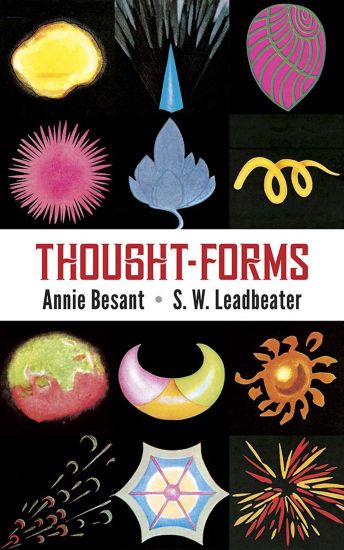
Thought Forms

Thought Forms

Annie Besant; Paul Dickson

Dover Publications Inc.
2020
nidottu
A classic of the Theosophical tradition, this treatise explores the concept of what thoughts "look" like. Written by a pair of prominent Theosophists, it provides a way to visualize the invisible realms within and around us. These simple, clearly expressed, and well-illustrated discussions address the meaning of color, thought forms built by music, the nature of helpful thoughts, and related subjects.
The Rise of the G.I. Army, 1940-1941

The Rise of the G.I. Army, 1940-1941

Paul Dickson

Grove Press / Atlantic Monthly Press
2020
sidottu
In September 1939, when Nazi Germany invaded Poland and initiated World War II, a strong strain of isolationism existed in Congress and across the country. The U.S. Army stood at fewer than 200,000 men—unprepared to defend the country, much less carry the fight to Europe and the Far East. And yet, less than a year after Pearl Harbor, the American army led the Allied invasion of North Africa, beginning the campaign that would defeat Germany, and the Navy and Marines were fully engaged with Japan in the Pacific.The story of America’s astounding industrial mobilization during World War II has been told. But what has never been chronicled before Paul Dickson’s The Rise of the G. I. Army, 1940-1941 is the extraordinary transformation of America’s military from a disparate collection of camps with dilapidated equipment into a well-trained and spirited army ten times its prior size in little more than eighteen months. From Franklin Roosevelt’s selection of George C. Marshall to be Army Chief of Staff to the remarkable peace-time draft of 1940 and the massive and unprecedented mock battles in Tennessee, Louisiana, and the Carolinas by which the skill and spirit of the Army were forged and out of which iconic leaders like Eisenhower, Bradley, and Clark emerged; Dickson narrates America’s urgent mobilization against a backdrop of political and cultural isolationist resistance and racial tension at home, and the increasingly perceived threat of attack from both Germany and Japan.An important addition to American history, The Rise of the G. I. Army, 1940-1941 is essential to our understanding of America’s involvement in World War II.
Sputnik

Sputnik

Paul Dickson

University of Nebraska Press
2019
pokkari
On October 4, 1957, the day Leave It to Beaver premiered on American television, the Soviet Union launched the space age. Sputnik, all of 184 pounds with only a radio transmitter inside its highly polished shell, became the first artificial satellite in space; while it immediately shocked the world, its long-term impact was even greater, for it profoundly changed the shape of the twentieth century. Paul Dickson chronicles the dramatic events and developments leading up to and resulting from Sputnik’s launch. Supported by groundbreaking, original research and many declassified documents, Sputnik offers a fascinating profile of the early American and Soviet space programs and a strikingly revised picture of the politics and personalities behind the facade of America’s fledgling efforts to get into space. The U.S. public reaction to Sputnik was monumental. In a single weekend, Americans were wrenched out of a mood of national smugness and postwar material comfort. Initial shock at and fear of the Soviets’ intentions galvanized the country and swiftly prompted innovative developments that define our world today. Sputnik directly or indirectly influenced nearly every aspect of American life: from an immediate shift toward science in the classroom to the arms race that defined the Cold War, the competition to reach the moon, and the birth of the internet. By shedding new light on a pivotal era, Dickson expands our knowledge of the world we now inhabit and reminds us that the story of Sputnik goes far beyond technology and the beginning of the space age, and that its implications are still being felt today.
The Hidden Language of Baseball

The Hidden Language of Baseball

Paul Dickson

University of Nebraska Press
2019
pokkari
Baseball is set apart from other sports by many things, but few are more distinctive than the intricate systems of coded language that govern action on the field and give baseball its unique appeal. During a nine-inning game, more than one thousand silent instructions are given-from catcher to pitcher, coach to batter, fielder to fielder, umpire to umpire-and without this speechless communication the game would simply not be the same. Baseball historian Paul Dickson examines the rich legacy of baseball’s hidden language, offering fans everywhere a smorgasbord of history and anecdote. Baseball’s tradition of signing grew out of the signal flags used by ships and hand signals used by soldiers during battle and were first used in games during the Civil War. The Hartford Dark Blues appear to be the first team to steal signs, introducing a larcenous obsession that, as Dickson delightfully chronicles, has given the game some of its most historic-and outlandish-moments. In this revised and expanded edition through the 2018 season, Dickson discusses recent developments and incidents, including the illegal use of new technology to swipe signs. A roster of baseball’s greatest names and games, past and present, echoes throughout, making The Hidden Language of Baseball a unique window on the history of our national pastime.
Work Revolution

Work Revolution

Paul Dickson

Routledge
2018
nidottu
In this book, first published in 1975, the author critically examines the organisation of work, the systems of control, and the patterns of authority in British establishments. By bringing together detailed descriptions of alternative forms of work organisation and management from Norway, Sweden, Denmark and the USA, Paul Dickson provokes considerable thought as to the extent to which these models could be developed and applied in the UK. This title will be of interest to students of business studies and human resource management.
Work Revolution

Work Revolution

Paul Dickson

Routledge
2017
sidottu
In this book, first published in 1975, the author critically examines the organisation of work, the systems of control, and the patterns of authority in British establishments. By bringing together detailed descriptions of alternative forms of work organisation and management from Norway, Sweden, Denmark and the USA, Paul Dickson provokes considerable thought as to the extent to which these models could be developed and applied in the UK. This title will be of interest to students of business studies and human resource management.
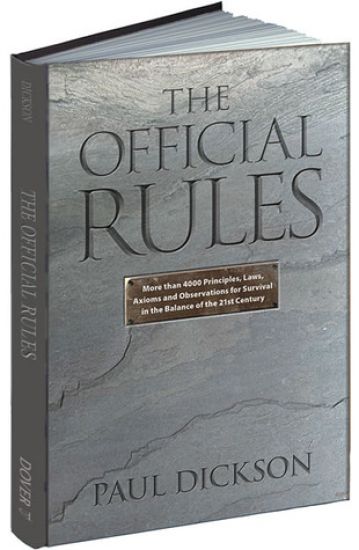
The Official Rules

The Official Rules

Paul Dickson

Dover Publications Inc.
2013
sidottu
According to Murphy's Law, "If anything can go wrong, it will." This humorous hardcover compilation offers a wealth of variations on the well-known adage, including maxims related to business matters, excuses, efficiency, and legal jargon. It also features a "Bureaucratic Survival Kit," "Old Saws Resharpened," "How to Tell the Difference Between Democrats and Republicans," and other comic truths.
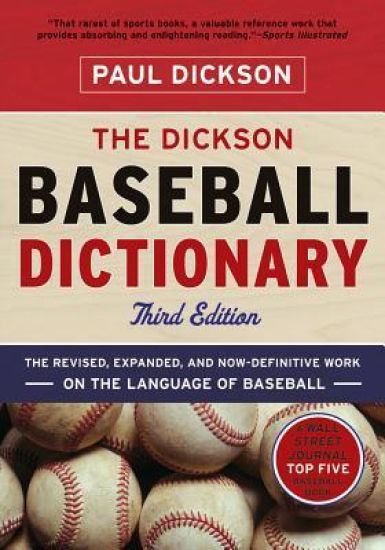
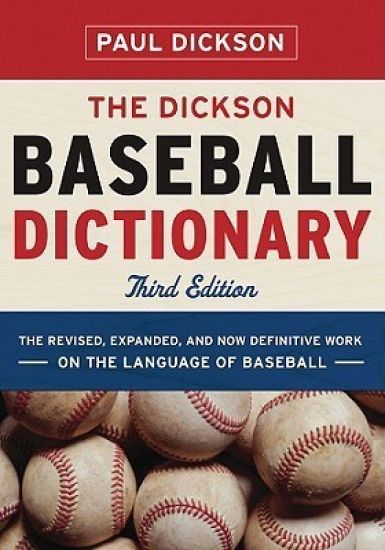
The Dickson Baseball Dictionary

The Dickson Baseball Dictionary

Paul Dickson

WW Norton Co
2011
nidottu
Hailed as “a staggering piece of scholarship” (Wall Street Journal) and “an indispensable guide to the language of baseball” (San Diego Union-Tribune), The Dickson Baseball Dictionary has become an invaluable resource for those who love the game. Drawing on dozens of nineteenth- and early twentieth-century periodicals, as well as contemporary sources, Dickson’s brilliant, illuminating definitions trace the earliest appearances of terms both well known and obscure. This edition includes more than 10,000 terms with 18,000 individual entries, and more than 250 photos. This “impressively comprehensive” (The Nation) book will delight everyone from the youngest fan to the hard-core aficionado.
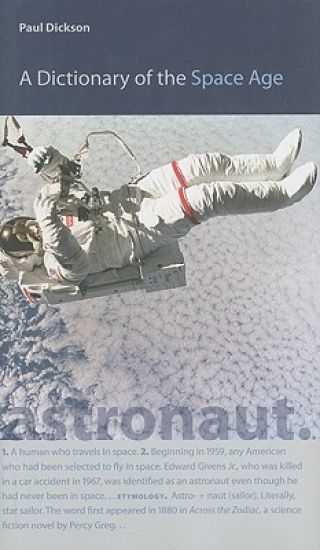
A Dictionary of the Space Age

A Dictionary of the Space Age

Paul Dickson

Johns Hopkins University Press
2009
sidottu
The launch of Sputnik 1 in 1957 ushered in an exciting era of scientific and technological advancement. As television news anchors, radio hosts, and journalists reported the happenings of the American and the Soviet space programs to millions of captivated citizens, words that belonged to the worlds of science, aviation, and science fiction suddenly became part of the colloquial language. What's more, NASA used a litany of acronyms in much of its official correspondence in an effort to transmit as much information in as little time as possible. To translate this peculiar vocabulary, Paul Dickson has compiled the curious lingo and mystifying acronyms of NASA in an accessible dictionary of the names, words, and phrases of the Space Age. Aviators, fighter pilots, and test pilots coined the phrases "spam in a can" (how astronauts felt prelaunch as they sat in a tiny capsule atop a rocket booster); "tickety-boo" (things are fine), and "the Eagle has landed" (Neil Armstrong's famous quote when Apollo 11 landed on the Moon). This dictionary captures a broader foundation for language of the Space Age based on the historic principles employed by the Oxford English Dictionary and Webster's New Third International Dictionary. Word histories for major terms are detailed in a conversational tone, and technical terms are deciphered for the interested student and lay reader. This is a must-own reference for space history buffs.
The Dickson Baseball Dictionary

The Dickson Baseball Dictionary

Paul Dickson

WW Norton Co
2009
sidottu
Hailed as “a staggering piece of scholarship” (Wall Street Journal) The Dickson Baseball Dictionary is the most complete resource on the lexicon of baseball in the English language. More than twenty-five years in the making, with the help of more than 400 baseball and lexical experts, this masterful third edition, expanded by more than 30 percent, with over 10,000 terms and 18,000 definitions, provides the comprehensive history and meanings of words and phrases from around the world of baseball. Drawing on dozens of nineteenth- and early twentieth-century periodicals, as well as contemporary sources, Paul Dickson’s brilliant, illuminating definitions trace the earliest appearances of our most treasured baseball expressions (“tearin’ up the pea patch,” “can o’ corn,” “catbird seat,” etc.). Termed “baseball’s Webster,” Dickson has spent nearly a decade painstakingly revising and writing new definitions, for words both well-known and obscure, including those introduced by Latin-American ballplayers, and statistical expressions relating to fantasy baseball and the SABR/Moneyball era. More than 200 photos throughout the book—many rare and previously unpublished—illuminate various historical and contemporary terms. Because of its deep and broad coverage, its authoritativeness and its rich and colorful descriptions, The Dickson Baseball Dictionary will prove indispensable to baseball fans and word lovers alike.
The Unwritten Rules of Baseball: The Etiquette, Conventional Wisdom, and Axiomatic Codes of Our National Pastime
From beanballs to basebrawls, the most important rules governing the game of baseball have never been officially written down--until now.They have no sanction from the Commissioner, appear nowhere in any official publication, and are generally not posted on any clubhouse wall. They represent a set of time-honored customs, rituals, and good manners that show a respect for the game, one's teammates, and one's opponents. Sometimes they contradict the official rulebook. The fans generally only hear about them when one is bent or broken, and it becomes news for a few days. Now, for the first time ever, Paul Dickson has put these unwritten rules down on paper, covering every situation, whether on the field or in the clubhouse, press box, or stands. Along with entertaining baseball axioms, quotations, and rules of thumb, this essential volume contains the collected wisdom of dozens of players, managers, and reporters on the secret rules that you break at your own risk, such as: 1.7.1. In a Fight, Everyone Must Leave the Bench and the Bullpen Has to Join In1.13.3. In a Blowout Game, Never Swing as Hard as You Can at a 3-0 Pitch5.1.0. In Areas That Have Two Baseball Teams, Any Given Fan Can Only Really Root For One of Them
Baseball's Greatest Quotations, Revised Edition
Baseball has always had its share of colorful characters, and over the years they have expressed themselves in eminently quotable ways. In this treasury of more than 5,000 quotations, noted baseball writer and observer Paul Dickson has captured the flavor of the game, in the words of its most important participants and onlookers.They are all here--from Aaron (Estella, Hank's mother) to Zoldack ("Sad Sack" Sam), and everyone in between. From the players, sportswriters, and politicians, to noted personalities in other fields (a very diverse group), everyone has his or her say on our nation's pastime. Dickson skillfully selects and annotates each remark, presenting the good, the bad, and the ugly of baseball lore. Included are extended lessons in Stengelese, Reggiespeak, Earl Weaverisms, and famous announcers' home run calls (who can forget Mel Allen's classic "Going, going, gone "?).These and thousands of other cheerful, pithy, and memorable voices from the past through the present day are all captured in Baseball's Greatest Quotations.
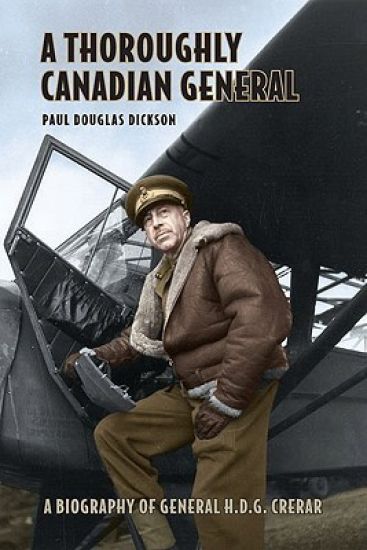
A Thoroughly Canadian General

A Thoroughly Canadian General

Paul Dickson

University of Toronto Press
2007
sidottu
General H.D.G. 'Harry' Crerar (1888-1965) was involved in or directly responsible for many of the defining moments of Canadian military history in the twentieth century. In the First World War, Crerar was nearly killed at the second battle of Ypres, was a gunner who helped to secure victory at Vimy Ridge, and was a senior staff officer during the pivotal battles of the last Hundred Days. During the Second World War, he occupied and often defined the Canadian army's senior staff and operational appointments, including his tenure as commander of First Canadian Army through the northwest European campaign.Despite his pivotal role in shaping the Canadian army, however, General Crerar has been long overlooked as a subject of biography. In A Thoroughly Canadian General, Paul Douglas Dickson examines the man and his controversial place in Canadian military history, arguing that Crerar was a nationalist who saw the army as an instrument to promote Canadian identity and civic responsibility. From his days as a student at the Royal Military College in Kingston, to his role as primary architect of First Canadian Army, the career of General H.D.G. Crerar is thoroughly examined with a view to considering and reinforcing his place in the history of Canada and its armed forces.
Miracle in Kigali

Miracle in Kigali

Illuminee Nganemariya; Paul Dickson

Tagman Press Ltd
2007
nidottu
Illuminee Nganemariya existed for 100 days in the living hell of Kigali, Rwanda's capital, after watching her husband being dragged away to be killed by friends who had celebrated their wedding with them a month earlier. Then she embarked on a horrific journey through the Genocide with her son strapped to her back.
Labels For Locals

Labels For Locals

Paul Dickson

HarperCollins
2006
nidottu
"Labels for Locals" is a quirky guide to what to call people from various locales, both the proper names and nicknames, the common and unusual. While there are some general rules and guidelines, there are also plenty of exceptions as well as historical and etymological reasons for those exceptions. Organized from A-Z, "Labels for Locals" sorts and categorizes these distinctions for the inquiring mind, and is packed with fascinating lore and history behind the terms. Whether you're a Liverpudlian, a Kiwi, or a Tar Heel, this book is sure to tickle your brain.