Kirjojen hintavertailu. Mukana 12 595 353 kirjaa ja 12 kauppaa.

Kirjailija

Paul E. Griffiths

Kirjat ja teokset yhdessä paikassa: 3 kirjaa, julkaisuja vuosilta 1997-1999, suosituimpien joukossa What Emotions Really Are. Vertaile teosten hintoja ja tarkista saatavuus suomalaisista kirjakaupoista.

3 kirjaa

Kirjojen julkaisuhaarukka 1997-1999.

Sex and Death

Sex and Death

Kim Sterelny; Paul E. Griffiths

University of Chicago Press
1999
nidottu
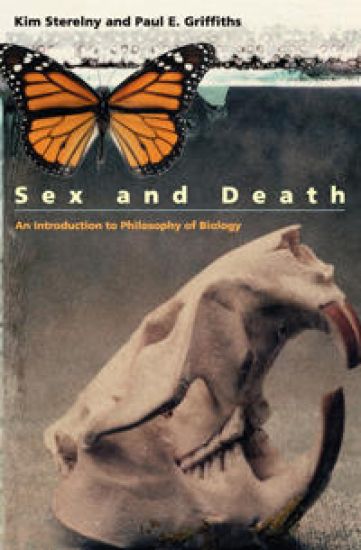
Is the history of life a series of accidents or a drama scripted by selfish genes? Is there an "essential" human nature, determined at birth or in a distant evolutionary past? What should we conserve—species, ecosystems, or something else?Informed answers to questions like these, critical to our understanding of ourselves and the world around us, require both a knowledge of biology and a philosophical framework within which to make sense of its findings. In this accessible introduction to philosophy of biology, Kim Sterelny and Paul E. Griffiths present both the science and the philosophical context necessary for a critical understanding of the most exciting debates shaping biology today. The authors, both of whom have published extensively in this field, describe the range of competing views—including their own—on these fascinating topics.With its clear explanations of both biological and philosophical concepts, Sex and Death will appeal not only to undergraduates, but also to the many general readers eager to think critically about the science of life.
What Emotions Really Are

What Emotions Really Are

Paul E. Griffiths

University of Chicago Press
1998
nidottu
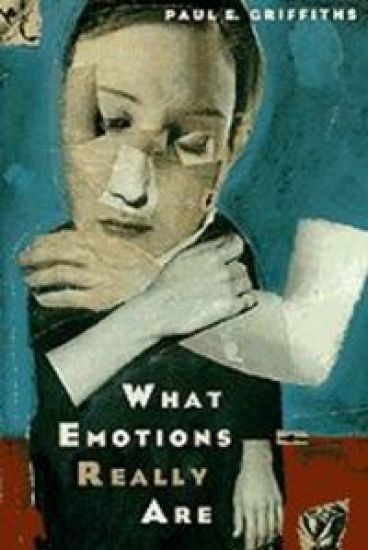
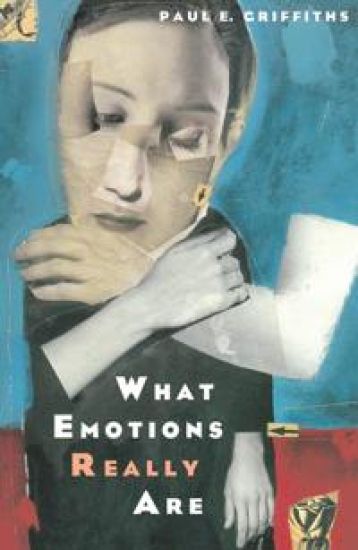
This study argues that much research of the emotions has been misguided. It attempts to show that "emotion" encompasses psychological states of very different, and thus not comparable, kinds. Some emotions, such as a brief flaring up of anger in response to some experience, are evolutionary ancient, reflex-like responses which appear insensitive to culture. Others, like moral guilt, differ importantly across cultures, despite their long history in humans, and affinity to behaviour seen in other species. Yet other emotions appear to be the acting-out of today's psychological myths, as ghost possession acted out the metaphysical myths of past centuries. These three kinds of responses have different evolutionary origins, different adaptive functions, different biological bases, and different roles in human psychology. The concept that binds them together, emotion, plays no useful role, since there is no object of scientific knowledge that corresponds to it. A detailed overview of the relevant theoretical approaches is provided in this text, assessing the relative merits of three main theoretical approaches: affect programme theory, evolutionary psychology, and social constructionism.
What Emotions Really Are

What Emotions Really Are

Paul E. Griffiths

University of Chicago Press
1997
sidottu
This study argues that much research of the emotions has been misguided. It attempts to show that "emotion" encompasses psychological states of very different, and thus not comparable, kinds. Some emotions, such a brief flaring up of anger in response to some experience, are evolutionary ancient, reflex-like responses which appear insensitive to culture. Others, like moral guilt, differ importantly across cultures, despite their long history in humans, and affinity to behaviour seen in other species. Yet other emotions appear to be the acting-out of today's psychological myths, as ghost possession acted out the metaphysical myths of past centuries. These three kinds of responses have different evolutionary origins, different adaptive functions, different biological bases, and different roles in human psychology. The concept that binds them together, emotion, plays no useful role, since there is no object of scientific knowledge that corresponds to it. A detailed overview of the relevant theoretical approaches is provided in this text, assessing the relative merits of three main theoretical approaches: affect programme theory, evolutionary psychology, and social constructionism.