Kirjojen hintavertailu. Mukana 12 595 353 kirjaa ja 12 kauppaa.

Kirjailija

Paul E. Potter

Kirjat ja teokset yhdessä paikassa: 5 kirjaa, julkaisuja vuosilta 1987-2011, suosituimpien joukossa Introductory Petrography of Fossils. Vertaile teosten hintoja ja tarkista saatavuus suomalaisista kirjakaupoista.

5 kirjaa

Kirjojen julkaisuhaarukka 1987-2011.

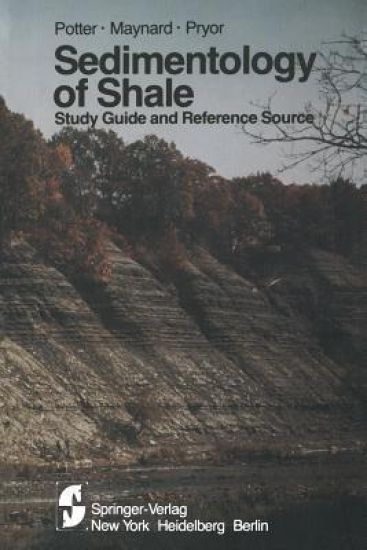
Sedimentology of Shale

Sedimentology of Shale

Paul E. Potter; J. Barry Maynard; Wayne A. Pryor

Springer-Verlag New York Inc.
2011
nidottu
We wrote Sedimentology of Shale primarily because we lacked a handy, reasonably comprehensive source of information and ideas about shales for students in our sedimentology program. It was also our feeling that the time for shales to receive more study had finally arrived. Sedimentology of Shale also seems very timely because today more sedimentologists are interested in shales. Certainly in the last five years the pace of shale research has no­ ticeably quickened because the role of shales as important sources of oil, gas, heavy metals and as a long understudied part of the earth's geologic his­ tory has been recognized. Noteworthy developments include the elucida­ tion of the importance of trace fossils in shales, the discovery of thick sequences of overpressured shales in regions such as the Gulf Coast (which have important implications for hydrocarbon migration and faulting), the ex­ tension of the principles of metamorphic facies to the realm of low tempera­ ture diagenesis by study of the organic matter in shales, and shales as ul­ timate sources for mineral deposits. Accordingly, we decided it was timely to write a book on shales. In one respect, however, ours is an unusual book. Most books in geology are produced after one or two decades of progress have been made in a field and attempt to summarize and evaluate that progress.
Introductory Petrography of Fossils

Introductory Petrography of Fossils

Alan S. Horowitz; Paul E. Potter

Springer-Verlag Berlin and Heidelberg GmbH Co. K
2011
nidottu
This is a book for beginners. Not geological beginners, because an introductory course in paleontology and some knowledge of the petrographic microscope is assumed, but for beginners in the study of the petrography of fossil constituents in sedimentary rocks. Fossils are studied for various reasons: 1) to provide chron­ ologic (time) frameworks, 2) to delineate rock units and ancient environments, or 3) to understand the past development (evolu­ tion) of living plants and animals. All of these uses may be at­ tained through petrographic studies of thin sections of fossils embedded in sedimentary rocks. Some knowledge of the appear­ ance of fossils in thin section is also fundamental for general stratigraphic studies, biofacies analyses, and is even useful in studying some metamorphic rocks. Commonly, fossils are essen­ tial for the delineation of carbonate rock types (facies or bio­ facies). We have written this book for sedimentary petrologists and stratigraphers, who routinely encounter fossils as part of their studies but who are not specialists in paleontology, and for students who are seeking a brief review and an introduction to the literature of the petrography of fossiliferous sedimentary rocks. Although experienced paleontologists may be appalled by the many generalized statements on size, shape, and principal fossil characters recited herein, we counter that we have had some success in introducing non-paleontologically oriented geologists to the use and identification of fossil constituents without using excessive paleontological terminology and detailed systematics.
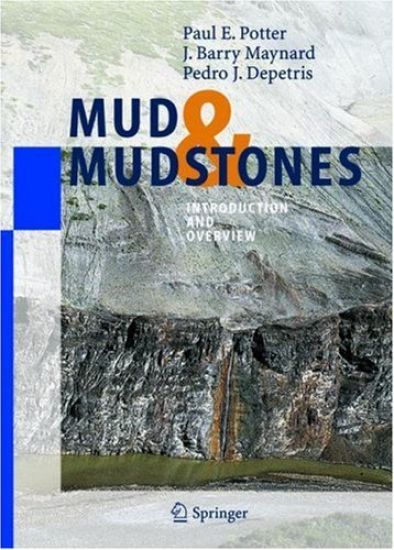
Mud and Mudstones

Mud and Mudstones

Paul E. Potter; J. B. Maynard; Pedro J. Depetris

Springer-Verlag Berlin and Heidelberg GmbH Co. K
2010
nidottu
Mud and mudstone, the most abundant of all sediments and sedimentary rocks, are relevant to many different human activities and disciplines and thus have a widely scattered literature. Our book provides the first elementary overview of mud and mudstone written for a broad spectrum of professionals, teachers and students in geology, petroleum geology and engineering, urban planning and development, paleontology and paleoecology, and architecture and archaeology. Mud and mudstone provide the foundations to master all their aspects and prepares you to dig deeply into the many fascinating questions of their origin, relationships to earth history and practical uses. Key topics include the production of mud, its transport, the important role of bottom oxygen, sites of deposition, burial, provenance, mudstones in basins and an overview of practical uses followed by an appendix and extended glossary.
Mud and Mudstones

Mud and Mudstones

Paul E. Potter; J. B. Maynard; Pedro J. Depetris

Springer-Verlag Berlin and Heidelberg GmbH Co. K
2004
sidottu
Mud and mudstone, the most abundant of all sediments and sedimentary rocks, are relevant to many different human activities and disciplines and thus have a widely scattered literature. Our book provides the first elementary overview of mud and mudstone written for a broad spectrum of professionals, teachers and students in geology, petroleum geology and engineering, urban planning and development, paleontology and paleoecology, and architecture and archaeology. Mud and mudstone provide the foundations to master all their aspects and prepares you to dig deeply into the many fascinating questions of their origin, relationships to earth history and practical uses. Key topics include the production of mud, its transport, the important role of bottom oxygen, sites of deposition, burial, provenance, mudstones in basins and an overview of practical uses followed by an appendix and extended glossary.
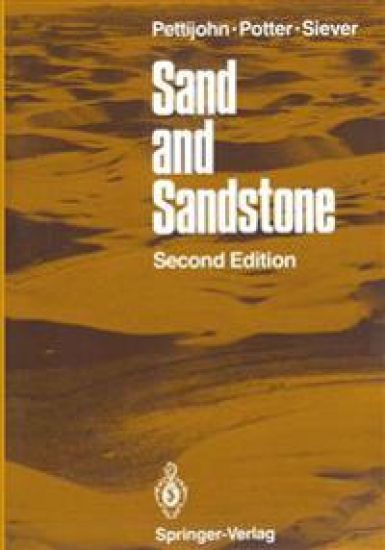
Sand and Sandstone

Sand and Sandstone

F. J. Pettijohn; Paul E. Potter; Raymond Siever

Springer-Verlag New York Inc.
1987
nidottu
The first edition appeared fourteen years ago. Since then there have been significant advances in our science that warrant an updating and revision of Sand and Sandstone. The main framework of the first edition has been retained so that the reader can begin with the mineralogy and textural properties of sands and sandstones, progress through their organization and classification and their study as a body of rock, to consideration of their origin-prove­ nance, transportation, deposition, and lithification-and finally to their place in the stratigraphic column and the basin. The last decade has seen the rise of facies analysis based on a closer look at the stratigraphic record and the recognition of characteristic bed­ ding sequences that are the signatures of some geologic process-such as a prograding shallow-water delta or the migration of a point bar on an alluvial floodplain. The environment of sand deposition is more closely determined by its place in such depositional systems than by criteria based on textural characteristics-the "fingerprint" approach. Our revi­ sion reflects this change in thinking. As in the geological sciences as a whole, the concept of plate tectonics has required a rethinking of our older ideas about the origin and accumu­ lation of sediments-especially the nature of the sedimentary basins.