Kirjojen hintavertailu. Mukana 12 215 015 kirjaa ja 12 kauppaa.
Kirjailija
Paul Eggert
Kirjat ja teokset yhdessä paikassa: 12 kirjaa, julkaisuja vuosilta 2009-2026, suosituimpien joukossa How D. H. Lawrence Wrote. Vertaile teosten hintoja ja tarkista saatavuus suomalaisista kirjakaupoista.
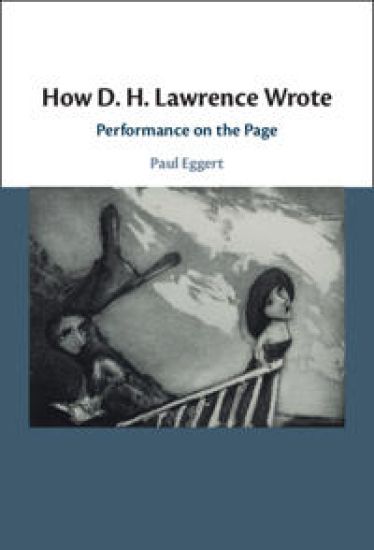
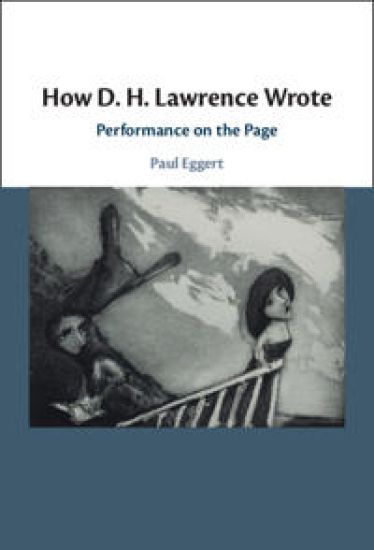
Paul Eggert's book meshes biographical scholarship and editorial theory with literary-critical analysis to offer a fresh understanding and appreciation of how D. H. Lawrence wrote. By concentrating on the material surfaces and biographical moments of Lawrence's textual performances as he wrote and revised, Eggert reveals a continuous intellectual-imaginative project across his novels, stories, plays and poems. Gone is the old Lawrence-as-moralist of the sacred body and interfering mind in favour of a new Lawrence as a profoundly Modernist performer engaged in writing-acts of self-revealing discovery, characterised by projective force and ceaseless experiment. The interwoven and intersecting versions of his many writings are explored at revealing moments in his writing career. New, compelling accounts of his most important novels, poetry and travel books become possible. Students of creative writing and Modernist literature, and all readers of Lawrence's works, will benefit from this ambitious and original book.
Paul Eggert's book meshes biographical scholarship and editorial theory with literary-critical analysis to offer a fresh understanding and appreciation of how D. H. Lawrence wrote. By concentrating on the material surfaces and biographical moments of Lawrence's textual performances as he wrote and revised, Eggert reveals a continuous intellectual-imaginative project across his novels, stories, plays and poems. Gone is the old Lawrence-as-moralist of the sacred body and interfering mind in favour of a new Lawrence as a profoundly Modernist performer engaged in writing-acts of self-revealing discovery, characterised by projective force and ceaseless experiment. The interwoven and intersecting versions of his many writings are explored at revealing moments in his writing career. New, compelling accounts of his most important novels, poetry and travel books become possible. Students of creative writing and Modernist literature, and all readers of Lawrence's works, will benefit from this ambitious and original book.
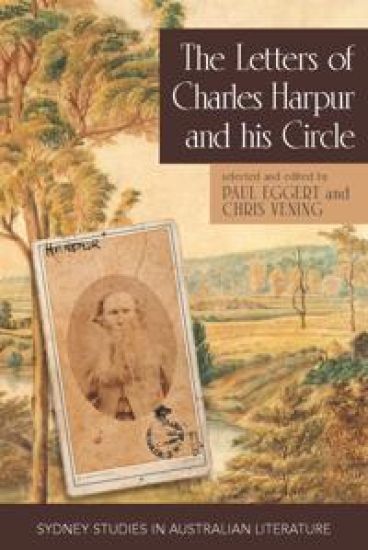
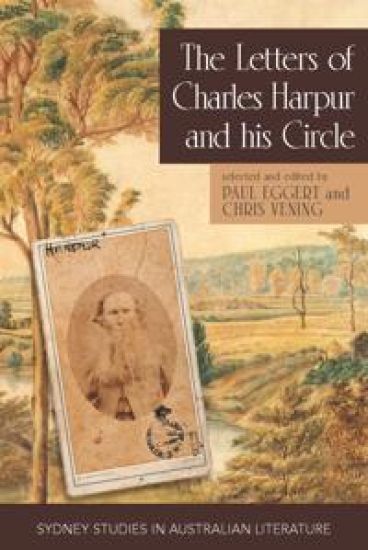
This is the first collection in print of the letters of Australian colonial poet Charles Harpur (1813–68) and his circle. Supported by extensive annotation newly prepared for this edition, the 200 letters and life-documents open up successive phases of colonial culture from the 1830s to the 1860s in a newly focused way. Harpur’s two-way correspondence with poet Henry Kendall, and with poet and future premier of NSW Henry Parkes, is especially impressive.The letters selected for this edition document Harpur’s life in a previously unavailable way. They reveal the intriguing struggle of a high-minded young man to pursue a serious vocation as a poet amidst the unpromising contours of colonial New South Wales society. Despite bearing the taint of a convict family background, Harpur took his vocation with utmost seriousness and had much to endure before he would find recognition as a poet, mainly in colonial newspapers where his poems made over 900 appearances.This edition captures the process in detail, as well as the production in 1883 of his Poems in book form. Even though editorially mangled, Poems confirmed his reputation and led to his presence in dozens of anthologies down to the present day.
This is the first collection in print of the letters of Australian colonial poet Charles Harpur (1813-68) and his circle. Supported by extensive annotation newly prepared for this edition, the 200 letters and life -- documents open up successive phases of colonial culture from the 1830s to the 1860s in a newly focused way. Harpur's two-way correspondence with poet Henry Kendall, and with poet and future premier of NSW Henry Parkes, is especially impressive.The letters selected for this edition document Harpur's life in a previously unavailable way. They reveal the intriguing struggle of a high-minded young man to pursue a serious vocation as a poet amidst the unpromising contours of colonial New South Wales society. Despite bearing the taint of a convict family background, Harpur took his vocation with utmost seriousness and had much to endure before he would find recognition as a poet, mainly in colonial newspapers where his poems made over 900 appearances.This edition captures the process in detail, as well as the production in 1883 of his Poems in book form. Even though editorially mangled, Poems confirmed his reputation and led to his presence in dozens of anthologies down to the present day.
By the late 1980s the concept of the work had slipped out of sight, consigned to its last refuge in the library catalogue as concepts of discourse and text took its place. Scholarly editors, who depended on it, found no grounding in literary theory for their practice. But fundamental ideas do not go away, and the work is proving to be one of them. New interest in the activity of the reader in the work has broadened the concept, extending it historically and sweeping away its once-supposed aesthetic objecthood. Concurrently, the advent of digital scholarly editions is recasting the editorial endeavour. The Work and The Reader in Literary Studies tests its argument against a range of book-historically inflected case-studies from Hamlet editions to Romantic poetry archives to the writing practices of Joseph Conrad and D. H. Lawrence. It newly justifies the practice of close reading in the digital age.
By the late 1980s the concept of the work had slipped out of sight, consigned to its last refuge in the library catalogue as concepts of discourse and text took its place. Scholarly editors, who depended on it, found no grounding in literary theory for their practice. But fundamental ideas do not go away, and the work is proving to be one of them. New interest in the activity of the reader in the work has broadened the concept, extending it historically and sweeping away its once-supposed aesthetic objecthood. Concurrently, the advent of digital scholarly editions is recasting the editorial endeavour. The Work and The Reader in Literary Studies tests its argument against a range of book-historically inflected case-studies from Hamlet editions to Romantic poetry archives to the writing practices of Joseph Conrad and D. H. Lawrence. It newly justifies the practice of close reading in the digital age.
Computer users often find occasion to ask how two files differ. Perhaps one file is a newer version of the other file. Or maybe the two files started out as identical copies but were changed by different people. You can use the diff command to show differences between two files, or each corresponding file in two directories. diff outputs differences between files line by line in any of several formats, selectable by command line options. This set of differences is often called a diff or patch. For files that are identical, diff normally produces no output; for binary (non-text) files, diff normally reports only that they are different. You can use the cmp command to show the byte and line numbers where two files differ. cmp can also show all the bytes that differ between the two files, side by side. A way to compare two files character by character is the Emacs command M-x compare-windows. See Section "Other Window" in The GNU Emacs Manual, for more information on that command. You can use the diff3 command to show differences among three files. When two people have made independent changes to a common original, diff3 can report the differences between the original and the two changed versions, and can produce a merged file that contains both persons' changes together with warnings about conflicts. You can use the sdiff command to merge two files interactively. You can use the set of differences produced by diff to distribute updates to text files (such as program source code) to other people. This method is especially useful when the differences are small compared to the complete files. Given diff output, you can use the patch program to update, or patch, a copy of the file. If you think of diff as subtracting one file from another to produce their difference, you can think of patch as adding the difference to one file to reproduce the other. This manual first concentrates on making diffs, and later shows how to use diffs to update files.
Biography of a Book traces the life of an iconic Australian literary work in the lead-up to, and for a century after, its initial publication: Henry Lawson's 1896 collection While the Billy Boils. Paul Eggert follows Lawson's gradual development of a pared-back bush realism in the early 1890s, as he struggled to forge a career, writing short stories and sketches for the newspapers. Lawson's famous collection came out at a decisive moment for the development of a fully professional Australian literary publishing industry, then in its infancy in Sydney. The volume's editing, design, and production were collaborative events that changed the feel and nature of Lawson's writing. He had to give ground on the order in which his stories were presented and even on their texts-especially the idiosyncratic wordings that helped breathe life into his characters.While the Billy Boils went on to be reprinted and repackaged countless times. Its production and reception histories act like a geological cross section, revealing the contours of successive cultural formations in Australia. In unraveling the life of Lawson's classic work, Eggert's book-historical approach challenges and clarifies established understandings of crucial moments in Australian literary history and of Lawson himself.
Biography of a Book traces the life of an iconic Australian literary work in the lead-up to, and for a century after, its initial publication: Henry Lawson's 1896 collection While the Billy Boils. Paul Eggert follows Lawson's gradual development of a pared-back bush realism in the early 1890s, as he struggled to forge a career, writing short stories and sketches for the newspapers. Lawson’s famous collection came out at a decisive moment for the development of a fully professional Australian literary publishing industry, then in its infancy in Sydney. The volume’s editing, design, and production were collaborative events that changed the feel and nature of Lawson’s writing. He had to give ground on the order in which his stories were presented and even on their texts—especially the idiosyncratic wordings that helped breathe life into his characters.While the Billy Boils went on to be reprinted and repackaged countless times. Its production and reception histories act like a geological cross section, revealing the contours of successive cultural formations in Australia. In unraveling the life of Lawson’s classic work, Eggert’s book-historical approach challenges and clarifies established understandings of crucial moments in Australian literary history and of Lawson himself.
Biography of a Book traces the life of an iconic Australian literary work in the lead-up to, and for a century after, its initial publication: Henry Lawson's 1896 collection While the Billy Boils. Paul Eggert follows Lawson's gradual development of a pared-back bush realism in the early 1890s, as he struggled to forge a career, writing short stories and sketches for the newspapers.Lawson's famous collection came out at a decisive moment for the development of a fully professional Australian literary publishing industry, then in its infancy in Sydney. The volume's editing, design and production were collaborative events that changed the feel and nature of Lawson's writing. He had to give ground on his texts and their sequencing.The collection went on to be reprinted and repackaged countless times. Its production and reception histories act like a geological cross-section, revealing the contours of successive cultural formations in Australia. In unravelling the life of Lawson's classic work, Eggert's book-historical approach challenges and clarifies established understandings of crucial moments in Australian literary history and of Lawson himself.
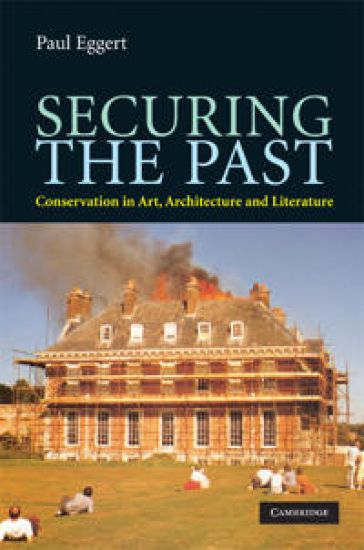
We all have a stake in the past and in its tangible preservation, and we trust professionals to preserve our cultural heritage for the future. However, restoration in all its forms is entangled in many contemporary theoretical debates and problems. This book is the first concerted effort to examine together the linked philosophies of the different arts of preserving and uncovering the past: the restoration of buildings, conservation of works of art, and editing of literary works to retrieve their original or intended texts. By investigating a series of recent crises in each of these areas, Securing the Past shows how their underlying justifications relate closely to one another. Paul Eggert shows how they have been philosophically undermined by postmodern theories and charts another, richer way forward to a new future for the past.
We all have a stake in the past and in its tangible preservation, and we trust professionals to preserve our cultural heritage for the future. However, restoration in all its forms is entangled in many contemporary theoretical debates and problems. This book is the first concerted effort to examine together the linked philosophies of the different arts of preserving and uncovering the past: the restoration of buildings, conservation of works of art, and editing of literary works to retrieve their original or intended texts. By investigating a series of recent crises in each of these areas, Securing the Past shows how their underlying justifications relate closely to one another. Paul Eggert shows how they have been philosophically undermined by postmodern theories and charts another, richer way forward to a new future for the past.