Kirjojen hintavertailu. Mukana 12 491 664 kirjaa ja 12 kauppaa.

Kirjailija

Paul Elie

Kirjat ja teokset yhdessä paikassa: 9 kirjaa, julkaisuja vuosilta 2004-2026, suosituimpien joukossa The Last Supper: Art, Faith, Sex, and Controversy in the 1980s. Vertaile teosten hintoja ja tarkista saatavuus suomalaisista kirjakaupoista.

9 kirjaa

Kirjojen julkaisuhaarukka 2004-2026.

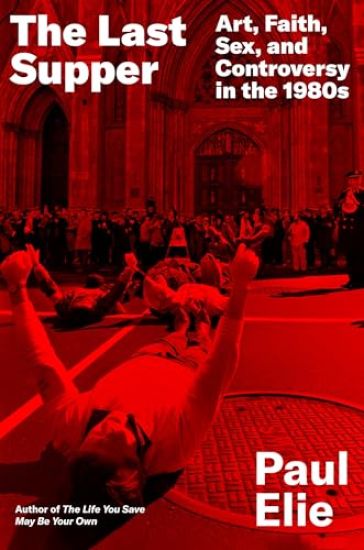
The Last Supper: Art, Faith, Sex, and Controversy in the 1980s
This enthralling group portrait brings to life a moment when popular culture became the site of religious strife--strife that set the stage for some of the most salient political and cultural clashes of our day. Circa 1980, tradition and authority are in the ascendant, both in Catholicism (via Pope John Paul II) and in American civic life (through the Moral Majority and the so-called televangelists). But the public is deeply divided on issues of body and soul, devotion and desire. Enter the figures Paul Elie calls "crypto-religious." Here is Leonard Cohen writing "Hallelujah" on his knees in a Times Square hotel room; Andy Warhol adapting Leonardo's The Last Supper in response to the AIDS pandemic; Prince making the cross and altar into "signs o' the times." Through Toni Morrison, spirits speak from the grave; Patti Smith and Bruce Springsteen deepen the tent-revival intensity of their work; Wim Wenders offers an angel's-eye view of Berlin; U2, the Neville Brothers, and Sin ad O'Connor reckon with their Christian roots in music of mystic yearning. And Martin Scorsese overcomes fundamentalist ire to make The Last Temptation of Christ--a struggle that anticipates Salman Rushdie's struggle with Islam in The Satanic Verses. In Elie's acclaimed first book, The Life You Save May Be Your Own, Catholic writers ventured out into the wilds of postwar America; in this book, creative figures who were raised religious go to the margins of conventional belief, calling forth controversy. Episodes such as the boycott sparked by Madonna's "Like a Prayer" video and the tearing-up of Andres Serrano's Piss Christ in Congress are early skirmishes in the culture wars--but here the creators (not the politicians) are the protagonists, and the work they make speaks to conflicts that remain unsettled. The Last Supper explores the bold and unexpected forms an encounter with belief can take. It traces the beginnings of our postsecular age, in which religion is at once surging and in decline. Through a propulsive narrative, it reveals the crypto-religious imagination as complex, credible, daring, and vividly recognizable.
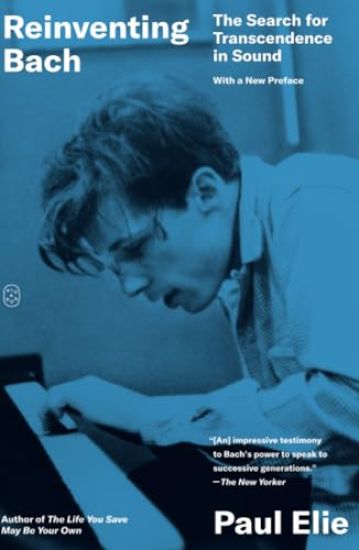
Reinventing Bach: The Search for Transcendence in Sound
The story of a revolution in classical music and technology, told through a century of recordings of the music of Johann Sebastian Bach In Reinventing Bach, his remarkable second book, Paul Elie tells the electrifying story of how musicians of genius have made Bach's music new in our time, at once restoring Bach as a universally revered composer and revolutionizing the ways that music figures into our lives. As a musician in eighteenth-century Germany, Bach was on the technological frontier--restoring organs, inventing instruments, and perfecting the tuning system still in use today. Two centuries later, pioneering musicians began to take advantage of breakthroughs in audio recording to make Bach's music the sound of modern transcendence. The sainted organist Albert Schweitzer played to a mobile recording unit set up at London's Church of All Hallows in order to spread Bach's organ works to the world beyond the churches. Pablo Casals, recording at Abbey Road Studios, made Bach's cello suites existentialism for the living room; Leopold Stokowski and Walt Disney, with Fantasia, made Bach the sound of children's playtime and Hollywood grandeur alike. Glenn Gould's Goldberg Variations opened and closed the LP era and made Bach the byword for postwar cool; and Yo-Yo Ma has brought Bach into the digital present, where computers and smartphones put the sound of Bach all around us. In this book we see these musicians and dozens of others searching, experimenting, and collaborating with one another in the service of Bach, who emerges as the very image of the spiritualized, technically savvy artist. Reinventing Bach is a gorgeously written story of music, invention, and human passion--and a story with special relevance in our time, for it shows that great things can happen when high art meets new technology.
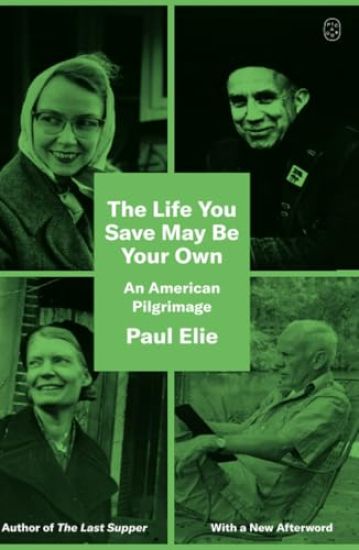
The Life You Save May Be Your Own: An American Pilgrimage
The story of four modern American Catholics who made literature out of their search for God In the mid-twentieth century four American Catholics came to believe that the best way to explore the questions of religious faith was to write about them-in works that readers of all kinds could admire. The Life You Save May Be Your Own is their story-a vivid and enthralling account of great writers and their power over us. Thomas Merton was a Trappist monk in Kentucky; Dorothy Day the founder of the Catholic Worker in New York; Flannery O'Connor a "Christ-haunted" literary prodigy in Georgia; Walker Percy a doctor in New Orleans who quit medicine to write fiction and philosophy. A friend came up with a name for them-the School of the Holy Ghost-and for three decades they exchanged letters, ardently read one another's books, and grappled with what one of them called a "predicament shared in common." A pilgrimage is a journey taken in light of a story; and in The Life You Save May Be Your Own Paul Elie tells these writers' story as a pilgrimage from the God-obsessed literary past of Dante and Dostoevsky out into the thrilling chaos of postwar American life. It is a story of how the Catholic faith, in their vision of things, took on forms the faithful could not have anticipated. And it is a story about the ways we look to great books and writers to help us make sense of our experience, about the power of literature to change-to save-our lives.
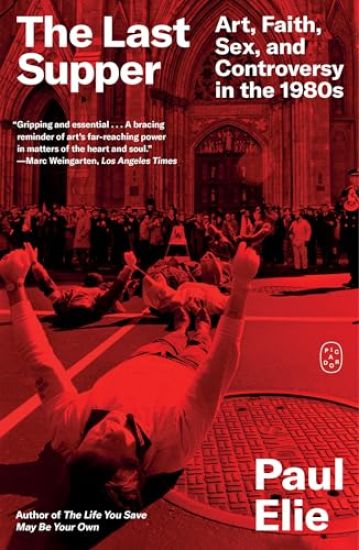
The Last Supper

The Last Supper

Paul Elie

FARRAR, STRAUS GIROUX INC
2025
sidottu
The 1980s are usually seen as a slick, shrill decade. The Ayatollah Khomeini and his followers urged 'Death to America'; Ronald Reagan was in the White House, backed by the Moral Majority; John Paul II was asserting Catholic traditionalism and denouncing homosexuality, as were the televangelists on cable TV. And yet 'crypto-religious' artists pushed back against the spirit of the age, venturing into vexed areas where politicians and clergy were loath to go - and anticipating the postsecular age we are living in today. That is the story Paul Elie tells in this enthralling group portrait. Here's Leonard Cohen writing 'Hallelujah' in a Times Square hotel room; Andy Warhol adapting Leonardo's The Last Supper in response to the AIDS crisis; Prince making the cross and altar into 'signs of the times.' Through Toni Morrison the spirits of the enslaved speak from the grave; Patti Smith and Bruce Springsteen deepen the tent-revival intensity of their work; U2, Morrissey, and Sinéad O'Connor give voice to the anguish of young people who were raised religious; Wim Wenders offers an angel's-eye view of Berlin. And Martin Scorsese overcomes fundamentalist opposition to make The Last Temptation of Christ - a struggle that anticipates Salman Rushdie's struggle with Islam in The Satanic Verses. Much of that work drew controversy, and episodes such as the boycott sparked by Madonna's 'Like a Prayer' video and the tearing up of Andres Serrano's Piss Christ in Congress were early skirmishes in the culture wars. But in this book's interlocking tales of the crypto-religious, the artists are the protagonists, and their work speaks to us because it deals with matters of the spirit that are too complex to be reduced to doctrines and headlines. Stirring, immersive, The Last Supper traces the beginning of our age, in which religion is both surging and in decline. And it presents an outlook - open to belief but wary of it - that those artists and today's readers have in common.
Sant'Egidio's Dream

Sant'Egidio's Dream

Roberto Morozzo della Rocca; Jeffrey D. Sachs; Paul Elie

GEORGETOWN UNIVERSITY PRESS
2024
pokkari
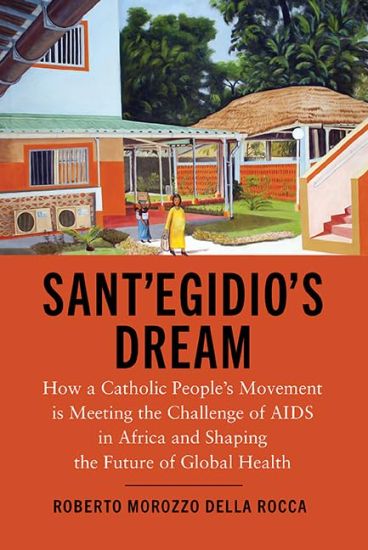
The story of an innovative program of treatment for AIDS in Africa that succeeded in the face of international development agencies’ “afro pessimism” Until this century, Western governments and foundations framing policies for AIDS relief in Africa maintained that prevention alone was a preferable alternative to prevention-plus-treatment, which would be costly and impractical in Africa, or would benefit only the prosperous and well-connected. Sant'Egidio’s Dream argues that this initial, failed approach to AIDS in African countries reflects a global moral blindness to the imperative to save lives–which was not lost on the Community of Sant’Egidio, an Italian, Catholic social movement rooted in “the gospel and friendship” and present in 70 countries. Drawing on two decades of peacemaking and humanitarian experience in Africa, the movement grasped the evidence that HIV, if treated, does not lead to AIDS and to death–and saw that treatment gives hope in Africa just as it does in the developed world. By enabling large numbers of people to live with a chronic disease, and involving family and neighbors in free and effective care, it offers a dream of a society surviving and even thriving in spite of HIV. In 2002, Sant Egidio established the DREAM (Drug Resource Enhancement Against AIDS and Malnutrition) project, a community-based approach to the AIDS crisis, rooted in medicine, epidemiology, and public health, that has proven effective in ten countries where it has been implemented–and has emerged as a model for healthcare in the global South.
Sant'Egidio's Dream

Sant'Egidio's Dream

Roberto Morozzo della Rocca; Jeffrey D. Sachs; Paul Elie

GEORGETOWN UNIVERSITY PRESS
2024
sidottu
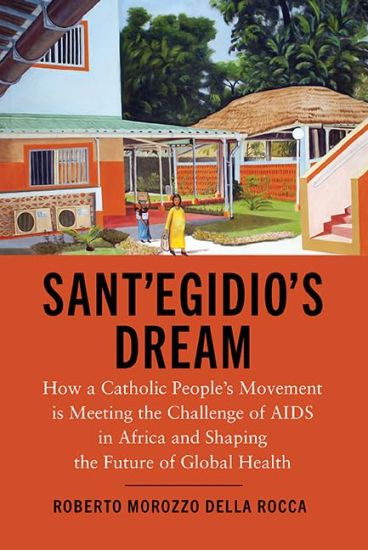
The story of an innovative program of treatment for AIDS in Africa that succeeded in the face of international development agencies’ “afro pessimism” Until this century, Western governments and foundations framing policies for AIDS relief in Africa maintained that prevention alone was a preferable alternative to prevention-plus-treatment, which would be costly and impractical in Africa, or would benefit only the prosperous and well-connected. Sant'Egidio’s Dream argues that this initial, failed approach to AIDS in African countries reflects a global moral blindness to the imperative to save lives–which was not lost on the Community of Sant’Egidio, an Italian, Catholic social movement rooted in “the gospel and friendship” and present in 70 countries. Drawing on two decades of peacemaking and humanitarian experience in Africa, the movement grasped the evidence that HIV, if treated, does not lead to AIDS and to death–and saw that treatment gives hope in Africa just as it does in the developed world. By enabling large numbers of people to live with a chronic disease, and involving family and neighbors in free and effective care, it offers a dream of a society surviving and even thriving in spite of HIV. In 2002, Sant Egidio established the DREAM (Drug Resource Enhancement Against AIDS and Malnutrition) project, a community-based approach to the AIDS crisis, rooted in medicine, epidemiology, and public health, that has proven effective in ten countries where it has been implemented–and has emerged as a model for healthcare in the global South.
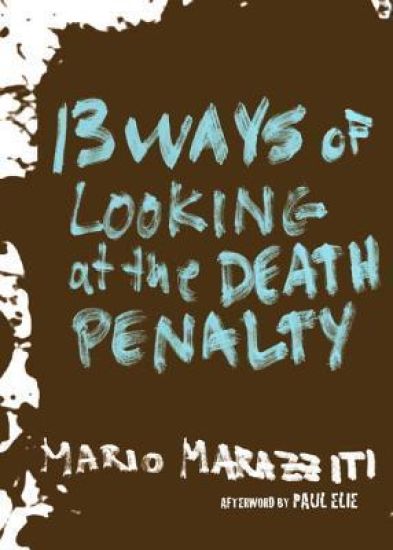
13 Ways Of Looking At The Death Penalty

13 Ways Of Looking At The Death Penalty

Mario Marazziti; Paul Elie

Seven Stories Press,U.S.
2015
sidottu
In the past decade 141 of the world's 192 countries have abolished or ceased to use capital punishment. Some have outlawed the death penalty for the first time; others, having outlawed it decades ago, have taken resolutions never to adopt it in the future. Meanwhile, NGOs, citizens' groups, progressive politicians, and church people have inspired a popular opposition to the death penalty, so that many American cities and states are now anti-death-penalty zones: not just Cambridge and Berkeley, but New Jersey, New Mexico and Michigan. The United States is the largest western nation where the death penalty is still in use, but the movement for abolition has taken place out of our view. Attention here has focused on technical questions: Is it legal? Color-blind? Cost-effective? A real deterrent to violent crime? Marazziti, an Italian, sheds light on the inhumanity of the death pealty in thirteen vivid, pointed episodes. They include a Swiftian tour of the Museum of Execution in Huntsville, Texas; the story of Dominique Green, a black man who was sentenced unfairly in Texas by an all-white jury, and made friends worldwide while on death row; conversations with exonerated prisoners and with family members of murdered people who stand against the death penalty despite their own loss; and an unforgettable profile of the prison warden who, after carrying out dozens of executions in Huntville, became convinced that the death penalty is an inhuman crime. It is time to imagine the United States without the death penalty, and this original and powerful book shows us how to do so.
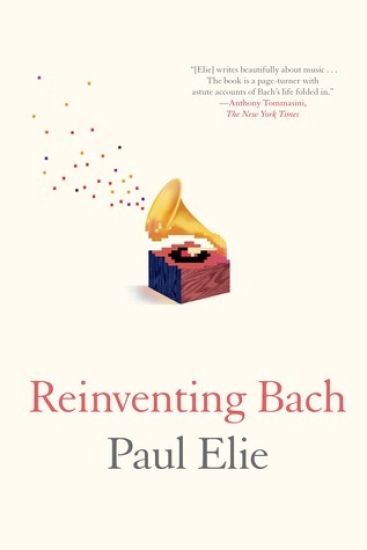
Reinventing Bach

Reinventing Bach

Paul Elie

Farrar, Straus and Giroux
2013
nidottu
The story of a revolution in classical music and technology, told through a century of recordings of the music of Johann Sebastian Bach In Reinventing Bach, his remarkable second book, Paul Elie tells the electrifying story of how musicians of genius have made Bach's music new in our time, at once restoring Bach as a universally revered composer and revolutionizing the ways that music figures into our lives. As a musician in eighteenth-century Germany, Bach was on the technological frontier--restoring organs, inventing instruments, and perfecting the tuning system still in use today. Two centuries later, pioneering musicians began to take advantage of breakthroughs in audio recording to make Bach's music the sound of modern transcendence. The sainted organist Albert Schweitzer played to a mobile recording unit set up at London's Church of All Hallows in order to spread Bach's organ works to the world beyond the churches. Pablo Casals, recording at Abbey Road Studios, made Bach's cello suites existentialism for the living room; Leopold Stokowski and Walt Disney, with Fantasia, made Bach the sound of children's playtime and Hollywood grandeur alike. Glenn Gould's Goldberg Variations opened and closed the LP era and made Bach the byword for postwar cool; and Yo-Yo Ma has brought Bach into the digital present, where computers and smartphones put the sound of Bach all around us. In this book we see these musicians and dozens of others searching, experimenting, and collaborating with one another in the service of Bach, who emerges as the very image of the spiritualized, technically savvy artist. Reinventing Bach is a gorgeously written story of music, invention, and human passion--and a story with special relevance in our time, for it shows that great things can happen when high art meets new technology.
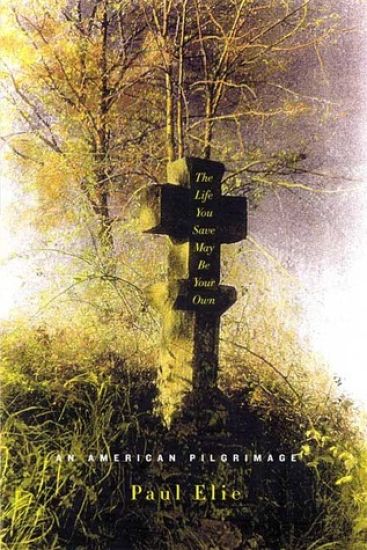
The Life You Save May Be Your Own

The Life You Save May Be Your Own

Paul Elie

Farrar, Straus and Giroux
2004
pokkari
The story of four modern American Catholics who made literature out of their search for God In the mid-twentieth century four American Catholics came to believe that the best way to explore the questions of religious faith was to write about them-in works that readers of all kinds could admire. The Life You Save May Be Your Own is their story-a vivid and enthralling account of great writers and their power over us. Thomas Merton was a Trappist monk in Kentucky; Dorothy Day the founder of the Catholic Worker in New York; Flannery O'Connor a "Christ-haunted" literary prodigy in Georgia; Walker Percy a doctor in New Orleans who quit medicine to write fiction and philosophy. A friend came up with a name for them-the School of the Holy Ghost-and for three decades they exchanged letters, ardently read one another's books, and grappled with what one of them called a "predicament shared in common." A pilgrimage is a journey taken in light of a story; and in The Life You Save May Be Your Own Paul Elie tells these writers' story as a pilgrimage from the God-obsessed literary past of Dante and Dostoevsky out into the thrilling chaos of postwar American life. It is a story of how the Catholic faith, in their vision of things, took on forms the faithful could not have anticipated. And it is a story about the ways we look to great books and writers to help us make sense of our experience, about the power of literature to change-to save-our lives.