Kirjojen hintavertailu. Mukana 12 595 353 kirjaa ja 12 kauppaa.
Kirjailija
Paul Emslie
Kirjat ja teokset yhdessä paikassa: 11 kirjaa, julkaisuja vuosilta 2017-2025, suosituimpien joukossa Air Force Nonrated Technical Training. Vertaile teosten hintoja ja tarkista saatavuus suomalaisista kirjakaupoista.
Agnes Gereben Schaefer; Kimberly Jackson; Maria McCollester; Thomas Bush; Laura Kupe; Katherine L Kidder; Paul Emslie; Michael H Phan; Thomas Goughnour
The authors analyze how statutes, personnel policies, and resource policies constrain how Air Reserve Component (ARC) personnel are utilized to perform frequent or long-term active component operational requirements; suggest potential changes that would make accessing the ARC more efficient; and suggest specific strategic solutions for an operational ARC.
Kathleen Reedy; Lisa M Harrington; Bart E Bennett; Barbara Bicksler; James R Broyles; Robert Corsi; Paul Emslie; Charles A Goldman; Daniel Ibarra; Darrell D Jones; Rita Karam; Matthew Walsh
The authors identify insights and best practices upon which the Air Force could draw to improve its nonrated technical training pipeline. The researchers examined three topics of interest identified by the Air Force: (1) how colleges and universities right-size their instructor corps, (2) best practices associated with supply chain management, and (3) approaches for developing a flexible instructor pool.
Raymond E Conley; Kimberly Curry Hall; Claude Messan Setodji; Stephen W Oliver; C Ben Gibson; Paul Emslie; Shawn Cochran; Michael Schiefer; Melissa Bauman
The Department of the Air Force (DAF) promulgates directives, memorandums of instructions, and other guidance embracing the importance of diversity. Although demographic data have been masked for most boards making decisions about career development and promotions, the 2021 Central Professional Military Education Program Boards provided an opportunity to test the effects of unmasking the data.
Through its Task Force True North (TFTN) program, the Air Force seeks to provide effective prevention and treatment programs to airmen in need by embedding health care providers directly into units. This report identified approaches to expanding the TFTN program, including estimating each approach's associated manpower requirements, recruiting requirements, total costs, and implementation timelines.
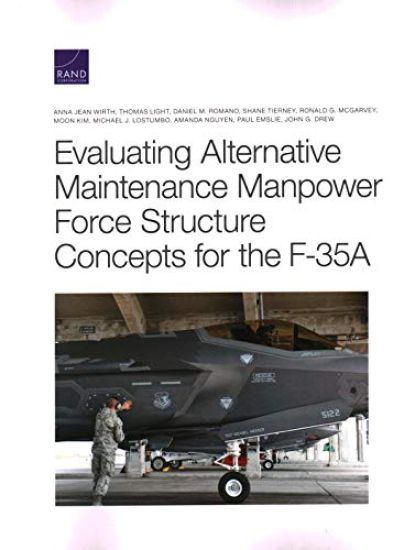
Anna Jean Wirth; Thomas Light; Daniel M Romano; Shane Tierney; Ronald G McGarvey; Moon Kim; Michael J Lostumbo; Amanda Nguyen; Paul Emslie; John G Drew
The U.S. Air Force has a goal of reducing the life cycle operating and support (O&S) costs of the F-35A. Maintenance manpower is a significant driver of O&S costs, and consolidation and reorganization of career fields could reduce manpower and training costs. The authors of this report evaluate the costs and benefits of six F-35A maintenance manpower force structures in the U.S. Air Force that merge maintenance career fields in different ways.
This report presents the results of three analyses: (1) determining which characteristics of recruiters are most strongly linked to recruiting production, (2) identifying which Department of the Air Force recruiting offices would gain the most from adding recruiters, and (3) examining how the factors affecting recruiter productivity are different in two types of markets. The report also provides recommendations for improving recruiting data.
This report summarizes research on how top-down risk analysis models could help inform the staffing, systems, and strategies for the U.S. Air Force Security Forces. Although existing security planning supports bottom-up, asset-based security planning, such processes do not fully explore the risk trade-offs, nor do they identify opportunities for SF strategies to manage multiple risks simultaneously.
The authors examine the process the Air Force uses to determine manpower requirements, compare it with processes used in other services and organizations, and evaluate options for increasing the efficiency of the Air Force process.
Institutional requirements are funded manpower positions that can be difficult to fill because they do not align with traditional career fields, and they compete for the same personnel as operational and staff requirements. This report documents how the Air Force could reduce the impact of these requirements on career fields while ensuring that the organizations that depend on institutional requirements are staffed with qualified personnel.
This report models the effect of filling institutional requirement (IR) positions on a career field's health. The report also examines how changing the number of IRs affects the operational development, career experience diversity, and career paths of space officers. The fill rates of most space jobs would not be affected by reductions in the total number of IRs allocated to the space career field. IR effects on space officers' careers could be lessened by careful job selection and position prioritization.