Kirjojen hintavertailu. Mukana 12 657 676 kirjaa ja 12 kauppaa.

Kirjailija

Paul Eprile

Kirjat ja teokset yhdessä paikassa: 3 kirjaa, julkaisuja vuosilta 2017-2022, suosituimpien joukossa Melville. Vertaile teosten hintoja ja tarkista saatavuus suomalaisista kirjakaupoista.

3 kirjaa

Kirjojen julkaisuhaarukka 2017-2022.

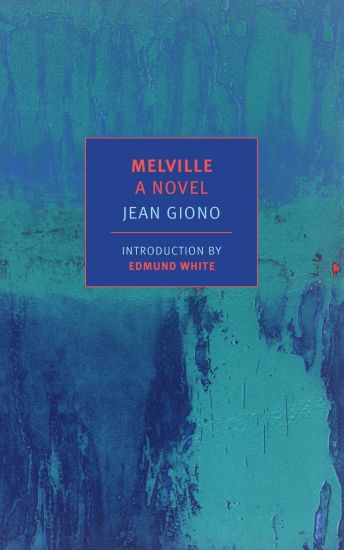
Melville

Melville

Edmund White; Jean Giono; Paul Eprile

The New York Review of Books, Inc
2017
nidottu
In the fall of 1849, Herman Melville traveled to London to deliver his novel White-Jacket to his publisher. On his return to America, Melville would write Moby-Dick. Melville: A Novel imagines what happened in between: the adventurous writer fleeing London for the country, wrestling with an angel, falling in love with an Irish nationalist, and, finally, meeting the angel's challenge--to express man's fate by writing the novel that would become his masterpiece. Eighty years after it appeared in English, Moby-Dick was translated into French for the first time by the Proven al novelist Jean Giono and his friend Lucien Jacques. The publisher persuaded Giono to write a preface, granting him unusual latitude. The result was this literary essai, Melville: A Novel--part biography, part philosophical rumination, part romance, part unfettered fantasy. Paul Eprile's expressive translation of this intimate homage brings the exchange full circle. Paul Eprile was a co-winner of the French-American Foundation's 2018 Translation Prize for his translation of Melville.
Chéri and The End of Chéri

Chéri and The End of Chéri

Colette Colette; Paul Eprile

New York Review Books
2022
nidottu
Colette's celebrated novels about an older courtesan and her young lover, now in a new translation and published in one volume. Colette's Ch ri (1920) and its sequel, The End of Ch ri (1926), are widely considered her masterpieces. In sensuous, elegant prose, the two novels explore the evolving inner lives and the intimate relationship of an unlikely couple: L a de Lonval, a middle-aged former courtesan, and Fred Peloux, twenty-five years her junior, known as Ch ri. The two have been involved for years, and it is time for Ch ri to get on with life, to make something of himself, but he, the personification of male beauty and vanity, doesn't know how to go about it. It is time, too, for L a to let go ofCh ri and the sensual life that has been hers, and yet this is more easily resolved than done. Ch ri marries, but once married he is restless and is inevitably drawn back to his mistress, as she is to him. And yet to reprise their relationship is only to realize even more the inevitability of its end. That end will come when Ch ri, back from World War I, encounters a world that the war has changed through and through. Lost in his memories of time past, he is irremediably lost to the busy present. Paul Eprile's new translation of these two celebrated novels brings out a vivid sensuality and acute intelligence that past translations have failed to capture.
The Open Road

The Open Road

Jean Giono; Paul Eprile

NYRB Classics
2021
nidottu
A nomad and a swindler embark on an eccentric road trip in this picaresque, philosophical novel by the author of The Man Who Planted Trees. The south of France, 1950: A solitary vagabond walks through the villages, towns, valleys, and foothills of the region between northern Provence and the Alps. He picks up work along the way and spends the winter as the custodian of a walnut-oil mill. He also picks up a problematic companion: a cardsharp and con man, whom he calls "the Artist." The action moves from place to place, and episode to episode, in truly picaresque fashion. Everything is told in the first person, present tense, by the vagabond narrator, who goes unnamed. He himself is a curious combination of qualities--poetic, resentful, cynical, compassionate, flirtatious, and self-absorbed. While The Open Road can be read as loosely strung entertainment, interspersed with caustic reflections, it can also be interpreted as a projection of the relationship of author, art, and audience. But it is ultimately an exploration of the tensions and boundaries between affection and commitment, and of the competing needs for solitude, independence, and human bonds. As always in Jean Giono, the language is rich in natural imagery and as ruggedly idiomatic as it is lyrical.