

Kirjailija
Paul Erickson
Kirjat ja teokset yhdessä paikassa: 12 kirjaa, julkaisuja vuosilta 1997-2024, suosituimpien joukossa The Sail Makers Legacy. Vertaile teosten hintoja ja tarkista saatavuus suomalaisista kirjakaupoista.
12 kirjaa
Kirjojen julkaisuhaarukka 1997-2024.
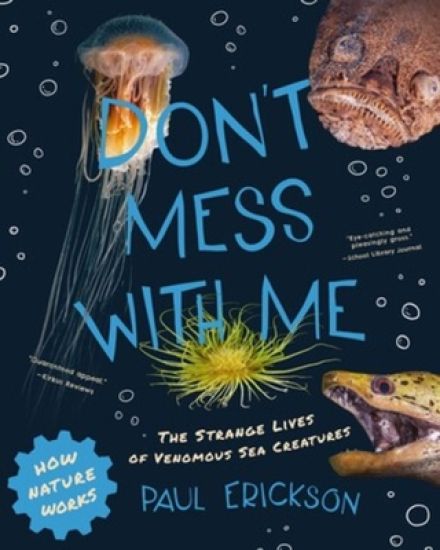
Scorpions and brown recluse spiders are fine as far as they go, but if you want daily contact with venomous creatures, the ocean is the place to be. Blue-ringed octopi, stony corals, sea jellies, stonefish, lionfish, poison-fanged blennies, stingrays, cone snails, blind remipedes, fire urchins—you can choose your poison in the ocean. Venoms are often but not always defensive weapons. The banded sea krait, an aquatic snake, wriggles into undersea caves to prey on vicious moray eels, killing them with one of the world’s most deadly neurotoxins, which it injects through fangs that resemble hypodermic needles.
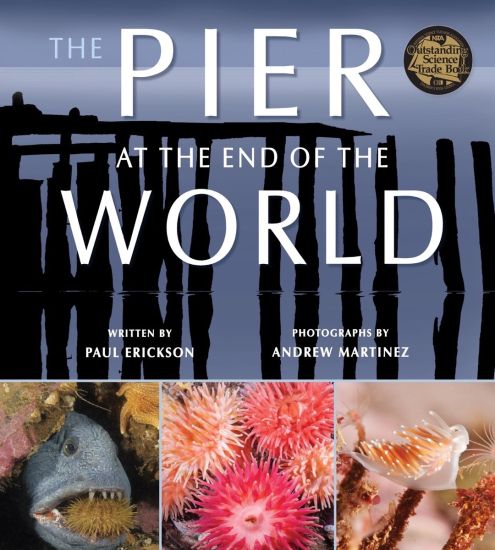
What can you see beneath an old, old pier on the edge of a cold sea? An ugly wolffish munching a live sea urchin, a hermit crab switching shells, a garden of anemones, a starfish eating a clam, a 35-pound hundred-year-old lobster guarding his domain, and more strange and wonderful creatures than you can imagine….
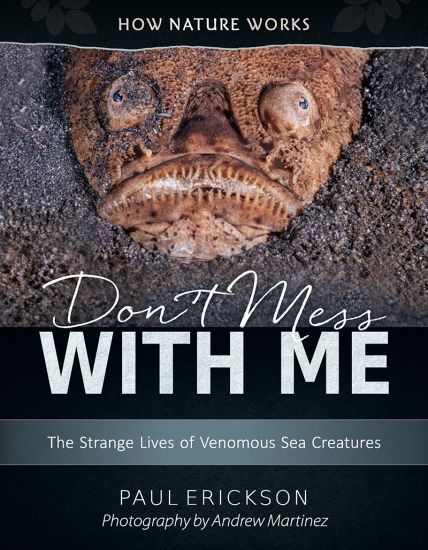
Scorpions and brown recluse spiders are fine as far as they go, but if you want daily contact with venomous creatures, the ocean is the place to be. Blue-ringed octopi, stony corals, sea jellies, stonefish, lionfish, poison-fanged blennies, stingrays, cone snails, blind remipedes, fire urchins—you can choose your poison in the ocean. Venoms are often but not always defensive weapons. The banded sea krait, an aquatic snake, wriggles into undersea caves to prey on vicious moray eels, killing them with one of the world’s most deadly neurotoxins, which it injects through fangs that resemble hypodermic needles.
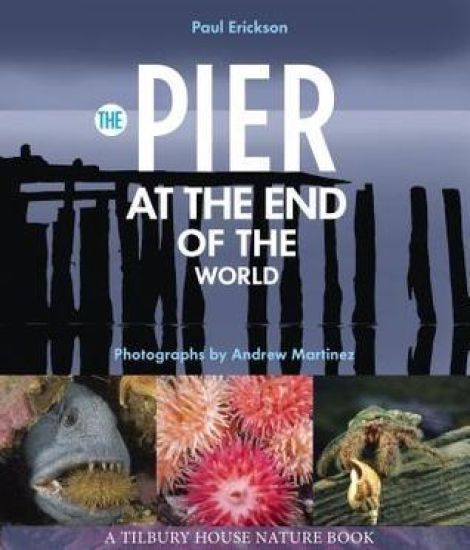
Vivid photos of a wolf fish munching a sea urchin, a hermit crab switching shells, a sea slug arming itself with stinging cells stolen from an anemone, a 35-pound lobster guarding his domain, and other exotic creatures take us from dawn to darkness. Colorful panoramic paintings show us the bigger picture, including the eyes of nighttime predators and the creatures who are missing the following morning. A gorgeous book for future scientists.Both lyrical and scientifically accurate, the story follows a day in the life of the denizens lurking in the cold, tide-swept waters beneath a remote pier on the shore of a northern sea.Stunning underwater photos of a wolffish munching a live sea urchin, a hermit crab switching shells, a sea slug arming itself with stinging cells stolen from an anemone, a starfish thrusting its stomach through its mouth to digest its prey, exotic-looking basket stars straining the water for food, a 35-pound hundred-year-old lobster guarding his domain, and other exotic creatures take us from dawn to darkness.Colorful panoramic paintings of the bigger picture, including the eyes of nighttime predators and the creatures who are among the missing the following morning. Includes an appendix of macro-photos showing tiny animals that are critical to the food web. Another appendix gives scientific names and brief science facts about all animals in the book.Interactive, as readers are asked to compare before-night and after-night images to discover who's missingCorrelations to the Next Generation Science Standards and the Common Core ELA Standards available online at www.tilburyhouse.com The Tilbury House Nature Book series brings the natural world to life for young readers without anthropomorphizing animals. Each book aims for the highest standards of scientific accuracy and storytelling magic. Fountas & Pinnell Level T

An unabridged reading of this exciting novelisation of a First Doctor television adventure. It is ten million years in the future, and the Earth is about to plunge into the Sun. A gigantic Space Ark has been launched, to take the last of humanity to a new life on the planet Refusis II. Accompanying the humans on their journey are the Monoids, strange reptilian creatures from an alien world. When the TARDIS materialises on board, the Doctor and his friends are greeted with suspicion, which soon turns to open hostility when Dodo inadvertently infects the Ark's crew with a long-forgotten virus. It is an accident which will have a terrible effect on mankind, an effect which will last for seven hundred years... Duration: 4 hours approx.

How Reason Almost Lost Its Mind – The Strange Career of Cold War Rationality
Paul Erickson; Judy L. Klein; Lorraine Daston; Rebecca Lemov; Thomas Sturm; Michael Gordin
University of Chicago Press
2015
nidottu
In the United States at the height of the Cold War, roughly between the end of World War II and the early 1980s, a new project of redefining rationality commanded the attention of sharp minds, powerful politicians, wealthy foundations, and top military brass. Its home was the human sciences—psychology, sociology, political science, and economics, among others—and its participants enlisted in an intellectual campaign to figure out what rationality should mean and how it could be deployed. How Reason Almost Lost Its Mind brings to life the people—Herbert Simon, Oskar Morgenstern, Herman Kahn, Anatol Rapoport, Thomas Schelling, and many others—and places, including the RAND Corporation, the Center for Advanced Study in the Behavioral Sciences, the Cowles Commission for Research and Economics, and the Council on Foreign Relations, that played a key role in putting forth a \u201cCold War rationality.\u201d Decision makers harnessed this picture of rationality—optimizing, formal, algorithmic, and mechanical—in their quest to understand phenomena as diverse as economic transactions, biological evolution, political elections, international relations, and military strategy. The authors chronicle and illuminate what it meant to be rational in the age of nuclear brinkmanship.
In recent decades game theory-the mathematics of rational decision-making by interacting individuals-has assumed a central place in our understanding of capitalist markets, the evolution of social behavior in animals, and even the ethics of altruism and fairness in human beings. With game theory's ubiquity, however, has come a great deal of misunderstanding. Critics of the contemporary social sciences view it as part of an unwelcome trend toward the marginalization of historicist and interpretive styles of inquiry, and many accuse its proponents of presenting a thin and empirically dubious view of human choice. The World the Game Theorists Made seeks to explain the ascendency of game theory, focusing on the poorly understood period between the publication of John von Neumann and Oscar Morgenstern's seminal Theory of Games and Economic Behavior in 1944 and the theory's revival in economics in the 1980s. Drawing on a diverse collection of institutional archives, personal correspondence and papers, and interviews, Paul Erickson shows how game theory offered social scientists, biologists, military strategists, and others a common, flexible language that could facilitate wide-ranging thought and debate on some of the most critical issues of the day.

How Reason Almost Lost Its Mind
Paul Erickson; Judy L. Klein; Lorraine Daston; Rebecca Lemov; Thomas Sturm; Michael Gordin
University of Chicago Press
2013
sidottu
In the United States at the height of the Cold War, roughly between the end of World War II and the early 1980s, a new project of redefining rationality commanded the attention of sharp minds, powerful politicians, wealthy foundations, and top military brass. Its home was the human sciences - psychology, sociology, political science, and economics, among others - and its participants enlisted in an intellectual campaign to figure out what rationality should mean and how it could be deployed. How Reason Almost Lost Its Mind brings to life the people - Herbert Simon, Oskar Morgenstern, Herman Kahn, Anatol Rapoport, Thomas Schelling, and many others - and places, including the RAND Corporation, the Center for Advanced Study in the Behavioral Sciences, the Cowles Commission for Research and Economics, and the Council on Foreign Relations, that played a key role in putting forth a "Cold War rationality." Decision makers harnessed this picture of rationality - optimizing, formal, algorithmic, and mechanical - in their quest to understand phenomena as diverse as economic transactions, biological evolution, political elections, international relations, and military strategy. The authors chronicle and illuminate what it meant to be rational in the age of nuclear brinkmanship.

Doctor Who Collection 6: The TV Episodes
Donald Cotton; Paul Erickson; Glyn Jones
BBC Physical Audio
2013
cd
These classic soundtrack adventures, with additional linking narration, have all been remastered and include bonus interviews with William Russell, Maureen O'Brien, Peter Purves and Anneke Wills. The Sensorites: the Doctor and friends meet the alien Sensorites... The Romans: in first-century Rome, Ian and Barbara are sold into slavery and the Doctor encounters Nero... The Space Museum: the Doctor and his companions see a terrible potential future... The Ark: the Doctor, Steven and Dodo come face-to-face with the last humans and their servants, the Monoids... The Gunfighters: 1881, Tombstone. The TARDIS crew are in trouble, as they try to avoid getting caught in the crossfire at the OK Corral... The War Machines: The TARDIS lands in London in 1966 - only to find that the brand new Post Office Tower is home to a monstrous supercomputer. This box set also contains bonus PDF files of the original TV scripts.13 CDs. 12 hrs 30 mins.
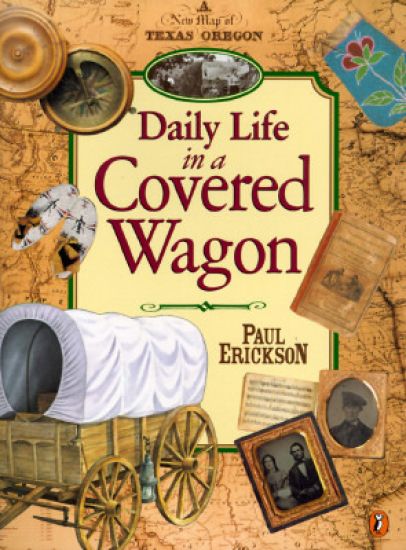
Great for classroom lessons on the Oregon Trail and Westward Expansion In 1853, the Larkin family loaded up their wagons and headed west in search of a new life. But how did they do it? What did they eat? How did they survive sickness, and attacks from cattle thieves? Drawing on diaries and letters, and illustrated with photographs of actual object from the past, Daily Life in a Covered Wagon explored what life was really like on the wagon trail.