

Kirjailija
Paul Evans
Kirjat ja teokset yhdessä paikassa: 35 kirjaa, julkaisuja vuosilta 2002-2025, suosituimpien joukossa Love Bomb. Vertaile teosten hintoja ja tarkista saatavuus suomalaisista kirjakaupoista.
35 kirjaa
Kirjojen julkaisuhaarukka 2002-2025.

In his younger days, mysteries consumed him. The allure of Agatha Christie's intricate plots kept him engrossed for hours, as he delved into each twist and turn. Drawing from the vibrant tapestry of his own life - rich, thrilling, and ever-evolving - he crafted a narrative that seamlessly blends his experiences with fiction. While firmly rooted in reality, he infused the tale with creative embellishments, taking full advantage of artistic liberty. After sharing the initial draft with close friends, the overwhelming response was one of surprise, particularly at the story's unexpected climax. Dive in, and let his journey surprise you too.
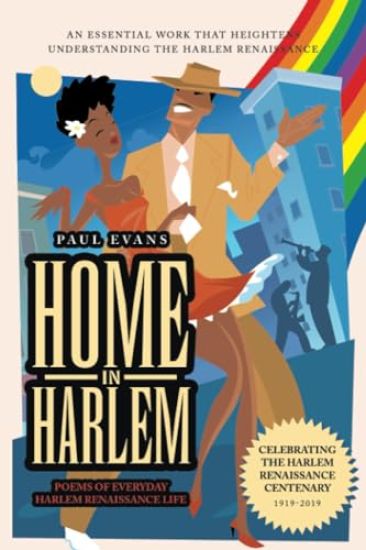
As well-known as The Harlem Renaissance has become in American Culture, with its bigger-than-life luminaries in literatures, music, art and theater, little is known about the ordinary, everyday Harlem folks and their lives - until now. Perhaps, for the first time and in poetic format, the veil is pulled aside to reveal an indepth picture of what it meant to be in Harlem during the Renaissance.
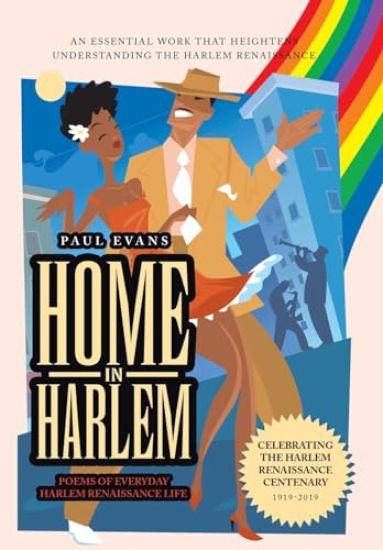
As well-known as The Harlem Renaissance has become in American Culture, with its bigger-than-life luminaries in literatures, music, art and theater, little is known about the ordinary, everyday Harlem folks and their lives - until now. Perhaps, for the first time and in poetic format, the veil is pulled aside to reveal an indepth picture of what it meant to be in Harlem during the Renaissance.

It's Christmas Eve...and I can't sleep. Hey, what's that noise? Is it my new puppy that's on my 'list'? Is it Rudolph and friends? Could it be the 'Big Guy' himself?I have to get up and go investigate. OH MY GOSH No one will ever believe what I just saw..."Thanks Santa Paul, our students' behavior, attitude, and effort have improved thanks to this awesome story We also love Santa's Behavior Chart. We have it on our classroom walls."-Ms. Karly, Special Education Teacher and Ms. Jeriann, First Grade Teacher, Warwick, RI"This is now our go-to book on Christmas Eve and throughout the whole year. Our 3 small children love it We definitely recommend it "-The Carroll Family, Northbridge, MA"Please, Just Leave the Glass is now part of our family tradition on Christmas Eve "-The Evans Family, Fairfield, CT

The Global Challenge
Vladimir Pucik; Paul Evans; Ingmar Bjorkman; Shad Morris
Chicago Business Press
2023
nidottu
This concise textbook seeks to unpack the real-life complexities of leadership by examining the theories and models surrounding it and encouraging self-analysis in the individual’s own contexts.The book: Provides an outline of the various perspectives of leadership theory; Develops a critical and robust framework for considering existing leadership theory and consequently applying leadership practice across the organization; Identifies important individual characteristics likely to enhance leadership practice in the workplace; Considers a framework for analyzing leadership performance and methods and practicalities for application.Reflexive Leadership in Context provides a practical and concise introduction for executive education students currently studying for MSc/MBA apprenticeship programs, as well as supplementary reading for postgraduate students studying modules within leadership and management.


‘Galvanises us to notice and care about our glorious natural world, through the words of an army of poets, ancient and modern’ – Bel Mooney An anthology of poems to enter the bloodstream and rewild the spirit. As with all life on Earth, the climate emergency, species extinction, ecological disaster, global pandemics, economic collapse, war, genocide and social injustice are all interconnected — how do we face our fears? How do we find the courage to rebel against forces ranged against the Earth? This galvanising collection of poems spans 4,000 years of human history. Ranging from Nikolai Duffy's 'Against Metaphor' and Lord Byron's 'Darkness' to Allen Ginsberg's evocative 'Sunflower Sutra' and Jean 'Binta' Breeze's 'Tweet Tweet'. This book is not just a sanctuary in which to find solace from environmental grief but a manual for psychic resistance in the war against Nature. As Pablo Neruda said, 'Poetry is rebellion.'
This concise textbook seeks to unpack the real-life complexities of leadership by examining the theories and models surrounding it and encouraging self-analysis in the individual’s own contexts.The book: Provides an outline of the various perspectives of leadership theory; Develops a critical and robust framework for considering existing leadership theory and consequently applying leadership practice across the organization; Identifies important individual characteristics likely to enhance leadership practice in the workplace; Considers a framework for analyzing leadership performance and methods and practicalities for application.Reflexive Leadership in Context provides a practical and concise introduction for executive education students currently studying for MSc/MBA apprenticeship programs, as well as supplementary reading for postgraduate students studying modules within leadership and management.
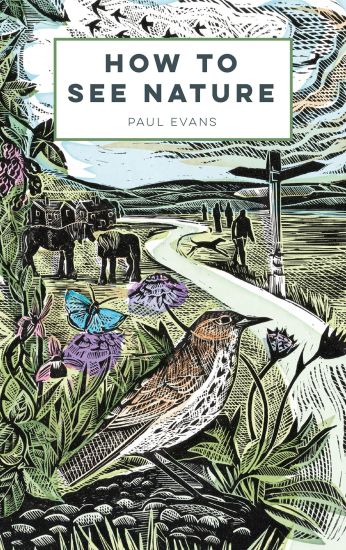
"Pack soup, cheese and a copy of How To See Nature by the Bard of Wenlock Edge and Guardian diarist."John Vidal With a title taken from the 1940 Batsford book, this is nature writing for the modern reader. Evans weaves historical, cultural and literary references into his writing, ranging from TS Eliot to Bridget Riley, from Hieronymus Bosch to Napoleon. It is a book both for those that live in the country and those that don't, but experience nature every day through brownfield edge lands, transport corridors, urban greenspace, industrialised agriculture and fragments of ancient countryside. The essays include the The Weedling Wild, on the wildlife of the wasteland: ragwort, rosebay willowherb, giant hogweed and the cinnabar moth; Gardens of Light, about the creatures to be found under moonlight: pipistrelle bats, lacewings and orb-weaver spider; The Flow, with tales from the riverbank, estuaries and seas, including kingfisher, minnow, otter and heron. The Commons looks at meadowland with a human footprint, with the Adonis blue butterfly, horseshoe vetch, skylark, black knapweed and the six-belted clearwing moth. The author also looks at the wildlife returned to Britain, such as wild boar and polecats, and finds nature in and around landscapes as varied as a domestic garden or a wild moor. The book ends with an alphabetical bestiary, an idiosyncratic selection of British wildlife based on the author's personal encounters.
When I Woke Up: One Man's Unbreakable Spirit to Survive
Carolyn Coe; Paul Evans
Independently Published
2019
nidottu
He went to hell and back. Then went again. He died on the operating table and lived in a parallel universe whilst fighting for his life in a coma. Became a fugitive, captured at gun point and imprisoned in a squalid Cairo jail for a crime he did not commit. As a child he battled with relentless bullies and overcame chronic dyslexia. As a man, he cheated death survived a foreign prison and built a multi-million-dollar business, yet lost it overnight and found the strength, despite personal tragedy, to rebuild it. Again. He lives today knowing and believing that YOU can survive anything. If you want to know how to get through this thing called life - THIS is your manual.

A beautifully lyrical collection of essays on the natural world in Britain by the Guardian's country diary writer Paul Evans. With a title taken from the 1940 Batsford book, this is nature writing for the modern reader. It is a book both for those that live in the country and those that don't, but experience nature every day through brownfield edge lands, transport corridors, urban greenspace, industrialised agriculture and fragments of ancient countryside. Evans weaves historical, cultural and literary references into his writing, ranging from TS Eliot to Bridget Riley, from Hieronymus Bosch to Napoleon. The essays include the The Weedling Wild, on the wildlife of the wasteland: ragwort, rosebay willowherb, giant hogweed and the cinnabar moth; Gardens of Light, about the creatures to be found under moonlight: pipistrelle bats, lacewings and orb-weaver spider; The Flow, with tales from the riverbank, estuaries and seas, including kingfisher, minnow, otter and heron. The Commons looks at meadowland with a human footprint, with the Adonis blue butterfly, horseshoe vetch, skylark, black knapweed and the six-belted clearwing moth. Other chapters look at the wildlife returned to Britain, such as wild boar and polecats, and finds nature in and around landscapes as varied as a domestic garden or a wild moor. The book ends with an alphabetical bestiary, an idiosyncratic selection of British wildlife based on the author's personal encounters.
A new commentary for today's world, The Story of God Bible Commentary explains and illuminates each passage of Scripture in light of the Bible's grand story.The first commentary series to do so, SGBC offers a clear and compelling exposition of biblical texts, guiding everyday readers in how to creatively and faithfully live out the Bible in their own contexts. Its story-centric approach is ideal for pastors, students, Sunday school teachers, and laypeople alike.Each volume employs three main, easy-to-use sections designed to help readers live out God's story:LISTEN to the Story: Includes complete NIV text with references to other texts at work in each passage, encouraging the reader to hear it within the Bible's grand story.EXPLAIN the Story: Explores and illuminates each text as embedded in its canonical and historical setting.LIVE the Story: Reflects on how each text can be lived today and includes contemporary stories and illustrations to aid preachers, teachers, and students. —1 & 2 Samuel—The book of Samuel develops theological concepts that are important not only for reading in the context of the Old Testament but also for reading from a New Testament context and a twenty-first century context. The most prominent theological themes are the fulfillment of the prophetic word, trust in God, the seriousness of sin, the importance of true repentance, the Davidic covenant, and the Messiah.Edited by Scot McKnight and Tremper Longman III, and written by a number of top-notch theologians, The Story of God Bible Commentary series will bring relevant, balanced, and clear-minded theological insight to any biblical education or ministry.
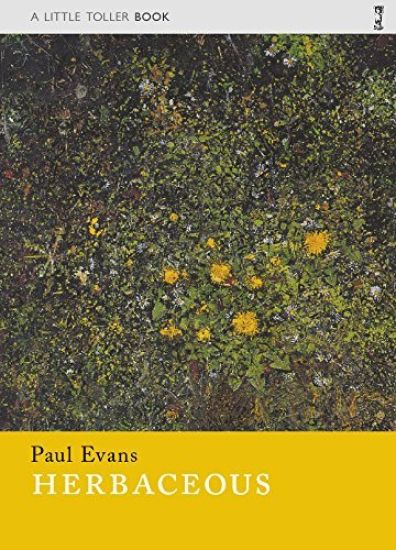
As climate change erodes the familiar pattern of the seasons, we turn instinctively to the life cycles of herbaceous plants to guide us through the year. The growing, flowering, seeding and dying back of wild flowers, weeds, herbs and garden perennials sustain and enrich our lives. Herbaceous is a journey which follows the colour pulse of plants through the year, looking for the new and emerging rhythms. Beginning with the bright yellow, followed by the vernal whites of spring and the pinks of summer, the blues of early autumn and finally the browns of seeds set as winter comes. Herbaceous is gardening with words - asking us to look again at our relationship with plants and celebrates their power to nourish our spirits.
‘A profoundly satisfying read’ Financial TimesIn Field Notes from the Edge, the acclaimed writer of the Guardian's 'Country Diary', Paul Evans, takes us on a journey through the in-between spaces of Nature – such as strandlines, mudflats, cliff tops and caves – where one wilderness is on the verge of becoming another and all things are possible. Here, Evans searches out wildlife and plants to reveal a Nature that is inspiring yet intimidating; miraculous yet mundane; part sacred space, part wasteland. It is here that we tread the edge between a fear of Nature’s dangers and a love of Nature’s beauty.Combining a naturalist’s eye for observation with a poet’s ear for the lyrical, Field Notes from the Edge confirms Paul Evans's place among our leading nature writers today.

Critical approaches to leadership studies have sought to challenge the normative position of leadership as residing solely within the formal leader and have gone as far as to undermine the traditionally held assumption of leadership as a "real" phenomenon. The book offers a critical account of the nature of leadership and management in modern organizations. Specifically it examines the forces that affect the influence relationships between leaders and followers in public sector organizational settings and thus, how these relationships inform social influence processes. Although the book focuses on the case of a public sector organization in the UK, the findings are placed in the context of both leadership theory and research across the globe and the dissemination of 'new public management' worldwide.By acknowledging the criticisms concerning the weaknesses of conventional or mainstream leadership study and through the adoption of a critical perspective, Critical Leadership provides a deep and rich interpretation of the empirical material on leadership, thus making an outstanding contribution to the current literature.

How to Teach Non-Fiction Writing at Key Stage 3 is a practical manual to help teachers of 11-14 year-olds to focus on key aspects of developing their pupil's non-fiction writing. The book presents a clear teaching sequence that emphasizes the link between reading and writing, and can raise pupil's attainment levels in both areas. Practical writing workshops focus on the six main types of non-fiction as defined in the NLS Framework for Year 7: information, recount, explanation, instruction, persuasion and discussion texts. Each workshop includes photocopiable sample texts, instructions for teachers, and tasks for pupils to complete.With advice on how to make best use of a writing journal, and how to progress in sentence construction - how to make sentences more flexible and better adapted to purpose - the book is a practical and immediately useful resource for KS3 teachers.
Early Trope Repertory of Saint Martial de Limoges
Paul Evans
Princeton University Press
2016
sidottu
Focusing on the earliest and most extensive collection of tropes we now possess, those associated with the abbey of Saint Martial de Limoges in the tenth and early eleventh centuries, Professor Evans offers new conclusions about the nature and early development of the trope. Originally published in 1970. The Princeton Legacy Library uses the latest print-on-demand technology to again make available previously out-of-print books from the distinguished backlist of Princeton University Press. These editions preserve the original texts of these important books while presenting them in durable paperback and hardcover editions. The goal of the Princeton Legacy Library is to vastly increase access to the rich scholarly heritage found in the thousands of books published by Princeton University Press since its founding in 1905.