Kirjailija
Paul Farmer
Kirjat ja teokset yhdessä paikassa: 27 kirjaa, julkaisuja vuosilta 1995-2023, suosituimpien joukossa EC Tax Law. Vertaile teosten hintoja ja tarkista saatavuus suomalaisista kirjakaupoista.
27 kirjaa
Kirjojen julkaisuhaarukka 1995-2023.
This new edition of EC Tax Law provides a detailed and extensive survey of EC tax legislation and case law. With the generalist lawyer in mind, the volume contains an introduction to VAT and to the basic principles of company taxation. It deals at some length with the legislation and case law on VAT (which is almost completely harmonized at the EC level) and excise duties. In relation to indirect taxation it analyses the case law on Article 90 of the EC Treaty which prohibits fiscal discrimination against goods from other Member States. In the area of direct taxation it covers the existing legislation on company taxation, and also the recent case law of the EC Court applying the treaty articles on the free movement of persons, services, and capital. The volume provides a detailed analysis of the legislation and its interpretation by the European Court, and also an analysis of the impact of the State aid rules in the tax field and the growing concern over what is often called unfair tax competition.
This book provides a detailed and extensive survey of EC tax legislation and case law. Accordingly, it deals at some length with the legislation and case law on VAT (which is almost completely harmonized at the EC level) and excise duties. It also covers the recent legislation on company taxation, concentrating in particular on the Parent-Subsidiary Directive. A distinctive feature of the book is the detailed analysis of the legislation and its interpretation by the European Court. The book also contains an analysis of the impact of the tax sphere of the provisions of the EC Treaty, including Article 95 on the prohibition of fiscal discrimination against EC goods and the treaty articles on the free movement of persons, services, and capital. With the generalist lawyer in mind, the book contains an introduction to VAT and to the basic principles of company taxation. Since the focus of the book is EC and the language of the international tax world is English, the book should have an appeal for tax and EC lawyers throughout the EC, including the new entrant states.
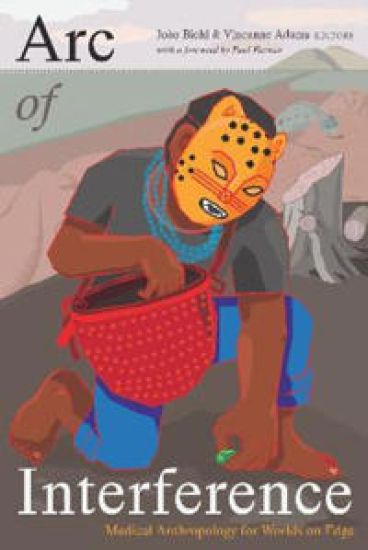
The radically humanistic essays in Arc of Interference refigure our sense of the real, the ethical, and the political in the face of mounting social and planetary upheavals. Creatively assembled around Arthur Kleinman’s medical anthropological arc and eschewing hegemonic modes of intervention, the essays advance the notion of a care-ful ethnographic praxis of interference. To interfere is to dislodge ideals of naturalness, blast enduring binaries (human/nonhuman, self/other, us/them), and redirect technocratic agendas while summoning relational knowledge and the will to create community. The book’s multiple ethnographic arcs of interference provide a vital conceptual toolkit for today’s world and a badly needed moral perch from which to peer toward just horizons. Contributors. Vincanne Adams, João Biehl, Davíd Carrasco, Lawrence Cohen, Jean Comaroff, Robert Desjarlais, Paul Farmer, Marcia Inhorn, Janis H. Jenkins, David S. Jones, Salmaan Keshavjee, Arthur Kleinman, Margaret Lock, Adriana Petryna
An Introduction to Global Health Delivery
Joia Mukherjee; Paul Farmer
OXFORD UNIVERSITY PRESS INC
2022
nidottu
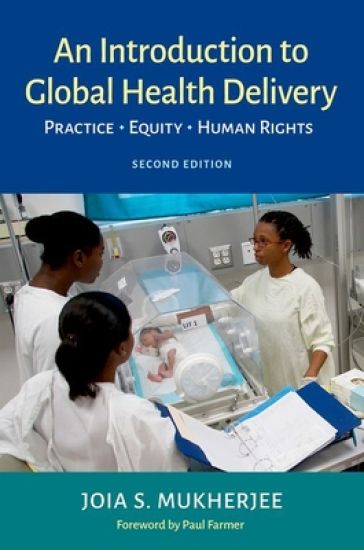
In the last two decades, the rise of global health studies at universities across the world reflects the interest of a growing generation of students motivated to be involved in progressive global change. Grassroots advocacy for health equity and strong leadership in the global South have catalyzed a paradigm shift from primarily preventative health programs to holistic systems providing health care as a human right. To succeed in this field, students must not only understand the elements needed to deliver equitable health care but also the historical and social factors that cause and propagate health disparities. An Introduction to Global Health Delivery, Second Edition is an immersive introduction to global health's origins, actors, interventions, and challenges from the ongoing impacts of racism to the momentum for the delivery of care that began with the AIDS movement through to the current era of COVID-19. Informed by physician Joia Mukherjee's quarter-century of experience fighting disease and poverty in more than a dozen countries, it delivers a clear-eyed overview of the movement underway to address injustice, reduce global health disparities, and deliver health care as a human right. This second edition extends the lens of global health delivery to address the challenges of COVID-19 and the prevention of future pandemics. It features updated chapters exploring pandemics, preparedness, and the intersection of key social movements with the right to health care, including Black Lives Matter, decolonization, and climate justice. Enriched with case studies and exercises that encourage readers to think critically about equitable global health delivery, An Introduction to Global Health Delivery, Second Edition is the essential starting point for readers of any background seeking a practical grounding in global health's promise and progress.
"Paul Farmer brings his considerable intellect, empathy, and expertise to bear in this powerful and deeply researched account of the Ebola outbreak that struck West Africa in 2014. It is hard to imagine a more timely or important book." --Bill and Melinda Gates" The] history is as powerfully conveyed as it is tragic . . . Illuminating . . . Invaluable." --Steven Johnson, The New York Times Book Review In 2014, Sierra Leone, Liberia, and Guinea suffered the worst epidemic of Ebola in history. The brutal virus spread rapidly through a clinical desert where basic health-care facilities were few and far between. Causing severe loss of life and economic disruption, the Ebola crisis was a major tragedy of modern medicine. But why did it happen, and what can we learn from it? Paul Farmer, the internationally renowned doctor and anthropologist, experienced the Ebola outbreak firsthand--Partners in Health, the organization he founded, was among the international responders. In Fevers, Feuds, and Diamonds, he offers the first substantive account of this frightening, fast-moving episode and its implications. In vibrant prose, Farmer tells the harrowing stories of Ebola victims while showing why the medical response was slow and insufficient. Rebutting misleading claims about the origins of Ebola and why it spread so rapidly, he traces West Africa's chronic health failures back to centuries of exploitation and injustice. Under formal colonial rule, disease containment was a priority but care was not - and the region's health care woes worsened, with devastating consequences that Farmer traces up to the present. This thorough and hopeful narrative is a definitive work of reportage, history, and advocacy, and a crucial intervention in public-health discussions around the world.
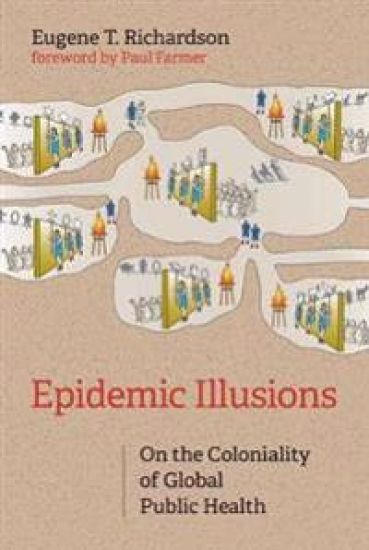
In Epidemic Illusions, Eugene Richardson makes a provocative claim- that public health science manages and maintains global health inequity. Richardson, a physician and and anthropologist, examines the conventional public health approach to epidemiology through the lens of a participant-observer, identifying a dogmatic commitment to the quantitative paradigm. This paradigm, he argues, plays a role in causing and perpetrating public health crises. The mechanisms of public health science--and epidemiology in particular--that set public health agendas and claim a monopoly on truth stem from a colonial, racist, and patriarchal system that had its inception in 1492.
Doctor and social activist Paul Farmer shares a collection of charismatic short speeches that aims to inspire the next generation. One of the most passionate and influential voices for global health equity and social justice, Farmer encourages young people to tackle the greatest challenges of our times. Engaging, often humorous, and always inspiring, these speeches bring to light the brilliance and force of Farmer’s vision in a single, accessible volume. A must-read for graduates, students, and everyone seeking to help bend the arc of history toward justice, To Repair the World:challenges readers to counter failures of imagination that keep billions of people without access to health care, safe drinking water, decent schools, and other basic human rightschampions the power of partnership against global poverty, climate change, and other pressing problems todayoverturns common assumptions about health disparities around the globe by considering the large-scale social forces that determine who gets sick and who has access to health carediscusses how hope, solidarity, faith, and hardbitten analysis have animated Farmer’s service to the poor in Haiti, Peru, Rwanda, Russia, and elsewhereleaves the reader with an uplifting vision: that with creativity, passion, teamwork, and determination, the next generations can make the world a safer and more humane place.
Second Suns is the unforgettable true story of two very different doctors with a common mission: to rid the world of preventable blindness. Dr. Geoffrey Tabin was the high-achieving “bad boy” of his class at Harvard Medical School. Dr. Sanduk Ruit grew up in a remote village in the Himalayas, where cataract blindness—easily curable in modern hospitals—amounts to an epidemic. Together, they pioneered a new surgical method, by which they have restored sight to over 100,000 people—all for about $20 per operation. Master storyteller David Oliver Relin brings the doctors’ work to vivid life through poignant portraits of their patients, from old men who can once again walk treacherous mountain trails, to children who can finally see their mothers’ faces. The Himalayan Cataract Project is changing the world—one pair of eyes at a time.
Neoliberalism has been the defining paradigm in global health since the latter part of the twentieth century. What started as an untested and unproven theory that the creation of unfettered markets would give rise to political democracy led to policies that promoted the belief that private markets were the optimal agents for the distribution of social goods, including health care. A vivid illustration of the infiltration of neoliberal ideology into the design and implementation of development programs, this case study, set in post-Soviet Tajikistan's remote eastern province of Badakhshan, draws on extensive ethnographic and historical material to examine a revolving drug fund" program used by numerous nongovernmental organizations globally to address shortages of high-quality pharmaceuticals in poor communities. Provocative, rigorous, and accessible, Blind Spot offers a cautionary tale about the forces driving decision making in health and development policy today, illustrating how the privatization of health care can have catastrophic outcomes for some of the world's most vulnerable populations.
Here, for the first time, is a collection of short speeches by the charismatic doctor and social activist Paul Farmer. One of the most passionate and influential voices for global health equity and social justice, Farmer encourages young people to tackle the greatest challenges of our times. Engaging, often humorous, and always inspiring, these speeches bring to light the brilliance and force of Farmer's vision in a single, accessible volume. A must-read for graduates, students, and everyone seeking to help bend the arc of history toward justice, To Repair the World: challenges readers to counter failures of imagination that keep billions of people without access to health care, safe drinking water, decent schools, and other basic human rights; champions the power of partnership against global poverty, climate change, and other pressing problems today; overturns common assumptions about health disparities around the globe by considering the large-scale social forces that determine who gets sick and who has access to health care; discusses how hope, solidarity, faith, and hardbitten analysis have animated Farmer's service to the poor in Haiti, Peru, Rwanda, Russia, and elsewhere; and leaves the reader with an uplifting vision: that with creativity, passion, teamwork, and determination, the next generations can make the world a safer and more humane place.
Winner of the 2015 Margaret Mead Award from the American Anthropological Association and the Society for Applied Anthropology After Haiti’s 2010 earthquake, over half of U.S. households donated to thousands of nongovernmental organizations (NGOs) in that country. Yet we continue to hear stories of misery from Haiti. Why have NGOs failed at their mission? Set in Haiti during the 2004 coup and aftermath and enhanced by research conducted after the 2010 earthquake, Killing with Kindness analyzes the impact of official development aid on recipient NGOs and their relationships with local communities. Written like a detective story, the book offers rich ethnographic comparisons of two Haitian women’s NGOs working in HIV/AIDS prevention, one with public funding (including USAID), the other with private European NGO partners. Mark Schuller looks at participation and autonomy, analyzing donor policies that inhibit these goals. He focuses on NGOs’ roles as intermediaries in “gluing” the contemporary world system together and shows how power works within the aid system as these intermediaries impose interpretations of unclear mandates down the chain—a process Schuller calls “trickle-down imperialism.”