Kirjailija
Paul Goldberger
Kirjat ja teokset yhdessä paikassa: 22 kirjaa, julkaisuja vuosilta 2009-2026, suosituimpien joukossa Jed Johnson. Vertaile teosten hintoja ja tarkista saatavuus suomalaisista kirjakaupoista.
22 kirjaa
Kirjojen julkaisuhaarukka 2009-2026.
From humble beginnings in Minnesota, Johnson rose to prominence in the 1970s New York, via the Warhol Factory, to the highest echelons of the rarified world of design. He was named by Architectural Digest in the January 2010 issue one of 'The Worlds 20 Greatest Designers of All Time.' His impressive client list included Pierre Berge, Mick Jagger and Jerry Hall, Richard Gere, and Barbara Streisand. Yet, he never lost his shy humility, generous spirit, and quiet grace. Through a series of essays, project photographs, and personal photographs, we trace the influences on his nascent career, his special relationship with Andy Warhol as recently portrayed in the Netflix series of 2022 'The Andy Warhol Diaries,' and his magical effect on others. Many never-before-seen photographs are included by important photographers, among them: Cecil Beaton, Francesco Scavuello, Billy Name, Jack Mitchell, John Hall, Elizabeth Heyert, and Warhol himself. Opulent Restraint is a must have for every interior design office.

The Imperfect City: Design, Serendipity, and the Real Life of Cities
Paul Goldberger
Knopf Publishing Group
2026
sidottu
A Pulitzer Prize-winning architectural critic explores how modern cities thrive when urban planning leaves room for happy accidents and innovations "A city is not a symphony, composed as a single work," Paul Goldberger writes. "It is more like jazz, with its mix of order and improvisation." The Imperfect City recounts Goldberger's looking, lingering, and thinking about cities--how they develop their character, how they affect us, and how they change. On this exhilarating journey around the world, Goldberg points out each city's notable qualities, from the eco-friendly features of Singapore's skyscrapers, to the collision and coexistence of old and new in Rome, to the boldly imagined lakefront in Chicago. He wanders the picturesque canals of Amsterdam, sets off down the jagged slash of Broadway across Manhattan's grid, and follows the poetic tributaries of Los Angeles's freeway ramps. Goldberg brings the world's best and brightest city planners to life on these pages, some bidding for immortality, others possessed with a mission to turn a city into art. What emerges is a sweeping portrait of the often haphazard, half-thought-through elements that sometimes give identity and charm to a place and sometimes turn out to be eyesores. Drawn from a lifetime of appreciation, dating back to his own tender-aged first arrivals in Manhattan, Paris, and beyond, this warm and brilliant book shows that the joy of urban experience comes not from seeking the perfection of order, but from embracing the energy, beauty, and unpredictability of cities at their best. The Imperfect City helps us to understand how cities, and people, truly evolve--by luck, accident, and design.
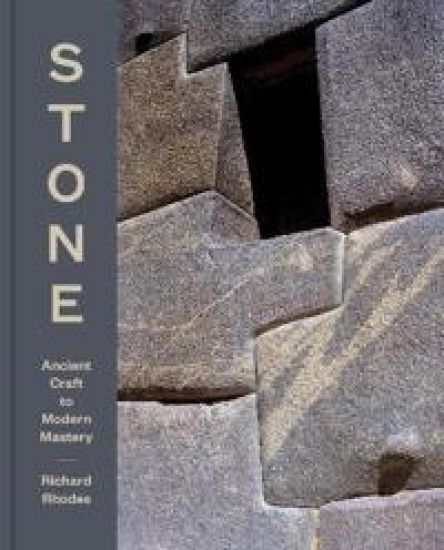
In this perceptive and illustrative look at the expressive and practical use of stone throughout history, Richard Rhodes unlocks the underlying principles of this ancient material—and explains the closely guarded “Sacred Rules” of the Freemasons guild for the first time ever. The relationship between mankind and stone is elemental and deeply ingrained in us all. Stone, after all, has been the primary building material for more than five thousand years of human history, and it continues to record our triumphs and failures. In this searching history, Rhodes—a sculptor, stonemason, and scholar of stonework—explores how stone is best used today and throughout history.Stone presents the closely kept “Sacred Rules” developed over centuries by the medieval Freemason guild, previously available only to the initiated. Here, the rules are explained through historical examples and photographs. In these times of rapid development and expansive urbanization, Rhodes implores us to explore the essential qualities of stone that emerge from the Sacred Rules, not only to rediscover the ancient and traditional knowledge that governed its use for so long but also to find a roadmap for how future generations might thoughtfully recapture the power this material offers.
Explore iconic destinations with The Leading Hotels of the World in this celebration of exceptional hospitality through architecture and design Embark on a stunning visual journey through The Leading Hotels of the World, a collection of the world’s most exclusive independent luxury hotels, which consistently dominates prestigious awards, securing top honors in Travel + Leisure’s World’s Best Awards and Condé Nast Traveler’s Readers’ Choice Awards. Richly illustrated, exquisitely arranged, and expertly edited, this lavish volume celebrates legendary hospitality and extraordinary design, featuring a carefully curated selection of over 70 hotels from LHW’s 400-plus-member collection across 80 countries. From Norman Foster’s sinuous courtyard structure in Singapore, to Jacques Garcia’s indulgent interiors in Paris, to Axel Vervoordt’s Zen penthouse in New York City, discover how great aesthetics serve exceptional luxury hospitality. This volume – the first in a multi-volume series – includes five in-depth feature stories capturing LHW’s essence: Ambiente A Landscape Hotel in Sedona, Arizona; Botanic Sanctuary in Antwerp; La Réserve in Paris; The Okura in Tokyo; and Portrait Hotel in Milan. Edited and produced by Spencer Bailey and the New York–based editorial studio of The Slowdown, the book comprises a foreword by the Pulitzer Prize–winning architecture critic Paul Goldberger and contributions from leading design and travel writers such as Maria Cristina Didero, Mark Ellwood, Christina Ohly Evans, Cynthia Rosenfeld, Warren Singh Bartlett, and Janelle Zara. Two feature-length interviews – Eleven Madison Park chef Daniel Humm in conversation with fashion designer Gabriela Hearst in New York City, and architect Michael Rojkind with fashion designer Carla Fernández in Mexico City – are also found in its pages, as well as expert travel tips from dozens of notables, including André Fu, Stephanie Goto, Samuel Ross, and Kulapat Yantrasast.
Rosario Candela & The New York Apartment
David Netto; Paul Goldberger
RIZZOLI INTERNATIONAL PUBLICATIONS
2024
sidottu
Known and celebrated for many of the apartment buildings on Park Avenue, Fifth Avenue, and in Sutton Place 82 in NYC, including the storied 740 Park, sometimes called the richest and most powerful address in New York and whose famous residents included John D. Rockefeller Jr. Candela s work is at once timeless and profoundly of its time. Classical in styling and even modest on the exterior, it is on the insides, in the apartment interiors, the floorplans, the extraordinary and frequently luxurious arrangements of rooms and space, where his designs set a standard that serves as a benchmark and aspirational goal of taste and refinement. The authors explore these seminal spaces through the lens of exteriors and urbanism, planning and interior architecture, and the circumstances and stories of creation. Lavish and comprehensive black-and-white vintage photography as well as color imagery of the exteriors, original plans, and a collection of exceptional interior views give historical perspective (including a seductive Slim Aarons' Park Avenue streetscape) and contemporary sizzle (as seen in Derry Moore s depiction of K. K. Auchincloss s penthouse at 1040 Fifth). The story told is of a genius designer who gave form to the New York of his dreams.
Founded in 2007 by Eran Chen, ODA seeks to reconcile the conditions of vertical urban living with quality of life and has established a reputation for mold-breaking designs. Seeking to reorder urban architectural priorities by putting people first, ODA challenges conventional perspectives of dwelling that will, over time, influence life in our cities. Full of setbacks, cutouts, and terraces, an ODA building invariably has an exciting profile, tending to be sculptural where important to be visually exciting, up in the sky, and plainer where more important to be straightforward, at street level. Building shapes catch the eye but forms are never arbitrary or excessive. Some, like 15 Renwick in Manhattan, as observed by Goldberger, are well-behaved, and defer to the street more than show off their shape; others, like Bevel in Long Island City, Queens, are more striking but they never come off as excessive, as form for form s sake. With chapters moving from Apartment to Building to Block to Neighborhood and a gatefold that reveals an exciting new project destined to enliven the New York skyline, the book s message underlines ODA s fundamental understanding that nothing exists in isolation, and the goal of architecture is not just the making of comfortable and visually pleasing places in which to live, but the making of community.
Blue Dream and the Legacy of Modernism in the Hamptons
Paul Goldberger
DISTRIBUTED ART PUBLISHERS
2023
sidottu
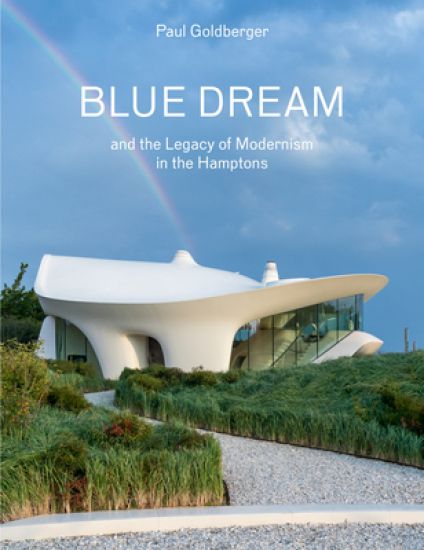
The story of the creation of an astonishing house that renews and reinvigorates the spirit of the avant-garde in the Hamptons Architecture critic Paul Goldberger tells the story of an extraordinary house on the Atlantic Double Dunes in East Hampton—Blue Dream, the result of a remarkable collaboration between collectors Julie Reyes Taubman and Robert Taubman, architects Diller Scofidio + Renfro, builder Ed Bulgin, landscape architect Michael Boucher and designer Michael Lewis, who sought to renew the legacy of modernist architecture and art in the Hamptons. Goldberger offers insight into the complex process by which an architectural idea generated a work that stands as the most striking addition of our time to the roster of architecturally ambitious modernist houses on Long Island. As he notes, "There are relatively few books devoted to the architecture of a single house, but what is clear if you read any of them is that they are stories about clients as much as about architects." So it is with Blue Dream. The Taubmans were inspired by the avant-garde spirit of artists and architects who settled and worked in the Hamptons and set out to create a house like no other, a house whose complex curving forms could only be built using the composite material used to make fighter jets. Iwan Baan's photographic portfolio documents Blue Dream across four seasons. Goldberger’s text is illustrated with images of earlier modernist houses that inspired the project, as well as documentation of the design process involved in the making of Blue Dream itself. Paul Goldberger (born 1950), whom the Huffington Post has called "the leading figure in architecture criticism," is a contributing editor at Vanity Fair magazine. Goldberger began his career at the New York Times in 1972 and was appointed architecture critic at the paper in 1973, working alongside Ada Louise Huxtable until 1982. In 1984, he was awarded the Pulitzer Prize for Distinguished Criticism, the highest award in journalism. As architecture critic for the New Yorker (1997–2011), he wrote the magazine’s celebrated "Sky Line" column. After serving as dean of the Parsons School of Design from 2004 to 2006, Goldberger was named the Joseph Urban Professor of Design at the New School. He is the author of Why Architecture Matters (2023), Building Art: The Life and Work of Frank Gehry (2015), Building Up and Tearing Down: Reflections on the Age of Architecture (2009), Beyond the Dunes: A Portrait of the Hamptons, with photographer Jake Rajs (2018) and Houses of the Hamptons (1986), among other publications.
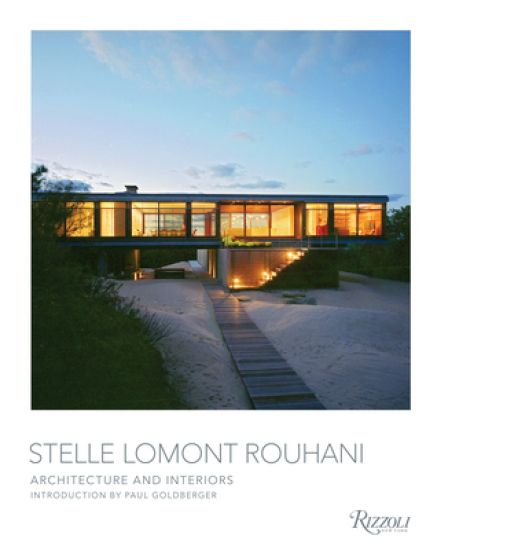
Modern houses that are timeless, thoughtfully detailed, marked by innovative and environmentally friendly design, and inevitably situated close to nature by the sea, on the bluff, upon the dunes are the hallmark of Stelle Lomont Rouhani. From Casa Loma and Lazy Point to House on the Point and Atlantic Dunes, mere mention of the homes is enough to inspire visions of some contemporary Xanadu. But it is the specifics, the careful use of materials, the very close attention to place, bespoke furniture and fixtures, and above all a sensitivity to those who will live in the spaces created that make these extraordinary works of architecture such beloved dwellings. With thought to an ultimate experience of comfort, to space and light, to views, and to a way of living beside nature that is considerate of nature, the architects open walls toward the sea and position decks to allow for the enjoyment of morning sunlight and scented breezes redolent of bayberries and pine. Ultimately it is a kind of harmony the architects are after and doing more with less, a Zen-like quality that renews the spirit, offering serenity and repose and which, in the houses featured here, they so warmly, so quietly find.
A classic work on the joy of experiencing architecture, with a new afterword reflecting on architecture’s place in the contemporary moment “Architecture begins to matter,” writes Paul Goldberger, “when it brings delight and sadness and perplexity and awe along with a roof over our heads.” In Why Architecture Matters, he shows us how that works in examples ranging from a small Cape Cod cottage to the vast, flowing Prairie houses of Frank Lloyd Wright, from the Lincoln Memorial to the Guggenheim Bilbao. He eloquently describes the Church of Sant’Ivo in Rome as a work that “embraces the deepest complexities of human imagination.” In his afterword to this new edition, Goldberger addresses the current climate in architectural history and takes a more nuanced look at projects such as Thomas Jefferson’s academical village at the University of Virginia and figures including Philip Johnson, whose controversial status has been the topic of much recent discourse. He argues that the emotional impact of great architecture remains vital, even as he welcomes the shift in the field to an increased emphasis on social justice and sustainability.
- Fascinating to read and relaxing to color, the book makes a wonderful keepsake and gift idea for architecture enthusiasts and colorists of all ages Experience the iconic Glass House - Philip Johnson's modernist home in New Canaan, Connecticut - in a fun new way in The Glass House Coloring Book. Three dozen black-and-white illustrations capture the architectural highlights of Johnson's visionary mid-century glass-and-steel pavilion, which ushered the International Style into residential American architecture. Each illustration is accompanied by the photograph that inspired it, along with caption information detailing its historical and aesthetic significance. Landscape and design elements include furniture by Ludwig Mies van der Rohe, the chain link Ghost House, and the skylit Sculpture Gallery. Fascinating to read and relaxing to color, the book makes a wonderful keepsake and gift idea for architecture enthusiasts and colorists of all ages.
Conceived and designed by Ma Yansong, founder of MAD Architects, MAD Rhapsody documents the buildings of this avant-garde architecture firm and traces the development of their ideas through associated practice including art, research, and exhibition projects. With photographs, drawings, and models, the book highlights 23 projects from the past six years, both built and in process. Known for their organic and dreamlike architecture that creates a dialogue with nature, earth, and sky, MAD projects reach all over the globe. At age 46, Ma Yansong is one of China s best-known architects. His curvilinear, free-form, and futuristic designs are often compared to those of his mentor, Zaha Hadid. Ma s greatest inspiration is nature; his opera house in the northern Chinese city of Harbin resembles a snow-capped mountain, while his master plan for the city of Nanjing calls for sloping buildings covered with vertical louvers that resemble waterfalls. Other projects include the Ordos Museum in the wilderness of Inner Mongolia, the Absolute Towers in Canada, and the Lucas Museum of Narrative Art in Los Angeles.
The illustrated history of a seminal New York neighborhood--a story of birth, decline, and renewal, of high design, of grit and glamour--a tale of real estate wrangling, of art, of commerce.DUMBO, an acronym for Down Under the Manhattan Bridge Overpass, is a flourishing neighborhood in the New York City borough of Brooklyn. Romantic cobblestone streets, stunning views of Manhattan, the East River, and New York Harbor, and storied architecture framed by the iconic silhouette of the Brooklyn Bridge characterize this extraordinary place. DUMBO, however, was not always flourishing--nor always called by this curious appellation. What we now know and see of the neighborhood is largely the product of adventurous artists and, in the end, the determination of a man with a vision. The story of DUMBO is at once the story of New York and, as well, a story of urban rebirth and our nation's return to the city, a tale involving real estate, of buying and selling with acumen and nerve, of beautiful place-making, and of people who have settled in a long neglected, but extraordinary locale--a place of much history, and, now, of brilliant resurgence.This volume considers this seminal New York neighborhood with both historic imagery culled from the great city collections as well as new photography taken specifically for the book. It features compelling streetscapes and dramatic views of transformed one-time industrial spaces, intimate apartment interiors, park spaces, and archival imagery from the area's richly layered past, all as seen through the eyes of Paul Goldberger, one of our nation's great writers on architecture, space, and New York.
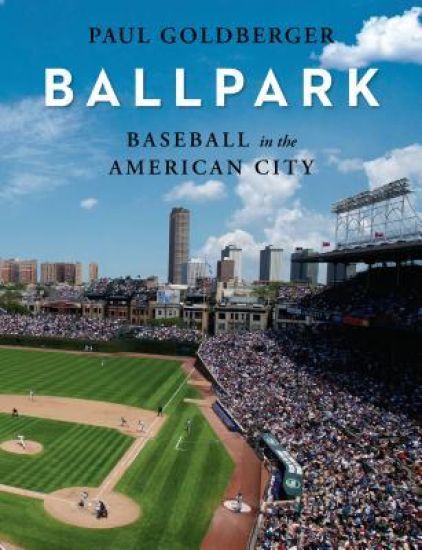
An exhilarating, splendidly illustrated, entirely new look at the history of baseball: told through the stories of the vibrant and ever-changing ballparks where the game was and is staged, by the Pulitzer Prize-winning architectural critic. From the earliest corrals of the mid-1800s (Union Grounds in Brooklyn was a "saloon in the open air"), to the much mourned parks of the early 1900s (Detroit's Tiger Stadium, Cincinnati's Palace of the Fans), to the stadiums we fill today, Paul Goldberger makes clear the inextricable bond between the American city and America's favorite pastime. In the changing locations and architecture of our ballparks, Goldberger reveals the manifestations of a changing society: the earliest ballparks evoked the Victorian age in their accommodations--bleachers for the riffraff, grandstands for the middle-class; the "concrete donuts" of the 1950s and '60s made plain television's grip on the public's attention; and more recent ballparks, like Baltimore's Camden Yards, signal a new way forward for stadium design and for baseball's role in urban development. Throughout, Goldberger shows us the way in which baseball's history is concurrent with our cultural history: the rise of urban parks and public transportation; the development of new building materials and engineering and design skills. And how the site details and the requirements of the game--the diamond, the outfields, the walls, the grandstands--shaped our most beloved ballparks. A fascinating, exuberant ode to the Edens at the heart of our cities--where dreams are as limitless as the outfields.
The New Residential Colleges at Yale
Robert A.M. Stern; Gideon Fink Shapiro; Paul Goldberger
Monacelli Press
2018
sidottu
Celebrating Yale's first new residential colleges in fifty years, The New Residential Colleges at Yale examines the role of the residential college system and the evolution of Yale's urban campus, presenting an important new chapter in the history of Yale and New Haven The residential college system at Yale, modeled after the academic communities at Oxford and Cambridge, is a cornerstone of Yale undergraduate life, breaking down the larger university into smaller, more closely-knit communities. Eight of the original ten residential colleges at Yale were designed by James Gamble Rogers in the 1930s, establishing Collegiate Gothic as the style with which Yale is most closely identified today. For the two new colleges, Robert A.M. Stern Architects was charged with designing buildings that fit into the residential college system, and in so doing say "Yale," while bringing twenty-first-century standards of communal living and environmental responsibility to college residential life. The two new colleges, housing 450 students each, are conceived as fraternal twins, similar in size but each enjoying its own identity, each incorporating a dining hall, a library, and a house for the head of the college, and each maintaining the traditional organization of entryways that intentionally create more intimate communities of students within the larger whole. The site will play important role in redefining the overall sense of the Yale campus, serving as it does as a lynchpin between districts identified with the humanities and the sciences, and between the university and adjacent neighborhoods. Beyond questions of Yale and New Haven, the book contributes to a wider historical and theoretical conversation about the expression of place, time, and identity through architecture. The design of the new colleges exemplifies the challenges and opportunities involved with practicing traditional architecture as a meditation between past and present in a historically sensitive setting. An extensive archive of original drawings, models, material samples, as well as extensive color photography of the completed buildings, illustrates the story.
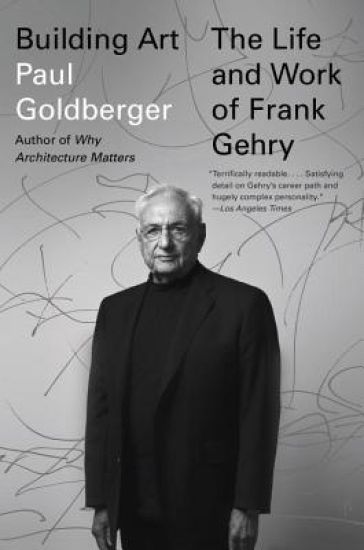
From Pulitzer Prize-winning architectural critic Paul Goldberger: an engaging, nuanced exploration of the life and work of Frank Gehry, undoubtedly the most famous architect of our time. This first full-fledged critical biography presents and evaluates the work of a man who has almost single-handedly transformed contemporary architecture in his innovative use of materials, design, and form, and who is among the very few architects in history to be both respected by critics as a creative, cutting-edge force and embraced by the general public as a popular figure. Building Art shows the full range of Gehry's work, from early houses constructed of plywood and chain-link fencing to lamps made in the shape of fish to the triumphant success of such late projects as the spectacular art museum of glass in Paris. It tells the story behind Gehry's own house, which upset his neighbors and excited the world with its mix of the traditional and the extraordinary, and recounts how Gehry came to design the Guggenheim Museum in Bilbao, Spain, his remarkable structure of swirling titanium that changed a declining city into a destination spot. Building Art also explains Gehry's sixteen-year quest to complete Walt Disney Concert Hall, the beautiful, acoustically brilliant home of the Los Angeles Philharmonic. Although Gehry's architecture has been written about widely, the story of his life has never been told in full detail. Here we come to know his Jewish immigrant family, his working-class Toronto childhood, his hours spent playing with blocks on his grandmother's kitchen floor, his move to Los Angeles when he was still a teenager, and how he came, unexpectedly, to end up in architecture school. Most important, Building Art presents and evaluates Gehry's lifetime of work in conjunction with his entire life story, including his time in the army and at Harvard, his long relationship with his psychiatrist and the impact it had on his work, and his two marriages and four children. It analyzes his carefully crafted persona, in which a casual, amiable "aw, shucks" surface masks a driving and intense ambition. And it explores his relationship to Los Angeles and how its position as home to outsider artists gave him the freedom in his formative years to make the innovations that characterize his genius. Finally, it discusses his interest in using technology not just to change the way a building looks but to change the way the whole profession of architecture is practiced. At once a sweeping view of a great architect and an intimate look at creative genius, Building Art is in many ways the saga of the architectural milieu of the twenty-first century. But most of all it is the compelling story of the man who first comes to mind when we think of the lasting possibilities of buildings as art. From the Hardcover edition.
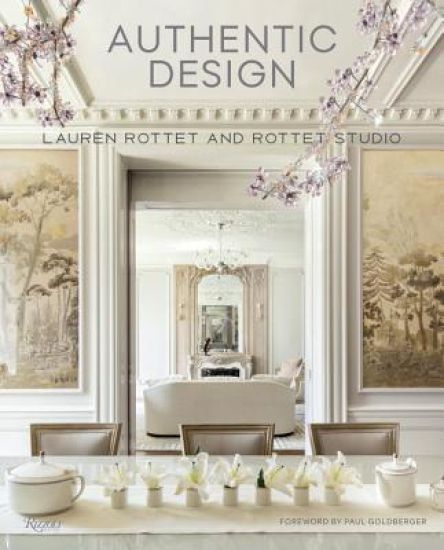
This book features the work of Lauren Rottet over the past fifteen years and includes the interiors of houses, apartments, hotels, and design studio offices in the wide range of styles at which Rottet Studio is adept, from elegant Modernism to Beaux-Arts classicism. Rottet-designed spaces are artfully curated living/working spaces that transcend their formal use and become places in which people ponder, experience, and are inspired. These environments, though immediately beautiful to the eye, are not meant to be one-moment impacts and instead are designed to reveal themselves over time. Above all, her elegant, contemporary designs, like pieces of art, emphasize transparency and light. A minimalist at heart, Rottet would happily live in a white box with beautiful light. But her influences are varied and her love of historic architecture, art, lovely objects, and well-edited decoration is deep, as is evident in her work.
Moshe Safdie II
Paul Goldberger; Peter G. Rowe; Witold Rybcynski
Images Publishing Group Pty Ltd
2016
sidottu
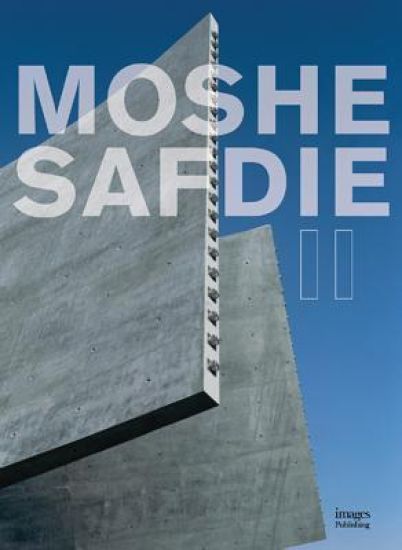
Since Habitat, his seminal experimental housing project constructed for Montreal's Expo 67, Safdie has continued to contribute meaningfully to the development of many building types. Moshe Safdie: Volume Two features an essay by Safdie presenting his thoughts on the significant issues facing architecture today. Complementing this essay are texts by William J. Mitchell, on global practice responding to a wide range of varied local conditions, and Thomas Fisher, on Safdie's books, which, like his buildings, continue to influence the international architecture community. Featured projects include the Salt Lake City Main Public Library, the US Institute of Peace Headquarters and the Peabody Essex Museum in the USA; the Holocaust History Museum at Yad Vashem, the Yitzhak Rabin Center and the new city of Modi'in in Israel; the Khalsa Heritage Memorial Complex in India and the Guangdong Science Center and the Guangzhou No. 2 Children's Palace in China.
To respond to the unique opportunities of each client and site, Bates Masi + Architects has developed an approach, rather than a devotion to a particular style. Careful study of the needs of the site and owners uncovers a guiding concept particular to each project. It may be derived from the owner s interests, the site's parameters, or the character of the place. That concept is distilled to its essence, just a few words, such that it can inform the design at all scales, from massing, to materials, to details. The consistency of the concept is evident in the finished product. It imbues even small details and simple materials with meaning, thus making the mundane memorable. The result is an architecture that is cohesive, innovative, contextual, and full of details that delight.
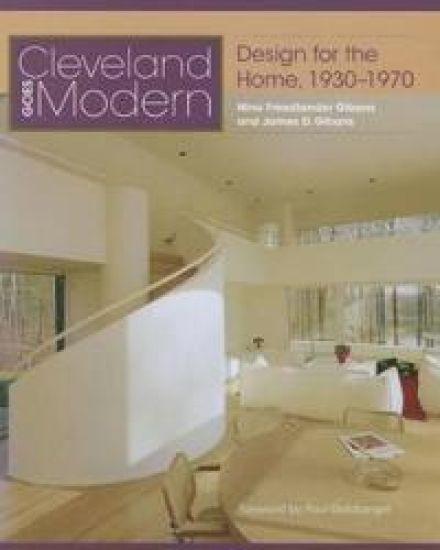
Cleveland Goes Modern
Nina Freelander Gibans; Paul Goldberger; James D. Gibans
Kent State University Press
2014
sidottu
Midcentury Modern domestic architecture in Northeast Ohio"The definitive study of its subject."—Alice T. Friedman, Wellesley CollegeBased on the award-winning exhibition of the same name, Cleveland Goes Modern: Design for the Home, 1930–1970, examines Modern movement houses in greater Cleveland within the context of American Modernism as a whole. The authors demonstrate that understanding and contextualizing this regional domestic architecture, along with the practitioners and clients who created it, makes a valuable contribution to the larger study of architecture and the Modern period as well as of the region's architectural history.Beautifully illustrated with more than 150 drawings and photographs in color and black-and-white, the book features the work of six architects: Don Hisaka, John Terence Kelly, Robert Little, William Morris, Ernst Payer, and Fred Toguchi. In their own words, the architects, clients, and restorers discuss the homes they created and preserved. Cleveland Goes Modern also documents other modernists who practiced during this period and the role they played. It examines how the modernist sensibility and tradition survives and thrives in national and local twenty-first-century architects. Functioning as both a historical overview and a gazetteer of significant examples, Cleveland Goes Modern makes a compelling case for preserving the works of architecture from the period.Some of the homes featured in the book have been torn down since the project began; others may be altered or disappear in the future. Cleveland Goes Modern makes a lasting contribution to the study of architecture, one that will serve students and scholars of architectural history for generations after these singular structures no longer exist.
Multimedia artist Clifford Ross looks beyond the natural world to uncover a world bound only by the imagination, much like in Lewis Carroll's Through the Looking Glass. Images are reversed and landscapes reimagined. Ross uses old and new methods to produce exceptionally beautiful and radically redesigned conceptions of reality, presenting his own digital vision.