Kirjojen hintavertailu. Mukana 12 390 323 kirjaa ja 12 kauppaa.

Kirjailija

Paul Gorman

Kirjat ja teokset yhdessä paikassa: 23 kirjaa, julkaisuja vuosilta 2015-2026, suosituimpien joukossa I Was His Witness. Vertaile teosten hintoja ja tarkista saatavuus suomalaisista kirjakaupoista.

23 kirjaa

Kirjojen julkaisuhaarukka 2015-2026.

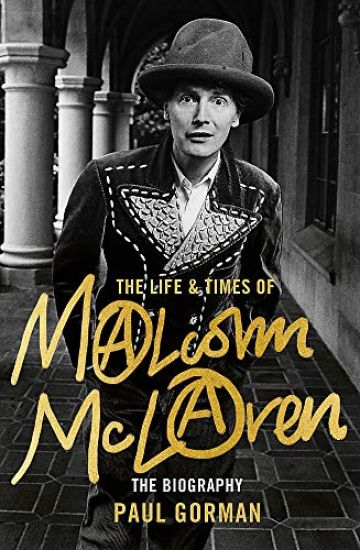
Malcolm McLaren

Malcolm McLaren

Paul Gorman

Constable
2018
nidottu
Malcolm McLaren is the fascinating and definitive life of the controversial cultural iconoclast and visionary who overturned the worlds of art, design, fashion, film, media, music, politics and television in his ceaseless search for expression as a visual artist.With unparalleled access, Malcolm McLaren will draw on a vast array of first-hand sources from within his inner circle, including family, friends and those who knew him best. Providing first-hand testimony about this complex, multi-faceted and often outrageous personality, contributors include family members, childhood friends, fellow students and art school teachers as well as his lovers, collaborators, fans and peers from Steven Spielberg (who employed McLaren as his Hollywood ideas guru and is providing the foreword), Quentin Tarantino, Marc Jacobs, Bella Freud, Greil Marcus and David Bailey to Richard Hell, Johnny Rotten, Boy George, Lauren Hutton, Chrissie Hynde and Dame Vivienne Westwood.
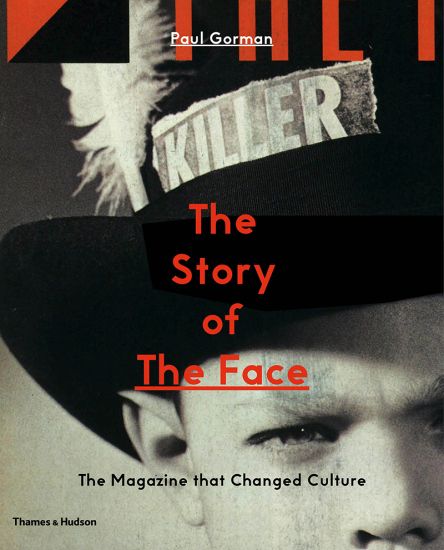
The Story of The Face

The Story of The Face

Paul Gorman

Thames Hudson Ltd
2017
nidottu
Featured on Rough Trade's top 20 Books of the Year listLaunched by NME editor and Smash Hits creator Nick Logan in 1980, The Face was Britain’s first youth magazine to present ‘youth subject matter’ beyond music alone. A strong voice of urban identity in the age of Thatcher, it rapidly became an icon of ‘style culture’, the benchmark for the very latest trends in music, fashion, photography and film. The Story of The Face tracks the exciting highs and calamitous lows of the life of the magazine in two parts. Part one focuses on the rise of the magazine in the 1980s, highlighting its striking visual identity – embodied by Neville Brody’s era-defining graphic designs, Nick Knight’s dramatic fashion photography and the ‘Buffalo’ styling of Ray Petri. The Face introduced Spandau Ballet and Boy George; Wham! and Sade, and was an early showcase for the works of Robert Mapplethorpe, Bruce Weber and Cindy Sherman. In 1990, The Face featured a 15-year-old Kate Moss on her first cover campaign. Styled by Melanie Ward, The Face published a series of fresh-faced cover images, an antidote to the glossy Vogue models of the time. Other iconic cover stars included David Bowie, Annie Lennox, Prince, George Michael and Adam Ant. Part two shows how in the 1990s, after surviving the Jason Donovan libel suit, the magazine heralded the post-acid house era of Britpop and Brit Art, shifting its focus from London to the regions. However, The Face met its eventual demise in 2004. With an introduction by Dylan Jones, The Story of The Face is an engaging behind-the-scenes look at the rise and fall of one of the most influential publications of the 80s and 90s.
Derek Boshier

Derek Boshier

Paul Gorman

Thames Hudson Ltd
2015
sidottu
Taking as his subject icons of consumerism and American popular culture, Derek Boshier made his name in the 1960s as one of the key proponents of British Pop Art, along with contemporaries David Hockney, Peter Blake and Pauline Boty. Since then, his output has been exceptionally diverse, including collage, book design, set design and illustration, as well as photography, film and sculpture.Rethink/Re-entry traces Boshier's formidable career. Beginning with his rise to prominence in the early 1960s, it then follows his abandonment of painting in the 1970s and his experimentation with new modes of expression, such as collage and illustration, as exemplified by his iconic sleeve design for David Bowie's album Lodgerand his drawings for CLASH 2nd Songbook. In this decade he formed the Artists’ Union with Bridget Riley and Robin Klassnik and produced politically inspired banner, poster and flyer designs, as well as curating public events such as the Smith/Novak Event.The chapters on the 1980s detail Boshier’s return to painting. This move coincided with his departure to Texas to teach, where he adopted the iconic figure of the Texan cowboy as the subject for his 'Cowboy' series as well as producing a prolific number of landscape paintings. The 1990s saw him relocate to Los Angeles, where he encountered a culture and iconography that provided rich source material for his later works.