

Kirjailija
Paul Gottfried
Kirjat ja teokset yhdessä paikassa: 8 kirjaa, julkaisuja vuosilta 1979-2024, suosituimpien joukossa The Essential Paul Gottfried. Vertaile teosten hintoja ja tarkista saatavuus suomalaisista kirjakaupoista.
8 kirjaa
Kirjojen julkaisuhaarukka 1979-2024.


War and Democracy is a compelling anthology of essays by Paul Gottfried, in which he delves into a vast range of historical and contemporary issues. Gottfried astutely scrutinizes the ambitious and arguably misguided aspiration of Western powers to propagate democracy universally, a mission that often ends in catastrophe and the erosion of personal freedoms. The author takes readers on a journey through the shifting landscape of the modern West, a place where the essence of foundational concepts has been twisted, giving birth to a society estranged from its roots. Championing the early tenets of the conservative movement, Gottfried proclaims the necessity for society to evolve organically, resisting the oppressive yoke of coercion and bureaucracy. This insightful work disrupts traditional viewpoints on war, democracy, and societal metamorphosis. "The notion that all countries must be brought - willingly or kicking and screaming - into the democratic fold is an invitation to belligerence. The notion that only democracies such as ours can be peaceful is what Edmund Burke called an 'armed doctrine.' ... It is simply ridiculous to treat the pursuit of peace based on world democratic conversion as a peaceful enterprise. This is a barely disguised adaptation of the Communist goal of bringing about world harmony through worldwide socialist revolution."
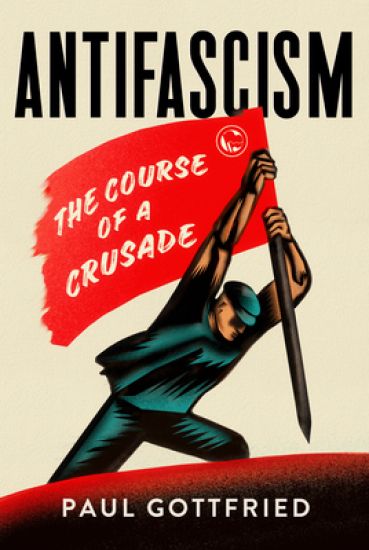
"No doubt Gottfried's book will rank among the most scholarly and convincing responses to the delirium of the present."- ÉlÉments A conservative take on the antifascist movement Antifascism argues that current self-described antifascists are not struggling against a reappearance of interwar fascism, and that the Left that claims to be opposing fascism has little in common with any earlier Left, except for some overlap with critical theorists of the Frankfurt School. Paul Gottfried looks at antifascism from its roots in early twentieth-century Europe to its American manifestation in the present. The pivotal development for defining the present political spectrum, he suggests, has been the replacement of a recognizably Marxist Left by an intersectional one. Political and ideological struggles have been configured around this new Left, which has become a dominant force throughout the Western world. Gottfried discusses the major changes undergone by antifascist ideology since the 1960s, fascist and antifascist models of the state and assumptions about human nature, nationalism versus globalism, the antifascism of the American conservative establishment, and Antifa in the United States. Also included is an excursus on the theory of knowledge presented by Thomas Hobbes in Leviathan. In Antifascism Gottfried concludes that promoting a fear of fascism today serves the interests of the powerful-in particular, those in positions of political, journalistic, and educational power who want to bully and isolate political opponents. He points out the generous support given to the intersectional Left by multinational capitalists and examines the movement of the white working class in Europe-including former members of Communist parties-toward the populist Right, suggesting this shows a political dynamic that is different from the older dialectic between Marxists and anti-Marxists.
Paul Gottfried's critical engagement with political correctness is well known. The essays in Revisions and Dissents focus on a range of topics in European intellectual and political history, social theory, and the history of modern political movements. With subjects as varied as Robert Nisbet, Whig history, the European Union election of 2014, and Donald Trump, the essays are tied together by their strenuous confrontation with historians and journalists whose claims about the past no longer receive critical scrutiny. According to Gottfried, successful writers on historical topics take advantage of political orthodoxy and/or widespread ignorance to present questionable platitudes as self-evident historical judgments. New research ceases to be of importance in determining accepted interpretations. What remains decisive, Gottfried maintains, is whether the favored view fits the political and emotional needs of what he calls "verbalizing elites." In this highly politicized age, Gottfried argues, it is necessary to re-examine these prevalent interpretations of the past. He does so in this engaging volume, which will appeal to general readers interested in political and intellectual history.

The Tragedy of Bleiburg and Viktring, 1945
Florian Rulitz; Paul Gottfried
Northern Illinois University Press
2016
pokkari
The atrocities and mass murders committed by Josip Broz Tito's Partisan units of the Yugoslav Army immediately after the Second World War had no place in the conscience of Socialist Yugoslavia. More than once, the annual Croatian commemoration of the Bleiburg victims was subject to attacks carried out by the socialist Yugoslav state. Abroad in the West, on Austrian soil, the Yugoslav secret service (UDBA) did not shy away from murdering the protagonist of the Croatian memory culture, Nicola Martinovic, as late as 1975. The official history was aligned with a firm interpretational paradigm that called for a glorification of the anti-fascist "people's liberation resistance." With the breakup of Yugoslavia and its socialist regime in 1991, the identity-establishing accounts of contemporary witnesses, which had mainly been cherished in exile circles abroad, increasingly reached public awareness in Croatia and Slovenia. In the 1990s Croatia witnessed the emergence of a memory that had been suppressed by the socialist-Yugoslav regime—namely the Bleiburg tragedy. The situation in Slovenia was similar in terms of identity and remembrance culture. Among the Slovenes, the communist crimes committed during the turmoil are known as the drama of Viktring or the Viktring tragedy, named after the largest refugee camp of the Slovenes. Reports on the communist postwar crimes and on the countless discoveries of mass gravesites have also begun circulating in the media of the German-speaking world in the last few years. Florian Rulitz's meticulously researched book, now available for the first time in English, provides a corrective to the historical memory that had been previously accepted as truth. Rulitz focuses on two essential questions. First, did the so-called "final encirclement battles" indeed occur in Carinthia in the Ferlach/Hollenburg/Viktring and Dravograd/Poljana/Bleiburg areas, resulting in military victories for the Yugoslav Army? Second, were the battles after the capitulation fought by the refugees with the aim of reaching the British-controlled areas in Carinthia? To answer these questions, Rulitz presents a detailed reconstruction of those days in May 1945. He furthermore considers the question of the murders on Austrian territory, which were hushed up in Partisan literature and presented as casualties of the final military operations. This groundbreaking study will interest scholars and students of modern European history.
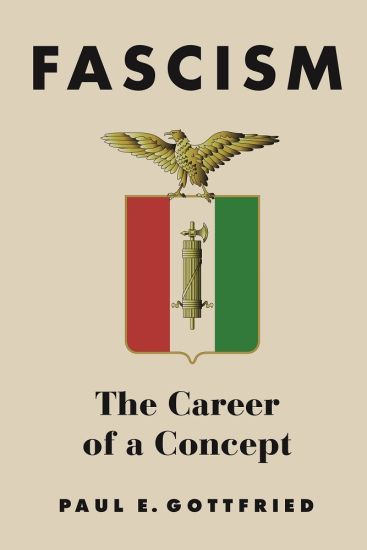
"For historians, Fascism offers clear and provocative insights and arguments, and the very detailed notes are especially helpful.... Recommended."â• Choice What does it mean to label someone a fascist? Today, it is equated with denouncing him or her as a Nazi. But as intellectual historian Paul E. Gottfried writes in this provocative yet even-handed study, the term's meaning has evolved over the years. Gottfried examines the semantic twists and turns the term has endured since the 1930s and traces the word's polemical function within the context of present ideological struggles. Like "conservatism," "liberalism," and other words whose meanings have changed with time, "fascism" has been used arbitrarily over the years and now stands for a host of iniquities that progressives, multiculturalists, and libertarians oppose, even if they offer no single, coherent account of the historic evil they condemn. Certain factors have contributed to the term's imprecise usage, Gottfried writes, including the equation of all fascisms with Nazism and Hitler, as well as the rise of a post-Marxist left that expresses predominantly cultural opposition to bourgeois society and its Christian and/or national components. Those who stand in the way of social change are dismissed as "fascist," he contends, an epithet that is no longer associated with state corporatism and other features of fascism that were once essential but are now widely ignored. Gottfried outlines the specific historical meaning of the term and argues that it should not be used indiscriminately to describe those who hold unpopular opinions. His important study will appeal to political scientists, intellectual historians, and general readers interested in politics and history.

Praised by President Richard Nixon as his favorite read for 1987, The Search for Historical Meaning presents the postwar American conservative movement against a background of ideas with which it has only rarely been identified. This important book—updated with a new preface—examines the influence of Hegelian concepts on the historical attitudes and cultural judgments of prominent postwar conservatives who, because of their concern with personal freedom as a political and ontological value, denounced Hegel while ascribing their own Hegelian ideas to less offensive sources. Gottfried argues that the lack of a true historical perspective was a serious defect in the postwar American conservative movement, and it grew worse in the years that followed. Essential reading for conservative thinkers, political philosophers, and American political historians, The Search for Historical Meaning concludes with an incisive examination of the American conservative movement that has implications for today.