Kirjojen hintavertailu. Mukana 12 595 353 kirjaa ja 12 kauppaa.

Kirjailija

Paul Guyer

Kirjat ja teokset yhdessä paikassa: 40 kirjaa, julkaisuja vuosilta 1987-2026, suosituimpien joukossa Reason and Experience in Mendelssohn and Kant. Vertaile teosten hintoja ja tarkista saatavuus suomalaisista kirjakaupoista.

40 kirjaa

Kirjojen julkaisuhaarukka 1987-2026.

Idealism in Modern Philosophy

Idealism in Modern Philosophy

Paul Guyer; Rolf-Peter Horstmann

Oxford University Press
2023
sidottu
This book tells the story of idealism in modern philosophy, from the seventeenth century to the turn of the twenty-first. Paul Guyer and Rolf-Peter Horstmann define idealism as the reduction of all reality to something mental in nature. Rather than distinguishing between metaphysical and epistemological versions of idealism, they distinguish between metaphysical and epistemological motivations for idealism. They argue that while metaphysical arguments for idealism have only rarely been accepted, for example by Bishop Berkeley in the early eighteenth century and the British idealists Bradley and McTaggart in the late nineteenth and early twentieth centuries, epistemological arguments for idealism have been widely accepted, even in the so-called analytic philosophy of the twentieth century. Guyer and Horstmann discuss many philosophers who have played a role in the development of idealism, from Descartes, Hobbes, Spinoza, Leibniz, Locke, Berkeley, and Hume, through Kant; the German idealists Fichte, Schelling, and Hegel; Schopenhauer and Nietzsche; the British and American idealists such as Green and Royce in addition to Bradley and McTaggart; G.E. Moore and Bertrand Russell, Neo-Kantians such as Ernst Cassirer; and twentieth-century philosophers such as Wittgenstein, Collingwood, Carnap, Sellars, and McDowell.
Idealism in Modern Philosophy

Idealism in Modern Philosophy

Paul Guyer; Rolf-Peter Horstmann

Oxford University Press
2023
nidottu
This book tells the story of idealism in modern philosophy, from the seventeenth century to the turn of the twenty-first. Paul Guyer and Rolf-Peter Horstmann define idealism as the reduction of all reality to something mental in nature. Rather than distinguishing between metaphysical and epistemological versions of idealism, they distinguish between metaphysical and epistemological motivations for idealism. They argue that while metaphysical arguments for idealism have only rarely been accepted, for example by Bishop Berkeley in the early eighteenth century and the British idealists Bradley and McTaggart in the late nineteenth and early twentieth centuries, epistemological arguments for idealism have been widely accepted, even in the so-called analytic philosophy of the twentieth century. Guyer and Horstmann discuss many philosophers who have played a role in the development of idealism, from Descartes, Hobbes, Spinoza, Leibniz, Locke, Berkeley, and Hume, through Kant; the German idealists Fichte, Schelling, and Hegel; Schopenhauer and Nietzsche; the British and American idealists such as Green and Royce in addition to Bradley and McTaggart; G.E. Moore and Bertrand Russell, Neo-Kantians such as Ernst Cassirer; and twentieth-century philosophers such as Wittgenstein, Collingwood, Carnap, Sellars, and McDowell.
A Philosopher Looks at Architecture

A Philosopher Looks at Architecture

Paul Guyer

Cambridge University Press
2021
pokkari
What should our buildings look like? Or is their usability more important than their appearance? Paul Guyer argues that the fundamental goals of architecture first identified by the Roman architect Marcus Pollio Vitruvius - good construction, functionality, and aesthetic appeal - have remained valid despite constant changes in human activities, building materials and technologies, as well as in artistic styles and cultures. Guyer discusses philosophers and architects throughout history, including Alberti, Kant, Ruskin, Wright, and Loos, and surveys the ways in which their ideas are brought to life in buildings across the world. He also considers the works and words of contemporary architects including Annabelle Selldorf, Herzog and de Meuron, and Steven Holl, and shows that - despite changing times and fashions - good architecture continues to be something worth striving for. This new series offers short and personal perspectives by expert thinkers on topics that we all encounter in our everyday lives.
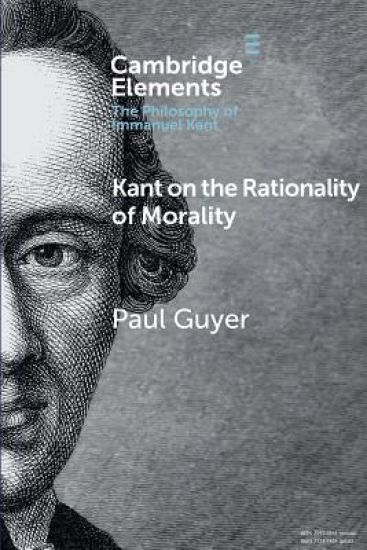
Kant on the Rationality of Morality

Kant on the Rationality of Morality

Paul Guyer

Cambridge University Press
2019
pokkari
Kant claims that the fundamental principle of morality is given by pure reason itself. Many have interpreted Kant to derive this principle from a conception of pure practical reason (as opposed to merely prudential reasoning about the most effective means to empirically given ends). But Kant maintained that there is only one faculty of reason, although with both theoretical and practical applications. This Element shows how Kant attempted to derive the fundamental principle and goal of morality from the general principles of reason as such, defined by the principles of non-contradiction and sufficient reason and the ideal of systematicity.
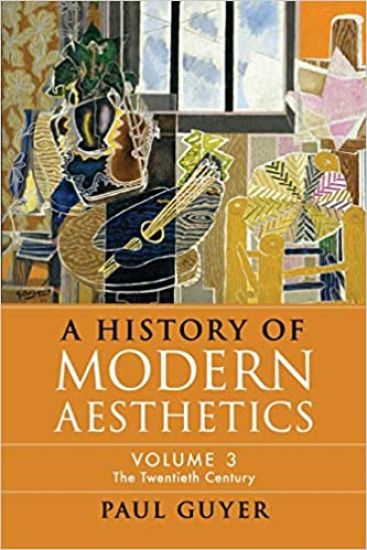
A History of Modern Aesthetics: Volume 3, The Twentieth Century
A History of Modern Aesthetics narrates the history of philosophical aesthetics from the beginning of the eighteenth century through the twentieth century. Aesthetics began with Aristotle's defense of the cognitive value of tragedy in response to Plato's famous attack on the arts in The Republic, and cognitivist accounts of aesthetic experience have been central to the field ever since. But in the eighteenth century, two new ideas were introduced: that aesthetic experience is important because of emotional impact - precisely what Plato criticized - and because it is a pleasurable free play of many or all of our mental powers. This set tells how these ideas have been synthesized or separated by aestheticians of modern times. This third volume shows how philosophers of art in Germany, Britain, and the United States continued the debate over cognitivist versus alternative approaches to aesthetic experience that was at the heart of the discipline in the previous two centuries, while responding to the intellectual challenges of their own times as well.
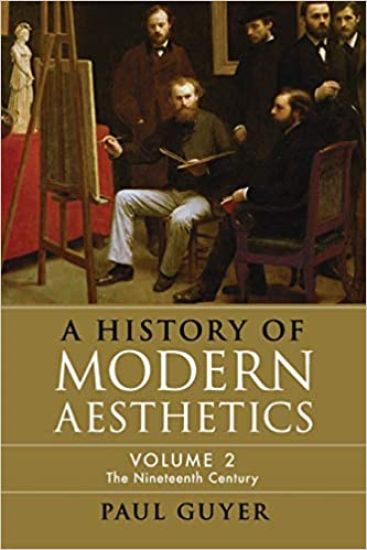
A History of Modern Aesthetics: Volume 2, The Nineteenth Century
A History of Modern Aesthetics narrates the history of philosophical aesthetics from the beginning of the eighteenth century through the twentieth century. Aesthetics began with Aristotle's defense of the cognitive value of tragedy in response to Plato's famous attack on the arts in The Republic, and cognitivist accounts of aesthetic experience have been central to the field ever since. But in the eighteenth century, two new ideas were introduced: that aesthetic experience is important because of emotional impact - precisely what Plato criticized - and because it is a pleasurable free play of many or all of our mental powers. This set tells how these ideas have been synthesized or separated by aestheticians of modern times. This second volume tells how over the course of the century philosophers in Germany, Britain, and eventually the United States struggled to return to a broader approach to the value of aesthetic experience by finding room for the emotional and playful aspects of art.
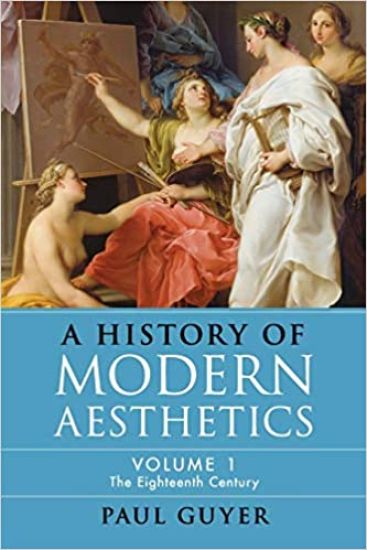
A History of Modern Aesthetics: Volume 1, The Eighteenth Century
A History of Modern Aesthetics narrates the history of philosophical aesthetics from the beginning of the eighteenth century through the twentieth century. Aesthetics began with Aristotle's defense of the cognitive value of tragedy in response to Plato's famous attack on the arts in The Republic, and cognitivist accounts of aesthetic experience have been central to the field ever since. But in the eighteenth century, two new ideas were introduced: that aesthetic experience is important because of emotional impact - precisely what Plato criticized - and because it is a pleasurable free play of many or all of our mental powers. This book tells how these ideas have been synthesized or separated by aestheticians of modern times. This first volume recounts how philosophers in Britain, France, and Germany developed these new approaches and searched for ways to combine them with the cognitivism of traditional aesthetics.
Knowledge, Reason, and Taste

Knowledge, Reason, and Taste

Paul Guyer

Princeton University Press
2013
pokkari
Immanuel Kant famously said that he was awoken from his "dogmatic slumbers," and led to question the possibility of metaphysics, by David Hume's doubts about causation. Because of this, many philosophers have viewed Hume's influence on Kant as limited to metaphysics. More recently, some philosophers have questioned whether even Kant's metaphysics was really motivated by Hume. In Knowledge, Reason, and Taste, renowned Kant scholar Paul Guyer challenges both of these views. He argues that Kant's entire philosophy--including his moral philosophy, aesthetics, and teleology, as well as his metaphysics--can fruitfully be read as an engagement with Hume. In this book, the first to describe and assess Hume's influence throughout Kant's philosophy, Guyer shows where Kant agrees or disagrees with Hume, and where Kant does or doesn't appear to resolve Hume's doubts. In doing so, Guyer examines the progress both Kant and Hume made on enduring questions about causes, objects, selves, taste, moral principles and motivations, and purpose and design in nature. Finally, Guyer looks at questions Kant and Hume left open to their successors.
Knowledge, Reason, and Taste

Knowledge, Reason, and Taste

Paul Guyer

Princeton University Press
2008
sidottu
Immanuel Kant famously said that he was awoken from his "dogmatic slumbers," and led to question the possibility of metaphysics, by David Hume's doubts about causation. Because of this, many philosophers have viewed Hume's influence on Kant as limited to metaphysics. More recently, some philosophers have questioned whether even Kant's metaphysics was really motivated by Hume. In Knowledge, Reason, and Taste, renowned Kant scholar Paul Guyer challenges both of these views. He argues that Kant's entire philosophy--including his moral philosophy, aesthetics, and teleology, as well as his metaphysics--can fruitfully be read as an engagement with Hume. In this book, the first to describe and assess Hume's influence throughout Kant's philosophy, Guyer shows where Kant agrees or disagrees with Hume, and where Kant does or doesn't appear to resolve Hume's doubts. In doing so, Guyer examines the progress both Kant and Hume made on enduring questions about causes, objects, selves, taste, moral principles and motivations, and purpose and design in nature. Finally, Guyer looks at questions Kant and Hume left open to their successors.
Kant's 'Groundwork for the Metaphysics of Morals'

Kant's 'Groundwork for the Metaphysics of Morals'

Paul Guyer

Continuum International Publishing Group Ltd.
2007
sidottu
Kant is probably the philosopher who best typifies the thought and ideals of the Enlightenment. He was influenced by the modern physics of Newton, the rationalist perfectionism of Leibniz and Wolff, the critical empiricism of Locke and Hume, and Rousseau's celebration of liberty and individualism, and his work can be seen partly as an attempt to combine and synthesize these various ideas. In moral philosophy, he developed a radical and radically new conception of the unconditional value of human autonomy, which he opposed to both theological and utilitarian conceptions of moral value. He first expounded his moral vision in the "Groundwork for the Metaphysics of Morals" (1785), the seminal work of modern moral philosophy in which he introduced his infamous 'categorical imperative'. Paul Guyer's Reader's Guide will help readers find their way in this brilliant but dense and sometimes baffling work.
Kant's 'Groundwork for the Metaphysics of Morals'

Kant's 'Groundwork for the Metaphysics of Morals'

Paul Guyer

Continuum International Publishing Group Ltd.
2007
nidottu
Kant is probably the philosopher who best typifies the thought and ideals of the Enlightenment. He was influenced by the modern physics of Newton, the rationalist perfectionism of Leibniz and Wolff, the critical empiricism of Locke and Hume, and Rousseau's celebration of liberty and individualism, and his work can be seen partly as an attempt to combine and synthesize these various ideas. In moral philosophy, he developed a radical and radically new conception of the unconditional value of human autonomy, which he opposed to both theological and utilitarian conceptions of moral value. He first expounded his moral vision in the Groundwork for the Metaphysics of Morals (1785), the seminal work of modern moral philosophy in which he introduced his infamous 'categorical imperative'. Paul Guyer's Reader's Guide will help readers find their way in this brilliant but dense and sometimes baffling work.
Values of Beauty

Values of Beauty

Paul Guyer

Cambridge University Press
2005
sidottu
Values of Beauty discusses major ideas and figures in the history of aesthetics from the beginning of the eighteenth century to the end of the twentieth century. The core of the book features Paul Guyer's essays on the epochal contribution of Immauel Kant, and sets Kant's work in the context of predecessors, contemporaries, and successors including David Hume, Alexander Gerard, Archibald Alison, Arthur Schopenhauer, and John Stuart Mill All of the essays emphasize the complexity rather than isolation of our aesthetic experience of both nature and art; and the interconnection of aesthetic values such as beauty and sublimity on the one hand, and prudential and moral values on the other. Guyer emphasizes that the idea of the freedom of the imagination as the key to both artistic creation and aesthetic experience has been a common thread throughout the modern history of aesthetics, although the freedom of the imagination has been understood and connected to other forms of freedom in a variety of ways.
Values of Beauty

Values of Beauty

Paul Guyer

Cambridge University Press
2005
pokkari
Values of Beauty discusses major ideas and figures in the history of aesthetics from the beginning of the eighteenth century to the end of the twentieth century. The core of the book features Paul Guyer's essays on the epochal contribution of Immauel Kant, and sets Kant's work in the context of predecessors, contemporaries, and successors including David Hume, Alexander Gerard, Archibald Alison, Arthur Schopenhauer, and John Stuart Mill All of the essays emphasize the complexity rather than isolation of our aesthetic experience of both nature and art; and the interconnection of aesthetic values such as beauty and sublimity on the one hand, and prudential and moral values on the other. Guyer emphasizes that the idea of the freedom of the imagination as the key to both artistic creation and aesthetic experience has been a common thread throughout the modern history of aesthetics, although the freedom of the imagination has been understood and connected to other forms of freedom in a variety of ways.
Kant on Freedom, Law, and Happiness

Kant on Freedom, Law, and Happiness

Paul Guyer

Cambridge University Press
2000
sidottu
Kant is often portrayed as the author of a rigid system of ethics in which adherence to a formal and universal principle of morality - the famous categorical imperative - is an end itself, and any concern for human goals and happiness a strictly secondary and subordinate matter. Such a theory seems to suit perfectly rational beings but not human beings. The twelve essays in this collection by one of the world’s preeminent Kant scholars argue for a radically different account of Kant’s ethics. They explore an interpretation of the moral philosophy according to which freedom is the fundamental end of human action, but an end that can only be preserved and promoted by adherence to moral law. By radically revising the traditional interpretation of Kant’s moral and political philosophy and by showing how Kant’s coherent liberalism can guide us in current debates, Paul Guyer will find an audience across moral and political philosophy, intellectual history, and political science.
Kant on Freedom, Law, and Happiness

Kant on Freedom, Law, and Happiness

Paul Guyer

Cambridge University Press
2000
pokkari
Kant is often portrayed as the author of a rigid system of ethics in which adherence to a formal and universal principle of morality - the famous categorical imperative - is an end itself, and any concern for human goals and happiness a strictly secondary and subordinate matter. Such a theory seems to suit perfectly rational beings but not human beings. The twelve essays in this collection by one of the world’s preeminent Kant scholars argue for a radically different account of Kant’s ethics. They explore an interpretation of the moral philosophy according to which freedom is the fundamental end of human action, but an end that can only be preserved and promoted by adherence to moral law. By radically revising the traditional interpretation of Kant’s moral and political philosophy and by showing how Kant’s coherent liberalism can guide us in current debates, Paul Guyer will find an audience across moral and political philosophy, intellectual history, and political science.
Kant's Groundwork of the Metaphysics of Morals
Kant's Groundwork of the Metaphysics of Morals is one of the most important works in modern moral philosophy. This collection of essays, the first of its kind in nearly thirty years, introduces the reader to some of the most important studies of the book from the past two decades, arranged in the form of a collective commentary.
Kant's Groundwork of the Metaphysics of Morals
Kant's Groundwork of the Metaphysics of Morals is one of the most important works in modern moral philosophy. This collection of essays, the first of its kind in nearly thirty years, introduces the reader to some of the most important studies of the book from the past two decades, arranged in the form of a collective commentary.
Kant and the Claims of Taste

Kant and the Claims of Taste

Paul Guyer

Cambridge University Press
1997
pokkari
Kant and the Claims of Taste, published here for the first time in paperback in a revised version, has become, since its initial publication in 1979, the standard commentary on Kant’s aesthetic theory. The book offers a detailed account of Kant’s views on judgments of taste, aesthetic pleasure, imagination and many other topics. For this new edition, Paul Guyer has provided a new foreword and has added a chapter on Kant’s conception of fine art. This re-issue will complement the author’s companion volume, Kant and the Experience of Freedom, which places Kant’s aesthetics in its historical context and examines the fundamental connection between Kant’s aesthetics and his moral theory.
Kant and the Experience of Freedom

Kant and the Experience of Freedom

Paul Guyer

Cambridge University Press
1996
pokkari
This collection of essays by one of the preeminent Kant scholars of our time transforms our understanding of both Kant’s aesthetics and his ethics. Kant is still widely regarded as the father of the aesthetics of formalism and the doctrine of art for art’s sake. Guyer shows, however, that Kant treats the disinterestedness of taste that is the core of his aesthetic theory as an experience of freedom and thus creates an essential connection between aesthetics and the interests of morality. At the same time Guyer reveals how Kant’s moral theory includes a distinctive place for the cultivation of both general moral sentiments and particular attachments even on the basis of the most rigorous principle of duty. The scope of the volume is broad. Topics treated include the sublime, natural versus artistic beauty, genius and art history, and duty and inclination.