Kirjojen hintavertailu. Mukana 12 563 193 kirjaa ja 12 kauppaa.

Kirjailija

Paul Gwynne

Kirjat ja teokset yhdessä paikassa: 10 kirjaa, julkaisuja vuosilta 2008-2027, suosituimpien joukossa Poets and Princes. Vertaile teosten hintoja ja tarkista saatavuus suomalaisista kirjakaupoista.

10 kirjaa

Kirjojen julkaisuhaarukka 2008-2027.

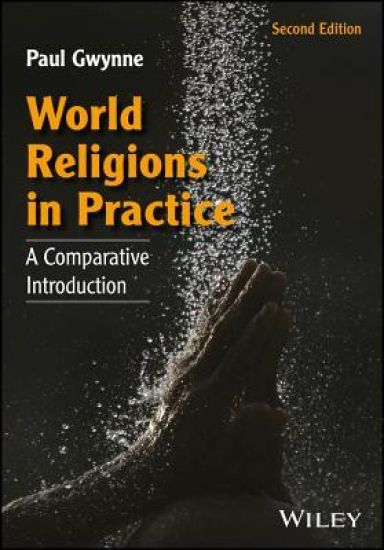
World Religions in Practice

World Religions in Practice

Paul Gwynne

John Wiley Sons Inc
2017
nidottu
A new and expanded edition of a highly successful textbook on world religions with a comparative approach which explores how six major religions are lived and expressed through their customs, rituals and everyday practices. A new edition of this major textbook, exploring the world's great religions through their customs, rituals and everyday practices by focusing on the 'lived experience' This comparative study is enriched and broadened with the inclusion of a sixth religion, DaoismTakes a thematic, comparative and practical approach; each chapter explores a series of key themes including birth, death, ethics, and worship across all six religions at each timeBroadens students' understanding by offering an impartial discussion of the similarities and differences between each religionIncludes an increased range of student-friendly features, designed to allow students to engage with each religion and extend their understanding
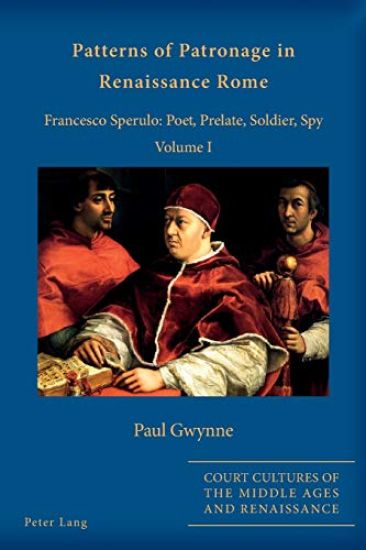
Patterns of Patronage in Renaissance Rome

Patterns of Patronage in Renaissance Rome

Paul Gwynne

Peter Lang AG, Internationaler Verlag der Wissenschaften
2015
nidottu
This book is also available as a set, together with Volume II. Please visit www.peterlang.com/view/product/84550 Patterns of Patronage in Renaissance Rome is the first full-length study of the life and works of Francesco Sperulo of Camerino (1463–1531). In a remarkable career during which the poet progressed from serving as a soldier of fortune in the service of Cesare Borgia to an Italian bishopric, Sperulo produced a significant body of Latin poetry, here presented in a critical edition for the first time. An impressive array of contemporary figures including Leonardo da Vinci, Isabella d’Este, Raphael and Baldassare Castiglione appear in his verse. By placing his work within the larger historical, literary, political and social context, this study, published in two volumes, sheds light on the role played by neo-Latin poetry at the papal court and documents the impact of classical culture in Rome during the period usually referred to as «the High Renaissance».Volume I reconstructs Sperulo’s life and circle of contacts by placing the poet’s works in chronological order and setting them within the political and social circumstances of their composition. Archival documents scattered across Italy, penitentiary records from the Vatican Archives and a voluminous correspondence with the Duke of Urbino and members of the Varano family of Camerino show that Sperulo was intimately involved in papal politics and intrigue; indeed, he was almost assassinated for his involvement. A selection of this correspondence is included here to supplement the poet’s biography.
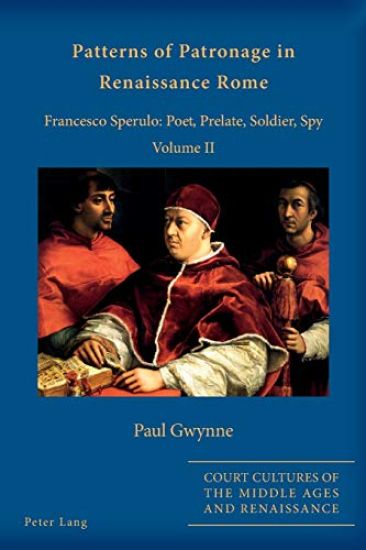
Patterns of Patronage in Renaissance Rome

Patterns of Patronage in Renaissance Rome

Paul Gwynne

Peter Lang AG, Internationaler Verlag der Wissenschaften
2015
nidottu
This book is also available as a set, together with Volume I.Please visit www.peterlang.com/view/product/84550Patterns of Patronage in Renaissance Rome is the first full-length study of the life and works of Francesco Sperulo of Camerino (1463–1531). In a remarkable career during which the poet progressed from serving as a soldier of fortune in the service of Cesare Borgia to an Italian bishopric, Sperulo produced a significant body of Latin poetry, here presented in a critical edition for the first time. An impressive array of contemporary figures including Leonardo da Vinci, Isabella d’Este, Raphael and Baldassare Castiglione appear in his verse. By placing his work within the larger historical, literary, political and social context, this study, published in two volumes, sheds light on the role played by neo-Latin poetry at the papal court and documents the impact of classical culture in Rome during the period usually referred to as «the High Renaissance». Volume II presents a complete critical edition of all Sperulo’s surviving Latin works in poetry and prose, with translation and commentary. This remarkable œuvre documents Cesare Borgia’s conquest of Faenza, suggests to Raphael a programme for the fresco decoration of the Villa Madama, records conversations on love with Isabella d’Este, describes the newly-discovered antiquities and reports a sensational murder. Two orations, delivered on the eve of the Sack of Rome, celebrate a treaty between Spain and France and a Polish victory in the Crimean steppes.
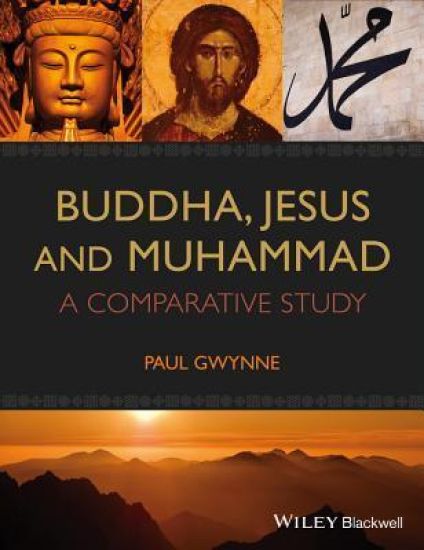
Buddha, Jesus and Muhammad

Buddha, Jesus and Muhammad

Paul Gwynne

John Wiley Sons Inc
2014
sidottu
This cool, clear-sighted comparative study has no theological axe to grind. It offers a trusty thematic guide to the figureheads of three of the largest religions in the world. The comparative approach is descriptive and even-handed, highlighting both similarities and differences across a range of major areas.The thematic chapters cover: early life, followers, the core message, political attitudes, relations with women, and death.The engaging writing and descriptive approach make this an ideal text for students, instructors and general readers.
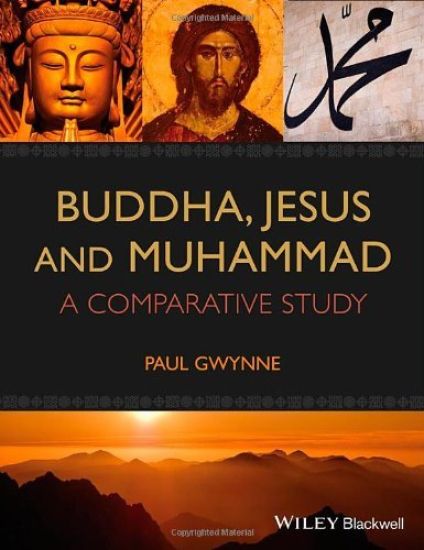
Buddha, Jesus and Muhammad

Buddha, Jesus and Muhammad

Paul Gwynne

John Wiley Sons Inc
2014
nidottu
This cool, clear-sighted comparative study has no theological axe to grind. It offers a trusty thematic guide to the figureheads of three of the largest religions in the world. The comparative approach is descriptive and even-handed, highlighting both similarities and differences across a range of major areas.The thematic chapters cover: early life, followers, the core message, political attitudes, relations with women, and death.The engaging writing and descriptive approach make this an ideal text for students, instructors and general readers.
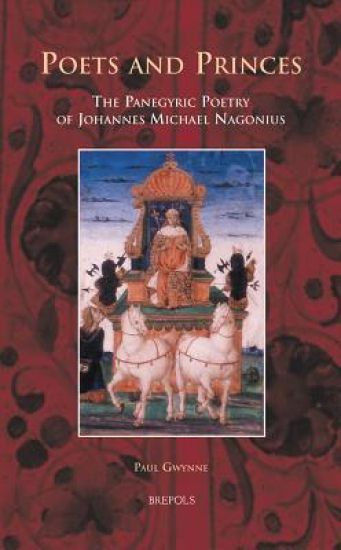
Poets and Princes

Poets and Princes

Paul Gwynne

Brepols N.V.
2012
sidottu
Poets and Princes offers a richly textured interdisciplinary survey of late medieval and early Renaissance court cultures across Europe as they are reflected in the neo-Latin verse of the itinerant poet, Johannes Michael Nagonius. In 1496 the poet laureate Nagonius presented Henry VII with a manuscript of Latin panegyric poetry. This elaborate diplomatic gift from Pope Alexander VI solicited the King's support against Charles VIII of France. The verse emphasized the mutual benefit of an alliance: if Henry supported him the Pope would acknowledge disputed Tudor claims to England's throne. For Henry, the gift represented a literary and political coup. With all the rhetorical skill of a learned poet, Nagonius presented the King as a classical hero on an epic scale in the latest Italian style. The work thus acknowledged Henry's international significance. Other recipients of Nagonius's panegyric verse include Holy Roman Emperor Maximilian I, Vladislav II of Bohemia, Louis XII of France, Doge Leonardo Loredan, the condottieri Niccolo Orsini and Gian Giacomo Trivulzio, Giovanni Bentivoglio, lord of Bologna, and Duke Ercole d'Este of Ferrara. The presentation of a deluxe manuscript to Julius II, celebrating the pontiff 's campaign in the Romagna, marked the climax of the poet's career. This analysis of the life and works of Nagonius thus provides a fascinating insight into the world of late medieval and early Renaissance court cultures. It contributes to the growing field of neo-Latin scholarship, examining the manuscripts and para-texts, studying the relationship between volume and dedicatee, placing these manuscripts within the wider literary and artistic cultures of the courts where they were presented, and investigating the role of neo-Latin verse within court cultures. Paul Gwynne received his Ph.D. in Combined Historical Studies from the Warburg Institute, University of London. His research interests include the reception of the Classical Tradition with particular emphasis on the development of Humanism in Renaissance Rome.
World Religions in Practice

World Religions in Practice

Paul Gwynne

Wiley-Blackwell (an imprint of John Wiley Sons Ltd)
2008
sidottu
World Religions in Practice introduces five of the world's great religions – Hinduism, Buddhism, Judaism, Christianity, and Islam – and explores how they are lived and expressed in custom, ritual, and symbol. A major new textbook exploring the world's great religions through their customs, rituals and everyday practices – by focusing on this 'lived experience' it goes beyond many traditional introductions to religious studiesAdopts a directly comparative approach to develop a greater understanding of the nature of religionEach chapter engages with an individual theme, such as birth, death, food, pilgrimage and ethics, to illustrate how religious practices are expressedBroadens students' understanding by offering an impartial discussion of the similarities and differences between each religionIncludes chapter-by-chapter opening themes and summaries, and will be accompanied by a website at www.blackwellpublishing.com/gwynne featuring additional resources and study questions.
Writing the Cappella Gregoriana: Architecture and Ekphrasis in the First Baroque Chapel
This volume publishes for the first time Lorenzo Frizolio's Sacellum Gregorianum (Rome, 1582), Ascanio Valentino's Sacellum Gregorianum (Rome, 1583) and Robert Turner's Panegyrici sermones duo (Ingolstadt, 1583). These three Neo-Latin verse and prose works describe the first monumental Baroque chapel, the Cappella Gregoriana in St. Peter's in Rome, which was built in 1580 by Pope Gregory XIII. The chapel famously holds the relics of the theologian, poet and saint, Gregory of Nazianzus (c. 330 - c. 389), whose elaborate and classically inspired procession to the mausoleum was recorded by the three Renaissance writers of this book. In over 500 Virgilian hexameters, Lorenzo Frizolio refashioned the chapel in words, itemising its sculptures, marbles, and mosaics from floor to dome. Ascanio Valentino was then prompted to offer a prose parallel which analysed with meticulous detail and crafted rhetoric the chapel's furnishings and technologies. Lastly, Robert Turner wrote a detailed description of the relics. These three texts are accompanied by translations and commentaries, as well as individual introductions explaining the historical context.