Kirjojen hintavertailu. Mukana 12 595 353 kirjaa ja 12 kauppaa.

Kirjailija

Paul Hallwood

Kirjat ja teokset yhdessä paikassa: 5 kirjaa, julkaisuja vuosilta 2014-2020, suosituimpien joukossa Oil, Debt and Development. Vertaile teosten hintoja ja tarkista saatavuus suomalaisista kirjakaupoista.

5 kirjaa

Kirjojen julkaisuhaarukka 2014-2020.

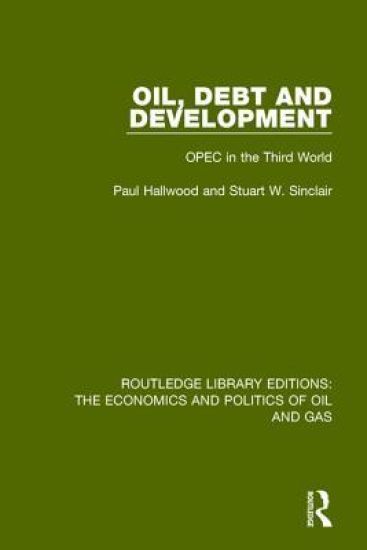
Oil, Debt and Development

Oil, Debt and Development

Paul Hallwood; Stuart Sinclair

Routledge
2016
sidottu
This book, originally published in 1981, discusses the various welfare effects – including ai, debt, trade and labour flows - of the rise in oil prices and revenues which took place in the 1970s. These complex effects and the negotiating stances of the developing countries are all examined an dinvestigated, drawing upon a wide range of sources and material for the more quantitative parts. Throughout, however, the treatment is non-mathematical and is written in clear English accessible not only to bankers and polititians, but also students of economics, international relationjs and area studies.
Interpreting Historical Sequences Using Economic Models

Interpreting Historical Sequences Using Economic Models

Paul Hallwood

Springer Nature Switzerland AG
2020
sidottu
This Palgrave Pivot presents theoretical models that explain common historical sequences, such as wars of secession, the rise and fall of empires, and international war. The book uses a rational choice model to frame the incentives of specific groups coming together in a polity or leaving it. These incentives are then set in a theoretical framework to determine the outcome—unity or secession, peace or war—and are demonstrated through historical examples. The book provides two longer case studies looking directly at motives for and against secession: the first on the American Civil War from the point of view of the Confederacy, and the second on efforts by the UK government to stem the tide of Scottish independence. Another case study discusses peacekeeping as aimed at reducing the costs of secessionist wars. With its accessible use of economic theory and ability to bring to life real-world examples of conflict and secession, this book is ideal supplementary reading for courses in international relations, conflict studies, global economics and economic history.
Oil, Debt and Development

Oil, Debt and Development

Paul Hallwood; Stuart Sinclair

Routledge
2018
nidottu
This book, originally published in 1981, discusses the various welfare effects – including ai, debt, trade and labour flows - of the rise in oil prices and revenues which took place in the 1970s. These complex effects and the negotiating stances of the developing countries are all examined an dinvestigated, drawing upon a wide range of sources and material for the more quantitative parts. Throughout, however, the treatment is non-mathematical and is written in clear English accessible not only to bankers and polititians, but also students of economics, international relationjs and area studies.
Economics of the Oceans

Economics of the Oceans

Paul Hallwood

Routledge
2014
sidottu
It is an unfortunate truth that our oceans offer valuable resources that are too often used unsustainably. Time and again this is due to the failure of international law to provide a framework for adequate governance. Economics of the Oceans examines this issue and provides a comprehensive study of ocean uses from the perspectives of law and economics. Themes covered in the book include ocean governance, the economics of oceanic resource exploitation, offshore oil, coral reefs, shipwrecks and maritime piracy. Analytical techniques such as basic game theory, environmental economics of the commons and cost-benefit analysis are employed to illuminate the topics.This book will be of interest to students of environmental economics, natural resource economics and management, and the economics of international law as relating to the oceans.
Economics of the Oceans

Economics of the Oceans

Paul Hallwood

Routledge
2014
nidottu
It is an unfortunate truth that our oceans offer valuable resources that are too often used unsustainably. Time and again this is due to the failure of international law to provide a framework for adequate governance. Economics of the Oceans examines this issue and provides a comprehensive study of ocean uses from the perspectives of law and economics. Themes covered in the book include ocean governance, the economics of oceanic resource exploitation, offshore oil, coral reefs, shipwrecks and maritime piracy. Analytical techniques such as basic game theory, environmental economics of the commons and cost-benefit analysis are employed to illuminate the topics.This book will be of interest to students of environmental economics, natural resource economics and management, and the economics of international law as relating to the oceans.