Kirjojen hintavertailu. Mukana 12 657 676 kirjaa ja 12 kauppaa.

Kirjailija

Paul Hardin Kapp

Kirjat ja teokset yhdessä paikassa: 5 kirjaa, julkaisuja vuosilta 2015-2027, suosituimpien joukossa Popular Iconoclasm in the Public Square. Vertaile teosten hintoja ja tarkista saatavuus suomalaisista kirjakaupoista.

5 kirjaa

Kirjojen julkaisuhaarukka 2015-2027.

Popular Iconoclasm in the Public Square

Popular Iconoclasm in the Public Square

Paul Hardin Kapp

ANTHEM PRESS
2027
nidottu
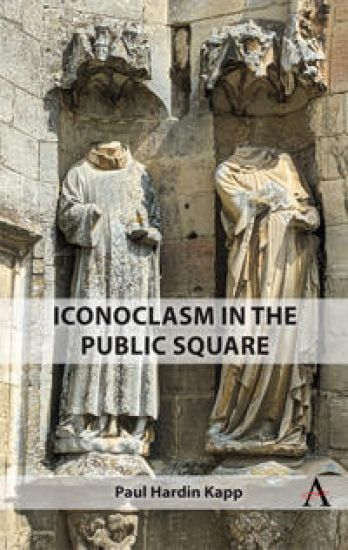
Throughout the nineteenth and twentieth centuries, the United States and Canada rarely experienced iconoclasm, the premeditated destruction of visual symbols, because of their specific emotional or ideological content in the public square. This is changing. As North Americans continue to reject the tangible and intangible heritage of institutionalized white supremacy, iconoclasm acts are happening with greater frequency. The death of George Floyd in May 2020 hastened the demand by Americans to remove historic monuments; so much so, that protesters took matters into their own hands and pulled down statues of historical figures, not limited to the American Civil War but also associated with European colonialism before the American Revolution and during the reign of Queen Victoria in Canada. For historic preservationists and conservationists, iconoclasm is now the most consequential issue in the field and will continue to be a matter of contention for the foreseeable future. Motives for enacting iconoclasm can be justified, but what are the consequences for doing so, and how, in turn, will this determine the future of our public spaces in towns and cities? More fundamentally, is the current period of iconoclasm leading us to reconsider the public square as part of the built environment? This book will be the first theory-informed work to examine the discordance among the public over controversial historic monuments in the historic landscape and how it should be addressed. It challenges architects, landscape architects, conservationists, preservationists, elected officials, and the public to reconsider the public square and whether or not civic art that memorializes is still relevant or a practice that can be reimagined. It also considers the after-effects of iconoclasm acts: How should we redesign public civic spaces after we have either destroyed or removed historic monuments? As societal values change in regard to public memorialization, how will heritage practitioners, conservationist technicians, and urban designers grapple with working in the civic realm, which may be considered antiquated but continues to exist in our cities? The book examines how iconoclasm is confronted through global heritage management theory. During the second half of the twentieth century, UNESCO and the European Union drafted charters to protect historic monuments from acts of war and degradation. The author considers these sets of principles and other international approaches to contested and conflicted heritage in addressing racism-based heritage that is embedded in North American heritage, from theoretical, architectural, and legal perspectives. France, which first experienced iconoclasm during the Revolution, has grappled with iconoclasm throughout its modern history. Revolutionary leader Henri Gr goire even invented a noun for it: "vandalism." Through the creation of an environment removed from a historic object's context--the public museum, the Louvre--France conceived institutional iconoclasm. From the revolutions and cultural upheavals of the eighteenth and nineteenth centuries to the calamities of two world wars in the twentieth century, Europeans have developed policy and a legal framework that address iconoclasm. The book intends to examine this legal framework closely. It will inform the direction that the North American heritage field should take in order to accept that heritage changes, and must change, in response to our own needs to acknowledge multiple histories and identities in a diverse society, while simultaneously recognizing that iconoclasm is a part of how a society resolves its emotional responses to its built heritage.
Popular Iconoclasm in the Public Square

Popular Iconoclasm in the Public Square

Paul Hardin Kapp

ANTHEM PRESS
2027
sidottu
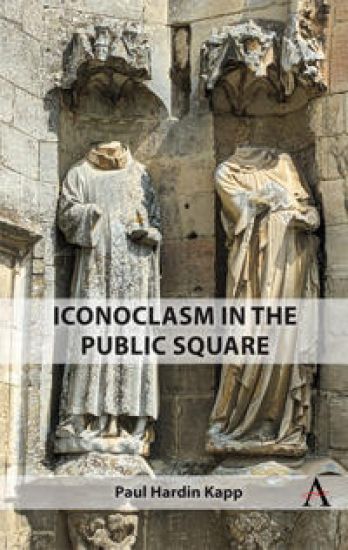
Throughout the nineteenth and twentieth centuries, the United States and Canada rarely experienced iconoclasm, the premeditated destruction of visual symbols, because of their specific emotional or ideological content in the public square. This is changing. As North Americans continue to reject the tangible and intangible heritage of institutionalized white supremacy, iconoclasm acts are happening with greater frequency. The death of George Floyd in May 2020 hastened the demand by Americans to remove historic monuments; so much so, that protesters took matters into their own hands and pulled down statues of historical figures, not limited to the American Civil War but also associated with European colonialism before the American Revolution and during the reign of Queen Victoria in Canada. For historic preservationists and conservationists, iconoclasm is now the most consequential issue in the field and will continue to be a matter of contention for the foreseeable future. Motives for enacting iconoclasm can be justified, but what are the consequences for doing so, and how, in turn, will this determine the future of our public spaces in towns and cities? More fundamentally, is the current period of iconoclasm leading us to reconsider the public square as part of the built environment? This book will be the first theory-informed work to examine the discordance among the public over controversial historic monuments in the historic landscape and how it should be addressed. It challenges architects, landscape architects, conservationists, preservationists, elected officials, and the public to reconsider the public square and whether or not civic art that memorializes is still relevant or a practice that can be reimagined. It also considers the after-effects of iconoclasm acts: How should we redesign public civic spaces after we have either destroyed or removed historic monuments? As societal values change in regard to public memorialization, how will heritage practitioners, conservationist technicians, and urban designers grapple with working in the civic realm, which may be considered antiquated but continues to exist in our cities? The book examines how iconoclasm is confronted through global heritage management theory. During the second half of the twentieth century, UNESCO and the European Union drafted charters to protect historic monuments from acts of war and degradation. The author considers these sets of principles and other international approaches to contested and conflicted heritage in addressing racism-based heritage that is embedded in North American heritage, from theoretical, architectural, and legal perspectives. France, which first experienced iconoclasm during the Revolution, has grappled with iconoclasm throughout its modern history. Revolutionary leader Henri Gr goire even invented a noun for it: "vandalism." Through the creation of an environment removed from a historic object's context--the public museum, the Louvre--France conceived institutional iconoclasm. From the revolutions and cultural upheavals of the eighteenth and nineteenth centuries to the calamities of two world wars in the twentieth century, Europeans have developed policy and a legal framework that address iconoclasm. The book intends to examine this legal framework closely. It will inform the direction that the North American heritage field should take in order to accept that heritage changes, and must change, in response to our own needs to acknowledge multiple histories and identities in a diverse society, while simultaneously recognizing that iconoclasm is a part of how a society resolves its emotional responses to its built heritage.
Heritage and Hoop Skirts

Heritage and Hoop Skirts

Paul Hardin Kapp

UNIVERSITY PRESS OF MISSISSIPPI
2022
sidottu
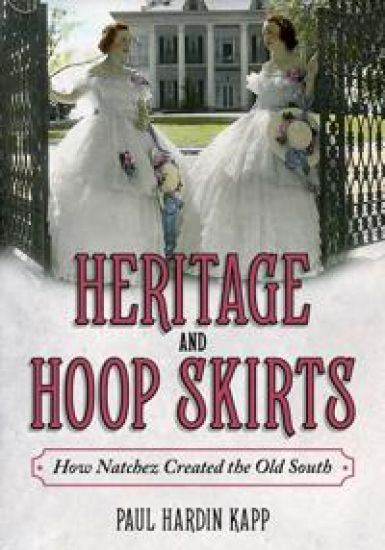
For over eighty years, tourists have flocked to Natchez, Mississippi, seeking the "Old South," but what they encounter is invention: a pageant and rewrite of history first concocted during the Great Depression. In Heritage and Hoop Skirts: How Natchez Created the Old South, author Paul Hardin Kapp reveals how the women of the Natchez Garden Club saved their city, created one of the first cultural tourism economies in the United States, changed the Mississippi landscape through historic preservation, and fashioned elements of the Lost Cause into an industry. Beginning with the first Natchez Spring Pilgrimage of Antebellum Homes in 1932, such women as Katherine Grafton Miller, Roane Fleming Byrnes, and Edith Wyatt Moore challenged the notion that smokestack industries were key to Natchez’s prosperity. These women developed a narrative of graceful living and aristocratic gentlepeople centered on grand but decaying mansions. In crafting this pageantry, they created a tourism magnet based on the antebellum architecture of Natchez. Through their determination and political guile, they enlisted New Deal programs, such as the WPA Writers’ Project and the Historic American Buildings Survey, to promote their version of the city. Their work did save numerous historic buildings and employed both white and African American workers during the Depression. Still, the transformation of Natchez into a tourist draw came at a racial cost and further marginalized African American Natchezians. By attending to the history of preservation in Natchez, Kapp draws on a rich archive of images, architectural documents, and popular culture to explore how meaning is assigned to place and how meaning evolves over time. In showing how and why the Natchez buildings of the "Old South" were first preserved, commercialized, and transformed into a brand, this volume makes a much-needed contribution to ongoing debates over the meaning attached to cultural patrimony.
SynergiCity

SynergiCity

Paul Hardin Kapp; Paul J. Armstrong; Richard Florida

University of Illinois Press
2015
nidottu
SynergiCity: Reinventing the Postindustrial City proposes a new and invigorating vision of urbanism, architectural design, and urban revitalization in twenty-first-century America. Culling transformative ideas from the realms of historic preservation, sustainability, ecological urbanism, and the innovation economy, Paul Hardin Kapp and Paul J. Armstrong present a holistic vision for restoring industrial cities suffering from population decline back into stimulating and productive places to live and work. With a particular emphasis on the Rust Belt of the American Midwest, SynergiCity argues that cities such as Detroit, St. Louis, and Peoria must redefine themselves to be globally competitive. This revitalization is possible through environmentally and economically sustainable restoration of industrial areas and warehouse districts for commercial, research, light industrial, and residential uses. The volume's expert researchers, urban planners, and architects draw on the redevelopment successes of other major cities--such as the American Tobacco District in Durham, North Carolina, and the Milwaukee River Greenway--to set guidelines and goals for reinventing and revitalizing the postindustrial landscape. Contributors are Paul J. Armstrong, Donald K. Carter, Lynne M. Dearborn, Norman W. Garrick, Mark Gillem, Robert Greenstreet, Craig Harlan Hullinger, Paul Hardin Kapp, Ray Lees, Emil Malizia, John O. Norquist, Christine Scott Thomson, and James Wasley.
The Architecture of William Nichols

The Architecture of William Nichols

Paul Hardin Kapp; William Seale

University Press of Mississippi
2015
sidottu
The Architecture of William Nichols: Building the Antebellum South in North Carolina, Alabama, and Mississippi is the first comprehensive biography and monograph of a significant yet overlooked architect in the American South. William Nichols designed three major university campuses--the University of North Carolina, the University of Alabama, and the University of Mississippi. He also designed the first state capitols of North Carolina, Alabama, and Mississippi. Nichols's architecture profoundly influenced the built landscape of the South but due to fire, neglect, and demolition, much of his work was lost and history has nearly forgotten his tremendous legacy.In his research onsite and through archives in North Carolina, Alabama, Louisiana, and Mississippi, Paul Hardin Kapp has produced a narrative of the life and times of William Nichols that weaves together the elegant work of this architect with the aspirations and challenges of the Antebellum South. It is richly illustrated with over two hundred archival photographs and drawings from the Historic American Building Survey.