Kirjojen hintavertailu. Mukana 12 390 323 kirjaa ja 12 kauppaa.

Kirjailija

Paul Helm

Kirjat ja teokset yhdessä paikassa: 34 kirjaa, julkaisuja vuosilta 1982-2024, suosituimpien joukossa John Calvin's Ideas. Vertaile teosten hintoja ja tarkista saatavuus suomalaisista kirjakaupoista.

34 kirjaa

Kirjojen julkaisuhaarukka 1982-2024.

John Calvin's Ideas

John Calvin's Ideas

Paul Helm

Oxford University Press
2004
sidottu
This is a major study of the theological thought of John Calvin, which examines his central theological ideas through a philosophical lens, looking at issues in Metaphysics, Epistemology, and Ethics. The study, the first of its kind, is concerned with how Calvin actually uses philosophical ideas in his work as a theologian and biblical commentator. The book also includes a careful examination of those ideas of Calvin to which the Reformed Epistemologists appeal, to find grounds and precedent for their development of `Reformed Epistemology', notably the sensus divinitatis and the internal testimony of the Holy Spirit.
Reason in the Service of Faith

Reason in the Service of Faith

Paul Helm

TAYLOR FRANCIS LTD
2024
nidottu
Paul Helm is a distinguished philosopher, with particular interests in the philosophy of religion. His work covers some of the most important aspects of the field as it has developed in the last thirty years with particular contributions to metaphysics, religious epistemology, and philosophical theology. In celebration of Helm’s life’s work, Reason in the Service of Faith brings together a range of his essays which reflect these central concerns of his thought.Over thirty of Helm's selected essays and four unpublished articles are gathered into five parts: Metaphilosophical Issues; Action, Change, and Personal Identity; Epistemology; God; and Creation, Providence, and Prayer. The volume is prefaced with a short editorial introduction, and ends with an extensive bibliography of Helm’s published works.Demonstrating the important connection between Helm’s theological and philosophical interests across his body of work, this collection is a remarkable resource for scholars of religion, philosophy, and theology.
Reason in the Service of Faith

Reason in the Service of Faith

Paul Helm

Ashgate Publishing Limited
2023
sidottu
Paul Helm is a distinguished philosopher, with particular interests in the philosophy of religion. His work covers some of the most important aspects of the field as it has developed in the last thirty years with particular contributions to metaphysics, religious epistemology, and philosophical theology. In celebration of Helm’s life’s work, Reason in the Service of Faith brings together a range of his essays which reflect these central concerns of his thought.Over thirty of Helm's selected essays and four unpublished articles are gathered into five parts: Metaphilosophical Issues; Action, Change, and Personal Identity; Epistemology; God; and Creation, Providence, and Prayer. The volume is prefaced with a short editorial introduction, and ends with an extensive bibliography of Helm’s published works.Demonstrating the important connection between Helm’s theological and philosophical interests across his body of work, this collection is a remarkable resource for scholars of religion, philosophy, and theology.
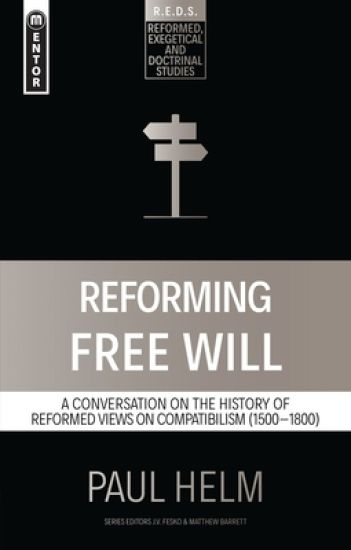
Reforming Free Will

Reforming Free Will

Paul Helm

Mentor
2020
pokkari
In the light of what powers and faculties are human beings responsible individuals in the everyday? In his theological, historical and philosophical examination of reformed orthodox views of free will and divine sovereignty Paul Helm considers determinism and compatibilism and their historical development between 1500 and 1800. He graciously tackles the views of Richard A. Muller and Antonie Vos to argue that compatibilism is deeply rooted and represents the mainstream understanding of the reformers’ conviction on the matter.
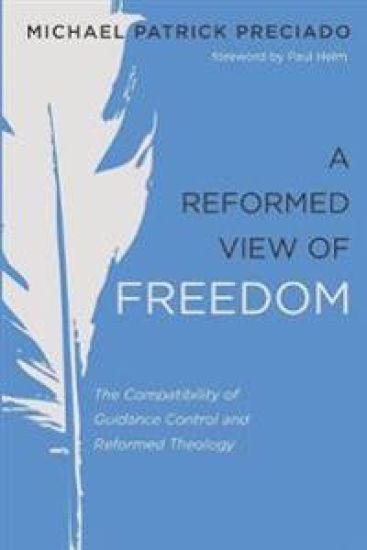
A Reformed View of Freedom

A Reformed View of Freedom

Michael Patrick Preciado; Paul Helm

Pickwick Publications
2019
pokkari
Reformed Christians do not believe in free will. This is a common assertion today and it is completely false. The Reformed tradition does advocate free will, just not libertarian free will. A Reformed View of Freedom: The Compatibility of Guidance Control and Reformed Theology explains how the Reformed tradition articulated its view of human freedom and moral responsibility in terms of rational spontaneity. It shows how the Reformed view of rational spontaneity is compatible with contemporary compatibilist and semi-compatibilist views, especially that of guidance control. This work addresses a number of pressing issues in the current academic climate. Is Reformed theology theological determinism? Is it compatibilism? Did Jonathan Edwards part ways with the Reformed tradition? What is the relationship between Reformed theology and contemporary compatibilist and semi-compatibilist positions in analytic philosophy? This book addresses these questions by exegeting the classic Reformed confessions, catechisms, and Reformed scholastics. It sets them in relation to contemporary analytic philosophy. It is an exercise in analytic theology. The reader will come away with a better understanding of how the Reformed viewed free will and moral responsibility in light of contemporary analytic philosophy. ""In the last decade or more there has been a spirited debate within Reformed theology about the shape of human freedom in relation to God's ordination of all that comes to pass. Do Reformed thinkers think God determines what happens in the world? Do they think there is wiggle room for human freedom in the divine purposes? Dr. Preciado's book contributes to this ongoing discussion. He offers clear, carefully reasoned arguments for the view that Reformed theology is consistent with both divine determinism and human freedom (rightly understood). He engages the range of recent literature on the topic in detail, and he shows how this relates to recent philosophical work on free will as well. Whether or not his conclusions are right, no one with an interest in these matters can afford to ignore this work."" --Oliver D. Crisp, Professor of Analytic Theology, University of St Andrews. ""Skillful footballers sometimes spot an unexpected gap, make a direct and accurate line for it, and, when they get through, make the exercise seem straightforward. With philosophical acumen and clear theological sight, Michael Preciado does the academic equivalent, co-opting untapped philosophical resources into alliance with Reformed theology in a significant and fruitful enterprise. --Stephen Williams, Honorary Professor of Theology, Queen's University Michael Patrick Preciado is a philosopher and a minister in the Presbyterian Church in America. He holds a BA and MA in philosophy, an MDiv from Westminster Seminary California, and a PhD in philosophical theology from the University of Aberdeen.
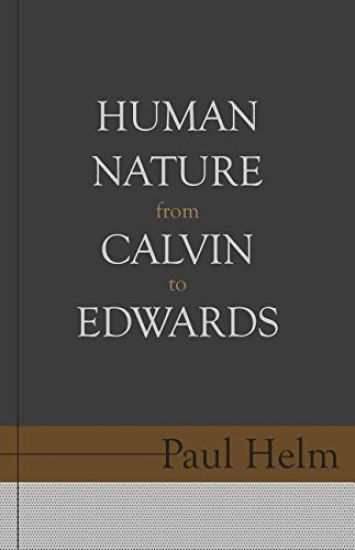
Human Nature From Calvin To Edwards

Human Nature From Calvin To Edwards

Paul Helm

Reformation Heritage Books
2018
nidottu
Paul Helm breaks fertile ground in this survey of theological anthropology in the Reformed tradition. Acknowledging the rich patristic and medieval heritage available to Reformed theologians, Helm works through a representative range of authors and materials during the period 1550 to 1750 in order to identify certain ways of thinking as well as elements of development and change. Addressing topics like the relation of body and soul, faculty psychology, and moral agency, Helm develops a compelling picture of Reformed thought on human nature that is sure to encourage more studies on this topic for years to come.
Excusing Sinners and Blaming God

Excusing Sinners and Blaming God

Guillaume Bignon; Paul Helm

Pickwick Publications
2017
pokkari
Calvinist determinism destroys moral responsibility and makes God the author of sin. These two accusations are not new, and were arguably anticipated by Paul in Romans 9, but they remain today the most important objections offered against Calvinist/determinist views of human free will. This book is a philosophically rigorous and comprehensive defense of Calvinism against these two families of arguments. With respect to human moral responsibility, it discusses whether determinism destroys ""free will,"" turns humans into pets or puppets, and involves or is analogous to coercion and manipulation. It responds to the consequence argument and direct argument for incompatibilism, the principle of alternate possibilities, the ""ought implies can"" maxim, and related claims. With respect to the authorship of sin, it discusses whether Calvinist determinism improperly involves God in evil. Does it mean that ""God sins,"" or ""causes sin,"" or ""wills sin"" in problematic ways? ""Does God intend our sin, or (merely) permit sin?"" In each case the coherence of the Calvinist view is defended against its most potent objections, to reject the claim that Calvinism is ""excusing sinners and blaming God."" ""If God determines all things, including the evil actions of his creatures, doesn't it follow by irrefutable logic that God must be culpable for those evil actions rather than the creatures? Au contraire, argues Calvinist philosopher Guillaume Bignon in this engaging yet rigorous work. Conversant with state-of-the-art literature on free will, this is one of the best defenses of theological compatibilism available today."" --James N. Anderson, Associate Professor of Theology and Philosophy, Reformed Theological Seminary ""It is often alleged that determinism or Calvinism or theological compatibilism (call it what you wish ) doesn't fit with moral responsibility. Bignon contests this thesis elegantly and forcefully. Here we have a philosophical defense of what is often called a Calvinist view of divine sovereignty, showing that Calvinism is not only biblically grounded but philosophically defensible."" --Thomas R. Schreiner, James Buchanan Harrison Professor of New Testament Interpretation, Southern Baptist Theological Seminary Guillaume Bignon is a French analytical philosopher and computer scientist who works in the financial industry in New York. He is an executive committee member of Association Axiome, a society of French-speaking Christian scholars.
Excusing Sinners and Blaming God

Excusing Sinners and Blaming God

Guillaume Bignon; Paul Helm

Pickwick Publications
2017
sidottu
Calvinist determinism destroys moral responsibility and makes God the author of sin. These two accusations are not new, and were arguably anticipated by Paul in Romans 9, but they remain today the most important objections offered against Calvinist/determinist views of human free will. This book is a philosophically rigorous and comprehensive defense of Calvinism against these two families of arguments. With respect to human moral responsibility, it discusses whether determinism destroys ""free will,"" turns humans into pets or puppets, and involves or is analogous to coercion and manipulation. It responds to the consequence argument and direct argument for incompatibilism, the principle of alternate possibilities, the ""ought implies can"" maxim, and related claims. With respect to the authorship of sin, it discusses whether Calvinist determinism improperly involves God in evil. Does it mean that ""God sins,"" or ""causes sin,"" or ""wills sin"" in problematic ways? ""Does God intend our sin, or (merely) permit sin?"" In each case the coherence of the Calvinist view is defended against its most potent objections, to reject the claim that Calvinism is ""excusing sinners and blaming God."" ""If God determines all things, including the evil actions of his creatures, doesn't it follow by irrefutable logic that God must be culpable for those evil actions rather than the creatures? Au contraire, argues Calvinist philosopher Guillaume Bignon in this engaging yet rigorous work. Conversant with state-of-the-art literature on free will, this is one of the best defenses of theological compatibilism available today."" --James N. Anderson, Associate Professor of Theology and Philosophy, Reformed Theological Seminary ""It is often alleged that determinism or Calvinism or theological compatibilism (call it what you wish ) doesn't fit with moral responsibility. Bignon contests this thesis elegantly and forcefully. Here we have a philosophical defense of what is often called a Calvinist view of divine sovereignty, showing that Calvinism is not only biblically grounded but philosophically defensible."" --Thomas R. Schreiner, James Buchanan Harrison Professor of New Testament Interpretation, Southern Baptist Theological Seminary Guillaume Bignon is a French analytical philosopher and computer scientist who works in the financial industry in New York. He is an executive committee member of Association Axiome, a society of French-speaking Christian scholars.
Varieties of Belief

Varieties of Belief

Paul Helm

Routledge
2014
nidottu
First published in 2002. This is Volume IV of seven in the Library of Philosophy series on the Philosophy of Religion. The Library of Philosophy was designed as a contribution to the History of Modern Philosophy under the heads: first of Different schools of Thought - Sensationalist, Realist, Idealist, Intuitivist; secondly of different Subjects - Psychology, Ethics, Aesthetics, Political Philosophy, Theology. Written in 1973, work in the philosophy of religion in the last thirty years has focused increasingly on the language of religion. Too often it seems that unless one happens to share the particular religious outlook of the writer, religious or theological premises are being made to yield philosophical conclusions. There is an obvious need for a less question-begging procedure, one that separates the philosophy from the religion. The aim of the study is to make a point about philosophical methodology no grounds are offered for preferring one analysis of religious belief to another.
Referring to God

Referring to God

Paul Helm

Routledge
2011
nidottu
There is a long tradition of discussion in the philosophy of religion about the problems and possibilities involved in talking about God. This book presents accounts of the problem within Jewish and Christian philosophy.
Eternal God

Eternal God

Paul Helm

Oxford University Press
2010
sidottu
Paul Helm presents a new, expanded edition of his much praised 1988 book Eternal God , which defends the view that God exists in timeless eternity. This is the classical Christian view of God, but it is claimed by many theologians and philosophers of religion to be incoherent. Paul Helm rebuts the charge of incoherence, arguing that divine timelessness is grounded in the idea of God as creator, and that this alone makes possible a proper account of divine omniscience. He develops some of the consequences of divine timelessness, particularly as it affects both divine and human freedom, and considers some of the alleged problems about referring to God. The book thus constitutes a unified treatment of the main concepts of philosophical theology. Helm's revised edition includes four new chapters that develop and extend his account of God and time, taking account of significant work in the area that has appeared since the publication of the first edition, by such prominent figures as William Lane Craig, Brian Leftow, and Richard Swinburne. This new discussion takes the reader into further areas, notably timelessness and creation and the nature of divine causality.