Kirjojen hintavertailu. Mukana 12 595 353 kirjaa ja 12 kauppaa.

Kirjailija

Paul Higgs

Kirjat ja teokset yhdessä paikassa: 17 kirjaa, julkaisuja vuosilta 2005-2025, suosituimpien joukossa Rethinking the Sociology of Ageing. Vertaile teosten hintoja ja tarkista saatavuus suomalaisista kirjakaupoista.

17 kirjaa

Kirjojen julkaisuhaarukka 2005-2025.

Rethinking the Sociology of Ageing

Rethinking the Sociology of Ageing

Paul Higgs; Chris Gilleard

EDWARD ELGAR PUBLISHING LTD
2025
sidottu
In this important new book, Paul Higgs and Chris Gilleard demonstrate how an effective sociology of later life is critical for understanding the ageing societies of the twenty-first century.Rethinking the Sociology of Ageing situates ageing firmly within the discipline of sociology. Adopting a global lens, the authors explore later life in relation to contemporary social theory as it relates to social institutions and the increasing role of forms of capital. Key topics covered include generation, households, lifestyle, ‘cosmopolitanisation’, health and risk. The book contends that the sociology of later life is a key element in the changing nature of a globalised, late, reflexive or second modernity. The social space of later life is a hitherto neglected prism through which to examine changes in contemporary society.This book will be invaluable for students and researchers specialising in sociology and sociological theory, comparative social policy, ageing studies, family and gender. Throwing a critical light on many age-based inequalities, it will also be of interest to policymakers and think tank specialists engaging with the contemporary salience of an ageing world.
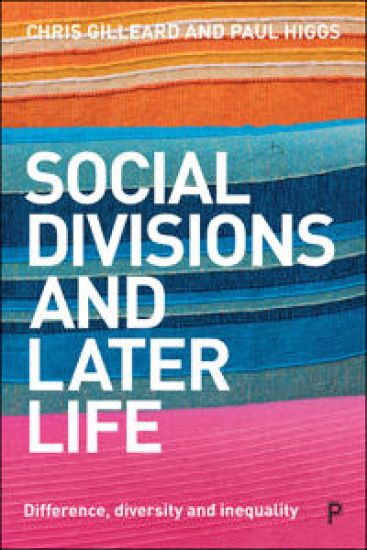
Social Divisions and Later Life

Social Divisions and Later Life

Chris Gilleard; Paul Higgs

Policy Press
2020
sidottu
As the population ages, this book reveals how divides that are apparent through childhood and working life change and are added to in later life. Two internationally renowned experts in ageing look beyond longstanding factors like class, gender and ethnicity to explore new social divisions, including contrasting states of physical fitness and mental health. They show how differences in health and frailty are creating fresh inequalities in later life, with significant implications for the future of our ageing societies. This accessible overview of social divisions is essential reading for those interested in the sociology of ageing and its differences, diversities and inequalities.
Social Divisions and Later Life

Social Divisions and Later Life

Chris Gilleard; Paul Higgs

Policy Press
2020
nidottu
As the population ages, this book reveals how divides that are apparent through childhood and working life change and are added to in later life. Two internationally renowned experts in ageing look beyond longstanding factors like class, gender and ethnicity to explore new social divisions, including contrasting states of physical fitness and mental health. They show how differences in health and frailty are creating fresh inequalities in later life, with significant implications for the future of our ageing societies. This accessible overview of social divisions is essential reading for those interested in the sociology of ageing and its differences, diversities and inequalities.
Ageing and Globalisation

Ageing and Globalisation

Martin Hyde; Paul Higgs

Policy Press
2017
nidottu
Population ageing and globalisation represent two of the most radical social transformations that have occurred. This book provides, for the first time, an accessible overview of how they interact. Ageing has been conventionally framed within the boundaries of nation states, yet demographic changes, transmigration, financial globalization and the global media have rendered this perspective problematic. This much-needed book is the first to apply theories of globalisation to gerontology, including Appadurai’s theory, allowing readers to understand the implications of growing older in a global age. This comprehensive introduction to globalisation for gerontologists is part of the Ageing in a Global Context series, published in association with the British Society of Gerontology. It will be of particular interest to advanced undergraduate and postgraduate students and academics in this area.
Cultures of Ageing

Cultures of Ageing

Chris Gilleard; Paul Higgs

Routledge
2016
sidottu
For undergraduate courses in sociology and psychology which examine ageing adulthood. This book focuses on the dramatic changes to the nature of post-retirement life experienced by people at the end of the twentieth century. It examines age and ageing in terms of the key preoccupations of contemporary sociology - citizenship, the body and the self. The book provides a platform for a new social gerontology that sees ageing as central to our understanding of social change. It examines social, cultural and political changes in Europe and North America to address the need for a text that moves the study of ageing from social policy towards the mainstream of social science.
Personhood, Identity and Care in Advanced Old Age

Personhood, Identity and Care in Advanced Old Age

Paul Higgs; Chris Gilleard

Policy Press
2016
sidottu
How do we sustain agency and identity amidst the frailty of advanced old age? What role does care play in this process? Pushing forward new sociological theory, this book explores the theoretical and practical issues raised by age and infirmity. It begins with a theoretical examination of the fourth age, interrogating notions of agency, identity and personhood, as well as the impact of frailty, abjection and ‘othering’. It then applies this analysis to issues of care. Exploring our collective hopes and fears concerning old age and the ends of people’s lives, this is essential reading on one of the biggest social issues of our time.
Personhood, Identity and Care in Advanced Old Age

Personhood, Identity and Care in Advanced Old Age

Paul Higgs; Chris Gilleard

Policy Press
2016
nidottu
How do we sustain agency and identity amidst the frailty of advanced old age? What role does care play in this process? Pushing forward new sociological theory, this book explores the theoretical and practical issues raised by age and infirmity. It begins with a theoretical examination of the fourth age, interrogating notions of agency, identity and personhood, as well as the impact of frailty, abjection and ‘othering’. It then applies this analysis to issues of care. Exploring our collective hopes and fears concerning old age and the ends of people’s lives, this is essential reading on one of the biggest social issues of our time.
Ageing and Globalisation

Ageing and Globalisation

Martin Hyde; Paul Higgs

Policy Press
2016
sidottu
Population ageing and globalisation represent two of the most radical social transformations that have occurred. This book provides, for the first time, an accessible overview of how they interact. Ageing has been conventionally framed within the boundaries of nation states, yet demographic changes, transmigration, financial globalization and the global media have rendered this perspective problematic. This much-needed book is the first to apply theories of globalisation to gerontology, including Appadurai’s theory, allowing readers to understand the implications of growing older in a global age. This comprehensive introduction to globalisation for gerontologists is part of the Ageing in a Global Context series, published in association with the British Society of Gerontology. It will be of particular interest to advanced undergraduate and postgraduate students and academics in this area.
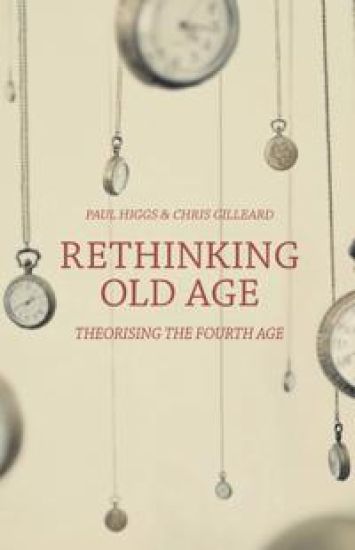
Rethinking Old Age

Rethinking Old Age

Paul Higgs; Chris Gilleard

Red Globe Press
2015
nidottu
With the aspiration for a long life now achievable for many individuals, the status of old age as a distinct social position has become problematic. In this radical re-examination of the nature of old age, Paul Higgs and Chris Gilleard reveal the emergence of a 'fourth age' that embodies the most feared and marginalised aspects of old age, conceptually linked to and yet distinct from traditional models of old age. Inspired by the authors' ground-breaking work on the third and fourth age and supported by extensive sociological, medical and historical research, Rethinking Old Age offers a unique and timely analysis of the fourth age as a 'social imaginary' that is shaped and maintained by the social, cultural and political discourses and practices that divide later life. It stands as a significant resource for students, academics and practitioners of sociology, ageing studies, gerontology, social policy, health studies, social work and nursing.
Rethinking Old Age

Rethinking Old Age

Paul Higgs; Chris Gilleard

Red Globe Press
2015
sidottu
With the aspiration for a long life now achievable for many individuals, the status of old age as a distinct social position has become problematic. In this radical re-examination of the nature of old age, Paul Higgs and Chris Gilleard reveal the emergence of a 'fourth age' that embodies the most feared and marginalised aspects of old age, conceptually linked to and yet distinct from traditional models of old age. Inspired by the authors' ground-breaking work on the third and fourth age and supported by extensive sociological, medical and historical research, Rethinking Old Age offers a unique and timely analysis of the fourth age as a 'social imaginary' that is shaped and maintained by the social, cultural and political discourses and practices that divide later life. It stands as a significant resource for students, academics and practitioners of sociology, ageing studies, gerontology, social policy, health studies, social work and nursing.
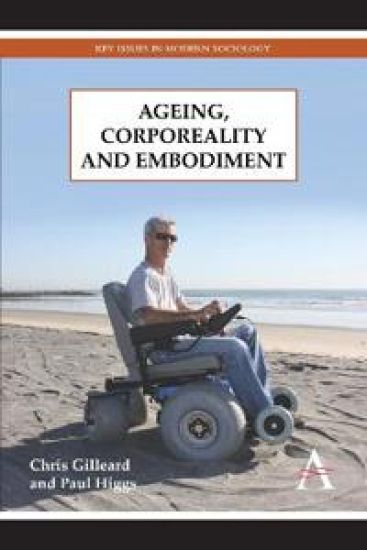
Ageing, Corporeality and Embodiment

Ageing, Corporeality and Embodiment

Chris Gilleard; Paul Higgs

Anthem Press
2014
nidottu
‘Ageing, Corporeality and Embodiment’ outlines and develops an argument about the emergence of a ‘new ageing’ during the second half of the twentieth century and its realisation through the processes of ‘embodiment’. The authors argue that ageing as a unitary social process and agedness as a distinct social location have lost much of their purchase on the social imagination. Instead, this work asserts that later life has become as much a field for ‘not becoming old’ as of ‘old age’. The volume locates the origins of this transformation in the cultural ferment of the 1960s, when new forms of embodiment concerned with identity and the care of the self arose as mass phenomena. Over time, these new forms of embodiment have been extended, changing the traditional relationship between body, age and society by making struggles over the care of the self central to the cultures of later life.
Ageing, Corporeality and Embodiment

Ageing, Corporeality and Embodiment

Chris Gilleard; Paul Higgs

Anthem Press
2013
sidottu
‘Ageing, Corporeality and Embodiment’ outlines and develops an argument about the emergence of a ‘new ageing’ during the second half of the twentieth century and its realisation through the processes of ‘embodiment’. The authors argue that ageing as a unitary social process and agedness as a distinct social location have lost much of their purchase on the social imagination. Instead, this work asserts that later life has become as much a field for ‘not becoming old’ as of ‘old age’. The volume locates the origins of this transformation in the cultural ferment of the 1960s, when new forms of embodiment concerned with identity and the care of the self arose as mass phenomena. Over time, these new forms of embodiment have been extended, changing the traditional relationship between body, age and society by making struggles over the care of the self central to the cultures of later life.
Medical Sociology and Old Age

Medical Sociology and Old Age

Paul Higgs; Ian Rees Jones

Routledge
2008
nidottu
The nature of health in later life has conventionally been studied from two perspectives. Medical sociologists have focused on the failing body, chronic illness, infirmity and mortality, while social gerontologists on the other hand have focused on the epidemiology of old age and health and social policy. By examining these perspectives, Higgs and Jones show how both standpoints have a restricted sense of contemporary ageing which has prevented an understanding of the way in which health in later life has changed. In the book, the authors point out that the current debates on longevity and disability are being transformed by the emergence of a fitter and healthier older population. This third age - where fitness and participation are valorised – leads to the increasing salience of issues such as bodily control, age-denial and anti-ageing medicine. By discussing the key issue of old age versus ageing, the authors examine the prospect of a new sociology – a sociology of health in later life. Medical Sociology and Old Age is essential reading for all students and researchers of medical sociology and gerontology and for anyone concerned with the challenge of ageing populations in the twenty-first century.This book is essential reading for all students and researchers of medical sociology and gerontology.
Medical Sociology and Old Age

Medical Sociology and Old Age

Paul Higgs; Ian Rees Jones

Routledge
2008
sidottu
The nature of health in later life has conventionally been studied from two perspectives. Medical sociologists have focused on the failing body, chronic illness, infirmity and mortality, while social gerontologists on the other hand have focused on the epidemiology of old age and health and social policy. By examining these perspectives, Higgs and Jones show how both standpoints have a restricted sense of contemporary ageing which has prevented an understanding of the way in which health in later life has changed. In the book, the authors point out that the current debates on longevity and disability are being transformed by the emergence of a fitter and healthier older population. This third age - where fitness and participation are valorised – leads to the increasing salience of issues such as bodily control, age-denial and anti-ageing medicine. By discussing the key issue of old age versus ageing, the authors examine the prospect of a new sociology – a sociology of health in later life. Medical Sociology and Old Age is essential reading for all students and researchers of medical sociology and gerontology and for anyone concerned with the challenge of ageing populations in the twenty-first century.This book is essential reading for all students and researchers of medical sociology and gerontology.
Ageing in a consumer society

Ageing in a consumer society

Ian Rees Jones; Martin Hyde; Christina R. Victor; Richard D. Wiggins; Chris Gilleard; Paul Higgs

Policy Press
2008
nidottu
Targeted as the 'grey consumer', people retiring now participated in the creation of the post-war consumer culture. These consumers have grown older but have not stopped consuming. Based on extensive analysis over two years, this unique book examines the engagement of older people with consumer society in Britain since the 1960s. It charts the changes in the experience of later life in the UK over the last 50 years, the rise of the 'individualised consumer citizen' and what this means for health and social policies. The book will appeal to students, lecturers, researchers and policy analysts. It will provide material for teaching on undergraduate courses and postgraduate courses in sociology, social policy and social gerontology. It will also have considerable appeal to private industry engaged with older consumers as well as to voluntary and non-governmental organisations addressing ageing in Britain.
Contexts of Ageing

Contexts of Ageing

Chris Gilleard; Paul Higgs

Polity Press
2005
sidottu
We live in ageing societies. Age preoccupies governments as much as individuals. A new affluence has spread across society and across the lifecourse. For many people looking forward to retirement, later life has changed for the better. But with this positive outcome for older people have come policy and social dilemmas for governments and individuals alike. Drawing on a wide range of sources, this book analyses the social nature of later life in the context of the history of welfare states, the emergence of consumer society and the growth of individualism. The book argues that the third age, its origins, identity and contradictions are central to understanding the future of our society. "Contexts of Ageing" is certain to stimulate academic debate. It is also appropriate for adoption on a range of courses. The book is written in a lively and accessible way, giving it appeal to upper-level undergraduates and postgraduates taking courses in sociology, social policy and health studies. Students and professionals working in the areas of nursing, health care and social gerontology will also find this book of interest.
Contexts of Ageing

Contexts of Ageing

Chris Gilleard; Paul Higgs

Polity Press
2005
nidottu
We live in ageing societies. Age preoccupies governments as much as individuals. A new affluence has spread across society and across the lifecourse. For many people looking forward to retirement, later life has changed for the better. But with this positive outcome for older people have come policy and social dilemmas for governments and individuals alike. Drawing on a wide range of sources, this book analyses the social nature of later life in the context of the history of welfare states, the emergence of consumer society and the growth of individualism. The book argues that the third age, its origins, identity and contradictions are central to understanding the future of our society. "Contexts of Ageing" is certain to stimulate academic debate. It is also appropriate for adoption on a range of courses. The book is written in a lively and accessible way, giving it appeal to upper-level undergraduates and postgraduates taking courses in sociology, social policy and health studies. Students and professionals working in the areas of nursing, health care and social gerontology will also find this book of interest.