Kirjojen hintavertailu. Mukana 12 595 353 kirjaa ja 12 kauppaa.

Kirjailija

Paul Hollander

Kirjat ja teokset yhdessä paikassa: 8 kirjaa, julkaisuja vuosilta 1987-2017, suosituimpien joukossa The End of Commitment. Vertaile teosten hintoja ja tarkista saatavuus suomalaisista kirjakaupoista.

8 kirjaa

Kirjojen julkaisuhaarukka 1987-2017.

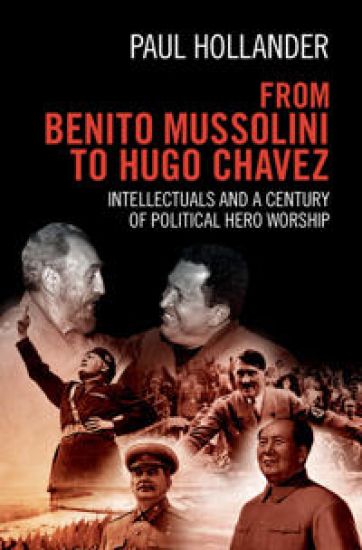
From Benito Mussolini to Hugo Chavez

From Benito Mussolini to Hugo Chavez

Paul Hollander

Cambridge University Press
2017
sidottu
During the twentieth and twenty-first centuries, political dictators were not only popular in their own countries, but were also admired by numerous highly educated and idealistic Western intellectuals. The objects of this political hero-worship included Benito Mussolini, Adolph Hitler, Joseph Stalin, Mao Zedong, Fidel Castro and more recently Hugo Chavez, among others. This book seeks to understand the sources of these misjudgements and misperceptions, the specific appeals of particular dictators, and the part played by their charisma, or pseudo-charisma. It sheds new light not only on the political disposition of numerous Western intellectuals - such as Martin Heidegger, Eric Hobsbawm, Norman Mailer, Ezra Pound, Susan Sontag and George Bernard Shaw - but also on the personality of those political leaders who encouraged, and in some instances helped to design, the cult surrounding their rise to dictatorship.
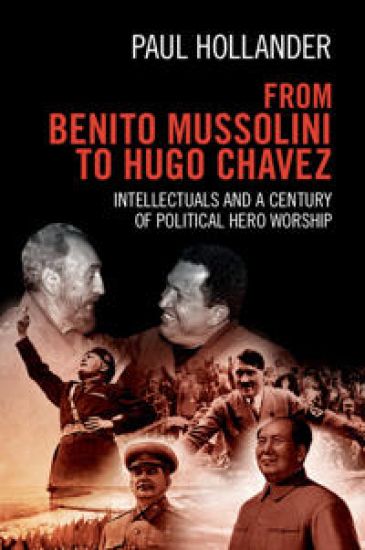
From Benito Mussolini to Hugo Chavez

From Benito Mussolini to Hugo Chavez

Paul Hollander

Cambridge University Press
2017
pokkari
During the twentieth and twenty-first centuries, political dictators were not only popular in their own countries, but were also admired by numerous highly educated and idealistic Western intellectuals. The objects of this political hero-worship included Benito Mussolini, Adolph Hitler, Joseph Stalin, Mao Zedong, Fidel Castro and more recently Hugo Chavez, among others. This book seeks to understand the sources of these misjudgements and misperceptions, the specific appeals of particular dictators, and the part played by their charisma, or pseudo-charisma. It sheds new light not only on the political disposition of numerous Western intellectuals - such as Martin Heidegger, Eric Hobsbawm, Norman Mailer, Ezra Pound, Susan Sontag and George Bernard Shaw - but also on the personality of those political leaders who encouraged, and in some instances helped to design, the cult surrounding their rise to dictatorship.
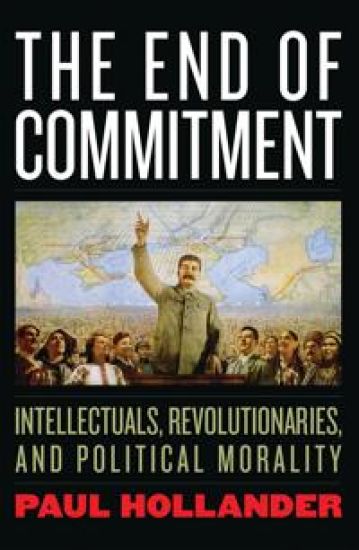
The End of Commitment

The End of Commitment

Paul Hollander

Ivan R Dee, Inc
2006
sidottu
The seduction of some of the twentieth century's great thinkers by Communist ideology and ideals is one of the most intriguing stories in the history of that ill-fated century. How was it that these distinguished intellectuals, public figures, and revolutionaries could enlist in the service of ideas which, when put in practice, proved repressive? Much has been written about the durable attraction of communism; we know far less about the disillusionment it spawned. In The End of Commitment, the distinguished sociologist Paul Hollander investigates how and why those individuals who were attracted to communism finally abandoned the cause that moved them. His is the first book to take a comprehensive, historically comparative view of disillusionment with Communist ideologies and systems, both in the countries where they were introduced and in the West. Relying chiefly on the autobiographies and memoirs of defectors, exiles, and dissidents from Communist states (the Soviet Union, in Eastern Europe, and in the Third World) as well as similar writings of major Western figures, Mr. Hollander examines and compares the sources and expressions of this political disenchantment. Concentrating on the moral conflicts created by the clash of unrealized ideals and actual practice, The End of Commitment sheds new light on the failings and malfunctions of these systems that were fully grasped only by those who lived under them. In a final, provocative section, Mr. Hollander explores the attitudes of some distinguished Western intellectuals who resisted disillusionment and clung to their commitment in the face of a welter of discrediting information. In all, his book offers a new insight into the patterns and processes of political attitude formation, persistence, and change in different social and historical settings.
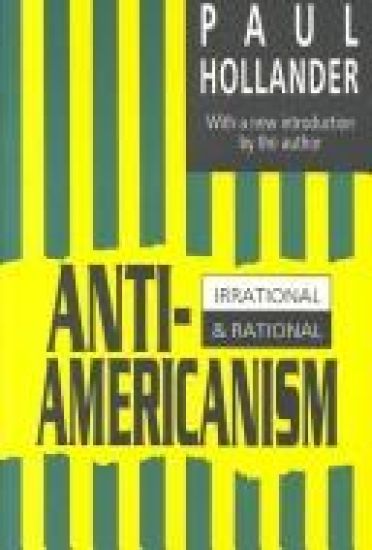
Anti-Americanism

Anti-Americanism

Paul Hollander

Transaction Publishers
1995
nidottu
In its domestic manifestations anti-Americanism may be equated with alienation, or an embittered radical social criticism. Abroad it may take the form of nationalism, anti-capitalism, and protest against modernity. This volume examines the phenomenon within American society and aboard, especially among intellectuals.
The Only Super Power

The Only Super Power

Paul Hollander

Lexington Books
2008
sidottu
In The Only Superpower: Reflections on Strength, Weakness, and Anti-Americanism, Paul Hollander examines anti-Americanism (including the relationship between the foreign and domestic varieties), American culture (especially mass culture), the lingering political and cultural influences of the 1960s, and the controversial relationship between the realms of the personal and the political. He also revisits the part played by hatred, and especially the scapegoating impulse, in social and political conflicts. The essays range widely, from Michael Moore's political celebrity, the American love for SUVs, and getting old in America to Islamic fanaticism and the aftermath of the fall of Eastern European communist systems.
A Century of Violence in Soviet Russia

A Century of Violence in Soviet Russia

Alexander N. Yakovlev; Paul Hollander

Yale University Press
2004
pokkari
The main architect of the concept of perestroika under Gorbachev, Alexander N. Yakovlev played a unique role in the transformation of the Soviet Union. Now, drawing on his own experiences and on his privileged access to state and Party archives, he reflects on the evils of the system that shaped the country he loves.“A searing book.”—Bill Keller, New York Times“Well documented. . . . [Yakovlev] provides a systematic and keenly insightful analysis of the Bolshevik Revolution and the Soviet system up to its collapse. . . . This is a book that deserves to be widely read.”—Aurel Braun, Globe and Mail (Toronto)“Among the best 250 pages you will ever read on Stalin.”—Simon Sebag Montefiore, Sunday Times“A fierce, raging indictment of the Soviet system.”—Virginia Quarterly Review“The quest for truth and justice erupts with explosive force in [this].”—David Pryce-Jones, National Review