Kirjojen hintavertailu. Mukana 12 595 353 kirjaa ja 12 kauppaa.
Kirjailija
Paul Howe
Kirjat ja teokset yhdessä paikassa: 10 kirjaa, julkaisuja vuosilta 2001-2026, suosituimpien joukossa Reducing Attrition in Selected Air Force Training Pipelines. Vertaile teosten hintoja ja tarkista saatavuus suomalaisista kirjakaupoista.
Thomas Manacapilli; Carl F. Matthies; Louis W. Miller; Paul Howe; P.J. Perez; Chaitra M. Hardison; Hugh G. Massey; Jerald Greenberg; Christopher Beighley; Carra S. Sims
Populism has upended politics around the world over the past decade. Claiming to speak for the people, populist leaders denigrate mainstream politicians, threaten democratic norms, and take aim at immigrants and other vulnerable minorities. Canadians have observed this gathering storm with one eye on events elsewhere and another on populist stirrings in the domestic political arena. Populist sentiment helped fuel the Freedom Convoy and was harnessed by Pierre Poilievre as he rose to the leadership of the Conservative Party. With the outcome of the 2025 election, the momentum behind this made-in-Canada populism seems to have faltered. But with populism flourishing globally, is this really the end of the story? In The Perils of Populism, political scientist Paul Howe answers this critical question by digging beneath the surface of recent events to examine the public attitudes, values, biases, and emotions that shape our contemporary political life. He asks probing questions about the commitment of Canadians to democratic norms, to the ideals and practices of engaged citizenship, and to principles of social tolerance and acceptance – finding evidence of vulnerabilities that stand ready to be exploited by a firebrand populist leader who strikes a chord with a critical mass of disaffected Canadians. In these tumultuous times, Howe advises, Canadians must recognize our vulnerability and reach across social divisions to find ways of strengthening our political community together.
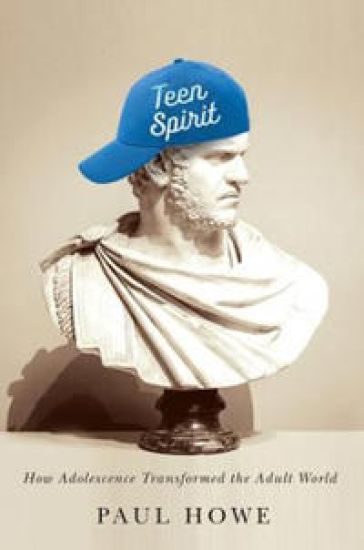
Teen Spirit offers a novel and provocative perspective on how we came to be living in an age of political immaturity and social turmoil. Award-winning author Paul Howe argues it's because a teenage mentality has slowly gripped the adult world. Howe contends that many features of how we live today—some regrettable, others beneficial—can be traced to the emergence of a more defined adolescent stage of life in the early twentieth century, when young people started spending their formative, developmental years with peers, particularly in formal school settings. He shows how adolescent qualities have slowly seeped upward, where they have gradually reshaped the norms and habits of adulthood. The effects over the long haul, Howe contends, have been profound, in both the private realm and in the public arena of political, economic, and social interaction. Our teenage traits remain part of us as we move into adulthood, so much so that some now need instruction manuals for adulting. Teen Spirit challenges our assumptions about the boundaries between adolescence and adulthood. Yet despite a cultural system that seems to be built on the ethos of Generation Me, it's not all bad. In fact, there has been an equally impressive rise in creativity, diversity, and tolerance within society: all traits stemming from core components of the adolescent character. Howe's bold and suggestive approach to analyzing the teen in all of us helps make sense of the impulsivity driving society and encourages us to think anew about civic reengagement.
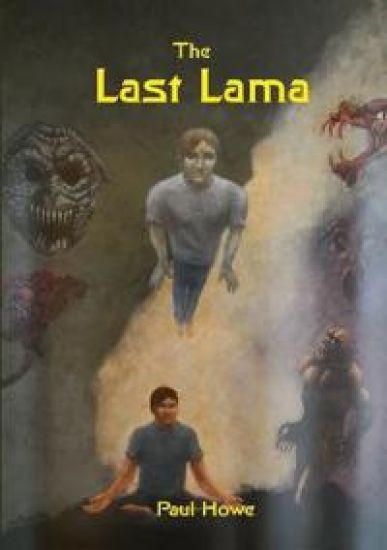
The world faces eternal damnation at the hands of the ultimate evil. The only chance for salvation lies in the hands of a young university student who is told by a Buddhist monk that he is the one who must defeat the Devil himself. How can he achieve this seemingly impossible task? Where should he start? Why him? And what are these strange powers and special talents he has mysteriously developed? The answers gradually fall into place as total strangers become trusted friends and together, they find themselves facing wave after nightmare-ish wave of ghouls, daemons, shape-shifters, trolls and dark angels from the depths of Hell. They fear there can only be one inevitable outcome but it's too terrifying to contemplate and together they must summon up every bit of strength and find every potential ally as they face a final desperate battle for survival and salvation.
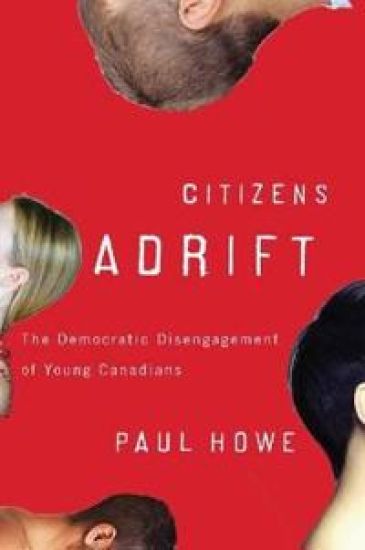
Many political observers, struck by low turnout rates among young voters, are pessimistic about the future of democracy in Canada and other Western nations. Citizens in general are disengaged in politics, and young people in particular are said to be adrift in a sea of apathy. Others have questioned this bleak assessment, arguing that youth engagement has shifted to newer forms of political and community involvement.In Citizens Adrift, Paul Howe examines past and present patterns of political and civic engagement and concludes that many young Canadians are, in fact, detached from the political realm. Two trends underlie his findings: waning political knowledge and attentiveness and generational changes in the norms and values that help sustain social integration. Putting young people back on the path towards engaged citizenship therefore requires a holistic approach, one which acknowledges that democratic engagement extends beyond the realm of formal politics.
Many political observers, struck by low turnout rates among young voters, are pessimistic about the future of democracy in Canada and other Western nations. Citizens in general are disengaged in politics, and young people in particular are said to be adrift in a sea of apathy. Others have questioned this bleak assessment, arguing that youth engagement has shifted to newer forms of political and community involvement.In Citizens Adrift, Paul Howe examines past and present patterns of political and civic engagement and concludes that many young Canadians are, in fact, detached from the political realm. Two trends underlie his findings: waning political knowledge and attentiveness and generational changes in the norms and values that help sustain social integration. Putting young people back on the path towards engaged citizenship therefore requires a holistic approach, one which acknowledges that democratic engagement extends beyond the realm of formal politics.
The controversy raises challenging questions about the role of a powerful judiciary in a democracy. In Judicial Power and Canadian Democracy, a series of essays commissioned by the Institute for Research on Public Policy, some of Canada's foremost commentators - academics, politicians, and Supreme Court judges themselves - take up the debate. Some tangle over the pivotal question: should judges have the decisive say on issues involving entrenched rights that have profound implication for the policy preferences of elected bodies? Others examine related issues, including Supreme Court appointment procedures, interest group litigation, the historical roots of the notwithstanding clause, and the state of public opinion on Canada's courts. Those interested in the power of the judicial branch will find much in this collection to stimulate fresh thinking on issues that are likely to remain on the public agenda for years to come. Contributors include Joseph F. Fletcher (Toronto), Janet Hiebert (Queen's), Gregory Hein (Toronto), Peter W. Hogg (York), Paul Howe, Rainer Knopff (Calgary), Sebastien Lebel-Grenier (Sherbrooke), Howard Leeson (Regina), Kate Malleson (London School of Economics), E. Preston Manning (Reform Party of Canada), Hon. Beverley McLachlin (Supreme Court of Canada), F.L. Morton (Calgary), Pierre Patenaude (Sherbrooke), Peter Russell, Allison A. Thornton (Blake, Cassels and Graydon), Frederick Vaughan (emeritus, Guelph), Lorraine Eisenstat Weinrib (Toronto), Hon. Bertha Wilson (emeritus, Supreme Court of Canada), and Jacob Ziegel (Toronto).