Kirjojen hintavertailu. Mukana 12 595 353 kirjaa ja 12 kauppaa.

Kirjailija

Paul Hurley

Kirjat ja teokset yhdessä paikassa: 41 kirjaa, julkaisuja vuosilta 2005-2026, suosituimpien joukossa Brewing in Cheshire. Vertaile teosten hintoja ja tarkista saatavuus suomalaisista kirjakaupoista.

41 kirjaa

Kirjojen julkaisuhaarukka 2005-2026.
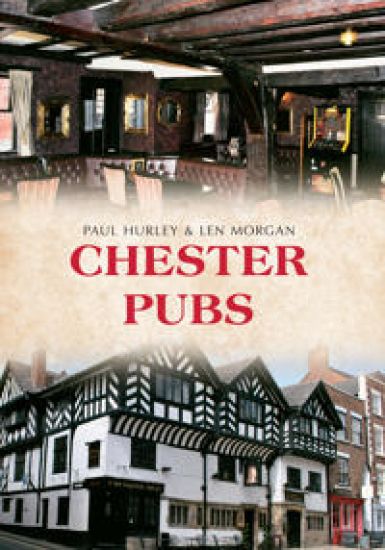
Chester Pubs

Chester Pubs

Paul Hurley; Len Morgan

Amberley Publishing
2015
nidottu
The drinking establishments of Saxon Chester are a mystery to us. The nineteenth-century historian Thomas Hughes wrote, ‘Anglo-Saxons had their eala-hus [ale house], win-hus [wine house] and cumen-hus [inn]’. We don’t know where they could have been located, but we do know that weak beer was the staple drink throughout the land because it was safer to drink than water. Chester has many cosy, historical and picturesque public houses, some that have served the public for hundreds of years. Chester pubs, like those throughout the country are going through a time of radical change. Reinvented for a new generation of patrons, many of the pubs have turned into gastro and themed pubs and bars. Within the pages of the Chester Pubs you will find a mixture of typical pubs from down the ages, some from a long way down, and a few of the newer bars.
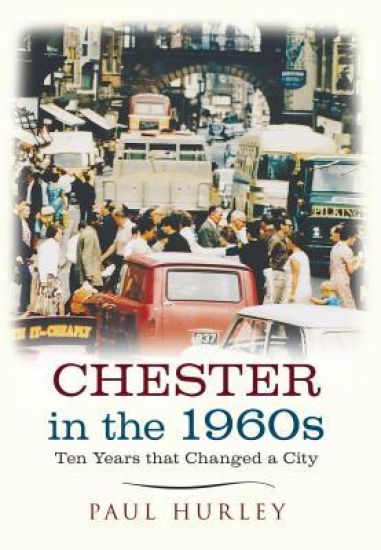
Chester in the 1960s

Chester in the 1960s

Paul Hurley

Amberley Publishing
2015
nidottu
Chester is well known as a Roman city once called Deva Victrix around 2,000 years ago. Over the centuries the city has seen significant change, but this has been done sympathetically for the most part and in keeping with the general antiquity of the surrounding buildings and streets. In this sequel to his previous book Chester in the 1950s, Paul Hurley takes a fascinating look at the ten years in which the baby boomers came into their own. As the fifties faded away and the sixties style arrived, this was a decade that altered the face of the city.
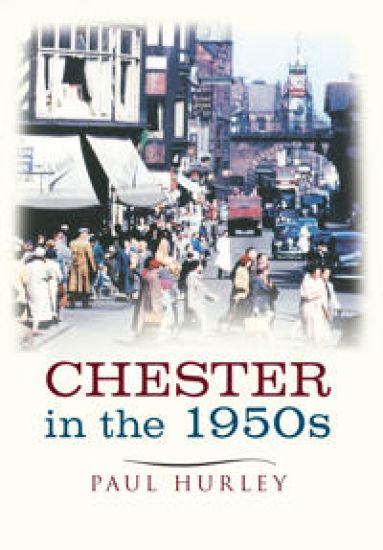
Chester In The 1950s

Chester In The 1950s

Paul Hurley

Amberley Publishing
2014
nidottu
Chester is well known as a Roman city, and has seen significant change over the centuries. This has been done sympathetically for the most part, and in keeping with the general antiquity of the surrounding buildings and streets. Chester in the 1950s was a time of reawakening following the dark years of the Second World War. The city was lucky to miss much damage during the conflict, but like the rest of Britain the residents suffered from privation and rationing, not to mention the boys and men who would never return to their hometown. From post-war austerity to the threshold of consumer society, Chester embraced the 1950s as a decade of renewal and opportunity.
Cheshire Through Time

Cheshire Through Time

Paul Hurley

Amberley Publishing
2012
nidottu
From the Cheshire Plain, that swathe of flatland with its mix of rich farmland, chocolate box villages and heavy industry to historic Chester with its aura of antiquity, across to the Wirral, most of which has been snatched away by Merseyside but leaves us with Ellesmere Port where the canal reaches the sea. Not forgetting ancient Nantwich, Alsager, Congleton, Wilmslow, Macclesfield, the gateway to the wild moorlands on the Cheshire Derbyshire border. Paul Hurley paints an affectionate portrait of Cheshire and gives residents, visitors and casual observers a look at how the towns once were compared with how they are now. Towns such as Stockport and Birkenhead that once formed part of the county, are not included but the ones that joined on amalgamation such as Widnes and Warrington are. So turn the pages compare the old with the new and see something different each time.
Macclesfield Through Time

Macclesfield Through Time

Paul Hurley

Amberley Publishing
2012
nidottu
Macclesfield is an ancient Cheshire town that stands beneath the sprawling and beautiful Peak District. It is Cheshire's furthest outpost before taking the road into Derbyshire and many years ago entered the Industrial Revolution in a more genteel manner perhaps, by becoming a silk town. Here all manner of silk items were manufactured such as the narrowest ribbons and the best of silks and satins.It is the perfect place to explore Macclesfield Forest and the Cheshire Peak District but the town itself has plenty to offer including the Heritage Centre with its museums and tea room. Paul Hurley has carefully selected modern and old views to paint a nostalgic historical portrait, so enjoy this pictorial tour of the town and see what is here now and compare it to what was here many years ago.
Knutsford & District Through Time

Knutsford & District Through Time

Paul Hurley

Amberley Publishing
2011
nidottu
The origins of the name Knutsford have been disputed by historians but there is an ancient and popular explanation. After one of his victories, King Canute crossed the brook known as Birken and the village became known as 'Canute's ford' later to be changed to Knutsford. The Domesday Book gives some credence to this by calling it 'Cunetesford' (Canute's Ford). Canute was the king of England from 1016 to 1035 and his name in Old Norse was Knutr. Over the years Knutsford became popular and affluent with the many wealthy families who settled in the vicinity. In the late 1800s Richard Harding Watt arrived with his money and love of Italian architecture, and used his wealth to build the Gaskell Memorial tower in memory of the town's famous author Elizabeth Gaskell and the Kings Coffee House next to it. So take a stroll through the streets of this Cheshire gem, and see how it has changed.
Beyond Consequentialism

Beyond Consequentialism

Paul Hurley

Oxford University Press
2011
nidottu
Consequentialism, the theory that morality requires us to promote the best overall outcome, is the default alternative in contemporary moral philosophy, and is highly influential in public discourses beyond academic philosophy. Paul Hurley argues that current discussions of the challenge consequentialism tend to overlook a fundamental challenge to consequentialism. The standard consequentialist account of the content of morality, he argues, cannot be reconciled to the authoritativeness of moral standards for rational agents. If rational agents typically have decisive reasons to do what morality requires, then consequentialism cannot be the correct account of moral standards. Hurley builds upon this challenge to argue that the consequentialist case for grounding the impartial evaluation of actions in the impartial evaluation of outcomes is built upon a set of subtle and mutually reinforcing mistakes. Through exposing these mistakes and misappropriations, he undermines consequentialist arguments against alternative approaches that recognize a conception of impartiality appropriate to the evaluation of actions which is distinct from the impartiality appropriate to the evaluation of outcomes. A moral theory that recognizes a fundamental role for such a distinct conception of impartiality can account for the rational authority of moral standards, but does so, Hurley argues, by taking morality beyond consequentialism in both its standard and non-standard forms.
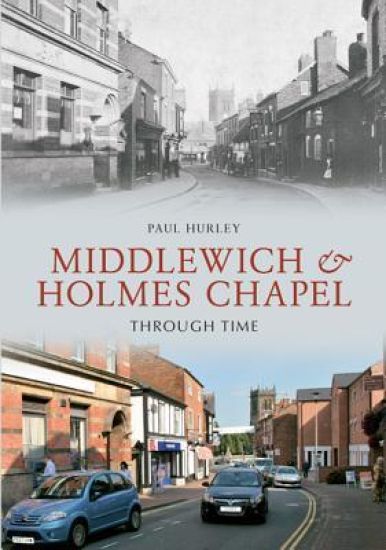
Middlewich and Holmes Chapel Through Time

Middlewich and Holmes Chapel Through Time

Paul Hurley

Amberley Publishing
2010
nidottu
From the earliest days salt was drawn from beneath the town of Middlewich making it one of the Cheshire Wiches. The town played an important role in the English Civil War and was the scene of the first and second battle of Middlewich. During this time Royalist troops occupied the church and many were slain. The very popular Middlewich Boat Festival draws people from far and wide each year to enjoy the music and festivities that take place on the canals and across the town. Whilst many towns have seen the local shops of long standing pushed to one side by large supermarkets, Holmes Chapel has bucked the trend and still boasts a number of very attractive and ancient family owned stores. So you are invited to visit these towns now separated by the mighty M6 motorway. View them as they once were and as they are now using this book as an aid.
Chester Through Time

Chester Through Time

Paul Hurley; Len Morgan

Amberley Publishing
2010
nidottu
Chester, the county town of Cheshire was better known as Deva Victrix by the Roman soldiers who were based here. This was the Roman name given to the city fortress when it was built in the AD 70s. The city is steeped in history, one of its most distinguishing features is The Rows, galleried walkways running along four streets and meeting at The Cross. Chester is also famous for the walls that surround the city and provide an uninterrupted circular walk for the many visitors. During this walk you may gaze down at the ancient amphitheatre, the largest of its kind uncovered in Great Britain. Pass the famous cathedral and the tower from which Charles I observed the defeat of his army. Then back into the city where alterations have taken place but this has been done sympathetically and in keeping with the general antiquity of the surrounding buildings. You can see why this city is one of the most visited in Britain.
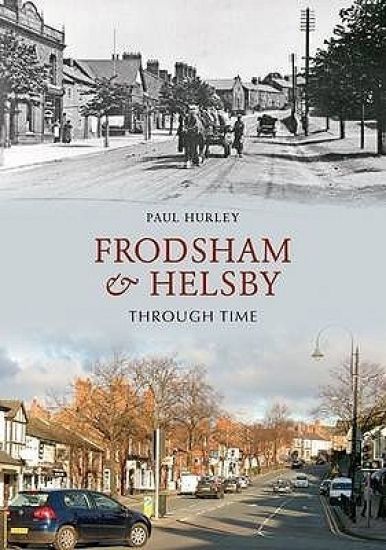
Frodsham & Helsby Through Time

Frodsham & Helsby Through Time

Paul Hurley

Amberley Publishing
2010
nidottu
Frodsham and Helsby lie comfortably between the lovely Cheshire countryside that once was part of the great Royal Forest of Mara and Mondrem, now Delamere, and the mighty River Mersey. Above Frodsham is the high peak that once boasted the popular pleasure ground of the Mersey View or, as it is known locally, Overton Hills, with its stunning views across the Mersey estuary to Liverpool and North Wales. Frodsham lies at the confluence of the rivers Weaver and Mersey and as such was once an important port for the export of salt from Cheshire's many mines. Along the road towards Chester we arrive at the village of Helsby. Here can be found evidence of Neolithic settlements on the hill and caves set in the soft sandstone. This book will interest not just local history buffs but readers of all ages.
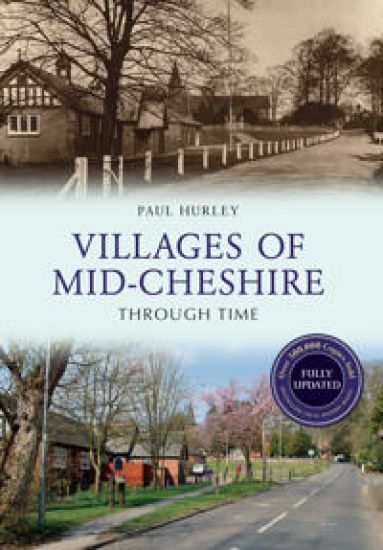
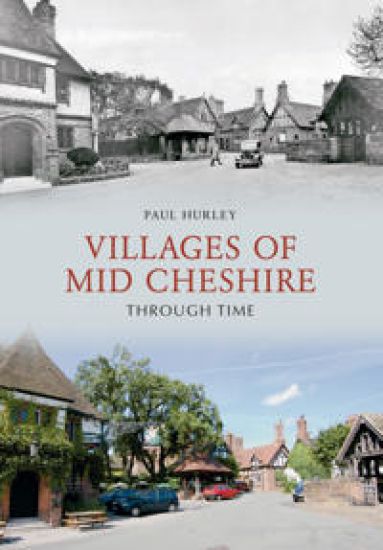
Villages of Mid-Cheshire Through Time

Villages of Mid-Cheshire Through Time

Paul Hurley

Amberley Publishing
2009
nidottu
Villages of Mid Cheshire Through Time is a unique insight into the illustrious history of this part of the country. Reproduced in full colour, this is an exciting examination of its well-known streets and famous faces, and what they meant to the people of this area throughout the 19th and into the 20th Century. Looking beyond the exquisite exterior of these well-kept photos, readers can see the historical context in which they are set, and through the author's factual captions for every picture, and carefully-selected choice of images, the reader can achieve a reliable view of the local history. There is something for everyone here, whether they have lived in the area all their lives, or whether they are just visiting for the first time. Villages of Mid Cheshire Through Time also shows how photography has continually evolved to keep up with an ever changing society.
Beyond Consequentialism

Beyond Consequentialism

Paul Hurley

Oxford University Press
2009
sidottu
Consequentialism, the theory that morality requires us to promote the best overall outcome, is the default alternative in contemporary moral philosophy, and is highly influential in public discourses beyond academic philosophy. Paul Hurley argues that current discussions of the challenge consequentialism tend to overlook a fundamental challenge to consequentialism. The standard consequentialist account of the content of morality, he argues, cannot be reconciled to the authoritativeness of moral standards for rational agents. If rational agents typically have decisive reasons to do what morality requires, then consequentialism cannot be the correct account of moral standards. Hurley builds upon this challenge to argue that the consequentialist case for grounding the impartial evaluation of actions in the impartial evaluation of outcomes is built upon a set of subtle and mutually reinforcing mistakes. Through exposing these mistakes and misappropriations, he undermines consequentialist arguments against alternative approaches that recognize a conception of impartiality appropriate to the evaluation of actions which is distinct from the impartiality appropriate to the evaluation of outcomes. A moral theory that recognizes a fundamental role for such a distinct conception of impartiality can account for the rational authority of moral standards, but does so, Hurley argues, by taking morality beyond consequentialism in both its standard and non-standard forms.
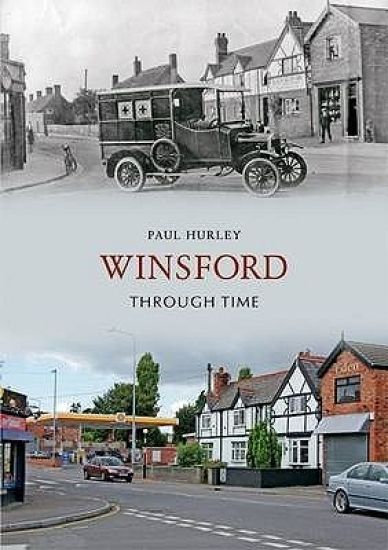
Winsford Through Time

Winsford Through Time

Paul Hurley

Amberley Publishing
2009
nidottu
Winsford Through Time is a unique insight into the illustrious history of one of England's finest towns. Reproduced in full colour, this is an exciting examination of Winsford, the well-known streets, the famous faces and what they meant to the people of this town throughout the 19th and into the 20th Century. Looking beyond the exquisite exterior of these well-kept photos, readers can see the historical context in which they are set, and through the author's factual captions for every picture and carefully-selected choice of images, the reader can achieve a reliable view of Winsford's history. Readers are invited to follow a timeline of events and watch the changing face of the town, as Paul Hurley guides us through the local streets. There is something for everyone here, whether they have lived in Winsford all their lives, or whether they are just visiting this delightful town. It also shows how photography has continually evolved to keep up with an ever changing society.
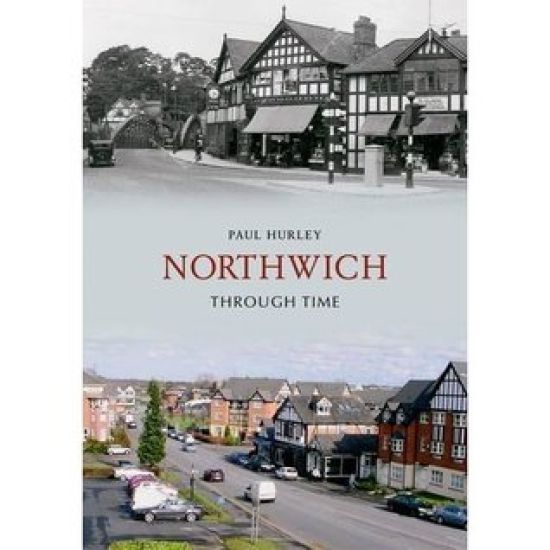
Northwich Through Time

Northwich Through Time

Paul Hurley

Amberley Publishing
2009
nidottu
Northwich Through Time is a unique insight into the illustrious history of this part of the country. Reproduced in full colour, this is an exciting examination of Northwich, the famous streets and the famous faces, and what they meant to the people of this town throughout the 19th and into the 20th Century. Looking beyond the exquisite exterior of these well-kept photos, readers can see the historical context in which they are set. Through the author's factual captions for every picture, and carefully-selected choice of images, the reader can also achieve a reliable view of the town's history. Readers are invited to follow a timeline of events and watch the changing face of Northwich, as Paul Hurley guides us through the town's streets. There is something for everyone here, whether they have lived in the area all their lives, or whether they are just visiting this fabulous town. Northwich Through Time also shows how photography has continually evolved to keep up with an ever changing society.