Kirjojen hintavertailu. Mukana 12 390 323 kirjaa ja 12 kauppaa.

Kirjailija

Paul J. Silvia

Kirjat ja teokset yhdessä paikassa: 9 kirjaa, julkaisuja vuosilta 2001-2021, suosituimpien joukossa Researching Daily Life. Vertaile teosten hintoja ja tarkista saatavuus suomalaisista kirjakaupoista.

Mukana myös kirjoitusasut: Paul J Silvia

9 kirjaa

Kirjojen julkaisuhaarukka 2001-2021.

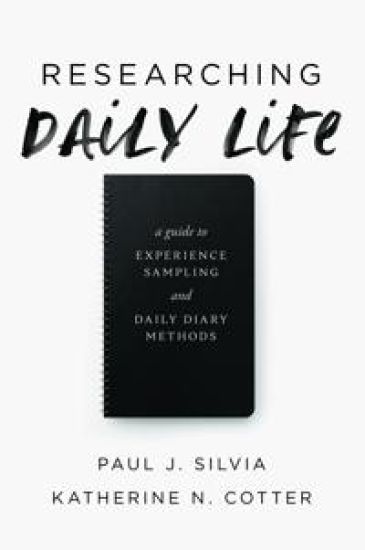
Researching Daily Life

Researching Daily Life

Paul J. Silvia; Katherine N. Cotter

American Psychological Association
2021
pokkari
A step-by-step guide to researching what people do in their everyday lives. This practical, beginner-friendly book teaches readers how to do daily life research, which is the study of what people do in their ordinary environments in their everyday lives. The basic approach is to collect data intensively over time, at least once a day for many days, in people amp rsquo s natural environments rather than in research labs. Common methods include daily diaries, experience sampling, and ecological momentary assessment. Collectively, these methods trade off the control and precision of the lab for the texture, depth, and realism of the real world. The book walks readers through the entire process of the research project, including first selecting a design and developing survey items, then collecting and cleaning data, and finally analyzing and disseminating the findings. With example studies pulled from all areas of psychology, the book will provide students with the conceptual foundation and practical knowledge needed to examine psychological processes amp ldquo up close amp rdquo in ways that experimental and survey methods can amp rsquo t.
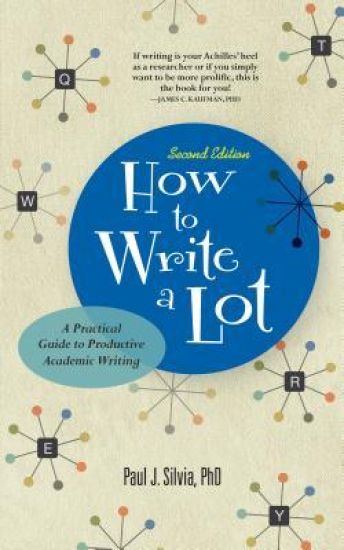
How to Write a Lot

How to Write a Lot

Paul J. Silvia

American Psychological Association
2018
pokkari
All academics need to write, but many struggle to finish their dissertations, articles, books, or grant proposals. Writing is hard work and can be difficult to wedge into a frenetic academic schedule. How can we write it all while still having a life? In this second edition of his popular guidebook, Paul Silvia offers fresh advice to help you overcome barriers to writing and use your time more productively. After addressing some common excuses and bad habits, he provides practical strategies to motivate students, professors, researchers, and other academics to become better and more prolific writers. Silvia draws from his own experience in psychology to explain how to write, submit, and revise academic work, from journal articles to books, all without sacrificing evenings, weekends, and vacations. The tips and strategies in this second edition have been updated to apply to academic writing in most disciplines. Also new to this edition is a chapter on writing grant and fellowship proposals.
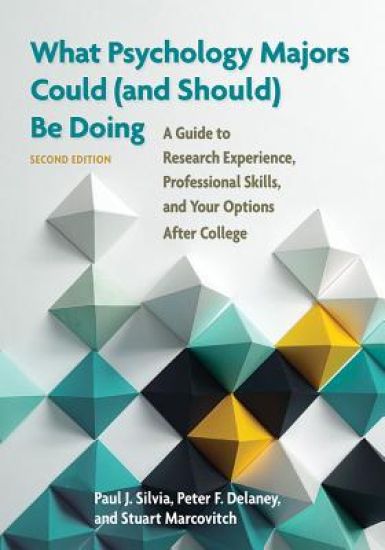
What Psychology Majors Could (and Should) Be Doing

What Psychology Majors Could (and Should) Be Doing

Paul J. Silvia; Peter F. Delaney; Stuart Marcovitch

American Psychological Association
2016
pokkari
This book will help undergraduate psychology students gain a competitive advantage for life after college, whether their plans include graduate school or work. Professional research experience remains the most important avenue for fostering and demonstrating the skills that employers and grad schools want-skills like writing, public speaking, and statistical reasoning. Thus, the authors emphasize ways to get involved in scholarly research. Updated and expanded, the second edition of What Psychology Majors Could (and Should) Be Doing includes tips for writing CVs and personal statements, empirically validated strategies for succeeding in classes, and guidance to help students think about their options after college. This consummate guide will help students get the most out of your psychology degree!
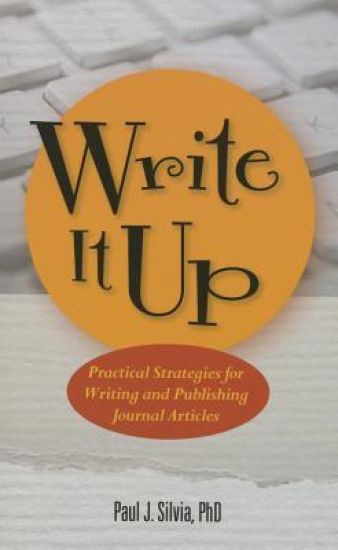
Write It Up

Write It Up

Paul J. Silvia

American Psychological Association
2014
pokkari
Write It Up is for anyone writing an empirical article in APA Style amp reg , from beginners facing their first article to old dogs looking for new writing strategies. Your academic writing will be more influential if you approach it reflectively and strategically. Based on his experience as an author, journal editor, and peer reviewer, Paul J. Silvia offers sage and witty advice on problems like picking journals cultivating the right tone and style for your article managing collaborative projects and coauthors crafting effective Introduction, Method, Results, and Discussion sections and submitting and resubmitting papers to journals.Write It Up features: amp bull readable and amusing, the book shows, step-by-step, how to plan and organize your academic writing and amp bull uses real-world examples to illustrate how to improve writing style and write better articles.
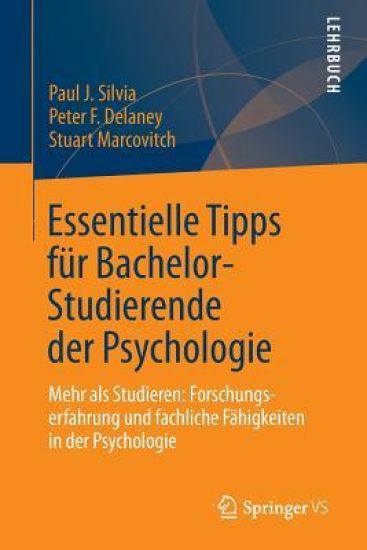
Essentielle Tipps für Bachelor-Studierende der Psychologie

Essentielle Tipps für Bachelor-Studierende der Psychologie

Paul J. Silvia; Peter F. Delaney; Stuart Marcovitch

Springer-Verlag Berlin and Heidelberg GmbH Co. K
2013
nidottu
Vielleicht haben Sie erst nach Studienbeginn ernüchtert festgestellt, dass das Psychologie-Studium anders ist, als Sie es sich vorgestellt hatten. Akademische Psychologie ist weitreichend und tiefgründig, wissenschaftlich und statistisch. Eine entscheidender Schwerpunkt im Studium der Psychologie ist die Forschung, die im Master- oder Promotionsstudium vertieft wird. Dieser humorvoll geschriebene und einfach zu lesende Wegweiser dient Ihnen zur Vorbereitung und zur praktischen Weichenstellung für die Zeit im und nach dem Bachelor-Studium. Das Werk macht Lust darauf, Forschungserfahrung als eine großartige Gelegenheit zu sehen, um fachliche Fähigkeiten auf- und auszubauen. Diese Forschungserfahrungen werden nicht nur als wichtige Kompetenz für eine wissenschaftliche, sondern auch für eine berufliche Karriere angesehen. Die zahlreichen Hinweise und Tipps können während dem Bachelorstudium angewendet werden, um später den gewünschten Nutzen zu bringen. So können Sie gezielt und effektiv die Vorbereitungen für eine erfolgreiche Karriere treffen.
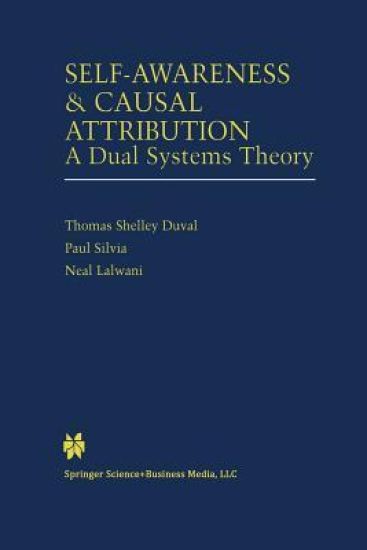
Self-Awareness & Causal Attribution

Self-Awareness & Causal Attribution

Thomas Shelley Duval; Paul J Silvia; Neal Lalwani

Springer-Verlag New York Inc.
2012
nidottu
Self-awareness - the ability to recognize one's existence - is one of the most important variables in psychology. Without self-awareness, people would be unable to self-reflect, recognize differences between the self and others, or compare themselves with internalized standards. Social, clinical, and personality psychologists have recognized the significance of self-awareness in human functioning, and have conducted much research on how it participates in everyday life and in psychological dysfunctions. Self-Awareness & Causal Attribution: A Dual-Systems Theory presents a new theory of how self-awareness affects thought, feeling, and action. Based on experimental social-psychological research, the authors describe how several interacting cognitive systems determine the links between self-awareness and organized activity. This theory addresses when people become self-focused, how people internalize and change personal standards, when people approach or avoid troubling situations, and the nature of self-evaluation. Special emphasis is given to causal attribution, the process of perceiving causality. Self-Awareness & Causal Attribution will be useful to social, clinical, and personality psychologists, as well as to anyone interested in how the self relates to motivation and emotion.
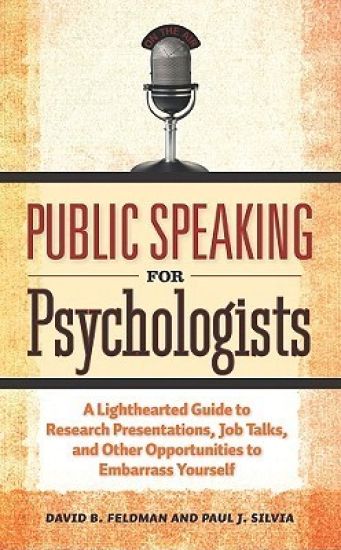
Public Speaking for Psychologists

Public Speaking for Psychologists

David B. Feldman; Paul J. Silvia

American Psychological Association
2010
pokkari
Public Speaking for Psychologists is a practical and lighthearted guide to planning, designing, and delivering a presentation. Public speaking is one of the most common fears. Few people look forward to talking in front of others and even fewer do it as effectively as they could. A career in psychology and its related fields involves extensive public speaking, so you will need to learn to do it well. With time and practice, you too can become a confident and effective presenter. The first half of Public Speaking for Psychologists covers the nuts-and-bolts of public speaking: preparing a talk, submitting an abstract, developing your slides, managing anxiety, handling questions, and preventing public-speaking disasters. The second half applies these tips to common presentations, such as research talks, poster presentations, job talks, and talks to lay audiences. Throughout the book, the authors-both experienced presenters-offer realistic advice, useful tips, and humorous stories of embarrassing mistakes they'll never make again.
Exploring the Psychology of Interest

Exploring the Psychology of Interest

Paul J. Silvia

Oxford University Press Inc
2006
sidottu
Interest, the momentary emotional feeling of curiosity, has always been a problem for mainstream psychologists because although simple interest and idle curiosity are always available to be cited as motives, they seem to be far too simple to account adequately for any aspect of human motivation or behaviour. The existence of interests, the enduring hobbies and avocations that give colour and frivolity to motivational life, gives rise to the question of why we are interested in some things rather than in others. Although this question is very important and basic to an understanding of human motivation and behaviour, it has generally been ignored or treated as simply too difficult to quantify. If properly understood, interest and interests could provide insights into many different issues, such as how transient emotional experience consolidates into lasting motives and how psychological states develop into traits. Understanding interest and interests and connecting the disparate areas within the psychology of interest are the primary goals of this book. As the first book on interest in decades, it will serve as the primary resource for anyone studying the psychology of interest.
Self-Awareness & Causal Attribution

Self-Awareness & Causal Attribution

Thomas Shelley Duval; Paul J Silvia; Neal Lalwani

Springer
2001
sidottu
Self-awareness - the ability to recognize one's existence - is one of the most important variables in psychology. Without self-awareness, people would be unable to self-reflect, recognize differences between the self and others, or compare themselves with internalized standards. Social, clinical, and personality psychologists have recognized the significance of self-awareness in human functioning, and have conducted much research on how it participates in everyday life and in psychological dysfunctions. Self-Awareness & Causal Attribution: A Dual-Systems Theory presents a new theory of how self-awareness affects thought, feeling, and action. Based on experimental social-psychological research, the authors describe how several interacting cognitive systems determine the links between self-awareness and organized activity. This theory addresses when people become self-focused, how people internalize and change personal standards, when people approach or avoid troubling situations, and the nature of self-evaluation. Special emphasis is given to causal attribution, the process of perceiving causality. Self-Awareness & Causal Attribution will be useful to social, clinical, and personality psychologists, as well as to anyone interested in how the self relates to motivation and emotion.