Kirjojen hintavertailu. Mukana 12 657 676 kirjaa ja 12 kauppaa.

Kirjailija

Paul J. Zwier

Kirjat ja teokset yhdessä paikassa: 7 kirjaa, julkaisuja vuosilta 2013-2020, suosituimpien joukossa Advanced Negotiation and Mediation, Theory and Practice: A Realistic Integrated Approach. Vertaile teosten hintoja ja tarkista saatavuus suomalaisista kirjakaupoista.

7 kirjaa

Kirjojen julkaisuhaarukka 2013-2020.

Peacemaking, Religious Belief and the Rule of Law
This book offers a new way of understanding the role of the mediator in teaching parties the interrelationship between sustainable peace, forgiveness, and international justice. It argues that the arrival of social media presents new opportunities for reaching sustainable peace agreements, through their use in gathering the detailed information that can match victims and perpetrators of past atrocities.The author aims to advance a more expansive understanding of the subjects and limitations of making peace in the shadow of international law by examining the concepts of mediation and forgiveness that exist alongside law. To that end, the book offers an account of the role of the mediator that emerges from the interplay between Ricouerian imagination and forgiveness and predicts ever-greater opportunities for making peace and protecting human rights that can be facilitated by a harnessing of social media as a tool for making peace with justice.The author also aims to examine how strategies for sustaining the peace must combat the inevitable frustrations with democracy that can lead to a slide into dictatorship. Assad, Obama, and the UN leadership and their decisions concerning making and maintaining peace in Syria are used as case studies to examine the interplay between a leaders’ religious beliefs, faith in democracy and rule of law, and impulses towards totalitarianism.
Peacemaking, Religious Belief and the Rule of Law
This book offers a new way of understanding the role of the mediator in teaching parties the interrelationship between sustainable peace, forgiveness, and international justice. It argues that the arrival of social media presents new opportunities for reaching sustainable peace agreements, through their use in gathering the detailed information that can match victims and perpetrators of past atrocities.The author aims to advance a more expansive understanding of the subjects and limitations of making peace in the shadow of international law by examining the concepts of mediation and forgiveness that exist alongside law. To that end, the book offers an account of the role of the mediator that emerges from the interplay between Ricouerian imagination and forgiveness and predicts ever-greater opportunities for making peace and protecting human rights that can be facilitated by a harnessing of social media as a tool for making peace with justice.The author also aims to examine how strategies for sustaining the peace must combat the inevitable frustrations with democracy that can lead to a slide into dictatorship. Assad, Obama, and the UN leadership and their decisions concerning making and maintaining peace in Syria are used as case studies to examine the interplay between a leaders’ religious beliefs, faith in democracy and rule of law, and impulses towards totalitarianism.
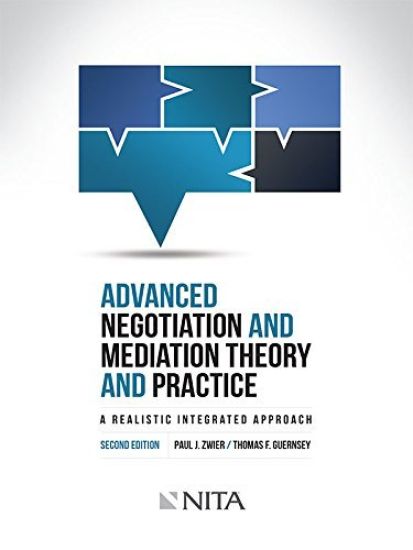
Advanced Negotiation and Mediation, Theory and Practice: A Realistic Integrated Approach
In this new, updated edition of Advanced Negotiation and Mediation Theory and Practice, Paul Zwier and Thomas Guernsey present a strategic planning and integrated systematic approach to negotiation, which recognizes that both adversarial and problem-solving strategies have distinct advantages and that lawyers need to combine styles and strategies to achieve the best results for their clients. Zwier and Guernsey provide attorneys with an outline to plan and implement effective negotiation techniques, using up-to-date situations throughout the book to demonstrate how understanding negotiation theory and practice can help them partner with their clients to make better strategic use of negotiation. The authors break down the counseling process into stages and show what information the client needs to make an informed decision. They then suggest and give examples of the techniques and skills that might be used to implement that decision in a negotiation and or mediation setting.
Fact Investigation: A Practical Guide to Interviewing, Counseling, and Case Theory Development
In a successful litigation, it isn't enough to know the facts. You must also know how to interpret and use those facts, and thoughtfully delving into the stories behind them is a crucial task if you hope to prevail for your client. Fact Investigation, by longtime NITA authors Paul Zwier and Anthony Bocchino, will change the way you approach cases for the rest of your career. Every litigator's investigation begins where the "official" investigation ends. During informal fact investigation, you must know how to engage your client so he shares the facts and stories critical to his case, then use them not just to develop but to implement a winning case theory. How do you do that? It all starts with your first meeting with your clientand what you say and how you do it. Find out how your word choice and body language lay the groundwork for connecting with your client, and how to establish the openness and trust that yield what you need to build a compelling case and be a persuasive advocate. From that client information, the authors take you through the steps necessary to build and implement effective alternative case theories that will inform your fact investigation process and lay the foundation for efficient use of formal discovery devices. Zwier and Bocchino model these practice skills through four familiar NITA case files: Quinlan v. Kane Electronics (business/contract case), Brown v. Byrd (auto accident and personal injury case), State v. Lawrence (criminal robbery case), and United States ex rel. Rodriguez v. Hughes (False Claims Act case). When you see these techniques modeled as case studies, you understand how to integrate them into your overall case planning and learn how to confront the thorny ethics of day-to-day lawyering. The Second Edition is fully revised, with special emphasis on the impact of the proposed Federal Rules Civil Procedure changes, and features an important new chapter on e-discovery. Rare is now the case that doesn't involve some form of electronic evidence, and every litigator must know the ever-expanding issues surrounding it. Find out how e-discovery strategies differ from plaintiff to defendant and how to manage your client's competing rights to both speech and privacy in our highly discoverable online world. From explaining how to use your opposing party's social media indiscretions against it to helping you make sense of new federal rules that limit the use of electronic evidence, Zwier and Bocchino tell you everything you must know about the impact of e-discovery on the modern litigation practice.
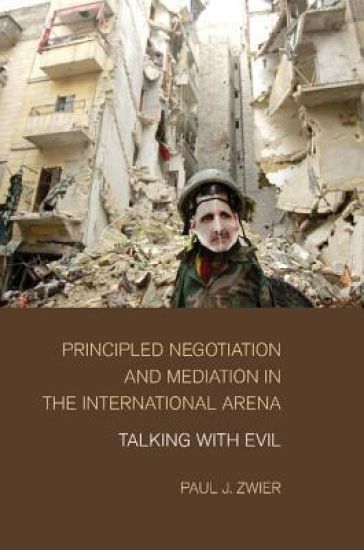
Principled Negotiation and Mediation in the International Arena
This book argues that it can be beneficial for the United States to talk with 'evil' - terrorists and other bad actors - if it engages a mediator who shares the United States' principles yet is pragmatic. It shows how the US can make better foreign policy decisions and demonstrate its integrity for promoting democracy and human rights, by employing a mediator who facilitates disputes between international actors by moving them along a continuum of principles, as political parties act for a country's citizens. This is the first book to integrate theories of rule of law development with conflict resolution methods, and it examines ongoing disputes in the Middle East, North Korea, South America and Africa. It draws on the author's experiences with The Carter Center and judicial and legal advocacy training to provide a sophisticated understanding of the current situation in these countries and of how a strategy of principled pragmatism will give better direction to US foreign policy abroad.
Effective Expert Testimony

Effective Expert Testimony

David M. Malone; Paul J. Zwier

Aspen Publishing
2014
nidottu
Paul Zwier and David Malone examine the rules of evidence and ethics that govern the relationship of experts to lawyers, experts to juries, and experts to courts, all in a manner that resolves these issues.
Principled Negotiation and Mediation in the International Arena
This book argues that it can be beneficial for the United States to talk with 'evil' - terrorists and other bad actors - if it engages a mediator who shares the United States' principles yet is pragmatic. It shows how the US can make better foreign policy decisions and demonstrate its integrity for promoting democracy and human rights, by employing a mediator who facilitates disputes between international actors by moving them along a continuum of principles, as political parties act for a country's citizens. This is the first book to integrate theories of rule of law development with conflict resolution methods, and it examines ongoing disputes in the Middle East, North Korea, South America and Africa. It draws on the author's experiences with The Carter Center and judicial and legal advocacy training to provide a sophisticated understanding of the current situation in these countries and of how a strategy of principled pragmatism will give better direction to US foreign policy abroad.