
Kirjojen hintavertailu. Mukana 12 390 323 kirjaa ja 12 kauppaa.

Kirjailija

Paul Kelleher

Kirjat ja teokset yhdessä paikassa: 3 kirjaa, julkaisuja vuosilta 2005-2017, suosituimpien joukossa Making Love. Vertaile teosten hintoja ja tarkista saatavuus suomalaisista kirjakaupoista.

3 kirjaa

Kirjojen julkaisuhaarukka 2005-2017.

Making Love

Making Love

Paul Kelleher

Bucknell University Press
2017
nidottu
In Making Love: Sentiment and Sexuality in Eighteenth-Century British Literature, Paul Kelleher revises the history of sexuality from the vantage point of the literary history of sentimentalism. Kelleher demonstrates how eighteenth-century British philosophers, essayists, and novelists fundamentally reconceived the relations among sentiment, sexuality, and moral virtue. It is his contention that sentimental discourse, both philosophical and literary, posited heterosexual desire as the precondition of moral feeling and conduct. The author further suggests that sentimental writers fashioned the ideal of conjugal love as an ideological antidote to the theories of self-love and self-interest found in the works of Thomas Hobbes and Bernard Mandeville. Heterosexual desire and its culmination in conjugal love, in other words, were represented as the privileged means for an individual to transcend self-love and to develop a moral sensibility attuned to the thoughts and feelings of others. At the same time, Kelleher suggests, other pleasures and desires—particularly those rooted in same-sex eroticism—were increasingly depicted as antithetical to conjugal love and, thus, were morally devalued and socially disenfranchised. Kelleher's argument unfolds through close readings of a variety of texts, including Shaftesbury’s Characteristics of Men, Manners, Opinions, Times, Joseph Addison and Richard Steele’s the Tatler and the Spectator, Eliza Haywood’s Love in Excess, Samuel Richardson’s Pamela, and Henry Fielding’s Tom Jones. Although these texts embody diverse rhetorical strategies and thematic concerns, he shows how they collectively reinforce an overarching sentimental ideology: on the one hand, heterosexual desire and conjugal love become synonymous with sympathy, benevolence, and moral goodness, while on the other hand, same-sex desire is pathologized as a selfish withdrawal from procreation, domesticity, sociability, and ultimately, “humanity” itself.

Making Love

Making Love

Paul Kelleher

Bucknell University Press
2015
sidottu
In Making Love: Sentiment and Sexuality in Eighteenth-Century British Literature, Paul Kelleher revises the history of sexuality from the vantage point of the literary history of sentimentalism. Kelleher demonstrates how eighteenth-century British philosophers, essayists, and novelists fundamentally reconceived the relations among sentiment, sexuality, and moral virtue. It is his contention that sentimental discourse, both philosophical and literary, posited heterosexual desire as the precondition of moral feeling and conduct. The author further suggests that sentimental writers fashioned the ideal of conjugal love as an ideological antidote to the theories of self-love and self-interest found in the works of Thomas Hobbes and Bernard Mandeville. Heterosexual desire and its culmination in conjugal love, in other words, were represented as the privileged means for an individual to transcend self-love and to develop a moral sensibility attuned to the thoughts and feelings of others. At the same time, Kelleher suggests, other pleasures and desires—particularly those rooted in same-sex eroticism—were increasingly depicted as antithetical to conjugal love and, thus, were morally devalued and socially disenfranchised. Kelleher's argument unfolds through close readings of a variety of texts, including Shaftesbury’s Characteristics of Men, Manners, Opinions, Times, Joseph Addison and Richard Steele’s the Tatler and the Spectator, Eliza Haywood’s Love in Excess, Samuel Richardson’s Pamela, and Henry Fielding’s Tom Jones. Although these texts embody diverse rhetorical strategies and thematic concerns, he shows how they collectively reinforce an overarching sentimental ideology: on the one hand, heterosexual desire and conjugal love become synonymous with sympathy, benevolence, and moral goodness, while on the other hand, same-sex desire is pathologized as a selfish withdrawal from procreation, domesticity, sociability, and ultimately, “humanity” itself.
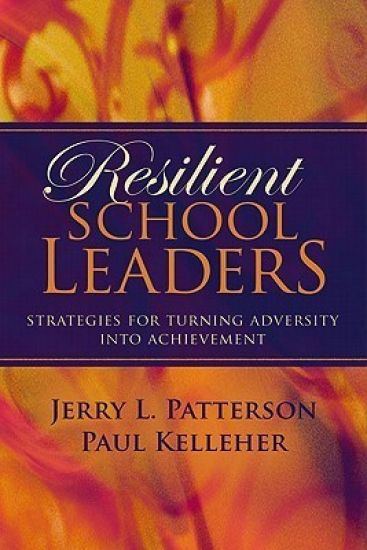
Resilient School Leaders

Resilient School Leaders

Jerry L Patterson; Paul Kelleher

Association for Supervision Curriculum Development
2005
pokkari
Getting fired, dealing with bitter disputes, having your competence or integrity challenged--these are experiences that educators have all the time. But what's the difference between educators who triumph over adversity versus those who succumb? Blending sage wisdom and research with real stories from educators, this book introduces you to three dimensions of resilience and describes guiding principles that every educator can live by - Why realistic optimism is critical. - How to use your Personal Strengths Triangle as an anchor. - Which strategies help you strengthen your confidence and competence. - How to harness four types of energy that will enhance your effectiveness. - Ways to help school teams through tough times.