Kirjojen hintavertailu. Mukana 12 595 353 kirjaa ja 12 kauppaa.

Kirjailija

Paul L Dawson

Kirjat ja teokset yhdessä paikassa: 34 kirjaa, julkaisuja vuosilta 2013-2027, suosituimpien joukossa Napoleon's Peninsular War. Vertaile teosten hintoja ja tarkista saatavuus suomalaisista kirjakaupoista.

Mukana myös kirjoitusasut: Paul L. Dawson

34 kirjaa

Kirjojen julkaisuhaarukka 2013-2027.

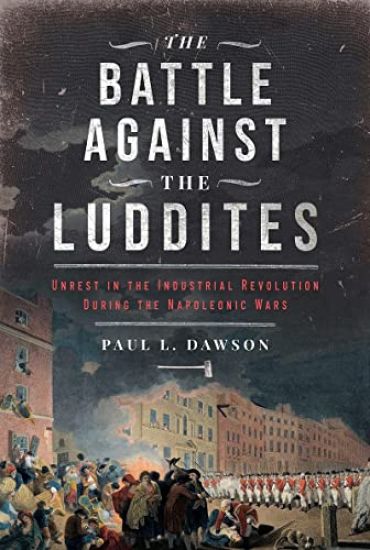
The Battle Against the Luddites

The Battle Against the Luddites

Paul L Dawson

PEN SWORD BOOKS LTD
2023
sidottu
As the columns of French infantry marched up the slopes of the Mont St Jean at Waterloo, the British heavy cavalry, the Royal Scots Greys to the fore, crashed into the packed ranks of the enemy. This was not the first time the Greys had drawn their swords during the Napoleonic Wars - but it was their first against Napoleon's troops. Three years earlier they had attacked workers in Halifax protesting at the introduction of machinery in the wool trade. Taking their name from Ned Ludd, who had smashed up knitting frames in Nottingham, the Luddites saw the emergence of mechanisation as a threat to their livelihood, with men replacing machines. In response they took matters into their own hands by wrecking the new equipment. Industrial unrest had gathered pace throughout the 18th century and exploded in an unpresented wave of violence in 1799\. Outbreaks of machine-breaking developed rapidly into strikes in a battle of capital against labour. A court battle ensued, culminating in new legislation in 1806 that backed the capitalists. This act, coupled with the impact of the Continental system introduced by Napoleon, which closed European and American ports to British merchants, heralded the largest economic depression of the era. Famine, pestilence and rising employment all fuelled the fires of Luddism. Months of violence swept across the West Midlands, Lancashire and Yorkshire which saw one factory boss murdered; other factory owners began shooting protesting workers. The disturbances resulted in the mobilising of thousands of regular soldiers - at one time there were as many British soldiers fighting the Luddites than there were fighting Napoleon on the Iberian Peninsula. As well as exploring these events, Paul L. Dawson also uncovers the origins of Luddism and their allies in the middle classes. The Napoleonic Wars marked the end of centuries old way of life in agriculture, textile production and the wider economy. The dramatic changes in Britain between 1790 and 1815 created a unique set of social grievances by those left behind by the unprecedented changes that were surging through the Britain which exploded into bitter fighting across large swathes of the country. With present day concerns over computerisation replacing labour, this is a story that echoes down the centuries.
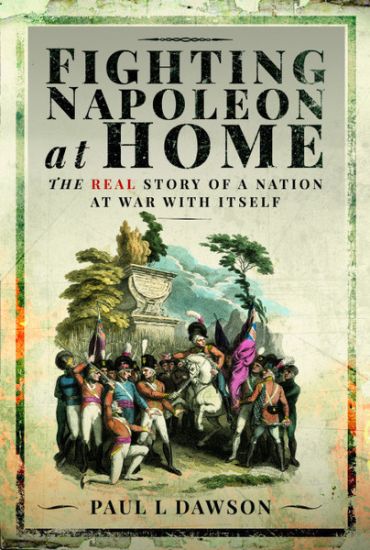
Fighting Napoleon at Home

Fighting Napoleon at Home

Paul L Dawson

PEN SWORD BOOKS LTD
2023
sidottu
From the sun-baked sierras of Spain, through the stormy waters off Cape Trafalgar to the muddy and bloody fields of Waterloo, Britain's soldiers and sailors were notching up victories which set the country on the path to becoming the greatest power on the planet. We like to imagine the country was unified against a common enemy, France, and the Tyrant of Europe - Napoleon. Yet if we scratch the surface, we find a nation not just at war with France but with itself. The great successes of Wellington and Nelson, and the glamour of Regency London, cover over the cracks of a divided society, of riots across the industrial north and widespread political opposition. Huge swathes of the country hated the war, booed and hissed at soldiers and lobbed turds' at the Scots Greys in Halifax. There were repeated Peace Petitions' which sought to stop the war - and even to prevent the British Army fighting at Waterloo. Armed Associations of gentlemen volunteers and Local Militias led the call to close down the debate on social and democratic reform, while on the other hand thousands of English reformers heeded the call from France and hundreds actually headed to France, with many thousands more believing that the time had come, when its young men were needed to fight for King and Country, for reform. The burgeoning middle class had no vote in parliament; rapidly expanding industrial towns and cities had no MPs, yet small villages - pocket boroughs - often had two. The burden of taxation fell on those least able to afford it; enclosure of common land; corn laws; restrictions on the freedom of expression; the endless killing, all fed into an undercurrent of political dissent that was ideologically opposed to the loyalist cause. It was a battle for the very sole of Britain. For the first time, the shocking reality of life in Britain, during what is often portrayed as being its greatest era, is told through diaries, letters, and newspaper comments. Fighting Napoleon at Home is a startling portrayal of the society from which the soldiers and sailors were drawn and exactly what it was they were fighting to defend. It will become essential reading for anyone attempting to understand why Britain's aristocracy had to stop Napoleon at any cost and suppress the dangerous ideals of libert , galit , fraternit .
Wakefield: A Potted History

Wakefield: A Potted History

Paul L. Dawson

AMBERLEY PUBLISHING
2022
nidottu
Wakefield was originally a settlement on the River Calder in West Yorkshire, first Anglo-Saxon, then Viking controlled. After the Norman Conquest, the manor passed to the de Warenne family and Wakefield grew into an important market town in the area. In the Wars of the Roses Richard, Duke of York, was killed at the Battle of Wakefield. Wakefield’s prosperity was growing as an inland port and a centre for tanning, the wool trade and coal mining. By the Industrial Revolution, Wakefield was a wealthy town, benefiting from the opening of the Aire & Calder Canal, which enabled it to trade goods, particularly grain and cloth, throughout the country. Wool mills were built in the nineteenth century and Wakefield became the administrative centre in West Riding, given city status in 1888. Although many industries closed in the later decades of the twentieth century, including its extensive coalfields, the city has embarked on a programme of regeneration, which includes the new Hepworth Wakefield art gallery, named after Wakefield-born artist Barbara Hepworth. Through successive centuries the author looks at what has shaped Wakefield’s history. Illustrated throughout, this accessible historical portrait of the transformation that Wakefield has undergone through the ages will be of great interest to residents, visitors and all those with links to the city.
Wakefield at Work

Wakefield at Work

Paul L. Dawson

Amberley Publishing
2020
nidottu
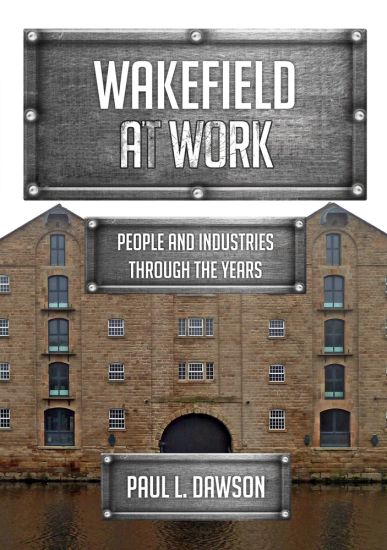
Wakefield was a prosperous market town in the Middle Ages, but it was transformed by coal mining during the Industrial Revolution. Mining dominated the local economy until the last pits closed in the 1970s and 1980s. Trade in cloth and cloth finishing were also cornerstones of Wakefield’s economy, drawing in merchants from across the north. Local families – the Milnes’s and the Naylors – dominated the trade until the economic depression of the 1820s and increasing mechanisation. Cloth production started on a small scale and many houses in the area had a weaving shed until the arrival of the first steam-powered mill in 1781 and the rapid expansion of fulling and scribbling mills in Wakefield. Yarn spinning was more successful, and the huge Plumpton Park complex on Westgate became the largest employer in the town. Heavy industry also came to Wakefield. Steam engines were constructed at Fall Ing Foundry from 1791 and the railways became a major employer. Greens Economiser Works were a major concern until the 1960s. The city has been transformed once more, with the major employers today being warehouse distribution bases, retail parks and shopping outlets. Wakefield at Work explores the working life of this Yorkshire city and its people, and the industries that have characterised it. The book will appeal to all those with an interest in the history of Wakefield.
Napoleon's Peninsular War

Napoleon's Peninsular War

Paul L Dawson

Frontline Books
2020
sidottu
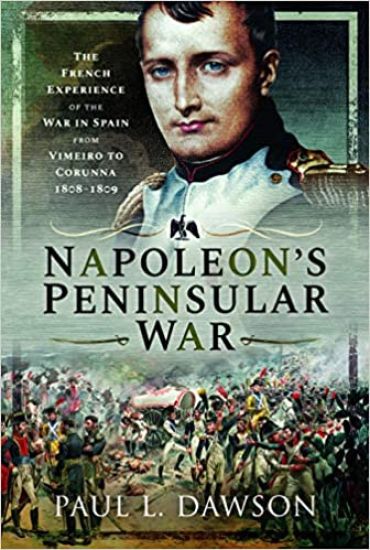
Memoirs of British soldiers who fought in the Peninsular War are commonplace and histories of the momentous campaigns and battles of Sir John Moore and Sir Arthur Wellesley, the future Duke of Wellington, can be numbered by the score. Yet surprisingly little has been published in English on their opponents, the French. Using previously unseen material from the French army archives in Paris, which includes numerous memoires that have not even been published in France, renowned historian Paul Dawson tells the story of the early years of the Peninsular War as never before. Eyewitness accounts of the horrific Siege of Zaragoza, in which more than 50,000 soldiers and civilians were killed defending the city, and of the cataclysmic Spanish defeats at Medellin and Ocana are interspersed with details of campaign life in the Iberian Peninsula and of struggling through the Galician mountains in pursuit of the British army marching to Corunna. As well as the drama of the great battles and the ever-present fear of Spanish guerrillas - the knife in the back, the flash of steel in the dark - Paul Dawson draws on the writings of the French soldiers to examine the ordinary conscript's belief in the war they were fighting for their Emperor, Napoleon. In this much-needed study of the Peninsular War from the French perspective, Paul Dawson has produced an unprecedented, yet vital addition to our understanding of the war in Iberia. _Napoleon's Peninsular War_ is destined to become one of the classic accounts of this turbulent, yet endlessly fascinating era.
Battle for Paris 1815

Battle for Paris 1815

Paul L. Dawson

Frontline Books
2019
sidottu
On the morning of 3 July 1815, the French General R mi Joseph Isidore Exelmans, at the head of a brigade of dragoons, fired the last shots in the defence of Paris until the Franco-Prussian War sixty-five years later. Why did he do so? Traditional stories of 1815 end with Waterloo, that fateful day of 18 June, when Napoleon Bonaparte fought and lost his last battle, abdicating his throne on 22 June. So why was Exelmans still fighting for Paris? Surely the fighting had ended on 18 June? Not so. Waterloo was not the end, but the beginning of a new and untold story. Seldom studied in French histories and virtually ignored by English writers, the French Army fought on after Waterloo. At Versailles, Sevres, Rocquencourt and elsewhere, the French fought off the Prussian army. In the Alps and along the Rhine other French armies fought the Allied armies, and General Rapp defeated the Austrians at La Souffel - the last great battle and the last French victory of the Napoleonic Wars. Many other French commanders sought to reverse the defeat of Waterloo. Bonapartist and irascible, General Vandamme, at the head of 3rd and 4th Corps, was, for example, champing at the bit to exact revenge on the Prussians. General Exelmans, ardent Bonapartist and firebrand, likewise wanted one final, defining battle to turn the war in favour of the French. Marshal Grouchy, much maligned, fought his army back to Paris by 29 June, with the Prussians hard on his heels. On 1 July, Vandamme, Exelmans and Marshal Davout began the defence of Paris. Davout took to the field in the north-eastern suburbs of Paris along with regiments of the Imperial Guard and battalions of National Guards. For the first time ever, using the wealth of archive material held in the French Army archives in Paris, along with eyewitness testimonies from those who were there, Paul Dawson brings alive the bitter and desperate fighting in defence of the French capital. The 100 Days Campaign did not end at Waterloo, it ended under the walls of Paris fifteen days later.
Napoleon's Waterloo Army

Napoleon's Waterloo Army

Paul L Dawson

Frontline Books
2019
sidottu
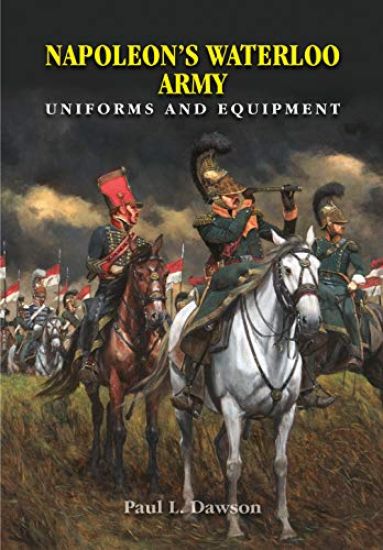
When Napoleon returned to Paris after exile on the Island of Elba, he appealed to the European heads of state to be allowed to rule France in peace. His appeal was rejected and the Emperor of the French knew he would have to fight to keep his throne. In just eight weeks, Napoleon assembled 128,000 soldiers in the French Army of the North and on 15 June moved into Belgium (then a part of the kingdom of the Netherlands). Before the large Russian and Austrian armies could invade France, Napoleon hoped to defeat two coalition armies, an Anglo-Dutch-Belgian-German force under the Duke of Wellington, and a Prussian army led by Prince von Bl cher. He nearly succeeded. Paul Dawson's examination of the troops who fought at Ligny, Quatre-Bras and Waterloo, is based on thousands of pages of French archival documents and translations. With hundreds of photographs of original artefacts, supplemented with scores of lavish colour illustrations, and dozens of paintings by the renowned military artist Keith Rocco, Napoleon's Waterloo Army is the most comprehensive, and extensive, study ever made of the French field army of 1815, and its uniforms, arms and equipment.
Napoleon's Imperial Guard Uniforms and Equipment
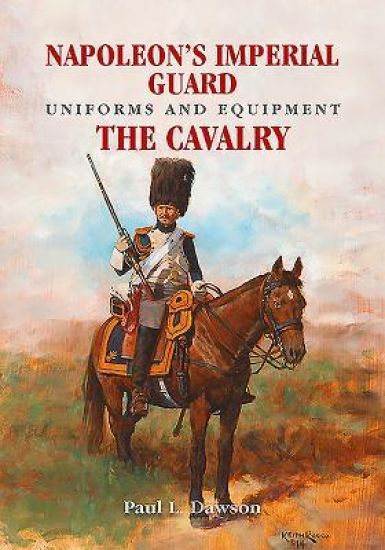
From its origins as the Consular Guard of the French Republic, and as Napoleon's personal bodyguard, the Imperial Guard developed into a force of all arms numbering almost 100,000 men. Used by Napoleon as his principle tactical reserve, the Guard was engaged only sparingly, being deployed at the crucial moment of battle to turn the tide of victory in favour of the Emperor of the French. Naturally the Imperial Guard has been the subject of numerous books over many decades, yet there has never been a publication that has investigated the uniforms and equipment of the Guard in such detail and with such precision. The author has collected copies of almost all the surviving documents relating to the Guard, which includes a vast amount of material regarding the issuing of dress items, even in some instances down to company level. The Guard was extravagantly dressed and accoutred, with the finest materials and the brightest colours. On both campaign and parade, the Guard provided a dazzling display of military grandeur. From the green and gold trappings of the Chasseurs Cheval, to the multi-coloured Mamelukes, the Guard cavalry was among the most brilliantly clothed formations ever to grace the field of battle. This information is supported by around 100 contemporary prints, many of which have never been published before, as well as images of original items of equipment held in museums and private collections across the globe. In addition, the renown military artist, Keith Rocco has produced a series of unique paintings commissioned exclusively for this book. This glorious book is, and will remain, unsurpassed as the standard work on the clothing and equipment of the Imperial Guard, and will be eagerly sought by reenactors, wargamers and modellers, and will sit on the book shelves of historians and enthusiasts as one of the most important publications ever produced on this most famous of military formations.
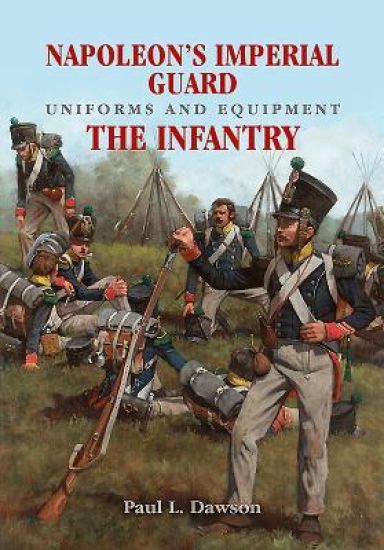
Napoleon's Imperial Guard Uniforms and Equipment: The Infantry
From its origins as the Consular Guard of the French Republic, and as Napoleon's personal bodyguard, the Imperial Guard developed into a force of all arms numbering almost 100,000 men. Used by Napoleon as his principle tactical reserve, the Guard was engaged only sparingly, being deployed at the crucial moment of battle to turn the tide of victory in favour of the Emperor of the French. Naturally, the Imperial Guard has been the subject of numerous books over many decades, yet there has never been a publication that has investigated the uniforms and equipment of the infantry of the Imperial Guard in such detail and with such precision. The author has collected copies of almost all the surviving documents relating to the Guard, which includes a vast amount of material regarding the issuing of dress items, even in some instances down to company level. This information is supported by an unrivalled collection of illustrations, many of which have never been published before, as well as images of original items of equipment held in museums and private collections across the globe. In addition, the renowned military artist, Keith Rocco, has produced a series of unique paintings commissioned exclusively for this book. This glorious book is, and will remain, unsurpassed as the standard work on the clothing and equipment of the Imperial Guard, and will not only be invaluable to historians, but also reenactors, wargamers and modellers. It is one of the most important publications ever produced on this most famous of military formations.
A-Z of Wakefield

A-Z of Wakefield

Paul L. Dawson

Amberley Publishing
2019
nidottu
The recorded history of Wakefield goes back more than 1,000 years and the city has evolved and changed over the centuries. The extensive developments of the last three centuries, through the Industrial Revolution and a massive increase in population to today’s largely post-industrial city, have seen its most radical period of change. A–Z of Wakefield delves into the history of this West Yorkshire city. It highlights well-known landmarks, famous residents and digs beneath the surface to uncover some of the lesser-known facts about Wakefield and its hidden gems. Significant moments in its history are covered as well as its notable buildings and other features, including famous names associated with Wakefield, from its medieval beginnings to the present day. This fascinating A–Z tour of Wakefield’s history is fully illustrated and will appeal to all those with an interest in this part of West Yorkshire.
Waterloo: The Truth at Last

Waterloo: The Truth at Last

Paul L. Dawson

Frontline Books
2018
sidottu
During October 2016 Paul Dawson visited French archives in Paris to continue his research surrounding the events of the Napoleonic Wars. Some of the material he examined had never been accessed by researchers or historians before, the files involved having been sealed in 1816\. These seals remained unbroken until Paul was given permission to break them to read the contents. Forget what you have read about the battle on the Mont St Jean on 18 June 1815; it did not happen that way. The start of the battle was delayed because of the state of the ground not so. Marshal Ney destroyed the French cavalry in his reckless charges against the Allied infantry squares wrong. The stubborn defence of Hougoumont, the key to Wellington s victory, where a plucky little garrison of British Guards held the farmhouse against the overwhelming force of Jerome Bonaparte s division and the rest of II Corps not true. Did the Union Brigade really destroy d Erlon s Corps, did the Scots Greys actually attack a massed French battery, did La Haie Sainte hold out until late in the afternoon? All these and many more of the accepted stories concerning the battle are analysed through accounts (some 200 in all) previously unpublished, mainly derived through French sources, with startling conclusions. Most significantly of all is the revelation of exactly how, and why, Napoleon was defeated. Waterloo, The Truth at Last demonstrates, through details never made available to the general public before, how so much of what we think we know about the battle simply did not occur in the manner or to the degree previously believed. This book has been described as a game changer , and is certain to generate enormous interest, and will alter our previously-held perceptions forever.
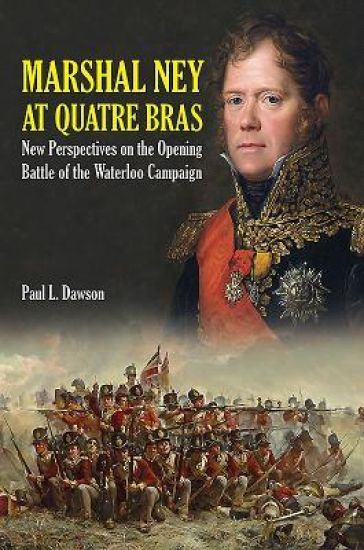
Marshal Ney at Quatre Bras

Marshal Ney at Quatre Bras

Paul L. Dawson

Frontline Books
2017
sidottu
Fought on 16 June 1815, two days before the Battle of Waterloo, the Battle of Quatre Bras has been described as a tactical Anglo-allied victory, but a French strategic victory. The French Marshal Ney was given command of the left wing of Napoleon s army and ordered to seize the vital crossroads at Quatre Bras, as the prelude to an advance on Brussels. The crossroads was of strategic importance because the side which controlled it could move south-eastward along the Nivelles-Namur road. Yet the normally bold and dynamic Ney was uncharacteristically cautious. As a result, by the time he mounted a full-scale attack upon the Allied troops holding Quatre Bras, the Duke of Wellington had been able to concentrate enough strength to hold the crossroads. Ney s failure at Quatre Bras had disastrous consequences for Napoleon, whose divided army was not able to reunite in time to face Wellington at Waterloo. This revelatory study of the Waterloo campaign draws primarily on French archival sources, and previously unpublished French accounts, to present a balanced view of a battle normally seen only from the British or Anglo-Allied perspective.
Changing Wakefield

Changing Wakefield

Paul L. Dawson

Fonthill Media
2013
nidottu
Wakefield, the capital of the former West Riding of Yorkshire, has a long and distinguished past. It came to prominence as a centre for the cloth trade in the latter half of the 15th century, the trade in cloth becoming a major part of the town's economy until recent years. By 1880, Wakefield as a town had expanded and gained many new institutions built on the wealth of the cloth trade, coal mining and heavy industry. Changing Wakefield presents a glimpse into what the townscape of Wakefield was like at the close of the 19th century and compares it to the modern cityscape that has constantly changed and evolved since 1880. Important buildings in today's cityscape are looked at in depth with concise histories of the buildings and the people that built or lived in these notable landmarks. This fascinating historical time capsule also presents rare images and histories of many of the lost architectural treasures of Wakefield.