Kirjojen hintavertailu. Mukana 12 390 323 kirjaa ja 12 kauppaa.

Kirjailija

Paul L. Hedren

Kirjat ja teokset yhdessä paikassa: 16 kirjaa, julkaisuja vuosilta 1998-2025, suosituimpien joukossa A Life Cut Short at the Little Big Horn. Vertaile teosten hintoja ja tarkista saatavuus suomalaisista kirjakaupoista.

16 kirjaa

Kirjojen julkaisuhaarukka 1998-2025.

A Life Cut Short at the Little Big Horn

A Life Cut Short at the Little Big Horn

Todd E. Harburn; Paul L. Hedren

UNIVERSITY OF OKLAHOMA PRESS
2024
nidottu
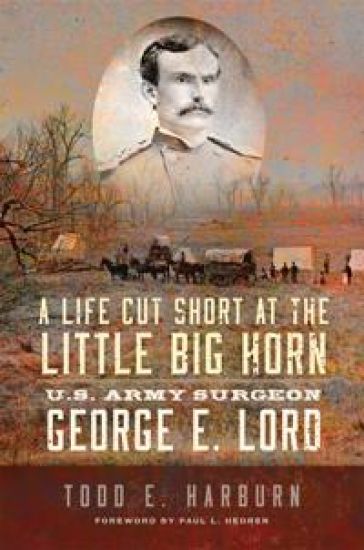
Of the three physicians at the Battle of the Little Big Horn, Doctor George Edwin Lord (1846–76) was the lone commissioned medical officer, an assistant surgeon with the United States Army’s 7th Cavalry—one more soldier caught up in the U.S. government’s efforts to fulfill what many people believed was the young country’s “Manifest Destiny.” A Life Cut Short at the Little Big Horn tells Lord’s story for the first time. Notable for its unique angle on Custer’s last stand and for its depiction of frontier-era medicine, the book is above all a compelling portrait of the making of an army medical professional in mid-nineteenth-century America. Drawing on newly discovered documents, Todd E. Harburn describes Lord’s education and training at Bowdoin College in Maine and the Chicago Medical College, detailing what the study of medicine entailed at the time for “a young man of promise . . . held in universal esteem.” Lord’s time as a contract physician with the army took him in 1874 to the U.S. Northern Boundary Survey. From there Harburn recounts how, after a failed romance and the rigors of the U.S. Army Medical Board examination, the young doctor proceeded to his first—and only—appointment as a post surgeon, at Fort Buford in Dakota Territory. What followed, of course, was Lord’s service, and his death, in the Little Big Horn campaign, which this book shows us for the first time from the unique perspective of the surgeon. A portrait of a singular figure in the milieu of the American military’s nineteenth-century medical elite, A Life Cut Short at the Little Big Horn offers a close look at a familiar chapter in U.S. history, and a reminder of the humanity lost in a battle that resonates to this day.
A Life Cut Short at the Little Big Horn

A Life Cut Short at the Little Big Horn

Todd E. Harburn; Paul L. Hedren

UNIVERSITY OF OKLAHOMA PRESS
2023
sidottu
Of the three physicians at the Battle of the Little Big Horn, Doctor George Edwin Lord (1846–76) was the lone commissioned medical officer, an assistant surgeon with the United States Army’s 7th Cavalry—one more soldier caught up in the U.S. government’s efforts to fulfill what many people believed was the young country’s “Manifest Destiny.” A Life Cut Short at the Little Big Horn tells Lord’s story for the first time. Notable for its unique angle on Custer’s last stand and for its depiction of frontier-era medicine, the book is above all a compelling portrait of the making of an army medical professional in mid-nineteenth-century America. Drawing on newly discovered documents, Todd E. Harburn describes Lord’s education and training at Bowdoin College in Maine and the Chicago Medical College, detailing what the study of medicine entailed at the time for “a young man of promise . . . held in universal esteem.” Lord’s time as a contract physician with the army took him in 1874 to the U.S. Northern Boundary Survey. From there Harburn recounts how, after a failed romance and the rigors of the U.S. Army Medical Board examination, the young doctor proceeded to his first—and only—appointment as a post surgeon, at Fort Buford in Dakota Territory. What followed, of course, was Lord’s service, and his death, in the Little Big Horn campaign, which this book shows us for the first time from the unique perspective of the surgeon. A portrait of a singular figure in the milieu of the American military’s nineteenth-century medical elite, A Life Cut Short at the Little Big Horn offers a close look at a familiar chapter in U.S. history, and a reminder of the humanity lost in a battle that resonates to this day.
Sitting Bull's War: The Battle of Little Big Horn and the Fight for Buffalo and Freedom on the Plains
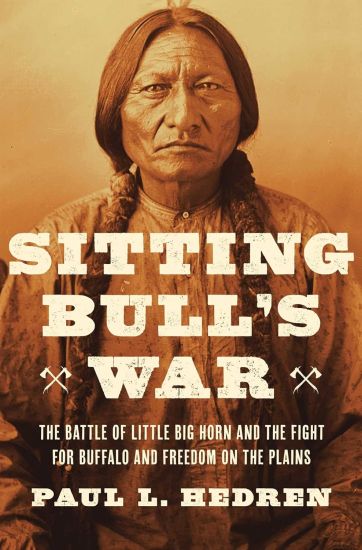
The dramatic story of America's greatest Indian war told from perspective of the Lakotas and the Northern Cheyennes, as they fight for their way of life on the buffalo prairie. In this deeply affecting account of America's greatest Indian war, readers are quickly immersed in the world of Lakotas and Northern Cheyennes and their struggle in the 1870s to retain their lives on the buffalo prairie. Those impassioned Northern Indians faced a succession of white invaders--railroaders, borderland surveyors, prospectors, and ultimately the United States Army. In the best of days they turned back George Crook at the Rosebud and wiped out George Armstrong Custer at the Little Big Horn. But a dozen other clashes followed, and in the end these tradition-minded people could not endure the army's endless hounding. Some fled to Canada to a luring if momentary exile, but in the end one and all faced starvation, submission, and, for some, death. Personifying this traditional way of life was Sitting Bull, legendary Hunkpapa Lakota spiritualist. He was supported throughout by Crazy Horse, Spotted Eagle, Big Road, Little Wolf, and a host of other kindred traditional chiefs and headmen who, in turn, rallied thousands of like-minded men, women, and children. And yet, but for momentary glory against Crook and Custer, this was a war that could not be won. Award-winning author Paul L. Hedren has spent ten years writing this great American epic. Utilizing an array of Lakota and Cheyenne accounts, pictographic renderings, and original interviews, this is the story of a people intent only on adhering to a traditional life on the buffalo prairie. The narrative is broad and inclusive and a welcome addition to the canon of American Indian wars history.
Rosebud, June 17, 1876

Rosebud, June 17, 1876

Paul L. Hedren

University of Oklahoma Press
2021
nidottu
The Battle of the Rosebud may well be the largest Indian battle ever fought in the American West. The monumental clash on June 17, 1876, along Rosebud Creek in southeastern Montana pitted George Crook and his Shoshone and Crow allies against Sioux and Northern Cheyennes under Sitting Bull and Crazy Horse. It set the stage for the battle that occurred eight days later when, just twenty-five miles away, George Armstrong Custer blundered into the very same village that had outmatched Crook. Historian Paul L. Hedren presents the definitive account of this critical battle, from its antecedents in the Sioux campaign to its historic consequences.Rosebud, June 17, 1876 explores in unprecedented detail the events of the spring and early summer of 1876. Drawing on an extensive array of sources, including government reports, diaries, reminiscences, and a previously untapped trove of newspaper stories, the book traces the movements of both Indian forces and U.S. troops and their Indian allies as Brigadier General Crook commenced his second great campaign against the northern Indians for the year. Both Indian and army paths led to Rosebud Creek, where warriors surprised Crook and then parried with his soldiers for the better part of a day on an enormous field. Describing the battle from multiple viewpoints, Hedren narrates the action moment by moment, capturing the ebb and flow of the fighting. Throughout he weighs the decisions and events that contributed to Crook's tactical victory, and to his fateful decision thereafter not to pursue his adversary. The result is a uniquely comprehensive view of an engagement that made history and then changed its course.Rosebud was at once a battle won and a battle lost. With informed attention to the subtleties and significance of both outcomes, as well as to the fears and motivations on all sides, Hedren has given new meaning to this consequential fight, and new insight into its place in the larger story of the Great Sioux War.
John Finerty Reports the Sioux War

John Finerty Reports the Sioux War

Paul L. Hedren

University of Oklahoma Press
2020
sidottu
In War-Path and Bivouac, published in 1890, John Finerty (1846-1908) recalled his summer following George Crook's infamous campaign against the Sioux in 1876. Historians have long surmised that Finerty's correspondence covering the campaign for the Chicago Times reappeared in its entirety in Finerty's celebrated book. But that turns out not to be the case, as readers will discover in this remarkable volume. In print at last, this collection of Finerty's letters and telegrams to his hometown newspaper, written from the field during Crook's campaign, conveys the full extent of the reporter's experience and observations during this time of great excitement and upheaval in the West. An introduction and annotations by Paul L. Hedren, a lifelong historian of the period, provide ample biographical and historical background for Finerty's account. Four times under fire, giving as well as he got, Finerty reported on the action with the immediacy of an unfolding wartime story. To his riveting dispatches on the Rosebud and Slim Buttes battles, this collection adds accounts of the lesser-known Sibley scout and the tortures of the campaign trail, penned by a keen-eyed newsman who rode at the front through virtually all of the action. Here, too, is an intimate look at the Black Hills gold rush and at principal towns like Deadwood and Custer City, captured in the earliest moments of their colorful history. Hedren's introduction places Finerty not only on the scene in Wyoming, Montana, and Dakota during the Indian campaign, but also in the context of battlefield journalism at a critical time in its evolution. Publication of this volume confirms John Finerty's outsize role in that historical moment.
Stricken Field

Stricken Field

Jerome A. Greene; Paul L. Hedren

University of Oklahoma Press
2020
nidottu
The Little Bighorn Battlefield National Monument is the site of one of America's most famous armed struggles, but the events surrounding Custer's defeat there in 1876 are only the beginning of the story. As park custodians, American Indians, and others have contested how the site should be preserved and interpreted for posterity, the Little Bighorn has turned into a battlefield in more ways than one. In Stricken Field, one of America's foremost military historians offers the first comprehensive history of the site and its administration in more than half a century.Jerome A. Greene has produced a compelling account of one of the West's most hallowed and controversial attractions, beginning with the battle itself and ending with the establishment of an American Indian memorial early in the twenty-first century. Chronicling successive efforts of the War Department and the National Park Service to oversee the site, Greene describes the principal issues that have confounded its managers, from battle observances and memorials to ongoing maintenance, visitor access, and public use.Stricken Field is a cautionary tale. Greene elucidates the conflict between the Park Service's dual mission to provide public access while preserving the integrity of a historical resource. He also traces the complex events surrounding the site, including Indian protests in the 1970s and 1980s that ultimately contributed to the 2003 dedication of a monument finally recognizing the Lakotas, Northern Cheyennes, and other American Indians who fought there.
Rosebud, June 17, 1876

Rosebud, June 17, 1876

Paul L. Hedren

University of Oklahoma Press
2019
sidottu
The Battle of the Rosebud may well be the largest Indian battle ever fought in the American West. The monumental clash on June 17, 1876, along Rosebud Creek in southeastern Montana pitted George Crook and his Shoshone and Crow allies against Sioux and Northern Cheyennes under Sitting Bull and Crazy Horse. It set the stage for the battle that occurred eight days later when, just twenty-five miles away, George Armstrong Custer blundered into the very same village that had outmatched Crook. Historian Paul L. Hedren presents the definitive account of this critical battle, from its antecedents in the Sioux campaign to its historic consequences.Rosebud, June 17, 1876 explores in unprecedented detail the events of the spring and early summer of 1876. Drawing on an extensive array of sources, including government reports, diaries, reminiscences, and a previously untapped trove of newspaper stories, the book traces the movements of both Indian forces and U.S. troops and their Indian allies as Brigadier General Crook commenced his second great campaign against the northern Indians for the year. Both Indian and army paths led to Rosebud Creek, where warriors surprised Crook and then parried with his soldiers for the better part of a day on an enormous field. Describing the battle from multiple viewpoints, Hedren narrates the action moment by moment, capturing the ebb and flow of the fighting. Throughout he weighs the decisions and events that contributed to Crook's tactical victory, and to his fateful decision thereafter not to pursue his adversary. The result is a uniquely comprehensive view of an engagement that made history and then changed its course. Rosebud was at once a battle won and a battle lost. With informed attention to the subtleties and significance of both outcomes, as well as to the fears and motivations on all sides, Hedren has given new meaning to this consequential fight, and new insight into its place in the larger story of the Great Sioux War.
Powder River

Powder River

Paul L. Hedren

University of Oklahoma Press
2018
nidottu
The Great Sioux War of 1876-77 began at daybreak on March 17, 1876, when Colonel Joseph J. Reynolds and six cavalry companies struck a village of Northern Cheyennes - Sioux allies - thereby propelling the Northern Plains tribes into war. The ensuing last stand of the Sioux against Anglo-American settlement of their homeland spanned some eighteen months, playing out across more than twenty battle and skirmish sites and costing hundreds of lives on both sides and many millions of dollars. And it all began at Powder River.Powder River: Disastrous Opening of the Great Sioux War recounts the wintertime Big Horn Expedition and its singular great battle, along with the stories of the Northern Cheyennes and their elusive leader Old Bear. Historian Paul Hedren tracks both sides of the conflict through a rich array of primary source material, including the transcripts of Reynolds's court-martial and Indian recollections. The disarray and incompetence of the war's beginnings - officers who failed to take proper positions, disregard of orders to save provisions, failure to cooperate, and abandonment of the dead and a wounded soldier - in many ways anticipated the catastrophe that later occurred at the Little Big Horn. Forty photographs, many previously unpublished, and five new maps detail the action from start to ignominious conclusion. Hedren's comprehensive account takes Powder River out of the shadow of the Little Big Horn and reveals how much this critical battle tells us about the army's policy and performance in the West, and about the debacle soon to follow.
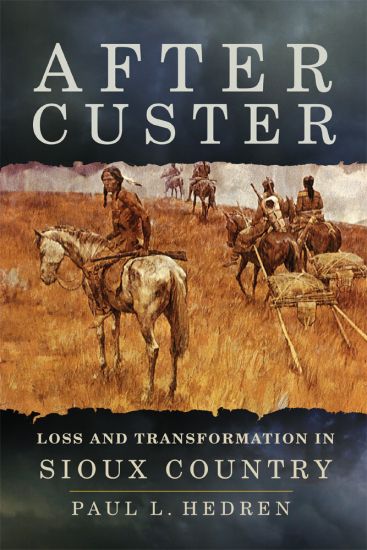
After Custer

After Custer

Paul L. Hedren

University of Oklahoma Press
2018
nidottu
Between 1876 and 1877, the U.S. Army battled Lakota Sioux and Northern Cheyenne Indians in a series of vicious conflicts known today as the Great Sioux War. After the defeat of Custer at the Little Big Horn in June 1876, the army responded to its stunning loss by pouring fresh troops and resources into the war effort. In the end, the U.S. Army prevailed, but at a significant cost. In this unique contribution to American western history, Paul L. Hedren examines the war's effects on the culture, environment, and geography of the northern Great Plains, their Native inhabitants, and the Anglo-American invaders.As Hedren explains, U.S. military control of the northern plains following the Great Sioux War permitted the Northern Pacific Railroad to extend westward from the Missouri River. The new transcontinental line brought hide hunters who targeted the great northern buffalo herds and ultimately destroyed them. A de-buffaloed prairie lured cattlemen, who in turn spawned their own culture. Through forced surrender of their lands and lifeways, Lakotas and Northern Cheyennes now experienced even more stress and calamity than they had endured during the war itself. The victors, meanwhile, faced a different set of challenges, among them providing security for the railroad crews, hide hunters, and cattlemen.Hedren is the first scholar to examine the events of 1876-77 and their aftermath as a whole, taking into account relationships among military leaders, the building of forts, and the army's efforts to memorialize the war and its victims. Woven into his narrative are the voices of those who witnessed such events as the burial of Custer, the laying of railroad track, or the sudden surround of a buffalo herd. Their personal testimonies lend both vibrancy and pathos to this story of irreversible change in Sioux Country.
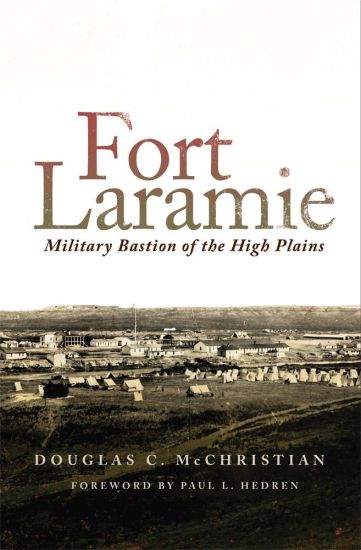
Fort Laramie

Fort Laramie

Douglas C. McChristian; Paul L. Hedren

University of Oklahoma Press
2017
nidottu
Of all the U.S. Army posts in the West, none witnessed more history than Fort Laramie, positioned where the northern Great Plains join the Rocky Mountains. From its beginnings as a trading post in 1834 to its abandonment by the army in 1890, it was involved in the buffalo hide trade, overland migrations, Indian wars and treaties, the Utah War, Confederate maneuvering, and the coming of the telegraph and first transcontinental railroad.Douglas C. McChristian has written the first complete history of Fort Laramie, chronicling every critical stage in its existence, including its addition to the National Park System. He draws on an extraordinary array of archival materials-including those at Fort Laramie National Historic Site-to present new data about the fort and new interpretations of historical events.Emphasizing the fort's military history, McChristian documents the army's vital role in ending challenges posed by American Indians to U.S. occupation and settlement of the region, and he expands on the fort's interactions with the many Native peoples of the Central Plains and Rocky Mountains. He provides a particularly lucid description of the infamous Grattan fight of 1854, which initiated a generation of strife between Indians and U.S. soldiers, and he recounts the 1851 Horse Creek and 1868 Fort Laramie treaties.Meticulously researched and gracefully told, this is a long-overdue military history of one of the American West's most venerable historic places.
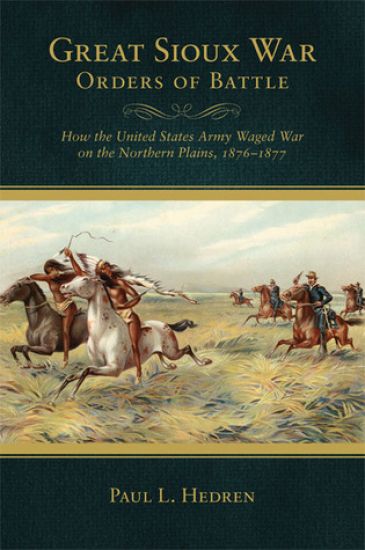
Great Sioux War Orders of Battle

Great Sioux War Orders of Battle

Paul L. Hedren

University of Oklahoma Press
2012
nidottu
Lasting nearly two years, the Great Sioux War pitted almost one-third of the U.S. Army against Lakota Sioux and Northern Cheyennes. By the time it ended, this grueling war had played out on twenty-seven different battlefields scattered across five states, resulted in hundreds of casualties, cost millions of dollars, and transformed the landscape and the lives of survivors on both sides. It also entrenched a view of the army as largely inept.In this compelling sourcebook, Paul Hedren uses extensive documentation to demonstrate that the American army adapted quickly to the challenges of fighting this unconventional war and was more effectively led and better equipped than is customarily believed. While it lost at Powder River and at the Little Big Horn, it did not lose the Great Sioux War.In the first part of this volume, Hedren considers concepts of doctrine, training, culture, and matériel to aid understanding of the army's structure and disposition. In part two he dissects the twenty-eight Great Sioux War deployments in chronological order, including documentation of command structures, regiments, and companies employed. In the concluding section, the author addresses how an otherwise sound American army was defeated in two battles and nearly lost a third. The book also features seven helpful appendices, a glossary, and an oversized map showing forts, encampments, and battle sites.By expanding his purview to encompass all of the war's battles - along with troop movements, strategies, and tactics - Hedren offers an authoritative account of the conduct of U.S. forces in a campaign all too frequently misunderstood.
Stricken Field

Stricken Field

Jerome A. Greene; Paul L. Hedren

University of Oklahoma Press
2008
sidottu
The Little Bighorn Battlefield National Monument is the site of one of America's most famous armed struggles, but the events surrounding Custer's defeat there in 1876 are only the beginning of the story. As park custodians, American Indians, and others have contested how the site should be preserved and interpreted for posterity, the Little Bighorn has turned into a battlefield in more ways than one. In Stricken Field, one of America's foremost military historians offers the first comprehensive history of the site and its administration in more than half a century.Jerome A. Greene has produced a compelling account of one of the West's most hallowed and controversial attractions, beginning with the battle itself and ending with the establishment of an American Indian memorial early in the twenty-first century. Chronicling successive efforts of the War Department and the National Park Service to oversee the site, Greene describes the principal issues that have confounded its managers, from battle observances and memorials to ongoing maintenance, visitor access, and public use.Stricken Field is a cautionary tale. Greene elucidates the conflict between the Park Service's dual mission to provide public access while preserving the integrity of a historical resource. He also traces the complex events surrounding the site, including Indian protests in the 1970s and 1980s that ultimately contributed to the 2003 dedication of a monument finally recognizing the Lakotas, Northern Cheyennes, and other American Indians who fought there.
Army Architecture in the West

Army Architecture in the West

Alison K. Hoagland; Paul L. Hedren

University of Oklahoma Press
2004
sidottu
During the nineteenth century, the U.S. military built numerous forts across the country as it stationed more and more troops west of the Mississippi. When most people think about military forts in the American West, they imagine imposing strongholds, meccas of defense enclosed by high, palisaded walls. This popular view, however, is far from reality.In Army Architecture in the West, Alison K. Hoagland dispels the myth that all western forts were uniform structures of military might churned out according to a master set of plans authorized by army officials in Washington, D.C. Instead, by examining three exemplary Wyoming forts, Hoagland reveals that widely varying architectural designs were used to construct western forts.With more than 120 illustrations, Army Architecture in the West offers a new way of using architecture to gain insight into the role of the army in the American West. By focusing on the tangible remains of the army's presence in the West, Hoagland presents a new vision of American military history.
The Exploits of Ben Arnold

The Exploits of Ben Arnold

Lewis F. Crawford; Paul L. Hedren

University of Oklahoma Press
2000
nidottu
Ben Arnold (Connor), soldier, gold-seeker, bullwhacker, scout, hunter, cowboy, trader, miner, interpreter, and homesteader, epitomized the restless frontiersman. Through Arnold's recollections, the reader can experience life in the post-Civil War West.""The young Indians did not want to part with the Black Hills at any price, and not until the latter part of September did the treaty finally get under way. The treaty was attended by many renowned chiefs and their prominent followers. They were suspicious of the whites and it seemed evident from the first that the conference would not be able to accomplish its purpose-the bloodless acquisition of the Black Hills. Fortunately for me I had brought over the mail from Running Water and had the opportunity of hearing the treaty. I had given out beef issues to every agency represented and interested in the Black Hills. I knew the chiefs and leading men in every Sioux tribe and was able to converse with them without the necessity of an interpreter.... The situation was so tense that soldiers were sent over from Fort Robinson. Bloodshed seemed eminent. Had a gun been accidentally discharged, the life of every white man present would have been snuffed out instantly.""""Arnold was a soldier in the Civil War, deserted on his second enlistment, and re-enlisted under an assumed name for service on the western Indian Frontier. On his way west, he helped to chase the guerrilla Quantrill, saw the smoke of burning Lawrence, traversed the Oregon Trail, and tarried by the way at Fort Kearney, Doby Town, Julesburg, and Fort Laramie. Stationed as a military guard on the telegraph line west of Laramie, Arnold herded horses, hunted bear, became acquainted with Joe Slade and other notorious plainsmen, and saw something of Brigham Young's Destroying Angels. Deserting again, Arnold went to the Snake River, across which he helped to ferry the ceaseless western-bound horde. Stampeding to Virginia City, he described the great Montana gold rush. He visited every trading post along the Missouri and became acquainted with all the characters of note, both white and Indian. Married to an Indian woman, he became skilled in Indian language and customs, took part as interpreter in the making of several treaties, and served as dispatch bearer in the Crook campaign."" - Horace Bagley, North Dakota Historical Quarterly
Fort Laramie and the Great Sioux War

Fort Laramie and the Great Sioux War

Paul L. Hedren

University of Oklahoma Press
1998
nidottu
Founded in 1834 on the high plains of present-day eastern Wyoming. Fort Laramie evolved into an organizational hub and chief supply center for the U.S. Army in its campaigns against the Sioux and Cheyenne Indians. Fort Laramie and the Great Sioux War focuses on a crucial year in the history of the fort, 1876. That was the year of General George Crook's Big Horn; the Black Hills gold rush; and chaos at the Red Cloud and Spotted Tail Indian agencies. Paul Hedren draws upon official army records, diaries, and journals to illuminate a fort-based history of the Great Sioux War, and for this edition he also provides a new preface.