Kirjojen hintavertailu. Mukana 12 101 209 kirjaa ja 12 kauppaa.

Kirjailija

Paul Lambert

Kirjat ja teokset yhdessä paikassa: 28 kirjaa, julkaisuja vuosilta 2011-2026, suosituimpien joukossa Ne Sautez Pas, Construisez. Vertaile teosten hintoja ja tarkista saatavuus suomalaisista kirjakaupoista.

28 kirjaa

Kirjojen julkaisuhaarukka 2011-2026.

International Handbook of Social Media Laws

International Handbook of Social Media Laws

Paul Lambert

BLOOMSBURY PUBLISHING PLC
2026
nidottu
“In one wide-ranging volume, Lambert and the country reporters demonstrate that law can not only keep up with technological change, but can in fact stay well ahead by anticipating upcoming questions. This comprehensive comparative reference will be invaluable for lawyers and students.” (Professor Joshua Fairfield. Washington and Lee University School of Law, Review of a previous edition) Bringing together a global team of authors, the International Handbook of Social Media Laws covers the law relating to social media across 34 countries in total. From influential social media defamation cases in Australia, to tweeting from court, and regulations enforced by the UK’s Online Safety Act 2023, this book clearly articulates the main legal issues and developments across various legal jurisdictions, to ensure a company’s social media presence is fully compliant with the law of each country. The third edition has been fully updated to incorporate new criminal and civil case law, and covers topics including: - Online abuse, online bullying and cyberbullying laws - Laws or rules specific to children and social media - Bans or restrictions on the use of, or access to, the internet or social media, including the influential TikTok, Inc. v. Garland case in the US - Use of social media as evidence in courts - Hacking and data breach laws. Contributors to the volume each provide coverage of their own country, ensuring the volume is both authoritative and practical. Countries represented include: Argentina, Australia, Belgium, Brazil, Bulgaria, China, Czech Republic, Denmark, El Salvador, Estonia, Finland, France, Germany, Greece, Hungary, India, Ireland, Italy, Malta, Mexico, New Zealand, Norway, Senegal, Serbia, Singapore, Slovenia, South Africa, Spain, Sweden, Switzerland, Taiwan, United Kingdom, United States and Uruguay. This title is included in Bloomsbury Professional's Intellectual Property and IT online service.

Ne Sautez Pas, Construisez

Ne Sautez Pas, Construisez

Paul Lambert

CHANTAL TREMBLAY
2026
pokkari
Tu connais cette boule au ventre du dimanche soir ? Ce job autrefois r v qui est devenu une cage dor e, confortable mais touffante ? Tu es comp tent(e), fiable, appr ci (e)... mais profond ment insatisfait(e). Coinc (e) entre une stabilit qui te vide de ton nergie et la peur paralysante de tout quitter d'un coup. Et si le probl me n' tait pas toi ? Et si ce n' tait pas une question de courage ? Et si le choix n' tait pas "endurer ou sauter" ? Ce livre t'offre une troisi me voie: construire. Ne Sautez Pas, Construisez propose une m thode concr te, progressive et s curisante - inspir e de la pens e ing nieur - pour b tir pierre par pierre un pont solide vers une carri re align e avec qui tu es. Sans prise de risque inutile. Sans saut dans le vide. Sans boule au ventre. Dans ce guide clair et structur , tu vas d couvrir: - La m thode de l'ing nieur: un plan en 8 phases pour concevoir ta transition sans danger. - L'audit d' nergie personnel: identifier ce qui te nourrit vraiment, au-del de tes comp tences. - Les entretiens exploratoires: obtenir informations et conseils sans jamais demander un job. - Le pouvoir du side project: tester une nouvelle voie le week-end, avant la moindre d cision. - Comment r crire ton CV et ton LinkedIn pour la carri re que tu vises vraiment. - Le pitch de reconversion: une structure simple pour raconter ton changement avec clart et impact. Ce livre te transforme d'ind cis paralys en b tisseur strat gique. Tu ne subiras plus ta carri re: tu vas la concevoir, la planifier et la construire. Arr te de regarder le vide. Prends ta caisse outils. Et commence b tir ton pont, d s aujourd'hui.
Gringras: The Laws of the Internet

Gringras: The Laws of the Internet

Paul Lambert

BLOOMSBURY PUBLISHING PLC
2025
sidottu
Gringras: The Laws of the Internet tackles the legal issues arising from the internet in a clear, user friendly way. The book examines the serious legal, policy and societal issues surrounding the internet, including intellectual property, online abuse, the real net/dark net, VAT and taxation, competition, privacy, data protection, security, breaches, big data, AI, the online Cloud, the rapidly evolving Internet of Things, crime, crowd activities, internet freedom and internet currencies.The seventh edition keeps pace with this fast-moving field through numerous new practical examples, and coverage of court cases and ICO complaint cases, and updates to legislation*. Revisions include:- New analysis of impact of previously decided cases- The Digital Operational Resilience Act (DORA) - UK IPO address for service changes - The Data Protection and Digital Information BillThis title is included in Bloomsbury Professional's Intellectual Property and IT online service.
Alive

Alive

Paul Lambert

LID Publishing
2025
nidottu
Our world is a rich and dynamic environment in which life moves through seasons and evolves over time. Our political, societal and economic life is permeated with major trends and movements affecting our lives and societies. However, in companies, this level of external disruption has been addressed through relatively conventional and static ways of organising. This original book offers an alternative to this stalemate through a fundamental shift in mindset. Organizations, like people, need to be seen as living, evolving organisms resulting in different ways of structuring and leading companies. The book is based on a living model of organization based on a clear Purpose expressed through physical, emotional and cognitive characteristics – reflecting the people who make up our companies. Written by International Consulting Director and Business School Lecturer, Paul Lambert, this book includes powerful and detailed examples throughout. These include Nissan, Apple, Haier, Buurtzorg, the Hoxby Collective, ChildFund International (humanitarian), FAVI Automotive, Barack Obama’s campaign organisation, a global oil and gas firm and an international Accountancy Firm. Application exercises and a summary of key chapter points allow the reader to immediately apply the insights to their own business.
DORA: Interpreting the EU's Digital Operational Resilience Act
The Digital Operational Resilience Act (DORA) aims to strengthen the ICT security of financial entities and ensure the resilience of the financial sector in the event of cyber-attacks or other digital disruption. DORA: Interpreting the EU’s Digital Operational Resilience Act is a definitive and detailed handbook, covering the legislative and compliance requirements. Split into two parts, this book provides an in-depth guide to DORA, whilst also examining the most recent updates and current practical issues. The book covers the various new and detailed reporting obligations that are created, alongside: - Increasing different types of IT security - Digital operational resilience (which is wider than just security) - Boards, roles and responsibilities - ICT risk management frameworks - Digital operational resilience testing and penetration testing and assessing - Patching and vulnerabilities - Modern and legacy systems - Identification, protection, prevention, and detection - Response, recovery, and backups - Third party service providers and dependencies - Crisis communication responses, training, learning, and evolving - Liability, investigations, enforcement, costs, and penalties The guide is essential reading for those working in financial services, insurance and ICT, alongside legal professionals and industry regulators.This title is included in Bloomsbury Professional's Intellectual Property and IT online service.
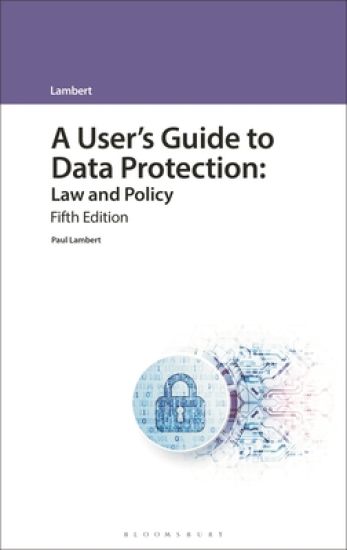
A User's Guide to Data Protection

A User's Guide to Data Protection

Paul Lambert

BLOOMSBURY PUBLISHING PLC
2023
nidottu
Are you ready if a client wishes to make a data protection claim, or needs to defend one?This title is a first port of call, providing clear guidance through the complex web of data protection issues and regulation.The Fifth Edition includes analysis of new cases and in-depth coverage of:- The Data Protection and Digital Information (No. 2) Bill- The Online Safety Bill - New data fines - New official documentation from the Department for Digital, Culture, Media & Sport, and the Information Commissioner’s Office- New EU guidance from the European Data Protection Board and the European Data Protection Supervisor - New EU data transfer rules, including those concerning controllers and processors- Developing legal, practice and technology issuesThis is an essential guide for IP practitioners, data protection and compliance officers, HR professionals, local authorities, as well as for academics and students of this area of the law.This title is included in Bloomsbury Professional's Intellectual Property and IT online service.
Data Protection and Data Transfers Law

Data Protection and Data Transfers Law

Paul Lambert

BLOOMSBURY PUBLISHING PLC
2023
sidottu
This title brings together the different aspects of the transfer landscape and outlines the separate rules, all in one accessible place. Data transfers (under data protection rules) are one of the most discussed areas of data protection, and are currently undergoing significant change. Data transfers are relied on as an essential function of national and international trade, business, and internet use. It is essential for practitioners to keep abreast of the new data transfer rules and changes for their clients. Following on from Brexit, professionals now have more than one set of transfer rules to comply with, including:- The different data transfer channels- New Adequacy Decision- New Standard Contract rules- New UK Contract rules- Consultation process on future laws- New proposed UK data laws- Data law and data transfer changes- Practical and commercial considerationsThere are more UK data transfer channels and rules to consider now than at any time previously. The UK data transfer regime is now more complex than the EU data transfer regime, necessitating significant extra diligence by commercial entities. This book is designed to assist UK and international law professionals, in-house data protection professionals and a wide range of other interested readers on the increasingly complex area of data rules.This title is included in Bloomsbury Professional's Intellectual Property and IT online service.
The Right to be Forgotten

The Right to be Forgotten

Paul Lambert

BLOOMSBURY PUBLISHING PLC
2022
sidottu
Longlisted for the 2022 Inner Temple Main Book PrizeThe Right to be Forgotten is one of the most publicised areas of the GDPR and has received massive worldwide publicity following judicial and legal developments in Europe. Individual data regulators have increased powers and importance in dealing with RtbF rights for individuals, and it is more important than ever for them to be up to date. The new, second edition, is fully updated to include:- the increasing importance of the role of RtbF in relation to media content (newspapers and television media in particular). - the evolving jurisprudence in terms of RtbF generally, especially in light of increased understanding of the GDPR RtbF and the landmark Google Spain RtbF case. - the recent Google France case. - the potential for group actions, class actions, and litigation funding, in relation to RtbF issuesThis title is included in Bloomsbury Professional's Intellectual Property and IT online service.
Gringras: The Laws of the Internet

Gringras: The Laws of the Internet

Paul Lambert

Bloomsbury Professional
2022
sidottu
The free flow of information and services around the world via the Internet constantly creates new issues and problems, such as rules of jurisdiction and applicable law, how new products and services should be regulated and many more.The sixth edition is updated with numerous new practical examples, cases (court cases and ICO complaint cases), laws and developments, including the following:· new Brexit legislation across all areas from January 2021 (post Brexit on 31 December 2020);· new Data Protection Act replacing Data Protection Act 2018;· new ePrivacy Regulations (PECR);· new ePrivacy Regulation (EU);· transition of EU registered trade marks and designs into new UK IP rights from 1 January 2021 creating new UK IP rights and new UK rightsholders;· changes in seeking IP protection in EU for UK residents;· changes in UK rightsholders seeking to take infringement actions outside of UK;· status of unregistered IP rights post Brexit;· different impacts on different IP rights;· status of UK commercial contracts, interpretation, and enforceability,· status of pre-existing contracts created prior to Brexit and which refer to EU and UK being in EU;· status, extent and scope of new contracts after Brexit;· UK torts and insurance law as impacted by Brexit;· changes in crime, data retention and international issues;· taxation changes, international relations, international Treaties, and EU· competition, internet, and regulator changes – including Brexit;· new UK caselaw;· news UK regulator cases, decision, sanctions and fines;· new EU caselaw.This title is included in Bloomsbury Professional's Intellectual Property and IT online service.
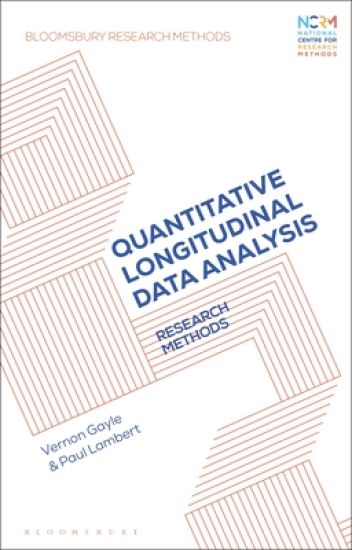
Quantitative Longitudinal Data Analysis

Quantitative Longitudinal Data Analysis

Vernon Gayle; Paul Lambert

Bloomsbury Academic
2020
sidottu
First published Open Access under a Creative Commons license as What is Quantitative Longitudinal Data Analysis?, this title is now also available as part of the Bloomsbury Research Methods series.Across the social sciences, there is widespread agreement that quantitative longitudinal research designs offer analysts powerful scientific data resources. But, to date, many texts on analysing longitudinal social analysis surveys have been written from a statistical, rather than a social science data analysis perspective and they lack adequate coverage of common practical challenges associated with social science data analyses. This book provides a practical and up-to-date introduction to influential approaches to quantitative longitudinal data analysis in the social sciences. The book introduces definitions and terms, explains the relative attractions of such a longitudinal design, and offers an introduction to the main techniques of analysis, explaining their requirements, statistical properties and their substantive contribution.
Quantitative Longitudinal Data Analysis

Quantitative Longitudinal Data Analysis

Vernon Gayle; Paul Lambert

Bloomsbury Academic
2020
nidottu
First published Open Access under a Creative Commons license as What is Quantitative Longitudinal Data Analysis?, this title is now also available as part of the Bloomsbury Research Methods series.Across the social sciences, there is widespread agreement that quantitative longitudinal research designs offer analysts powerful scientific data resources. But, to date, many texts on analysing longitudinal social analysis surveys have been written from a statistical, rather than a social science data analysis perspective and they lack adequate coverage of common practical challenges associated with social science data analyses. This book provides a practical and up-to-date introduction to influential approaches to quantitative longitudinal data analysis in the social sciences. The book introduces definitions and terms, explains the relative attractions of such a longitudinal design, and offers an introduction to the main techniques of analysis, explaining their requirements, statistical properties and their substantive contribution.
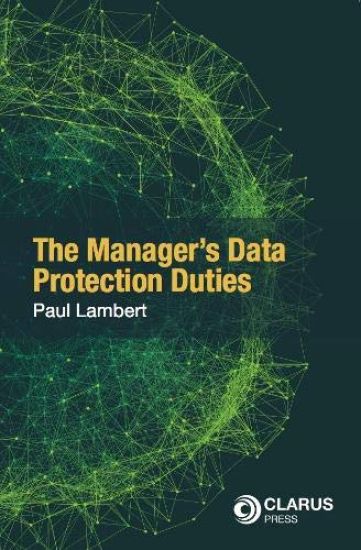
The Manager's Data protection Duties

The Manager's Data protection Duties

Paul Lambert

Clarus Press Ltd
2020
nidottu
Each manager of a department, or a specific responsibility, must assess the data issues and risks as are relevant to their individual department. The manager must assess what data exists; whether it is permitted for use; filter out (including deletion of) data that is over-broad or otherwise not permitted; and ensuring procedures to identify and eliminate processes that open up the risk of future unjustified data collections. While other agents of the company or organisation will have responsibilities in relation to data protection compliance, the manager of a department must also engage in best practices that focus on the data protection obligations of the department. Data protection compliance requires not just adherence to specific data protection legal provisions, but a full understanding of what data exists in the department, company or organisation, where it is located and for what purpose. The personnel manager needs to be satisfied that all of the internal personnel records are fully data protection complaint. Just one of the dangers is that these issues are not addressed in appropriate reviews, contracts and policies. Another risk gap is that there may be policies, etc., but the manager omitted to appropriately include other non full time employees, such as those whom may be contractors, temporary staff, interns, or family members. The marketing manager needs to be satisfied that all of the current and proposed marketing activities, customer lists, and user lists are all compliant with the new data protection rules. Organisations should have undergone an A – Z review of data protection compliance in the lead up to the new EU General Data Protection Regulation (GDPR) go-live date. In many organisations there will be many activities and actions which carried over from the GDPR review. These need to continue to be actioned. In addition, there is also a new Data Protection Act 2018 to consider. Organisations should also have appointed a new Data Protection Officer (DPO) to assist in these efforts and to be the official point of contact internally and externally (for data protection supervisory authorities and for customers and users). Critically, all Managers need to be aware of data protection compliance and related issues within their own Department. The Manager has duties and responsibilities. The Manager cannot simply assume that someone else will do it, or that all data protection issues for their Department are already being dealt with by the DPO or some other Department.
Social Inequalities and Occupational Stratification

Social Inequalities and Occupational Stratification

Paul Lambert; Dave Griffiths

Palgrave Macmillan
2020
nidottu
This book explores how structures of social inequality are linked to the social connections that people hold. The authors focus upon occupational inequalities where they see, for example, that the typical friendship patterns of people from one occupation are often very different to those of people from another. Social Inequalities and Occupational Stratification leverages empirical data about differences in social connections to chart structures of social distance and social inequality. Several of its chapters provide coverage of the long-standing Cambridge Social Interaction and Stratification scale (CAMSIS) project and its approach to analysing social interaction patterns in terms of a single dimension related to social inequality.
The Data Protection Officer

The Data Protection Officer

Paul Lambert

CRC Press
2020
nidottu
The EU's General Data Protection Regulation created the position of corporate Data Protection Officer (DPO), who is empowered to ensure the organization is compliant with all aspects of the new data protection regime. Organizations must now appoint and designate a DPO. The specific definitions and building blocks of the data protection regime are enhanced by the new General Data Protection Regulation and therefore the DPO will be very active in passing the message and requirements of the new data protection regime throughout the organization. This book explains the roles and responsiblies of the DPO, as well as highlights the potential cost of getting data protection wrong.
Understanding the New European Data Protection Rules
Compared to the US, European data and privacy protection rules seem Draconian. The European rules apply to any enterprise doing business in the EU. The new rules are far more stringent than the last set. This book is a quick guide to the directives for companies, particularly US, that have to comply with them. Where US organizations and businesses who collect or receive EU personal data fail to comply with the rule, the bottom line can suffer from very significant official fines and penalties, as well as from users, customers or representative bodies to pursuing litigation. This guide is essential for all US enterprises who directly or indirectly deal with EU personal data.
Data Protection, Privacy Regulators and Supervisory Authorities
Data Protection, Privacy Regulators and Supervisory Authorities explores and details the establishment, rules, and powers of data protection regulators and supervisory authorities. It also discusses rights issues (pursuing and defending) as well as the developing area of fines and contestability. Data protection and privacy are arguably the most significant developing areas of law and policy. New regulations span from the GDPR (EU) to the CCPA (California), and other new rules internationally. How the new data protection rules operate on a day-to-day basis is linked to the activities, functions and orders of data protection regulators and supervisory authorities. This brand new title includes coverage of: - The establishment and wider powers of the new data regulators - The new sanctions, orders, penalties and powers to enforce compliance - The new obligations to contact data regulators even before data collections - The detailed GDPR and DPA powers and requirements - Recent fines, penalties and case law including CJEU This book is essential for any entity dealing with the new data protection and privacy issues as no company, organisation nor their internal or external advisors, can ignore these new regulators, nor fully understand the new data protection and privacy compliance landscape without a detailed appreciation of these regulators. This title is included in Bloomsbury Professional's Intellectual Property and IT online service.

Social Inequalities and Occupational Stratification

Social Inequalities and Occupational Stratification

Paul Lambert; Dave Griffiths

Palgrave Macmillan
2018
sidottu
This book explores how structures of social inequality are linked to the social connections that people hold. The authors focus upon occupational inequalities where they see, for example, that the typical friendship patterns of people from one occupation are often very different to those of people from another. Social Inequalities and Occupational Stratification leverages empirical data about differences in social connections to chart structures of social distance and social inequality. Several of its chapters provide coverage of the long-standing Cambridge Social Interaction and Stratification scale (CAMSIS) project and its approach to analysing social interaction patterns in terms of a single dimension related to social inequality.
Understanding the New European Data Protection Rules
Compared to the US, European data and privacy protection rules seem Draconian. The European rules apply to any enterprise doing business in the EU. The new rules are far more stringent than the last set. This book is a quick guide to the directives for companies, particularly US, that have to comply with them. Where US organizations and businesses who collect or receive EU personal data fail to comply with the rule, the bottom line can suffer from very significant official fines and penalties, as well as from users, customers or representative bodies to pursuing litigation. This guide is essential for all US enterprises who directly or indirectly deal with EU personal data.
Data Protection Law in Ireland

Data Protection Law in Ireland

Paul Lambert

Clarus Press Ltd
2017
nidottu
Data Protection Law in Ireland: Sources and Issues is the most recent and up-to-date book on data protection in Ireland providing a comprehensive guide as to what data protection is and the implications and obligations for holders and subjects of such data. In 2016 data protection regulation has seen the most significant change in over twenty-one years.The Data Protection Directive is replaced in its entirety by the new General Data Protection Regulation. This affects all organisations and all individuals throughout the EU and Ireland. In addition to new and expanded rights and obligations, organisations must also engage Data Protection Officers, whom have significant responsibilities and independence.Some of the significant updates of Data Protection Law in Ireland: Sources and Issues, Second Edition include:The new Irish and EU data protection regime;New requirements of the General Data Protection Regulation (GDPR);New and enhanced rights for individuals;New detailed obligations for organisations;New principles, definitions, processing conditions and criteria;Increasing issues surrounding new types of data collections, business uses and new business models;The arrival of new technologies require particular compliance consideration in order to be lawful under the new data protection regime. Examples include new tracking and localisation services, new devices, new Apps, vehicles tracking, etc;Case law developments, for example: the right to be forgotten; Schrems EU-US Safe Harbour; DRI; Barbulescu; private investigators, Snowden issues, etc;Increasing litigation and prosecution of data protection breaches;The new tools of compliance, risk reduction, risk assessments including mandated reviews with the Data Protection Commissioner of risk-based proposed new services, and new Data Protection Impact Assessments;Data breaches and data loss (from Loyalty Build to Ashley Madison to Panama);Mandated notification of security data breaches;Employee monitoring and data protection;Significant new fines for data protection violations.Data Protection Law in Ireland: Sources and Issues, Second Edition, provides a detailed analysis of the new developments, procedures, rights and obligations.
The Data Protection Officer

The Data Protection Officer

Paul Lambert

CRC Press
2016
sidottu
The EU's General Data Protection Regulation created the position of corporate Data Protection Officer (DPO), who is empowered to ensure the organization is compliant with all aspects of the new data protection regime. Organizations must now appoint and designate a DPO. The specific definitions and building blocks of the data protection regime are enhanced by the new General Data Protection Regulation and therefore the DPO will be very active in passing the message and requirements of the new data protection regime throughout the organization. This book explains the roles and responsiblies of the DPO, as well as highlights the potential cost of getting data protection wrong.