

Kirjailija
Paul Lewis
Kirjat ja teokset yhdessä paikassa: 31 kirjaa, julkaisuja vuosilta 1989-2026, suosituimpien joukossa Cthulhu Cymraeg The Night Country. Vertaile teosten hintoja ja tarkista saatavuus suomalaisista kirjakaupoista.
31 kirjaa
Kirjojen julkaisuhaarukka 1989-2026.


THEY STEAL IDENTITIES.THEY BREAK THE LAW.THEY SLEEP WITH THE ENEMY.THEY ARE THE UNDERCOVER POLICE.This is the breathtaking story of forty years of state espionage revealed by award-winning journalists Rob Evans and Paul Lewis.

Taking Your Life In A New Direction-An Eclectic Motivational Guide
Paul Lewis
Createspace Independent Publishing Platform
2013
nidottu


Givers, Takers And Other Kinds of Lovers
Josh McDowell; Paul Lewis
Christian Focus Publications Ltd
2007
pokkari
This book bypasses vague generalities about love and sex and answers basic questions such as:Whatever happened to sexual freedom?We are not as liberated as people think we are. People discover that instant sex is about as gratifying as a sneeze.What is true love like?There are three kinds of love: love if, Love because and love period. If you have not experienced love period then it is likely that you are hoping that someday you will.What is your most important sex organ? Sex is never just a physical act because the physical aspect of sex almost always works. If sex goes wrong then any malfunction is usually in your mind - so stop treating sex as if if it is just a physical act - it's more than that. Your most important sexual organ is your MIND.Do men respond differently than women?Women should know that men may experience high sexual feelings even before they do... and men need to realise that a women can be turned on through touch and kind words.As you can see, if you are looking for straight answers about God's plan for the love act and sexuality then Givers, takers, and other kinds of lovers was written for you.

What do Jon Stewart, Freddy Krueger, Patch Adams, and George W. Bush have in common? As Paul Lewis shows in Cracking Up, they are all among the ranks of joke tellers who aim to do much more than simply amuse. Exploring topics that range from the sadistic mockery of Abu Ghraib prison guards to New Age platitudes about the healing power of laughter, from jokes used to ridicule the possibility of global climate change to the heartwarming performances of hospital clowns, Lewis demonstrates that over the past thirty years American humor has become increasingly purposeful and embattled. Navigating this contentious world of controversial, manipulative, and disturbing laughter, Cracking Up argues that the good news about American humor in our time—that it is delightful, relaxing, and distracting—is also the bad news. In a culture that both enjoys and quarrels about jokes, humor expresses our most nurturing and hurtful impulses, informs and misinforms us, and exposes as well as covers up the shortcomings of our leaders. Wondering what’s so funny about a culture determined to laugh at problems it prefers not to face, Lewis reveals connections between such seemingly unrelated jokers as Norman Cousins, Hannibal Lecter, Rush Limbaugh, Garry Trudeau, Jay Leno, Ronald Reagan, Beavis and Butt-Head, and Bill Clinton. The result is a surprising, alarming, and at times hilarious argument that will appeal to anyone interested in the ways humor is changing our cultural and political landscapes.

Political Parties in Post-Communist Eastern Europe is the first textbook to survey the course of party developments in eastern Europe as a whole in the post-Communist period. This book relates the specifics of the post-communist situation to the broader picture of the early stages of party development in western Europe and also to contemporary models of party organisation in established democracies.The book includes:· a brief historical introduction to the context of post-communist change· the process of competitive party formation and democratic elections· the development of independent parties; their ideologies, and electoral volatility· the structure and level of organisation developed by new parties· an analysis of stable party systems which have emerged in eastern Europe and the contribution they make to emerging democracies in the regionParty Politics in Post-Communist Eastern Europe will be a comprehensive and invaluable resource, accessible to undergraduates of politics and European studies, as well as the non-specialist reader.

Political Parties in Post-Communist Eastern Europe is the first textbook to survey the course of party developments in eastern Europe as a whole in the post-Communist period. This book relates the specifics of the post-communist situation to the broader picture of the early stages of party development in western Europe and also to contemporary models of party organisation in established democracies.The book includes:· a brief historical introduction to the context of post-communist change· the process of competitive party formation and democratic elections· the development of independent parties; their ideologies, and electoral volatility· the structure and level of organisation developed by new parties· an analysis of stable party systems which have emerged in eastern Europe and the contribution they make to emerging democracies in the regionParty Politics in Post-Communist Eastern Europe will be a comprehensive and invaluable resource, accessible to undergraduates of politics and European studies, as well as the non-specialist reader.

This book is a practical guide to the entire area of redundancy management. It will help managers handle redundancies in the most effective way, so avoiding industrial and legal challenges. It shows how employers can take a strategic approach to redundancy and how redundancy can be used to improve business performance. The Successful Management of Redundancy pinpoints the sorts of policies which are likely to pave the way for organizational change, be acceptable to employees and meet the various legal requirements. It integrates law, good practice and business policy and deals with issues such as: the avoidance of redundancy redundancy procedures (including consultation with trade unions) redundancy payments when and how to use voluntary redundancy selection for redundancy on grounds of business need rather than length of service the use of redundancy as a means of increasing productivity redundancy in the context of insolvency the realtionship between redundancy and business transfers the development of a strategic approach to redundancy New EC legal requirements are described and conclusions are drawn from a survey of how redundancy is managed in other countries. Practical guidance is given on how to resist an unfair redundancy claim at an industrial tribunal. Finally, a checklist for the management of redundancy is included, as are certain administrative details.
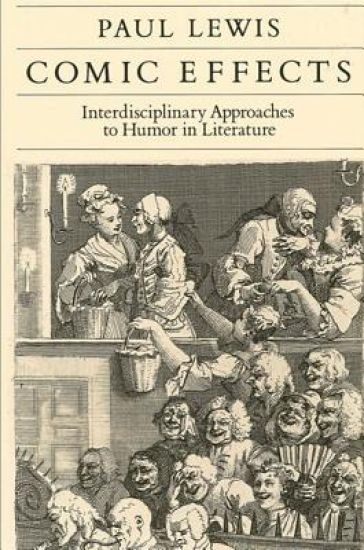
Lewis draws on both humor theories and research, arguing for the development of interdisciplinary methodologies in the study of literary humor. He demonstrates that the sociologist of humor and the comic playwright approach the same subject-humor in and between groups-with different tools, that writers of Bildungsromane and developmental psychologists share a common interest in the role of humor in maturation, and that the monsters that haunt the psyches of professional comedians can be useful in understanding the odd minglings of humor and fear in Gothic fiction. His treatment of writers who differ widely in their use of humor suggests that the complexity and diversity of humor make it a richly variable determinant of character, genre, and writer.