

Kirjailija
Paul M Hoskins
Kirjat ja teokset yhdessä paikassa: 9 kirjaa, julkaisuja vuosilta 2007-2020, suosituimpien joukossa Caleb. Vertaile teosten hintoja ja tarkista saatavuus suomalaisista kirjakaupoista.
Mukana myös kirjoitusasut: Paul M. Hoskins
9 kirjaa
Kirjojen julkaisuhaarukka 2007-2020.
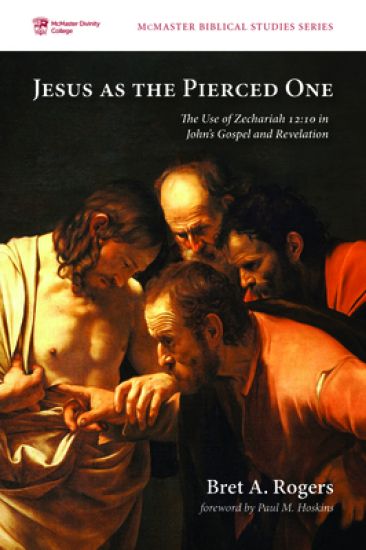
How can John use Zech 12:10 to explain both Jesus' first coming in humility (John 19:37) and Jesus' second coming in glory (Rev 1:7)? In this book, Rogers demonstrates how God's self-revelation in Jesus provides the key for understanding the fulfillment of Zech 12:10 in light of both John's high Christology and John's inaugurated and consummated eschatology. In contrast to previous approaches, Rogers proposes that John interprets Zech 12:10 not simply along a human, messianic axiom, but along a divine, messianic axiom. Moreover, by treating Zech 12:10, John 19:37, and Rev 1:7 in a single study, readers will better understand the unified narrative spanning the Testaments, the nature of Jesus' divine identity and mission in John's writings, and how Jesus' divine nature and mission compels the church to live between his two advents.
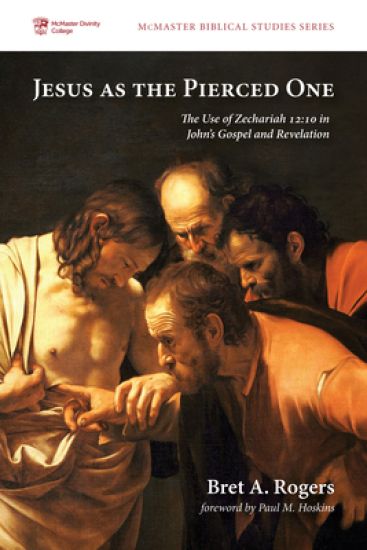
How can John use Zech 12:10 to explain both Jesus' first coming in humility (John 19:37) and Jesus' second coming in glory (Rev 1:7)? In this book, Rogers demonstrates how God's self-revelation in Jesus provides the key for understanding the fulfillment of Zech 12:10 in light of both John's high Christology and John's inaugurated and consummated eschatology. In contrast to previous approaches, Rogers proposes that John interprets Zech 12:10 not simply along a human, messianic axiom, but along a divine, messianic axiom. Moreover, by treating Zech 12:10, John 19:37, and Rev 1:7 in a single study, readers will better understand the unified narrative spanning the Testaments, the nature of Jesus' divine identity and mission in John's writings, and how Jesus' divine nature and mission compels the church to live between his two advents.

The Book of Revelation: A Theological and Exegetical Commentary
Paul M. Hoskins
Createspace Independent Publishing Platform
2017
nidottu


Jesus as the Fulfillment of the Temple in the Gospel of John
Paul M. Hoskins
Wipf Stock Publishers
2007
sidottu
This study examines John's portrayal of Jesus as the fulfillment and replacement of the Temple. It also shows how a traditional conception of typology can be helpful for understanding the nature of the relationship between Jesus and the Temple. Interpreters often associate John 1:14, 1:51, 2:18-22, and 4:20-24 with Jesus' replacement of the Temple. Based on these texts, one can already begin to see that he fulfills and replaces the Temple in that he is the new locus of God's presence, glory, revelation, and abundant provision for his people. In particular, John 2:18-22 clearly associates Jesus' role as the Temple with his death and resurrection. According to Isaiah, part of God's decisive action on behalf of his people, and for revealing himself to the nations, is the lifting up of the Temple above all other temples. In John, this expectation finds its fulfillment in Jesus. John's language of lifting up and glorification marks Jesus' death, resurrection, and exaltation as climactic events through which God lifts up and glorifies Jesus, the true Temple. Jesus' death, resurrection, and exaltation are also the means by which God provides for his people. Jesus offers his flesh and blood for the life of the world and sends the Spirit to enrich believers with the benefits of his sacrificial death. In doing so, he simultaneously fulfills prophecies and patterns associated with the Passover, Feast of Tabernacles, Feast of Dedication, and the Temple.
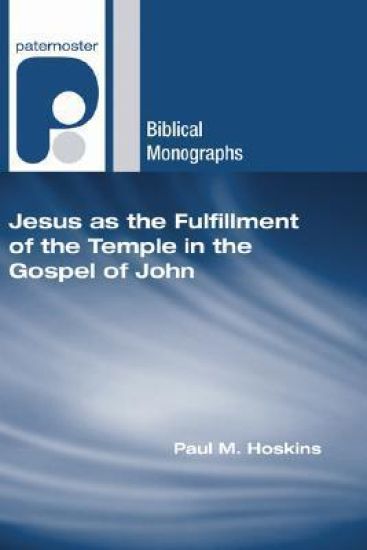
Jesus as the Fulfillment of the Temple in the Gospel of John
Paul M. Hoskins
Wipf Stock Publishers
2007
nidottu
This study examines John's portrayal of Jesus as the fulfillment and replacement of the Temple. It also shows how a traditional conception of typology can be helpful for understanding the nature of the relationship between Jesus and the Temple. Interpreters often associate John 1:14, 1:51, 2:18-22, and 4:20-24 with Jesus' replacement of the Temple. Based on these texts, one can already begin to see that he fulfills and replaces the Temple in that he is the new locus of God's presence, glory, revelation, and abundant provision for his people. In particular, John 2:18-22 clearly associates Jesus' role as the Temple with his death and resurrection. According to Isaiah, part of God's decisive action on behalf of his people, and for revealing himself to the nations, is the lifting up of the Temple above all other temples. In John, this expectation finds its fulfillment in Jesus. John's language of lifting up and glorification marks Jesus' death, resurrection, and exaltation as climactic events through which God lifts up and glorifies Jesus, the true Temple. Jesus' death, resurrection, and exaltation are also the means by which God provides for his people. Jesus offers his flesh and blood for the life of the world and sends the Spirit to enrich believers with the benefits of his sacrificial death. In doing so, he simultaneously fulfills prophecies and patterns associated with the Passover, Feast of Tabernacles, Feast of Dedication, and the Temple.