Kirjojen hintavertailu. Mukana 12 657 676 kirjaa ja 12 kauppaa.
Kirjailija
Paul Marshall
Kirjat ja teokset yhdessä paikassa: 21 kirjaa, julkaisuja vuosilta 2000-2024, suosituimpien joukossa Designing And Building Your Own Home - Revised Edition 2024. Vertaile teosten hintoja ja tarkista saatavuus suomalaisista kirjakaupoista.
Revised Edition 2021. In 2022, the government is providing funding and help to all prospective house builders. A Straightforward Guide to Designing and Building Your Own Home, Revised edition, will guide the reader through all of the stages involved in the process of self-building a home, from inception to completion.
Love and Stardust is a memoir and true love story. Dolly and Paul met in their teens, fell passionately in love, married at 21 and for fifty years shared what many considered a storybook marriage. Blessed in the art of love they used romance to shape their lives. Like most marriages, theirs did not escape untested. There were serious challenges along the way, yet together they never let anything alter their love for one another until one tragic day and with little warning, death took Dolly, nearly destroying Paul's desire to live. To go on without his constant lover was the greatest challenge he would ever face. This is a true story of unalterable love; heart breaking loss and the uphill mental struggle Paul battled before choosing life again.
In 10½ Lessons from Experience, Paul Marshall distils the experience of 35 years of investing, including over 20 years at Marshall Wace, the global equity hedge fund partnership. He describes the disconnect between academic theory and market practice, in particular the reality and persistence of 'skill' - the continuing ability of the best practitioners to beat the market. But he also underscores the prevalence of uncertainty and human fallibility, showing how a successful investment management business must steer a path which recognises both the persistence of skill and the pitfalls of cognitive bias, human fallibility and hubris.
When Paul Marshall began to pay attention to his dreams, he could not have anticipated the transformative experience that would follow. A tremendous expansion of consciousness exposed the insignificance of his everyday self but also revealed unsuspected depths of mind and hinted at a deeper self that holds the universe within. In The Shape of the Soul, Marshall—now a mysticism scholar—draws on personal experiences, along with a wealth of religious, philosophical, and scientific ideas, to explore this deeper self, sometimes experienced in mystical and near-death states as spherical in form. Drawing inspiration from the philosophers Plotinus and Leibniz, Marshall takes mind to be more fundamental than matter and views the basic units of nature as perceptual beings. We ourselves are such beings, striving for fulfilment in a long evolutionary journey of soul-making. Bringing together mysticism, philosophy, biology, and even some physics, The Shape of the Soul offers a deeply integrated vision of the self and the universe. Addressing the mind–body problem, the origin of the world, evolution, reincarnation, suffering, and the nature of God, Marshall delivers what will surely prove an intellectual classic.
This book sketches the contours of a vision that moves beyond the dominant paradigm or worldview that underlies and governs modernity (and postmodernity). It does so by drawing on the remarkable leap in human consciousness that occurred during the Axial Age and on a cross-pollination of what are arguably the three most comprehensive integrative metatheories available today: Complex thought, integral theory and critical realism – i.e. a complex integral realism. By deploying the three integrative metatheories this book recounts how the seeds of a number of biases within the Western tradition – analytical over dialectical, epistemology over ontology, presence over absence and exterior over interior – were first sown in axial Greece, later consolidated in European modernity and then challenged throughout the 20th century. It then discusses the remedies provided by the three integrative philosophies, remedies that have paved the way for a new vision. Outlining a ‘new axial vision’ for the twenty-first century which integrates the best of premodernity, modernity and postmodernity within a complex integral realist framework, this book will be of interest to students and scholars of the Axial Age, critical realism, integral theory and complex thought. It will also appeal to those interested in a possible integration of the insights and knowledge gleaned by science, spirituality and philosophy.
Anatomy and Physiology in Healthcare focuses on what healthcare students need to know about the biological principles which underpin the practice of healthcare. All healthcare students have to study anatomy and physiology. They often find it a challenging subject and struggle to see how the subject will link to their professional practice. This book is unique in that it integrates clinical cases with the essential biological facts to provide all students with a thorough understanding of how anatomy and physiology can be applied in healthcare. By using clinical cases throughout , the book helps the reader grasp the practical relevance of anatomy and physiology to decision-making and care delivery.The clinical cases have been carefully selected to reflect common conditions encountered in practice today, and the changing patterns of disease and healthcare.Clear high-quality full colour illustrations, links to appropriate web-based content, and self-assessment material make this the perfect, practical textbook for all healthcare students. Review: "This textbook presents anatomy and physiology in a fun and interactive way.... It is divided into 14 chapters and the way the authors have introduced the information gives it a modern twist. For example, instead of titling a chapter 'The reproductive system', it is called 'From one generation to the next'. ..... What works particularly well is the way the authors have used case studies that reflect the reality of the changing patterns of health and disease.... This book provides a good foundation in clinical application and it seeks to link theory to practice."; Nursing Standard, 27 September 2017, volume 32 number 5
The phrase "in-the-wild" is becoming popular again in the field of human-computer interaction (HCI), describing approaches to HCI research and accounts of user experience phenomena that differ from those derived from other lab-based methods. The phrase first came to the forefront 20-25 years ago when anthropologists Jean Lave (1988), Lucy Suchman (1987), and Ed Hutchins (1995) began writing about cognition being in-the-wild. Today, it is used more broadly to refer to research that seeks to understand new technology interventions in everyday living.A reason for its resurgence in contemporary HCI is an acknowledgment that so much technology is now embedded and used in our everyday lives. Researchers have begun following suit—decamping from their usability and living labs and moving into the wild; carrying out in-situ development and engagement, sampling experiences, and probing people in their homes and on the streets.The aim of this book is to examine what this new direction entails and what it means for HCI theory, practice, and design. The focus is on the insights, demands and concerns. But how does research in the wild differ from the other applied approaches in interaction design, such as contextual design, action research, or ethnography? What is added by labeling user research as being in-the-wild? One main difference is where the research starts and ends: unlike user-centered, and more specifically, ethnographic approaches which typically begin by observing existing practices and then suggesting general design implications or system requirements, in-the-wild approaches create and evaluate new technologies and experiences in situ(Rogers, 2012). Moreover, novel technologies are often developed to augment people, places, and settings, without necessarily designing them for specific user needs. There has also been a shift in design thinking. Instead of developing solutions that fit in with existing practices, researchers are experimenting with new technological possibilities that can change and even disrupt behavior. Opportunities are created, interventions installed, and different ways of behaving are encouraged. A key concern is how people react, change and integrate these in their everyday lives. This book outlines the emergence and development of research in the wild. It is structured around a framework for conceptualizing and bringing together the different strands. It covers approaches, methods, case studies, and outcomes. Finally, it notes that there is more in the wild research in HCI than usability and other kinds of user studies in HCI and what the implications of this are for the field.
This book sketches the contours of a vision that moves beyond the dominant paradigm or worldview that underlies and governs modernity (and postmodernity). It does so by drawing on the remarkable leap in human consciousness that occurred during the Axial Age and on a cross-pollination of what are arguably the three most comprehensive integrative metatheories available today: Complex thought, integral theory and critical realism – i.e. a complex integral realism. By deploying the three integrative metatheories this book recounts how the seeds of a number of biases within the Western tradition – analytical over dialectical, epistemology over ontology, presence over absence and exterior over interior – were first sown in axial Greece, later consolidated in European modernity and then challenged throughout the 20th century. It then discusses the remedies provided by the three integrative philosophies, remedies that have paved the way for a new vision. Outlining a ‘new axial vision’ for the twenty-first century which integrates the best of premodernity, modernity and postmodernity within a complex integral realist framework, this book will be of interest to students and scholars of the Axial Age, critical realism, integral theory and complex thought. It will also appeal to those interested in a possible integration of the insights and knowledge gleaned by science, spirituality and philosophy.
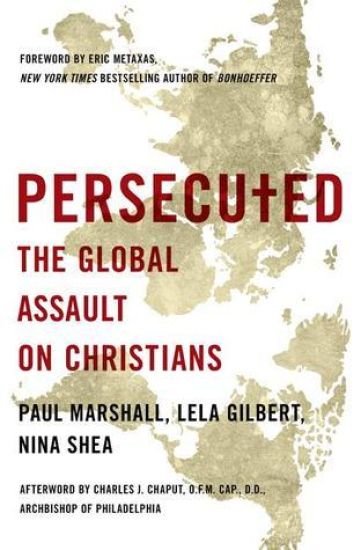
Christians are the world’s most widely persecuted religiousgroup, according to studiesby the Pew Research Center, Newsweek,and the Economist, among others.A woman is caught with a Bible and publicly shot to death.An elderly priest is abducted and never seen again. Three buses full ofstudents and teachers are struck by roadside bombs. These are not casualties ofa war. These are Christian believers being persecuted for their faith in thetwenty-first century. Many Americans do not understand that Christians today arevictims in many parts of the world. Even many Western Christians, who worshipand pray without fear of violent repercussions, are unaware that so manyfollowers of Christ live under governments and among people who are oftenopenly hostile to their faith. They think martyrdom became a rarity long ago. Persecuted soundlyrefutes these assumptions. This book offers a glimpse at the modern-day life ofChristians worldwide, recounting the ongoing attacks that rarely makeinternational headlines. As Western Christians pray for the future of Christ’schurch, it is vital that they understand a large part of the world’s Christian believerslive in danger. Persecuted gives documentedaccounts of the persecution of Christians in Africa, Asia, the Middle East, andformer Soviet nations. It contains vivid stories of men and women who sufferabuse because of their faith in Jesus Christ, and tells of their perseveranceand courage.. Persecuted is far more than a thorough and moving study of this global pattern of violence—it isa cry for freedom and a call to action.
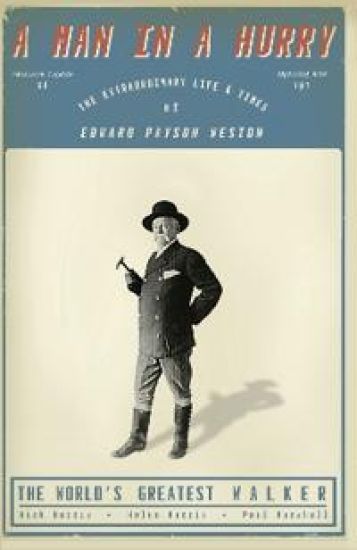
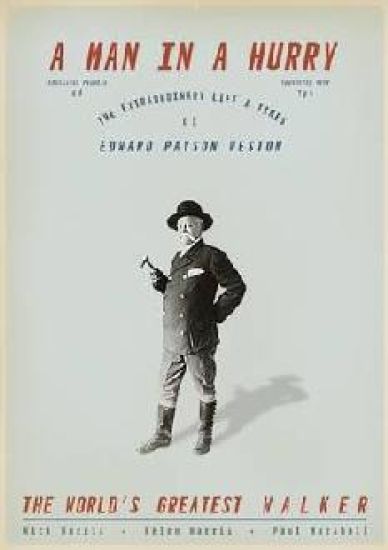
Edward Payson Weston's 3,100-mile walk from California to New York, completed on 3 May 1910, was one of his great achievements, but only one. It took him just 77 days. He was 71 years old. For half a century Weston was one of the most famous people in the English-speaking world, as the first age of international celebrity unfolded. The godfather of the pedestrianism movement, he criss-crossed Britain and America on foot earning fame, fortune and notoriety in an athletic career that saw him complete some of the most amazing endurance feats ever witnessed. In this entertaining and wide-ranging book, co-authors Nick Harris, Helen Harris and Paul Marshall, skillfully recreate a vanished world to tell one of the most amazing stories in sporting history. Part social history, part biography, part exposition of the seedy underbelly of Victorian society, this is a work that draws in elements of sporting genius, high stakes gambling, drug abuse, and marital scandal. A Man in a Hurry is one man's flamboyant athletic journey from the Gold Rush to the Jazz Age, the story of a dreamer, schemer and ladies man who met with Presidents and royalty, crooks and knaves.With its colourful detail, historical context and readable style, this groundbreaking work is an important addition to the sports literature canon.
Today understanding of religion is essential to understanding many major news stories. This book examines how the media frequently miss or misunderstand these stories because they do not take religion seriously, and how they misunderstand religion when they do take it seriously. To the extent that journalists do not grasp events' religious dimensions, both global and local, the authors argue, they are hindered from, and sometimes incapable of, describing what is happening. However, on the national level the press is one of the most secular institutions in American society - not necessarily contemptuous of serious religion, just uncomprehending. The essays in this book examine nine specific news stories that were inadequately or incorrectly reported by major news sources because their religious dimension was ignored, overlooked, or misrepresented. These stories range from the 2004 U.S. presidential elections, to Iran, Iraq, and the papal succession. In each case the author demonstrates how the story might have been more effectively reported and concludes with specific suggestions for journalist. The authors include both scholars and experienced news analysts. Although it will be of particular interest to people of faith, the book offers all readers an interesting and balanced analysis of the news media's uneasy relationship with religion and religious issues.
Today understanding of religion is essential to understanding many major news stories. This book examines how the media frequently miss or misunderstand these stories because they do not take religion seriously, and how they misunderstand religion when they do take it seriously. To the extent that journalists do not grasp events' religious dimensions, both global and local, the authors argue, they are hindered from, and sometimes incapable of, describing what is happening. However, on the national level the press is one of the most secular institutions in American society - not necessarily contemptuous of serious religion, just uncomprehending. The essays in this book examine nine specific news stories that were inadequately or incorrectly reported by major news sources because their religious dimension was ignored, overlooked, or misrepresented. These stories range from the 2004 U.S. presidential elections, to Iran, Iraq, and the papal succession. In each case the author demonstrates how the story might have been more effectively reported and concludes with specific suggestions for journalist. The authors include both scholars and experienced news analysts. Although it will be of particular interest to people of faith, the book offers all readers an interesting and balanced analysis of the news media's uneasy relationship with religion and religious issues.
Some experiences of the natural world bring a sense of unity, knowledge, self-transcendence, eternity, light, and love. This is the first detailed study of these intriguing phenomena. Paul Marshall explores the circumstances, characteristics, and after-effects of this important but relatively neglected type of mystical experience, and critiques explanations that range from the spiritual and metaphysical to the psychoanalytic, contextual, and neuropsychological. The theorists discussed include R. M. Bucke, Edward Carpenter, W. R. Inge, Evelyn Underhill, Rudolf Otto, Sigmund Freud, Aldous Huxley, R. C. Zaehner, W. T. Stace, Steven Katz, and Robert Forman, as well as contemporary neuroscientists. The book makes a significant contribution to current debates about the nature of mystical experience.
Is there room for religion in politics? In this insightfully written book, Paul Marshall argues that Christians can and should approach politics in a way informed by faith. Drawing on traditions of both Catholic and Protestant political thought, Marshall analyzes the ways in which religion influences our understanding of power, justice, and democracy. By exploring the biblical background of modern issues, Marshall provides an indispensable guide for Christians searching for a way to interject their religious convictions into their political actions. In an age when the relationship between politics and religion is becoming ever more important—and ever more blurred—both in America and beyond, God and the Constitution is essential reading for anyone interested in the intersection of faith and government.
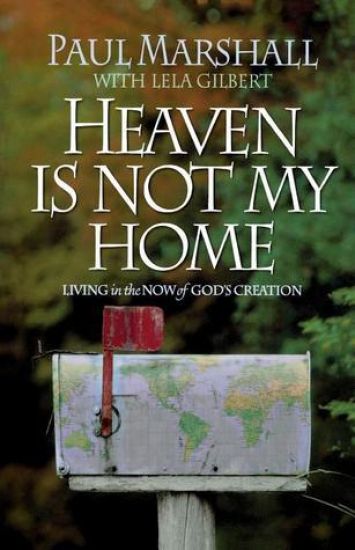
In Heaven Is Not My Home, author and scholar Paul Marshall asserts that God is not seeking to destroy the earth, but to restore it to its original splendor. In this thought-provoking book, he shows us how the redemption of all things should shape the way we look at every aspect of our lives.