Kirjojen hintavertailu. Mukana 12 504 969 kirjaa ja 12 kauppaa.
Kirjailija
Paul Monaghan
Kirjat ja teokset yhdessä paikassa: 3 kirjaa, julkaisuja vuosilta 2006-2014, suosituimpien joukossa How To Franchise Your Business 2nd Edition. Vertaile teosten hintoja ja tarkista saatavuus suomalaisista kirjakaupoista.
The business case for Sustainability or Corporate Responsibility will never be strong enough to support an isolated business in its competition against the unscrupulous. The progressive vanguard reaches a point where it can advance no further without rendering itself uncompetitive. That is, unless advocacy and public policy intervention change the rules and shift the bar for the allowable lowest common denominator. With the base reset, so is the bar of aspiration. New rules enable new behaviors, with players competing on a fairer, more sustainable footing. This groundbreaking book, Lobbying for Good, describes how far-sighted businesses are rebooting the game, throwing off cultural inhibitions and sticking their head above the parapet to advocate progressive legislative change. The authors describe a strategic opportunity to get on board the next wave of CSR - the most radical and impactful yet -- and explain how finely-tuned and well-delivered lobbying for good can be an extremely cost-effective brand-enhancement tool. Against a backdrop of general mistrust in business lobbying, learn how leaders are making it work and lobbying for good.
Learn how to effectively expand your business system and reap the benefits of growthIf you have a proven business system and are wishing to expand, franchising is a strong option. It provides a quick route to growth and uses other people's money and enthusiasm to open individual offices, shops, restaurants, salons, surgeries, units, van rounds, or service centres. This book provides practical advice on how franchising works from two authors with years of experience. As well as being for potential franchisors, this book is also invaluable to owners of existing branch networks, practising franchisors and their management teams, and candidates for the Diploma in Franchise Management. It will show you how to: - Decide whether your business should and could be franchised - Understand the franchisor/franchisee relationship - Structure the business so it works for both franchisor and franchisee - Prove the concept with pilot operations - Market your franchise and recruit franchisees - Motivate franchisees and monitor their performance - Franchise your business internationally - Prepare your network for sale - or buy an existing franchised networkContents: Acknowledgements; Preface; SECTION I - THE BASICS; 1. Introduction; 2. Business format franchising - a growth option for your business?; 3. The franchised network development plan; 4. The franchisor/franchisee relationship; 5. Pilot operations; 6. Building the franchisor management team; 7. The franchise operations manual; 8. The franchise agreement; 9. International franchising; SECTION 2 - PRACTICAL FRANCHISE; MANAGEMENT; 10. How to market a franchise; 11. How to recruit franchisees; 12. How to get the best results from franchise exhibitions; 13. How to help franchisees prepare and review their business plans; 14. How to write the franchise operations manual; 15. How to develop and deliver a franchise training programme; 16. How to monitor franchisees' performance; 17. How to motivate franchisees; 18. How to get the best from field visits; 19. How to manage franchise unit resales; 20. How to monitor your performance as a franchisor; 21. How to avoid legal problems for you and your franchisees; SECTION 3 - ADVANCED FRANCHISING; 22. Becoming an international franchisor; 23. Becoming a master franchisee; 24. Meeting your international match; 25. Negotiating the international arrangements; 26. Buying or selling an existing franchised network; Appendices; Index
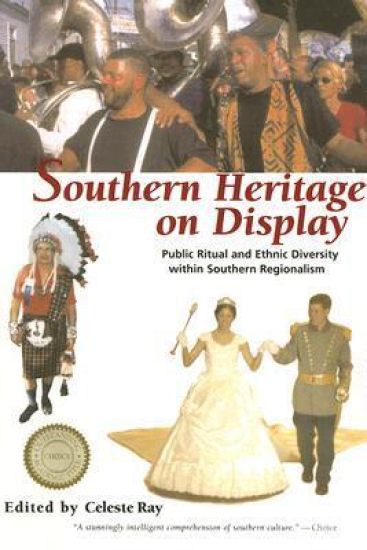
How ritualized public ceremonies affirm or challenge cultural identities associated with the American South* A Choice Outstanding Academic Title"From the jazz funeral processions in the streets of New Orleans to the annual Natchez Pilgrimage in Mississippi and the Scottish Highland games atop Grandfather Mountain in North Carolina, the reader is exposed to a diverse southern culture, or heritage, that is often overlooked by many people, both within and outside the South. The reality of a southern culture based in Mexican heritage or a celebration of [a] Southeastern tribe's heritage through the powwow helps deconstruct the myth of a solid southern culture as one that is simply portrayed as black and white."--Florida Historical Quarterly"The ambition Celeste Ray sets out in her introduction is to show how these groups are not only in the South but of it, how they interpret their diverse identities as Southern--put another way, to answer a question that arises in one noteworthy piece, why do Indians in North Carolina eat barbecue pork and collard greens at their powwows?"--Journal of American Ethnic History"Thought-provoking and well-crafted, Southern Heritage on Display is an innovative and important resource for regional studies and scholarship on public display."--Journal of Folklore ResearchW. J. Cash's 1941 observation that "there are many Souths and many cultural traditions among them" is certainly validated by this book. Although the Civil War and its "lost cause" tradition continues to serve as a cultural root paradigm in celebrations, both uniting and dividing loyalties, southerners also embrace a panoply of public rituals--parades, cook-offs, kinship homecomings, church assemblies, music spectacles, and material culture exhibitions--that affirm other identities. From the Appalachian uplands to the Mississippi Delta, from Kentucky bluegrass to Carolina piedmont, southerners celebrate in festivals that showcase their diverse cultural backgrounds and their mythic beliefs about themselves.The ten essays of this cohesive, interdisciplinary collection present event-centered research from various fields of study--anthropology, geography, history, and literature--to establish a rich, complex picture of the stereotypically "Solid South." Topics include the Mardi Gras Indian song cycle as a means of expressing African-American identity in New Orleans; powwow performances and Native American traditions in southeast North Carolina; religious healings in southern Appalachian communities; Mexican Independence Day festivals in central Florida; and, in eastern Tennessee, bonding ceremonies of melungeons who share Indian, Scots Irish, Mediterranean, and African ancestry. Seen together, these public heritage displays reveal a rich "creole" of cultures that have always been a part of southern life and that continue to affirm a flourishing regionalism.This book will be valuable to students and scholars of cultural anthropology, American studies, and southern history; academic and public libraries; and general readers interested in the American South. It contributes a vibrant, colorful layer of understanding to the continuously emerging picture of complexity in this region historically depicted by simple stereotypes.