

Kirjailija
Paul Needham
Kirjat ja teokset yhdessä paikassa: 7 kirjaa, julkaisuja vuosilta 1998-2026, suosituimpien joukossa Macroscopic Metaphysics. Vertaile teosten hintoja ja tarkista saatavuus suomalaisista kirjakaupoista.
7 kirjaa
Kirjojen julkaisuhaarukka 1998-2026.

This undergraduate textbook introduces some fundamental issues in philosophy of science for students of philosophy and science students. The book is divided into two parts. Part 1 deals with knowledge and values. Chap. 1 presents the classical conception of knowledge as initiated by the ancient Greeks and elaborated during the development of science, introducing the central concepts of truth, belief and justification. Aspects of the quest for objectivity are taken up in the following two chapters. Moral issues are broached in Chap. 4, which discusses some aspects of the use and abuse of science, taking up the responsibilities of scientists in properly conducting their business and decision-makers in their concerns with the import of science for society. Part 2 contrasts the view of scientific progress as the rejecting of old hypotheses and theories and replacing them with new ones, represented by Karl Popper, with the conception of progress as accumulating knowledge, saving as muchas possible from older theories, represented by Pierre Duhem. A concluding chapter defends the natural attitude of taking the theories of modern science to be literally true, i.e. realism, in the face of arguments drawn partly from the history of scientific progress in criticism of this stance.

This undergraduate textbook introduces some fundamental issues in philosophy of science for students of philosophy and science students. The book is divided into two parts. Part 1 deals with knowledge and values. Chap. 1 presents the classical conception of knowledge as initiated by the ancient Greeks and elaborated during the development of science, introducing the central concepts of truth, belief and justification. Aspects of the quest for objectivity are taken up in the following two chapters. Moral issues are broached in Chap. 4, which discusses some aspects of the use and abuse of science, taking up the responsibilities of scientists in properly conducting their business and decision-makers in their concerns with the import of science for society. Part 2 contrasts the view of scientific progress as the rejecting of old hypotheses and theories and replacing them with new ones, represented by Karl Popper, with the conception of progress as accumulating knowledge, saving as muchas possible from older theories, represented by Pierre Duhem. A concluding chapter defends the natural attitude of taking the theories of modern science to be literally true, i.e. realism, in the face of arguments drawn partly from the history of scientific progress in criticism of this stance.

This book is about our ordinary concept of matter in the form of enduring continuants and the processes in which they are involved in the macroscopic realm. It emphasises what science rather than philosophical intuition tells us about the world, and chemistry rather than the physics that is more usually encountered in philosophical discussions. The central chapters dealing with the nature of matter pursue key steps in the historical development of scientific conceptions of chemical substance.Like many contemporary discussions of material objects, it relies heavily on mereology. The classical principles are applied to the mereological structure of regions of space, intervals of time, processes and quantities of matter. Quantities of matter, which don’t gain or lose parts over time, are distinguished from individuals, which are typically constituted of different quantities of matter at different times. The proper treatment of the temporal aspect of the features of material objects is a central issue in this book, which is addressed by investigating the conditions governing the application of predicates relating time and other entities. Of particular interest here are relations between quantities of matter and times expressing substance kind, phase and mixture. Modal aspects of these features are taken up in the final chapter.

This book is about our ordinary concept of matter in the form of enduring continuants and the processes in which they are involved in the macroscopic realm. It emphasises what science rather than philosophical intuition tells us about the world, and chemistry rather than the physics that is more usually encountered in philosophical discussions. The central chapters dealing with the nature of matter pursue key steps in the historical development of scientific conceptions of chemical substance.Like many contemporary discussions of material objects, it relies heavily on mereology. The classical principles are applied to the mereological structure of regions of space, intervals of time, processes and quantities of matter. Quantities of matter, which don’t gain or lose parts over time, are distinguished from individuals, which are typically constituted of different quantities of matter at different times. The proper treatment of the temporal aspect of the features of material objects is a central issue in this book, which is addressed by investigating the conditions governing the application of predicates relating time and other entities. Of particular interest here are relations between quantities of matter and times expressing substance kind, phase and mixture. Modal aspects of these features are taken up in the final chapter.

Adventure and Art: The First Century of Printing accompanies a Rutgers University exhibition that highlights books published during the first century of printing-a transitional time of great innovation and accomplishment. The catalog begins with Gutenberg’s famous 42-line Bible and ends with the magnificently illustrated de luxe editions of the mid-sixteenth century, including the historically significant herbals of Otto Brunfels and Pedianus Dioscorides. Also featured are the exquisite specimens of the Golden Age of French typography, such as the multi-volume folio edition of the Spanish romance, the Amadis de Gaula. The catalog elegantly displays photographs of each work, including color photographs of the hand-colored herbal woodcuts and exquisite illuminations of fifteenth-century editions of Josephus and Antoninus. An extra feature is an essay by Barbara A. Shailor that analyzes the extraordinary cultural transformations wrought by the invention and refinement of printing. Paul Needham, Librarian of the Scheide Library at Princeton, provides detailed descriptions of the Rutgers incunabula, some of which are not held by any other North American library. Adventure and Art includes 27 illustrations (6 in full color) and a descriptive essay about Rutgers University Libraries Special Collections.
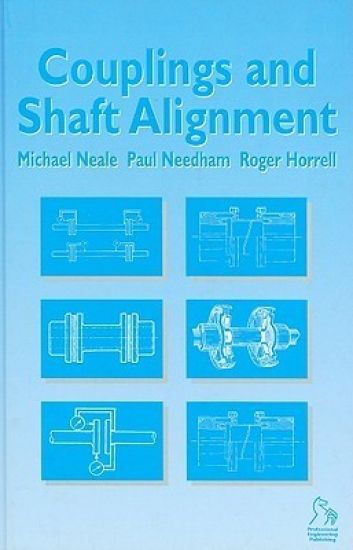
Couplings and Shaft Alignment
Michael Neale; Paul Needham; Roger Horrell
JOHN WILEY SONS INC
1998
sidottu
Couplings and Shaft Alignment provides positive practical guidance to engineers dealing with shaft couplings for the transmission of power, and concerned with the related problem of shaft alignment. First published in 1991, this useful text has been revised and reprinted in a more readable, updated format. COMPLETE CONTENTS: An approach to coupling selectionPreliminary choiceGear couplingsMultiple membrane couplingsContoured disc couplingsElastomeric element couplingsQuill shaft couplingsAlignmentEffect on machine train dynamicsHub mountingAccessoriesNomenclatureCoupling data sheetBibliography The book offers a systematic approach to the selection and specification of shaft couplings, and a rational approach to shaft alignment, which can assist in achieving the desired levels of reliability in process plant. It can be wholeheartedly recommended to all practising engineers involved in the design, specification, selection, operation, and maintenance of machine systems involving flexible shaft couplings.