Kirjojen hintavertailu. Mukana 12 553 849 kirjaa ja 12 kauppaa.

Kirjailija

Paul Parsons

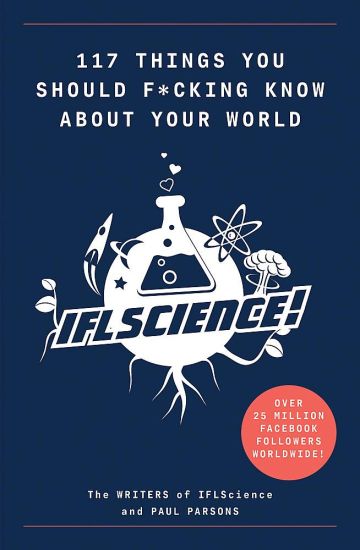
Kirjat ja teokset yhdessä paikassa: 19 kirjaa, julkaisuja vuosilta 1989-2020, suosituimpien joukossa 117 Things You Should F*#king Know About Your World. Vertaile teosten hintoja ja tarkista saatavuus suomalaisista kirjakaupoista.

19 kirjaa

Kirjojen julkaisuhaarukka 1989-2020.

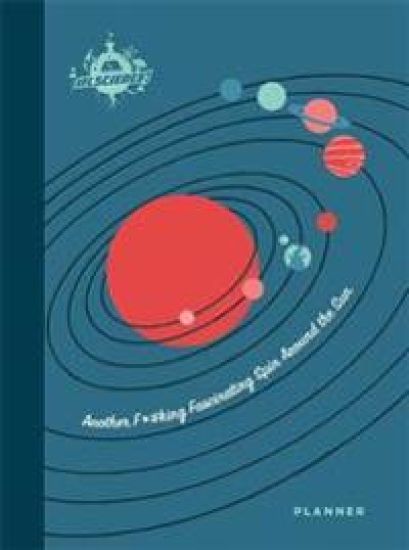
IFLScience: Another F*#king Fascinating Spin Around the Sun

IFLScience: Another F*#king Fascinating Spin Around the Sun

The Writers of IFLScience; Paul Parsons

Running Press Adult
2020
sidottu
This is the planner that only the world's most off-beat, irreverent, and weirdly wonderful source of science could produce. From the creators of IFLScience comes this 12-month planner, which includes:Undated weekly and monthly overviews for recording dates and appointments.Blank pages for tracking goals and to-do lists.Notes on historic moments in Science history on given days of the year.50 spot illustrations throughout.Ribbon marker.Rounded corners and full-color cover.
Space Travel: Ten Short Lessons

Space Travel: Ten Short Lessons

Paul Parsons

Johns Hopkins University Press
2020
nidottu
An expert yet easy-to-understand examination of space travel, from the first human voyages to the goals of future endeavors. In Space Travel: Ten Short Lessons, Paul Parsons takes us on an exhilarating journey to examine the game-changing discoveries in the history of space exploration that have illuminated the darkest corners of our universe. From the amazing technology that has enabled us to look beyond the clouds to the development of rockets and spacecraft during the twentieth century that led to missions to the moon and beyond, to the space tourism of the twenty-first century, this is a cutting-edge, expert-led guide for curious minds. About the series: The Pocket Einstein series is a collection of essential pocket-sized guides for anyone looking to understand a little more about some of the most relevant science that affects us all in the twenty-first century. Broken down into ten simple lessons and written by leading experts in their field, the books reveal the ten most important takeaways from those areas of science we should all know more about.
10 Short Lessons in Space Travel

10 Short Lessons in Space Travel

Paul Parsons

Michael O'Mara Books Ltd
2020
sidottu
'Extremely authoritative. The best book I have read on space travel since Arthur C. Clarke's classic, The Promise of Space.' Marcus ChownIn an era of rapidly developing technology and renewed ambition, the twenty-first century has ushered in an exciting new age of space flight. But what has brought us to this point in our exploration of the universe? And what does the future of space travel hold? From the amazing technology that has enabled us to look beyond the clouds to the possibilities of space tourism, 10 Short Lessons in Space Travel takes a timely look at the essential lessons learned from our voyages into outer space.About the series: The Pocket Einstein series is a collection of essential pocket-sized guides for anyone looking to understand a little more about some of the most relevant science that affects us all in the twenty-first century. Broken down into ten simple lessons and written by leading experts in their field, discover the ten most important takeaways from those areas of science we should all know more about.
Stephen Hawking på 3 minutter

Stephen Hawking på 3 minutter

Paul Parsons; Gail Dixon

Vigmostad Bjørke
2018
sidottu
Stephen Hawking var verdens mest begavede teoretiske fysiker siden Einstein. Han var kanskje vårt største vitenskapelige geni i moderne tid, og som populærvitenskapelig forfatter forklarte han på mesterlig vis vanskelige temaer for vanlige folk. I tillegg var Hawking en ivrig forkjemper for sosiale og politiske saker, som funksjonshemmedes rettigheter. Stephen Hawking på 3 minutter er en rask introduksjon til dette eksepsjonelle geniet. Denne mikroskopiske biografien deler opp Hawkings liv i 3 minutter lange småbiter, som hver serveres som et lett fordøyelig festmåltid. Les boken og få universet servert på sølvfat. Paul Parsons er vitenskapsforfatter med doktorgrad i kosmologi. Han er tidligere redaktør i det prisbelønte månedlige vitenskaps- og teknologitidsskriftet BBC Focus. Han var rådgivende redaktør for 30-Second Theories og skriver populærvitenskapelige artikler for alt fra Daily Telegraph til Men s Health. Gail Dixon er journalist og redaktør med mange års erfaring og har jobbet som ansvarlig redaktør for BBC Focus. Sammen med Paul Parsons er hun medredaktør for The Periodic Table (2013) og 50 Science Ideas You Really Need to Know?.
30-Second Theories

30-Second Theories

Martin Rees; Paul Parsons; Susan Blackmore

Icon Books Ltd
2018
nidottu
When it comes to big science, very few things are conclusively known. From Quantum Mechanics to Natural Selection, what we have instead are theories - ideas explain why things happen the way they do. We don't know for certain these are correct - no one ever saw the Big Bang - but with them we can paint beautiful, breathtaking pictures of everything from human behaviour to what the future may hold. Profiling the key scientists behind each theory, "30-Second Theories" presents each entry in a unique, eye-catching full-colour design, with thought-provoking extras and stylish illustrations. It is essential for anyone keen on expanding their mind with science's most thrilling ideas.
Design of Visualizations for Human-Information Interaction

Design of Visualizations for Human-Information Interaction

Kamran Sedig; Paul Parsons

Springer International Publishing AG
2016
nidottu
Interest in visualization design has increased in recent years. While there is a large body of existing work from which visualization designers can draw, much of the past research has focused on developing new tools and techniques that are aimed at specific contexts. Less focus has been placed on developing holistic frameworks, models, and theories that can guide visualization design at a general level—a level that transcends domains, data types, users, and other contextual factors. In addition, little emphasis has been placed on the thinking processes of designers, including the concepts that designers use, while they are engaged in a visualization design activity. In this book we present a general, holistic framework that is intended to support visualization design for human-information interaction. The framework is composed of a number of conceptual elements that can aid in design thinking. The core of the framework is a pattern language—consisting of a set of 14 basic, abstract patterns—and a simple syntax for describing how the patterns are blended. We also present a design process, made up of four main stages, for creating static or interactive visualizations. The 4-stage design process places the patterns at the core of designers’ thinking, and employs a number of conceptual tools that help designers think systematically about creating visualizations based on the information they intend to represent. Although the framework can be used to design static visualizations for simple tasks, its real utility can be found when designing visualizations with interactive possibilities in mind—in other words, designing to support a human-information interactive discourse. This is especially true in contexts where interactive visualizations need to support complex tasks and activities involving large and complex information spaces. The framework is intended to be general and can thus be used to design visualizations for diverse domains, users, information spaces, and tasks in different fields such as business intelligence, health and medical informatics, digital libraries, journalism, education, scientific discovery, and others. Drawing from research in multiple disciplines, we introduce novel concepts and terms that can positively contribute to visualization design practice and education, and will hopefully stimulate further research in this area.
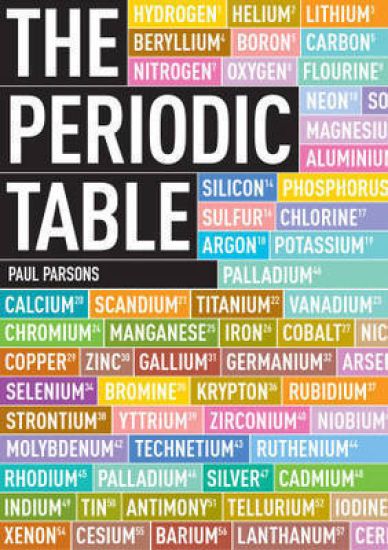
The Periodic Table

The Periodic Table

Paul Parsons; Gail Dixon

Quercus Publishing
2013
nidottu
The Periodic Table is one of the most recognizable images in science - and in our culture. Its 118 elements make up everything on our planet and in the entire universe. But how many of us actually know how to interpret its distinctive design? And what does its unique arrangement tell us about the behaviour of each element in the world around us? The Periodic Table looks at the fascinating story and surprising history of each of these elements, from the little-known uses of gold in medicine to that of arsenic as a wallpaper dye in the ninteenth-century and the development of the hydrogen bomb. Packed with interesting facts and figures and helpful illustrations, this accessible guide will help the armchair chemist navigate through the different groups of elements - and discover the world afresh.
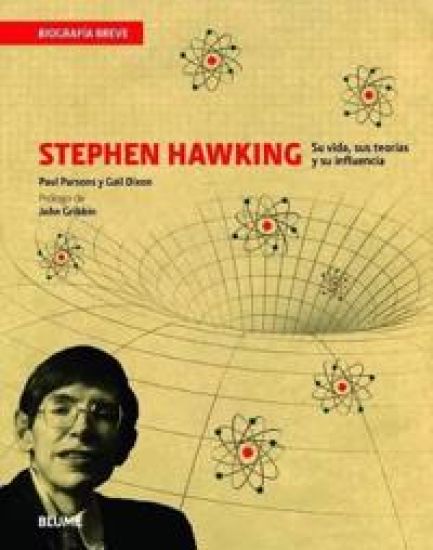
Biograf¡a Breve. Stephen Hawking

Biograf¡a Breve. Stephen Hawking

PAUL PARSONS; GAIL DIXON

Blume
2012
muu
Studying the man considered to be the most brilliant theoretical physicist since Albert Einstein, this biography of Stephen Hawking brings readers closer to one of the greatest living scientific geniuses. While obviously a brilliant scientific mind, Hawking has also succeeded in revealing some of the most complex topics to ordinary minds through his books and is a vocal campaigner for social and political issues, including the rights of disabled people. Written in an accessible language, this brief biography provides an introduction to this exceptional genius through three-minute bits of text that are both manageable and riveting. Estudiando al hombre considerado como el fisico teorico mas brillante desde Albert Einstein, esta biografia de Stephen Hawking acerca al lector a uno de los cientificos vivientes mas importantes de la actualidad. Aunque es obviamente una mente cientifica brillante, Hawking tambien ha logrado explicar algunos de los temas mas complejos a mentes comunes mediante sus libros y es muy vocal en asuntos sociales y politicos, tales como los derechos para las personas con impedimentos. Escrita en un lenguaje accesible, esta breve biografia provee una introduccion a este genio excepcional mediante trozos de texto de tres minutos cada uno que son tanto manejables como fascinantes."
How to Destroy the Universe

How to Destroy the Universe

Paul Parsons

Quercus Publishing
2012
pokkari
How to survive an earthquake. How to make an invisibility cloak. How to turn lead into gold. How to read someone's mind. Physics = tedious and unfathomable, right? No longer. If you thought physics was all about measuring the temperature of an ice bucket or trying to understand complicated equations, think again. How to Destroy the Universe will make you see the world around us through fresh eyes.
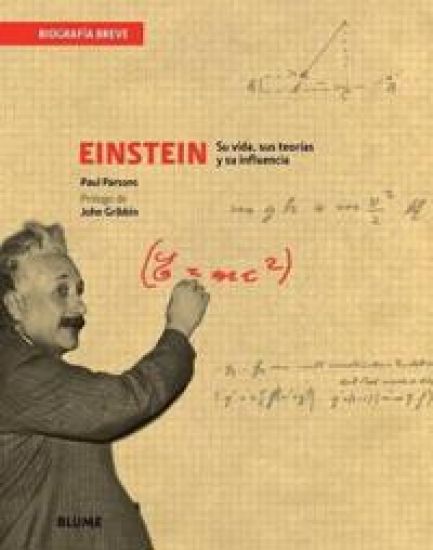
Biograf¡a Breve. Einstein
Examining the scientist whose space-time theories laid the foundations for modern physics, this biography portrays Albert Einstein as not only an unparalleled scientific genius, but as a human rights campaigner, a political activist, and the iconic archetype of the mad professor. This engaging and illuminating book shows readers why it is that Einstein continues to fascinate scientists and laypeople alike, all in brief bits of text that keep readers from getting overwhelmed by complicated and advanced scientific explanations. The biography is structured into three parts life, theories, and influence and although the two theories of relativity occupy places of honor, lesser-known aspects of Einstein s work are not forgotten, such as how his investigations aided in the invention of lasers, how he patented a unique type of refrigeration, how he proved the existence of atoms, and how he invested his last years into a premature search for the theory of everything. His celebrated scientific pursuits are contrasted with an agitated private life, two marriages, an illegitimate daughter, a lack of resources during World War I, illness, and his exile to the United States due to the Nazis rise to power. Examinando al cientifico cuyas teorias de tiempo y espacio proveyeron los fundamentos para la fisica moderna, esta biografia representa a Albert Einstein no solo como un cientifico brillante incomparable, pero como un defensor de los derechos humanos, un activista politico y el arquetipo del iconico profesor alocado. Este interesante e iluminante libro le muestra al lector por que es que Einstein continua fascinando a cientificos y laicos por igual, todo mediante trozos breves de texto que evitan que el lector se sienta inundado por explicaciones cientificas complicadas y avanzadas. La biografia esta estructurada en tres partes vida, teorias e influencia y aunque las dos teorias de la relatividad ocupan el puesto de honor, no se olvidan aspectos menos conocidos del trabajo de Einstein tales como como su investigacion ayudo a la invencion del laser, como patento un tipo unico de frigorifico, como demostro la existencia de los atomos y como invirtio sus ultimos anos en una busqueda prematura de la teoria del todo. Sus celebradas labores cientificas se contrastan con una vida privada agitada, dos matrimonios, una hija ilegitima, la escasez de recursos durante la primera guerra mundial, la enfermedad y la huida a Estados Unidos a causa del ascenso al poder de los nazis."
30-Second Theories

30-Second Theories

Martin Rees; Paul Parsons; Susan Blackmore

Icon Books Ltd
2010
sidottu
When it comes to big science, very few things are conclusively known. From Quantum Mechanics to Natural Selection, what we have instead are theories - ideas explain why things happen the way they do. We don't know for certain these are correct - no one ever saw the Big Bang - but with them we can paint beautiful, breathtaking pictures of everything from human behaviour to what the future may hold. Profiling the key scientists behind each theory, "30-Second Theories" presents each entry in a unique, eye-catching full-colour design, with thought-provoking extras and stylish illustrations. It is essential for anyone keen on expanding their mind with science's most thrilling ideas.
The Deep-Sky Observer’s Year

The Deep-Sky Observer’s Year

Paul Parsons

Springer London Ltd
2000
nidottu
Deep-sky observing - that's looking at the stars, nebulae and galaxies - is easily the most popular field for amateur astronomers. The big problem faced by non-professional observers is what to look at - what's visible at a paticular time of year. The Deep-sky Observer's Year is a month-by-month guide to the best objects to view. Objects are given a "star rating" according to how difficult they are to observe or image (i.e. photograph) with a particular size of telescope. The book includes many images produced by amateur astronomers, as well as photographs from NASA, ESA and ESO. There is also some background information about the objects that can be seen, along with lots of useful tips, hints, and resources (especially about what's available on the Internet) for deep-sky observers.