Kirjojen hintavertailu. Mukana 12 595 353 kirjaa ja 12 kauppaa.

Kirjailija

Paul R. Ehrlich

Kirjat ja teokset yhdessä paikassa: 22 kirjaa, julkaisuja vuosilta 1985-2024, suosituimpien joukossa One With Nineveh. Vertaile teosten hintoja ja tarkista saatavuus suomalaisista kirjakaupoista.

Mukana myös kirjoitusasut: Paul R. Ehrlich, Paul R Ehrlich

22 kirjaa

Kirjojen julkaisuhaarukka 1985-2024.

Before They Vanish

Before They Vanish

Paul R. Ehrlich; Gerardo Ceballos; Rodolfo Dirzo

Johns Hopkins University Press
2024
sidottu
Legendary conservationists show us that we still have the power to prevent critical consequences of the sixth extinction in this game-changing book.Can we save threatened animals and ecosystems in the midst of a mass extinction? The answer is a resounding yes! Before They Vanish shows us how. In this wise and impassioned book, renowned conservation scientists Paul R. Ehrlich, Gerardo Ceballos, and Rodolfo Dirzo urge us to shift our thinking rather than succumb to grief over the losses that humanity faces. This comprehensive look at a crucial but often overlooked aspect of conservation—population extinction, or the loss of a species within a specific geographic location—guides us onto a new, hopeful path. The authors argue that conservationists have placed too much emphasis on the extinction of entire species, which occurs gradually enough that we only detect it in the direst of cases. By that time, meaningful action may be impossible. By shifting our focus to identifying extinction threats at the more localized population level, we can intervene more rapidly and effectively to prevent broader declines before it's too late. This change in perspective represents a critical step in saving these vanishing species; early detection and intervention may be our last, best hope for stemming the tide of this global crisis. Using examples from the worlds of vertebrates, invertebrates, plants, fungi, and microorganisms, the authors explain the concept of population extinction, its causes and consequences, and how to prevent the mass destruction of the amazing and unique creatures with whom we share our planet. This call to action is a must-read for anyone concerned with saving endangered and threatened species, our natural world—and ourselves.
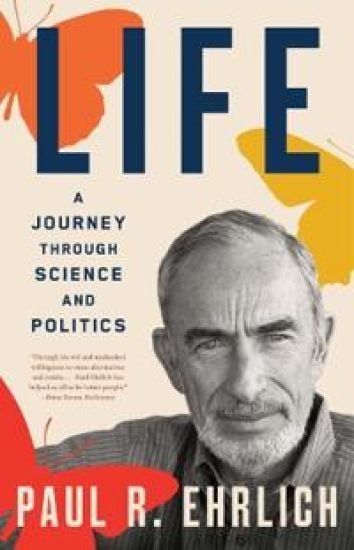
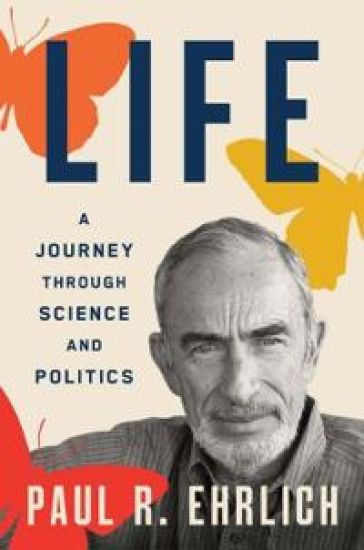
Life

Life

Paul R. Ehrlich

YALE UNIVERSITY PRESS
2024
pokkari
A renowned scientist and environmental advocate looks back on a life that has straddled the worlds of science and politics “Compelling. . . . [Ehrlich’s] memoir includes remarkable stories of his research, travels, friends, colleagues, and scientific controversies that still roil today.”—Peter Gleick, Science Acclaimed as a public scientist and as a spokesperson on pressing environmental and equity issues, delivering his message from the classroom to 60 Minutes, Paul R. Ehrlich reflects on his life, including his love affair with his wife, Anne, his scientific research, his public advocacy, and his concern for global issues. Interweaving the range of his experiences—as an airplane pilot, a desegregationist, a proud parent—Ehrlich’s insights are priceless on pressing issues such as biodiversity loss, overpopulation, depletion of resources, and deterioration of the environment. A lifelong advocate for women’s reproductive rights, Ehrlich also helped to debunk scientific bias associating skin color and intelligence and warned some fifty years ago about a possible pandemic and the likely ecological consequences of a nuclear war. This book is a vital contribution to literature focused on the human predicament, including problems of governance and democracy in the twenty-first century, and insight into the ecological and evolutionary science of our day. It is a must-read for anyone interested in understanding global change, our planet’s wonders, and a scientific approach to the present existential threats to civilization.
Life

Life

Paul R. Ehrlich

YALE UNIVERSITY PRESS
2023
sidottu
A renowned scientist and environmental advocate looks back on a life that has straddled the worlds of science and politics “Compelling. . . . [Ehrlich’s] memoir includes remarkable stories of his research, travels, friends, colleagues, and scientific controversies that still roil today.”—Peter Gleick, Science Acclaimed as a public scientist and as a spokesperson on pressing environmental and equity issues, delivering his message from the classroom to 60 Minutes, Paul R. Ehrlich reflects on his life, including his love affair with his wife, Anne, his scientific research, his public advocacy, and his concern for global issues. Interweaving the range of his experiences—as an airplane pilot, a desegregationist, a proud parent—Ehrlich’s insights are priceless on pressing issues such as biodiversity loss, overpopulation, depletion of resources, and deterioration of the environment. A lifelong advocate for women’s reproductive rights, Ehrlich also helped to debunk scientific bias associating skin color and intelligence and warned some fifty years ago about a possible pandemic and the likely ecological consequences of a nuclear war. This book is a vital contribution to literature focused on the human predicament, including problems of governance and democracy in the twenty-first century, and insight into the ecological and evolutionary science of our day. It is a must-read for anyone interested in understanding global change, our planet’s wonders, and a scientific approach to the present existential threats to civilization.
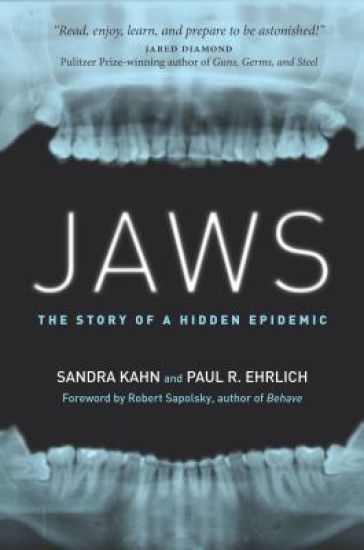
Jaws

Jaws

Sandra Kahn; Paul R. Ehrlich

Stanford University Press
2021
pokkari
There's a silent epidemic in western civilization, and it is right under our noses. Our jaws are getting smaller and our teeth crooked and crowded, creating not only aesthetic challenges but also difficulties with breathing. Modern orthodontics has persuaded us that braces and oral devices can correct these problems. While teeth can certainly be straightened, what about the underlying causes of this rapid shift in oral evolution and the health risks posed by obstructed airways? Sandra Kahn and Paul R. Ehrlich, a pioneering orthodontist and a world-renowned evolutionist, respectively, present the biological, dietary, and cultural changes that have driven us toward this major health challenge. They propose simple adjustments that can alleviate this developing crisis, as well as a major alternative to orthodontics that promises more significant long-term relief. Jaws will change your life. Every parent should read this book.
The Golden Door

The Golden Door

Paul R Ehrlich; Loy Bilderback; Anne H Ehrlich

Malor Books
2021
pokkari
One of the United States' most potentially disastrous national problems is the pressing catastrophe of massive illegal immigration. The Golden Door is a sensitive exploration of this difficult situation.Reviews: "The kind of exciting sock-'em history that you rarely luck into...The Golden Door is a first-rate book...an excitingly scary book that sizes up a mammoth problem...that lets conscience give self-interest several hefty kicks." -Robert Sherrill, The New York Times Book Review"Tough minded, intellectually honest and gracefully written, The Golden Door is a most timely and important book." -The Dallas Morning News"The Ehrlichs' book is the best contribution yet to a national understanding of the Mexican-U.S. problems with population and immigration policy. It should be read by every member of Congress." -Rep. Paul N. McCloskey, Jr."This book sheds much needed light on one of the most complex social and political issues facing the country." -Lester Brown, president, Earth Policy Institute"Well researched and forcefully presented, the survey exposes a potentially dangerous crisis." -Publishers Weekly"This work will be a welcome resource in the growing debate over the formulation of a new immigration policy. As such it is essential for both general and academic libraries." -Library Journal
Jaws

Jaws

Sandra Kahn; Paul R. Ehrlich

STANFORD UNIVERSITY PRESS
2018
sidottu
There's a silent epidemic in western civilization, and it is right under our noses. Our jaws are getting smaller and our teeth crooked and crowded, creating not only aesthetic challenges but also difficulties with breathing. Modern orthodontics has persuaded us that braces and oral devices can correct these problems. While teeth can certainly be straightened, what about the underlying causes of this rapid shift in oral evolution and the health risks posed by obstructed airways? Sandra Kahn and Paul R. Ehrlich, a pioneering orthodontist and a world-renowned evolutionist, respectively, present the biological, dietary, and cultural changes that have driven us toward this major health challenge. They propose simple adjustments that can alleviate this developing crisis, as well as a major alternative to orthodontics that promises more significant long-term relief. Jaws will change your life. Every parent should read this book.
Killing the Koala and Poisoning the Prairie

Killing the Koala and Poisoning the Prairie

Corey J. A. Bradshaw; Paul R. Ehrlich

University of Chicago Press
2015
nidottu
Though separated by thousands of miles, the United States and Australia have much in common. Geographically both countries are expansive-the United States is the fourth largest in land mass and Australia the sixth-and both possess a vast amount of natural biodiversity. At the same time, both nations are on a crash course toward environmental destruction. Highly developed super consumers with enormous energy footprints and high rates of greenhouse-gas emissions, they are two of the biggest drivers of climate change per capita. As renowned ecologists Corey J. A. Bradshaw and Paul R. Ehrlich make clear in Killing the Koala and Poisoning the Prairie, both of these countries must confront the urgent question of how to stem this devastation and turn back from the brink. In this book, Bradshaw and Ehrlich provide a spirited exploration of the ways in which the United States and Australia can learn from their shared problems and combine their most successful solutions in order to find and develop new resources, lower energy consumption and waste, and grapple with the dynamic effects of climate change. Peppering the book with humor, irreverence, and extensive scientific knowledge, the authors examine how residents of both countries have irrevocably altered their natural environments, detailing the most pressing ecological issues of our time, including the continuing resource depletion caused by overpopulation. They then turn their discussion to the politics behind the failures of environmental policies in both nations and offer a blueprint for what must be dramatically changed to prevent worsening the environmental crisis. Although focused on two nations, Killing the Koala and Poisoning the Prairie clearly has global implications-the problems facing the United States and Australia are not theirs alone, and the solutions to come will benefit by being crafted in coalition. This book provides a vital opportunity to learn from both countries' leading environmental thinkers and to heed their call for a way forward together.
The Annihilation of Nature

The Annihilation of Nature

Gerardo Ceballos; Ehrlich Anne H.; Paul R. Ehrlich

Johns Hopkins University Press
2015
sidottu
Gerardo Ceballos, Anne H. Ehrlich, and Paul R. Ehrlich serve as witnesses in this trial of human neglect, where the charge is the massive and escalating assault on living things. Nature is being annihilated, not only because of the human population explosion, but also as a result of massive commercial endeavors and public apathy. Despite the well-intentioned work of conservation organizations and governments, the authors warn us that not enough is being done and time is short for the most vulnerable of the world's wild birds and mammals. Thousands of populations have already disappeared, other populations are dwindling daily, and soon our descendants may live in a world containing but a minuscule fraction of the birds and mammals we know today. The Annihilation of Nature is a clarion call for engagement and action. These outspoken scientists urge everyone who cares about nature to become personally connected to the victims of our inadequate conservation efforts and demand that restoration replace destruction. Only then will we have any hope of preventing the worst-case scenario of the sixth mass extinction.
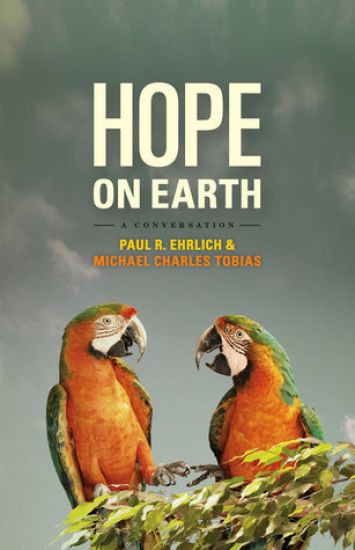
Hope on Earth: A Conversation

Hope on Earth: A Conversation

Paul R. Ehrlich; Michael Charles Tobias

University of Chicago Press
2014
sidottu
Hope on Earth is the thought-provoking result of a lively and wide-ranging conversation between two of the world's leading interdisciplinary environmental scientists: Paul R. Ehrlich, whose book The Population Bomb shook the world in 1968 (and continues to shake it), and Michael Charles Tobias, whose over 40 books and 150 films have been read and/or viewed throughout the world. Hope on Earth offers a rare opportunity to listen in as these deeply knowledgeable and highly creative thinkers offer their takes on the most pressing environmental concerns of the moment. Both Ehrlich and Tobias argue that we are on the verge of environmental catastrophe, as the human population continues to grow without restraint and without significant attempts to deal with overconsumption and the vast depletion of resources and climate problems it creates. Though their views are sympathetic, they differ in their approach and in some key moral stances, giving rise to a heated and engaging dialogue that opens up dozens of new avenues of exploration. They both believe that the impact of a human society on its environment is the direct result of its population size, and through their dialogue they break down the complex social problems that are wrapped up in this idea and attempts to overcome it, hitting firmly upon many controversial topics such as circumcision, religion, reproduction, abortion, animal rights, diet, and gun control. For Ehrlich and Tobias, ethics involve not only how we treat other people directly, but how we treat them and other organisms indirectly through our effects on the environment. University of California, Berkeley professor John Harte joins the duo for part of the conversation, and his substantial expertise on energy and climate change adds a crucial perspective to the discussion of the impact of population on global warming. This engaging and timely book invites readers into an intimate conversation with some of the most eminent voices in science as they offer a powerful and approachable argument that the ethical and scientific issues involved in solving our environmental crisis are deeply intertwined, while offering us an optimistic way forward. Hope on Earth is indeed a conversation we should all be having.
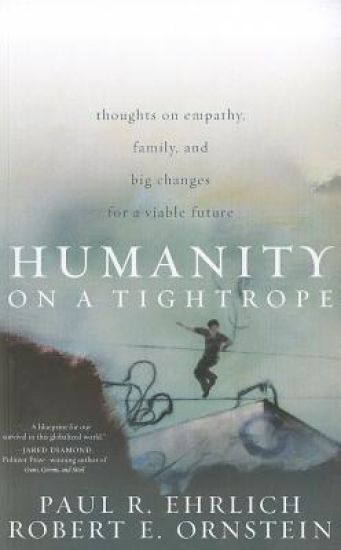
Humanity on a Tightrope

Humanity on a Tightrope

Paul R. Ehrlich; Robert E. Ornstein

Rowman Littlefield
2012
pokkari
When we think of family, we most often think of our sisters and brothers, our cousins and grandparents, rather than our world family or even our community connections. We still identify with our differences more than our similarities, unless it's convenient to do otherwise. Here, two seasoned authors tackle the question of family and what it means to us now and how it might change to help us address the problems that affect us all. Using specific examples throughout the work, they present a unique approach to what it means to belong to one human family. Beginning with a consideration of how the family unit has begun to be defined by allegiances, by common ties and empathy, the authors then discuss the evolution of the family unit and how the "us" vs. "them" mentality gave way to a way of life that separated peoples rather than brought them together. They consider family values, how they arose, developed, were perverted or perfected to suit the family unit's needs, and the confusion that followed. Humanity on a Tightrope focuses on what families and family values are, and how they often create an "us versus them" mentality that is at the root of many of today's most crucial problems from terrorism, racism, and war to the failure of humanity to come to grips with potentially lethal global environmental problems. The book underlines a basic element for solving the human predicament — quickly spreading the domain of empathy. It takes a close look at how we can do that, building on the findings of both social and natural science and using tools ranging from brain imaging to the internet. It explains how civilization is unlikely to persist unless many more people learn to put themselves in the shoes of others to keep society balancing on the tightrope to sustainability - a tightrope suspended over the collapse of civilization.
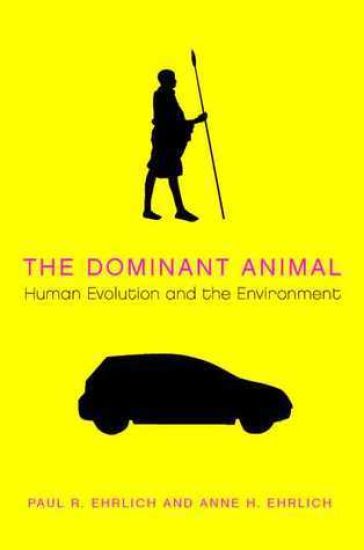
The Dominant Animal

The Dominant Animal

Paul R. Ehrlich; Anne H. Ehrlich

Island Press
2009
nidottu
In humanity's more than 100,000 year history, we have evolved from vulnerable creatures clawing sustenance from Earth to a sophisticated global society manipulating every inch of it. In short, we have become the dominant animal. Why, then, are we creating a world that threatens our own species? What can we do to change the current trajectory toward more climate change, increased famine, and epidemic disease? Renowned scientists Paul R. Ehrlich and Anne H. Ehrlich believe that intelligently addressing those questions depends on a clear understanding of how we evolved and how and why were changing the planet in ways that darken our descendants' future. "The Dominant Animal" arms readers with that knowledge, tracing the interplay between environmental change and genetic and cultural evolution since the dawn of humanity. In lucid and engaging prose, they describe how Homo sapiens adapted to their surroundings, eventually developing the vibrant cultures, vast scientific knowledge, and technological wizardry we know today. This classroom edition includes: updated and expanded set of suggested readings; glossary, key terms and concepts; selected, Annotated Bibliography that includes recent important works; and, Comprehensive Web site with ancillary materials such as: classroom relevant articles, study questions, discussion questions, instructor's guide, and author PowerPoint slides.
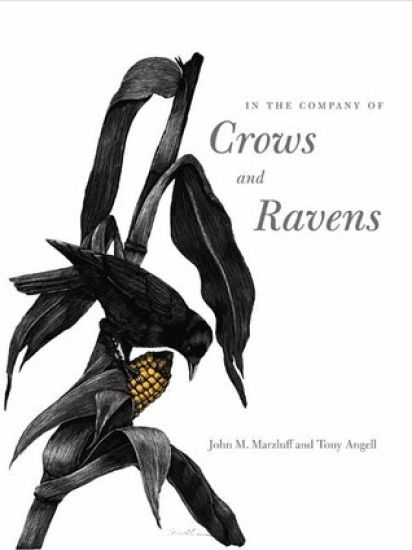
In the Company of Crows and Ravens

In the Company of Crows and Ravens

John M. Marzluff; Tony Angell; Paul R. Ehrlich

Yale University Press
2007
pokkari
“Crows and people share similar traits and social strategies. To a surprising extent, to know the crow is to know ourselves.”—from the Preface “If corvids could read—and it seems they can do damn near everything else—they would surely find this book as entertaining and instructive as this human does."—Laurence A. Marschall, Natural History From the cave walls at Lascaux to the last painting by Van Gogh, from the works of Shakespeare to those of Mark Twain, there is clear evidence that crows and ravens influence human culture. Yet this influence is not unidirectional, say the authors of this fascinating book: people profoundly influence crow culture, ecology, and evolution as well. Examining the often surprising ways that crows and humans interact, John Marzluff and Tony Angell contend that those interactions reflect a process of “cultural coevolution.” They offer a challenging new view of the human-crow dynamic—a view that may change our thinking not only about crows but also about ourselves. Featuring more than 100 original drawings, the book takes a close look at the influences people have had on the lives of crows throughout history and at the significant ways crows have altered human lives. In the Company of Crows and Ravens illuminates the entwined histories of crows and people and concludes with an intriguing discussion of the crow-human relationship and how our attitudes toward crows may affect our cultural trajectory.
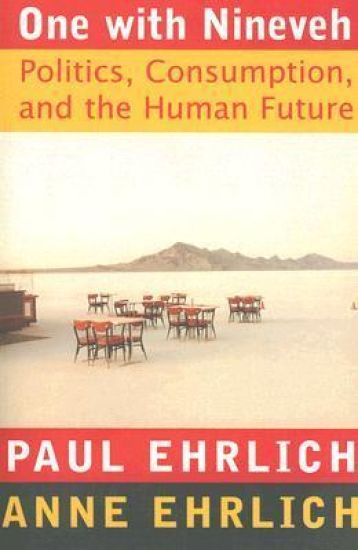
One With Nineveh

One With Nineveh

Paul R. Ehrlich; Anne H. Ehrlich

Shearwater Books,US
2005
nidottu
Named a Notable Book for 2005 by the American Library Association, "One with Nineveh" is a fresh synthesis of the major issues of our time, now brought up to date with an afterword for the paperback edition. Through lucid explanations, telling anecdotes, and incisive analysis, the book spotlights the three elephants in our global living room-rising consumption, still-growing world population, and unchecked political and economic inequity - that together are increasingly shaping today's politics and humankind's future. "One with Nineveh" brilliantly puts today's political and environmental debates in a larger context and offers some bold proposals for improving our future prospect.
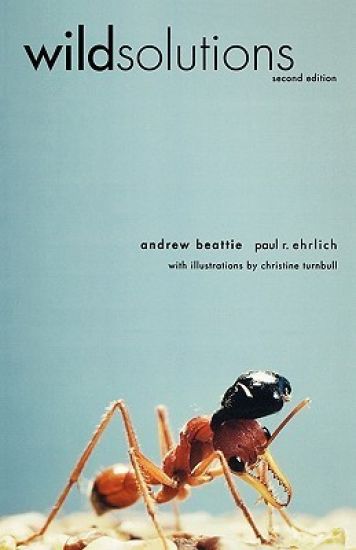
Wild Solutions

Wild Solutions

Beattie Andrew J.; Paul R. Ehrlich

Yale University Press
2004
pokkari
In this fascinating and abundantly illustrated book, two eminent ecologists explain how the millions of species living on Earth-some microscopic, some obscure, many threatened-not only help keep us alive but also hold possibilities for previously unimagined products, medicines, and even industries. In an Afterword written especially for this edition, the authors consider the impact of two revolutions now taking place: the increasing rate at which we are discovering new species because of new technology available to us and the accelerating rate at which we are losing biological diversity. Also reviewed and summarized are many "new" wild solutions, such as innovative approaches to the discovery of pharmaceuticals, the "lotus effect," the ever-growing importance of bacteria, molecular biomimetics, ecological restoration, and robotics. "An easy read, generating a momentum of energy and excitement about the potential of the natural world to solve many of the problems that face us."-E. J. Milner-Gulland, Nature "Must-reading for everyone."-Simon A. Levin, author of Fragile Dominion: Complexity and the Commons "An engaging book clearly intended to impress upon a lay audience the practical value of biological diversity. . . . An outstanding work."-Ecology "A most stimulating read for all those budding science students from secondary through graduate schools."-Science Books & Films
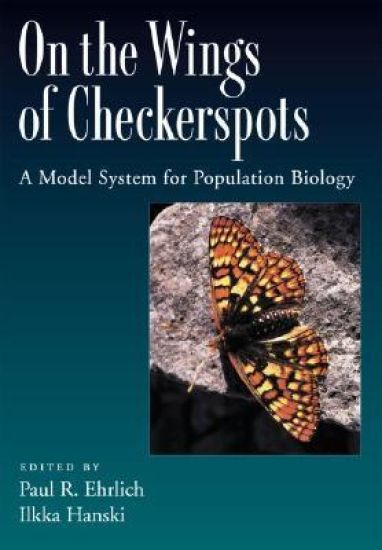
On the Wings of Checkerspots

On the Wings of Checkerspots

Paul R. Ehrlich; Ilkka Hanski

Oxford University Press Inc
2004
sidottu
Checkerspot butterflies have been used as an extraordinarily successful model system for more than four decades. This volume presents the first synthesis of the broad range of studies of that system as conducted in Ehrlich's research group in Stanford, in Hanski's research group in Helsinki and elsewhere. Ehrlich's long - term research project on Edith's checkerspot helped establish an intergrated disipline of population biology in the 1960s and ever since has contributed many fundamental insights into the ecological and evolutionary dynamics of populations. Hanski's and his associates' work an the Glanville fritillary for the past 14 years has been instrumental in establishing the field of metapopulation biology and showing how theoretical and empirical work can be effectively combined in the same project.
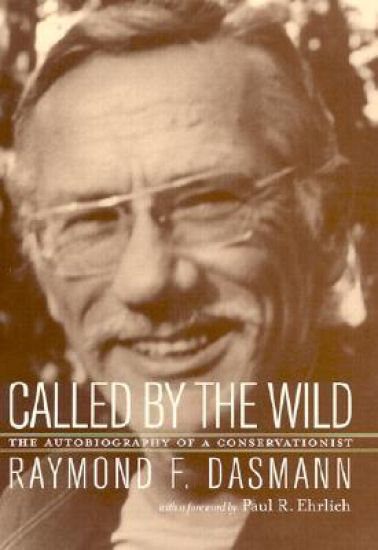
Called by the Wild

Called by the Wild

Raymond Dasmann; Paul R. Ehrlich

University of California Press
2002
sidottu
A pioneer in international conservation and wildlife ecology, Raymond Dasmann published his first book, the influential text "Environmental Conservation", when the term 'environment' was little known and 'conservation' to most people simply meant keeping or storing. This delightful memoir tells the story of an unpretentious man who helped create and shape today's environmental movement. Ranging from Dasmann's travels to ecological hotspots around the world to his development of concepts such as bioregionalism and ecotourism, this autobiography is a story of international conservation action and intrigue, a moving love story, and a gripping chronicle of an exceptional life. Dasmann takes us from his boyhood days in San Francisco in the early 1920s to his action-packed military service in Australia during World War II, where he met his future wife, Elizabeth. After returning to the United States, Dasmann received his doctorate as a conservation biologist when the field was just being developed. Dasmann left the safety of academia to work with conservation organizations around the world, including the United Nations, and has done fieldwork in Africa, Sri Lanka, the Caribbean, and California. This book is both a memoir and an account of how Dasmann's thinking developed around issues that are vitally important today. In engaging conversational language, he shares his thoughts on issues he has grappled with throughout his life, such as population growth and the question of how sustainability can be measured, understood, and regained. "Called by the Wild" tells the story of an inspirational risk taker who reminds us that 'the earth is the only known nature reserve in the entire universe' and that we must learn to treat it as such.
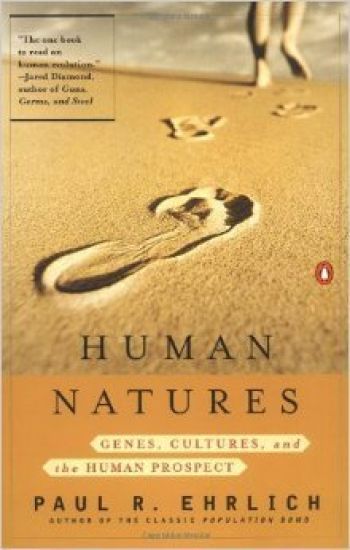
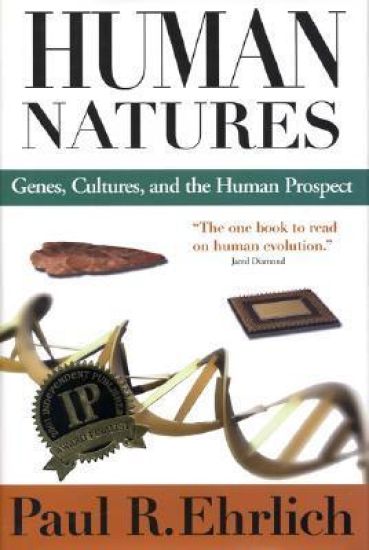
Human Natures: Genes, Cultures, and the Human Prospect
Why do we behave the way we do? Biologist Paul Ehrlich suggests that although people share a common genetic code, these genes "do not shout commands at us...at the very most, they whisper suggestions." He argues that human nature is not so much result of genetic coding; rather, it is heavily influenced by cultural conditioning and environmental factors. With personal anecdotes, a well-written narrative, and clear examples, Human Natures is a major work of synthesis and scholarship as well as a valuable primer on genetics and evolution that makes complex scientific concepts accessible to lay readers.
Human Natures

Human Natures

Paul R. Ehrlich

Island Press
2000
sidottu
"The Bell Curve", "The Moral Animal", "The Selfish Gene" - these and a host of other books and articles have made a seemingly overwhelming case that our genes determine our behaviour. Now, a leading evolutionary biologist shows why most of those claims of genetic destiny cannot be true, and explains how the aguments often stem from a fundamental misunderstanding of evolution itself. "You can't change human nature", the saying goes. But you can, Stanford biologist Paul Ehrlich shows us in "Human Natures", and in fact, evolution is the story of those changing natures. He makes a case that "human nature" is not a single, unitary entity, but is as diverse as humanity itself, and that changes in culture and other environmental variations play as much of a role in human evolution as genetic changes. We simply don't have enough genes to specify behaviour at the level that is often asserted. Never has knowledge of our evolutionary past been more important to our future. Developing intelligent strategies for antibiotic use, pest control, biodiversity protection - even for establishing more equitable social arrangements - all depend on understanding evolution and how it works. A hallmark of "Human Natures" is the author's ability to convey that understanding in the course of presenting a history of our species. Using personal anecdote, and example, Ehrlich guides us through the thicket of controversies over what science can and cannot say about the influence of our evolutionary past on everything from race to religion, from sexual orientation to economic development.
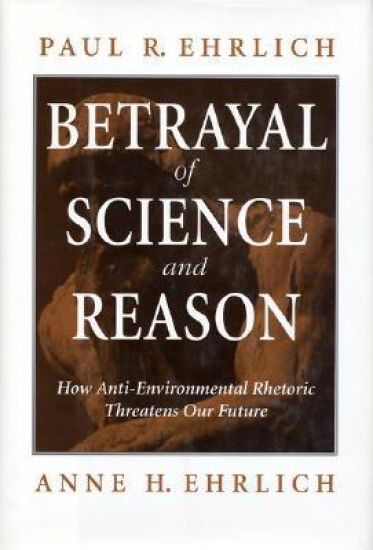
Betrayal of Science and Reason

Betrayal of Science and Reason

Paul R. Ehrlich; Anne H. Ehrlich; Paul R. Ehrlich

Island Press
1998
pokkari
In this hard-hitting and timely book, Paul R. Ehrlich and Anne H. Ehrlich challenge those who downplay the reality and importance of global environmental problems with appealing but misleading rhetoric. Such efforts to undermine and misinterpret environmental data, labeled the "brownlash" by the Ehrlichs, prolong an already difficult search for solutions and are deeply disturbing to environmental scientists. In Betrayal of Science and Reason, the Ehrlichs contrast anti-environmental rhetoric with the consensus view of the scientific community, tackling head-on such issues as population growth, desertification, food production, global warming, ozone depletion, acid rain, and biodiversity loss. They also offer a unique glimpse into how science works, and they discuss how scientists can speak out on matters of societal urgency yet retain the support of the scientific community. This book provides an eye-opening look at current environmental problems and the fundamental importance of the scientific process in solving them. It presents unique insight into the sources and implications of anti-environmental rhetoric, and it provides readers with a valuable means of understanding and refuting the feel-good fables that constitute the brownlash.